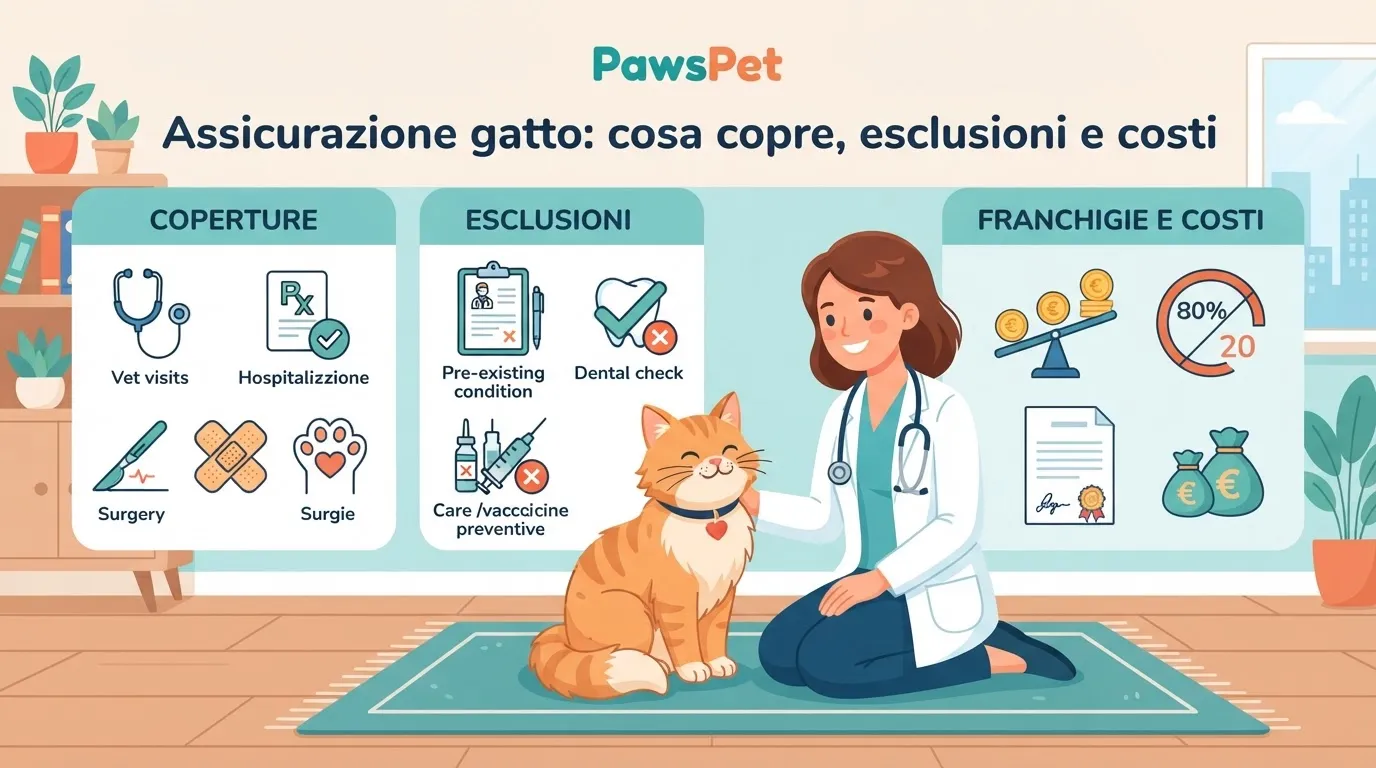
Choosing pet insurance is not just about looking at the annual premium: what really matters is how much the policy reimburses when your animal needs treatment. For a useful pet insurance comparison, carefully check the deductible, co-insurance, coverage limit, waiting periods and exclusions.
A well-assessed policy can help you plan for unexpected veterinary expenses, but not all plans protect against the same situations. Reading the terms before taking out a policy helps avoid unrealistic expectations when you request reimbursement.
Deductibles and co-insurance: what you pay
An insurance deductible and co-insurance both indicate the portion of the expense that remains the owner’s responsibility, but they work differently.
A pet insurance deductible is a fixed amount deducted from the reimbursement. It may apply to each claim, each visit or only once during the insurance year: this difference is important and should be checked in the policy.
Pet insurance co-insurance, on the other hand, is a percentage of the eligible expense that remains your responsibility. With percentage-based co-insurance, for example, the reimbursement decreases as the veterinary bill increases.
Before comparing two quotes, ask yourself:
- Is the deductible fixed, or does it vary depending on the treatment?
- Does it apply once, or to every reimbursement request?
- Does co-insurance apply even after the deductible has been exceeded?
- Is there a minimum co-insurance amount?
- Do visits, tests, procedures and hospital stays have different rules?
A policy with a lower premium may have a high deductible or significant co-insurance. This is not necessarily the wrong choice: it may suit you if you mainly want protection against more expensive events and can cover routine costs yourself.
How to assess a pet policy’s coverage limit
The pet policy coverage limit is the maximum amount the insurer may reimburse within a defined period, often the insurance year. It does not mean that you will automatically receive that amount, but rather that it is the ceiling within which the policy’s benefits apply.
When comparing pet insurance, check whether the coverage limit is:
- shared across all veterinary expenses;
- separate for procedures, diagnostics, hospital stays and treatments;
- applied per claim or across the entire year;
- shared with other benefits, such as third-party liability or legal protection;
- subject to sub-limits for specific types of treatment.
A high coverage limit is useful only if the other terms allow reimbursement for the specific situation. For this reason, it is worth reading the coverage limit together with the deductible, co-insurance and limits for each expense category.
Also consider your animal’s needs: age, lifestyle, known predispositions, travel frequency and access to veterinary facilities may affect your priorities. If you have questions about your animal’s health needs, speak with your veterinarian rather than treating insurance as a substitute for prevention or care.
Waiting periods, exclusions and pre-existing conditions
The less visible clauses are often the ones that have the greatest effect on reimbursement. A waiting period is the interval after the policy start date during which certain benefits are not yet active. It may vary depending on the type of event or treatment.
Exclusions, on the other hand, identify what is not covered. Depending on the policy, they may include:
- conditions or symptoms that appeared before enrollment;
- preventive care, vaccinations or routine check-ups;
- treatments that are not expressly included;
- events connected to specific conditions or behaviors;
- expenses incurred at facilities that do not meet the stated requirements.
Do not assume that a “veterinary expenses” plan covers every visit or treatment. Always ask how pre-existing conditions are handled and which medical documents may be required to assess a claim.
A practical method for comparing policies
Compare policies using the same hypothetical scenario: an urgent visit, diagnostic tests, and a possible hospital stay or procedure. You do not need to estimate exact figures: the goal is to understand the order in which the policy terms apply.
Follow these steps:
- Define your priority: protection against major unexpected costs, third-party liability, travel assistance or broader veterinary expense coverage.
- Read the policy documents: check included benefits, limits, deductibles, co-insurance, waiting periods and exclusions.
- Simulate the reimbursement: determine which portion would remain your responsibility in the event of a covered expense.
- Check the claims process: find out about deadlines, required documents, possible direct payment and how to file a claim.
- Compare the total cost: consider not only the premium, but also whether you can manage the amounts that are not reimbursed.
Keep invoices, medical records and receipts: good organization makes reimbursement requests easier. With PawsPet, you can collect your animal’s health information and set reminders for appointments and deadlines, keeping important details organized when you need them.
FAQ
Is the deductible always applied only once?
No. It depends on the policy: it may apply annually, per claim, per event or to each individual treatment. Check this clause before comparing premiums.
Is a low co-insurance percentage always better?
It reduces the percentage you have to pay, but it may be associated with a higher premium or other limits. Assess it together with the coverage limit, deductible and exclusions.
Does pet insurance cover existing conditions?
Pre-existing conditions are often excluded or subject to limitations. Read the policy definitions and, if necessary, ask the insurer or a qualified insurance professional for clarification.
Comparing policy terms systematically can help you choose protection that fits your daily life and your animal’s needs. PawsPet can help you keep health information, documents and useful reminders organized, so you can manage each decision with greater peace of mind.