Cat insurance can help manage some unexpected expenses, especially when veterinary visits, tests, or procedures become necessary. However, pet insurance policies do not all work in the same way: carefully reviewing coverage, exclusions, and deductibles is essential before choosing one.
The most suitable option depends on your cat’s age, health status, lifestyle, and the level of protection you want for everyday life.
What does cat insurance cover?
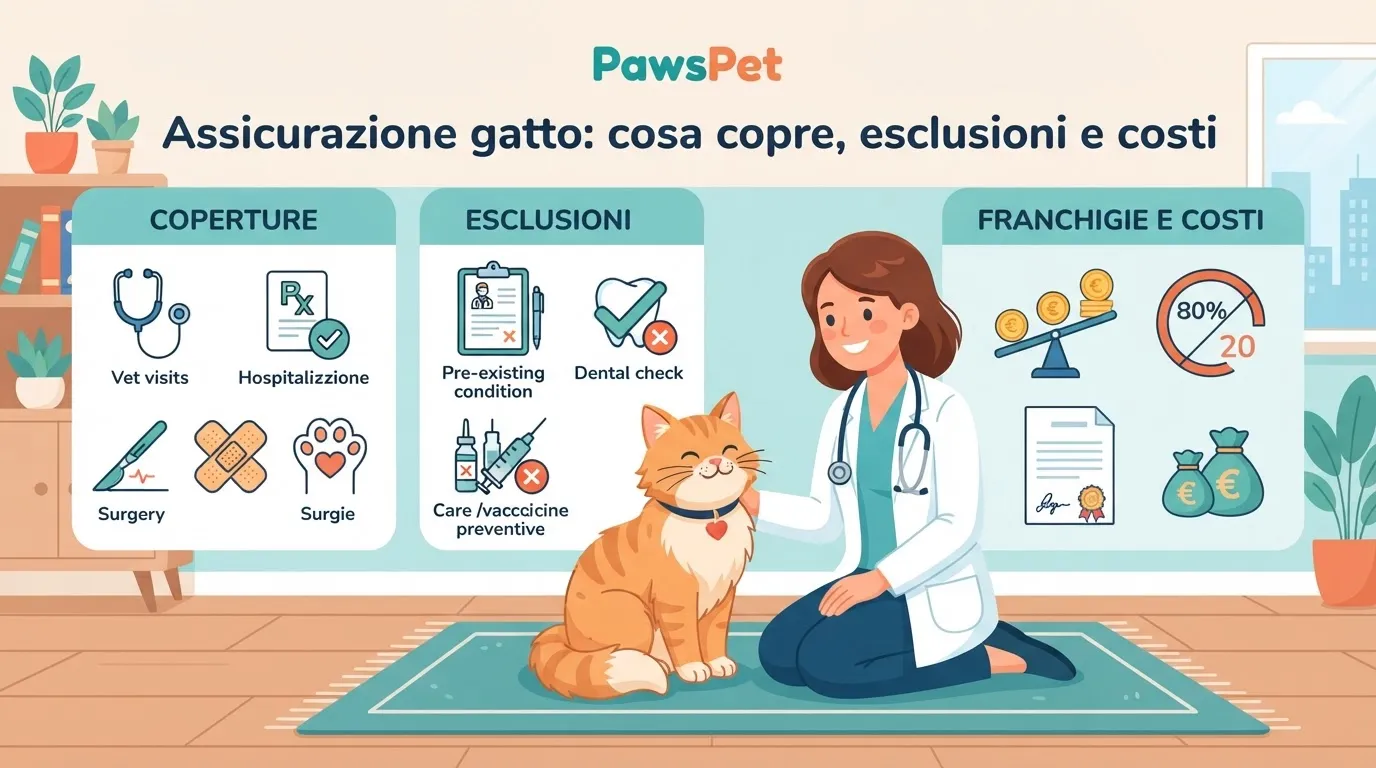
The answer to “what does cat insurance cover?” varies depending on the provider and the plan selected. In general, many policies include one or more of the following areas.
- Veterinary expenses following an accident: these may include visits, diagnostic tests, treatments, hospital stays, or procedures resulting from a covered accidental event.
- Veterinary expenses for illness: some policies reimburse part of the costs related to conditions that develop after the policy begins, subject to specific limits and requirements.
- Third-party liability: this protects the owner if the cat unintentionally causes injury or damage to other people, animals, or property, when this coverage is included.
- Assistance services: these may include organizational services or support in particular situations, as specified in the contract.
- Cover in the event of disappearance or death: this is available only with some policies and is subject to widely varying criteria.
Do not assume that a policy covers preventive care, vaccinations, parasite treatments, neutering, or routine checkups. These services may be excluded or available only through specific plans.
Exclusions: what to check before signing
Exclusions define the situations in which the insurer will not provide reimbursement. They are a central part of the policy, not a minor note to skim quickly.
Pay particular attention to:
- Pre-existing conditions, meaning health problems that were already present, known, or had appeared before the coverage started.
- Waiting periods, the initial interval during which some benefits are not yet active.
- Age limits for taking out or renewing the policy.
- Congenital or hereditary conditions, which may be excluded or subject to specific requirements.
- Preventive care and special diets, which are often not included in standard coverage.
- Damage occurring in specific circumstances, such as failure to comply with contractual conditions or behavior that does not follow the applicable rules.
Always ask whether a microchip, an up-to-date health record, veterinary certificates, or expense documentation is required. Keeping reports, invoices, and prescriptions organized makes it easier to submit a reimbursement claim.
Deductibles, co-insurance, and coverage limits: how they affect reimbursement
Price is not the only factor to compare. To understand how useful a policy really is, you need to evaluate how reimbursement works.
An insurance deductible is the portion that remains your responsibility when you make a claim. It may be a fixed amount or apply to every reimbursement request. Co-insurance, on the other hand, is a percentage of the expense that is not reimbursed.
The coverage limit is the maximum amount the insurer will recognize during a period established by the contract. It may apply to the policy as a whole, to a single benefit, or to specific services.
When comparing two offers, check:
- whether the deductible applies annually or to each individual event;
- what percentage of co-insurance applies;
- whether sub-limits exist for visits, hospital stays, or procedures;
- how reimbursement works: direct payment, reimbursement after payment, or both options;
- which documents must be submitted and within what timeframe.
A policy with a lower premium may have more restrictive limits. Consider the contract as a whole, rather than looking only at the initial cost.
Cat insurance cost and criteria for choosing a policy
The cost of cat insurance can vary based on several factors: the animal’s age, the benefits selected, coverage limits, deductibles, geographic area, and declared health conditions. There is therefore no single price that applies to every cat.
To make a more informed choice, define your priorities first. If you are mainly concerned about unexpected veterinary expenses, focus on the terms of the health coverage. If your cat goes outdoors or travels with you, also check the additional benefits that are genuinely relevant.
Before signing up:
- read the insurance information document and the complete policy terms;
- provide accurate information about your cat;
- compare several quotes with equivalent coverage;
- ask for written clarification about anything you do not understand;
- check whether the policy includes renewals, premium changes, or time limits.
Good organization also supports cat health management: with PawsPet, you can collect identification details, health documents, and reminders for appointments or deadlines, keeping useful information organized and accessible.
Cat insurance FAQ
Does cat insurance cover pre-existing conditions?
As a rule, pre-existing conditions are excluded. The exact terms depend on the contract and on the health information provided when enrolling.
Are routine veterinary visits reimbursed?
Often, they are not. Preventive checkups, vaccinations, and routine treatments may be excluded from the basic policy or included only through additional benefits.
Is it better to choose a higher deductible?
A higher deductible may reduce the premium, but it increases the portion of the expense you must pay yourself. It is useful only if that amount remains manageable even in the event of a significant veterinary expense.
Take your time to compare coverage and limits, choosing protection that matches your cat’s actual needs. PawsPet can help you keep health information, documents, and routine reminders organized.