Traveling with your dog in a campervan can make a vacation more flexible and enjoyable, but it requires practical planning: while driving, your dog must be secure, and during stops, they need water, shade, and time to recover. Preparing the route, documents, and equipment before departure helps you handle unexpected situations with less stress.
Dog in a campervan: safety rules while driving
The first rule for traveling with a dog in a campervan is to avoid letting them roam freely inside the vehicle. An unrestrained animal can distract the driver, interfere with driving, or be injured during sudden braking.
The most suitable solution depends on your dog’s size, the vehicle’s layout, and their habits. In general, you can consider:
- a stable, properly sized crate or kennel that is securely fastened;
- a dog seat belt attached to a sturdy harness, not to a collar;
- a divider or separate transport area, if it is designed to be safe and well ventilated.
Before setting off on a campervan vacation with your dog, take a few short trips. Watch for unusual panting, vocalizing, excessive drooling, or repeated attempts to get out of the crate: these may indicate discomfort or motion sickness. If you have concerns, ask your veterinarian for advice before traveling, especially if your dog is a puppy, senior, or has known health conditions.
Do not leave heavy objects, rigid bowls, or loose accessories near your dog. Even moderate braking can cause them to move.
Planning stops, temperatures, and travel routines
Stops are part of travel safety, not a waste of time. Plan them in advance, prioritizing quiet areas where your dog can get out on a leash, drink, and relieve themselves without too many distractions.
During each break:
- offer fresh water without forcing your dog to drink;
- take a short walk in a safe area;
- check their paws and coat for ticks or grass awns, especially after walking through grassy areas;
- make sure your dog does not show signs of overheating or exhaustion;
- always pick up waste and follow the rules of the rest area.
The temperature inside a campervan can rise quickly even when it does not seem particularly hot outside. Do not leave your dog alone in the vehicle unless you are certain that there is effective ventilation, stable shade, and safe weather conditions. Air conditioning, roof vents, or windows do not replace direct supervision: a malfunction, a change in sun exposure, or a longer-than-expected stop can quickly alter the situation.
During warm periods, it is best to drive during the cooler hours and choose shaded pitches. In colder months, prepare a blanket or insulating mat and check that the sleeping area is free from drafts and excessively cold surfaces.
Documents and rules to check before departure
Rules for dogs in campervans vary depending on the destination, rest areas, and campsites you choose. Before leaving, always check the facility’s access conditions: some campsites accept dogs but require them to be kept on a leash, ask owners to carry a muzzle, restrict access to shared areas, or have specific cleaning rules.
Keep the following in an easily accessible folder:
- health record and contact details for your regular veterinarian;
- identification documents required for the destination;
- any prescriptions, current treatments, and dietary instructions;
- contact details for veterinary clinics along the route;
- pet insurance information, if available.
Cross-border travel may require additional documents and specific health treatments. Requirements can change over time, so always check the official guidance for your destination country and consult your veterinarian well in advance.
Dog campervan checklist: what to bring
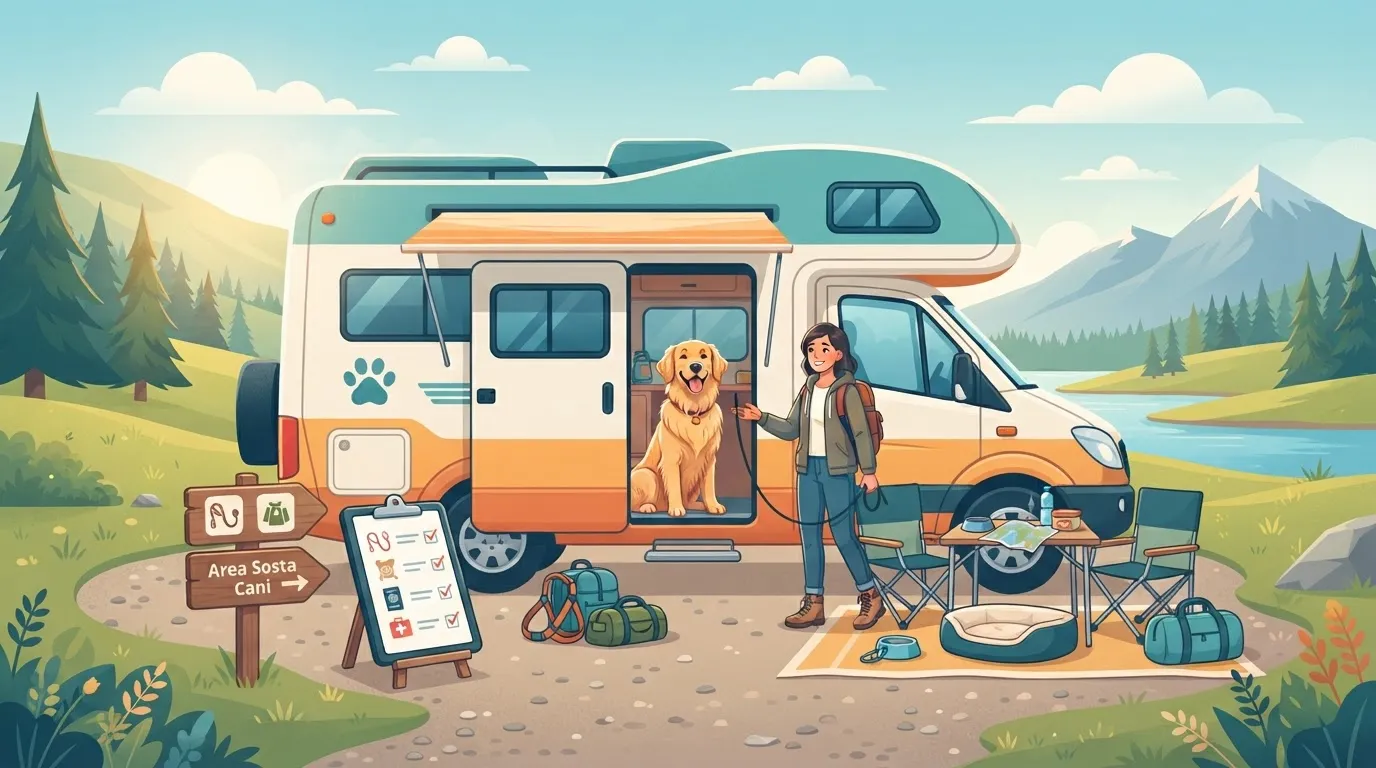
A well-prepared dog campervan checklist helps you avoid unnecessary purchases during the trip and makes it easier to organize the vehicle’s limited space. Divide accessories into categories and keep essential items somewhere easy to reach.
For safety and travel:
- harness, leash, and an up-to-date ID tag;
- suitable crate or restraint system;
- a light or reflective accessory for evening walks;
- waste bags and pet-safe wipes.
For routine and well-being:
- water and a travel bowl;
- their usual food, treats, and an airtight container;
- medications already prescribed by the veterinarian;
- a bed, blanket, or familiar item;
- quiet chew toys or enrichment activities.
For cleaning and minor mishaps:
- a towel reserved for their paws;
- a gentle cleaner suitable for animals;
- a brush and tweezers for possible superficial foreign objects;
- a pet first-aid kit, to be used according to your veterinarian’s instructions.
Keep mealtimes and walk times as consistent as possible. The novelty of traveling can be stimulating, but a familiar routine helps your dog adjust to life in a campervan.
Organizing pet-friendly stops without improvising
When choosing pet-friendly stops and destinations, do not rely only on the words “dogs allowed.” Check whether there are shaded areas, safe walking routes, water fountains, restricted zones, and convenient access to essential services.
When you arrive at a new pitch, take a brief exploratory walk before settling in. Identify exits, busy areas, hazardous waste, loose animals, and possible sources of noise. If your dog is uncertain, avoid introducing them to many people or other animals immediately.
With PawsPet, you can keep health documents and information organized, set reminders for treatments or supplies, and plan GPS walks during your travel stops.
FAQ
Can my dog roam freely in the campervan while we are driving?
No. It is safer to transport your dog using a suitable restraint system, such as a secured crate or a harness connected to a dedicated seat belt. Allowing them to roam freely increases the risk of distraction and injury.
How often should I stop when traveling with a dog in a campervan?
It depends on your dog’s age, health, habits, and the weather conditions. Plan regular breaks and take them sooner if your dog shows restlessness, thirst, panting, or a need to get out.
Can I leave my dog in the campervan while visiting a city?
This is best avoided, especially in mild or warm weather and without supervision. Instead, plan activities that are compatible with your dog’s presence or rely on a qualified professional when necessary.