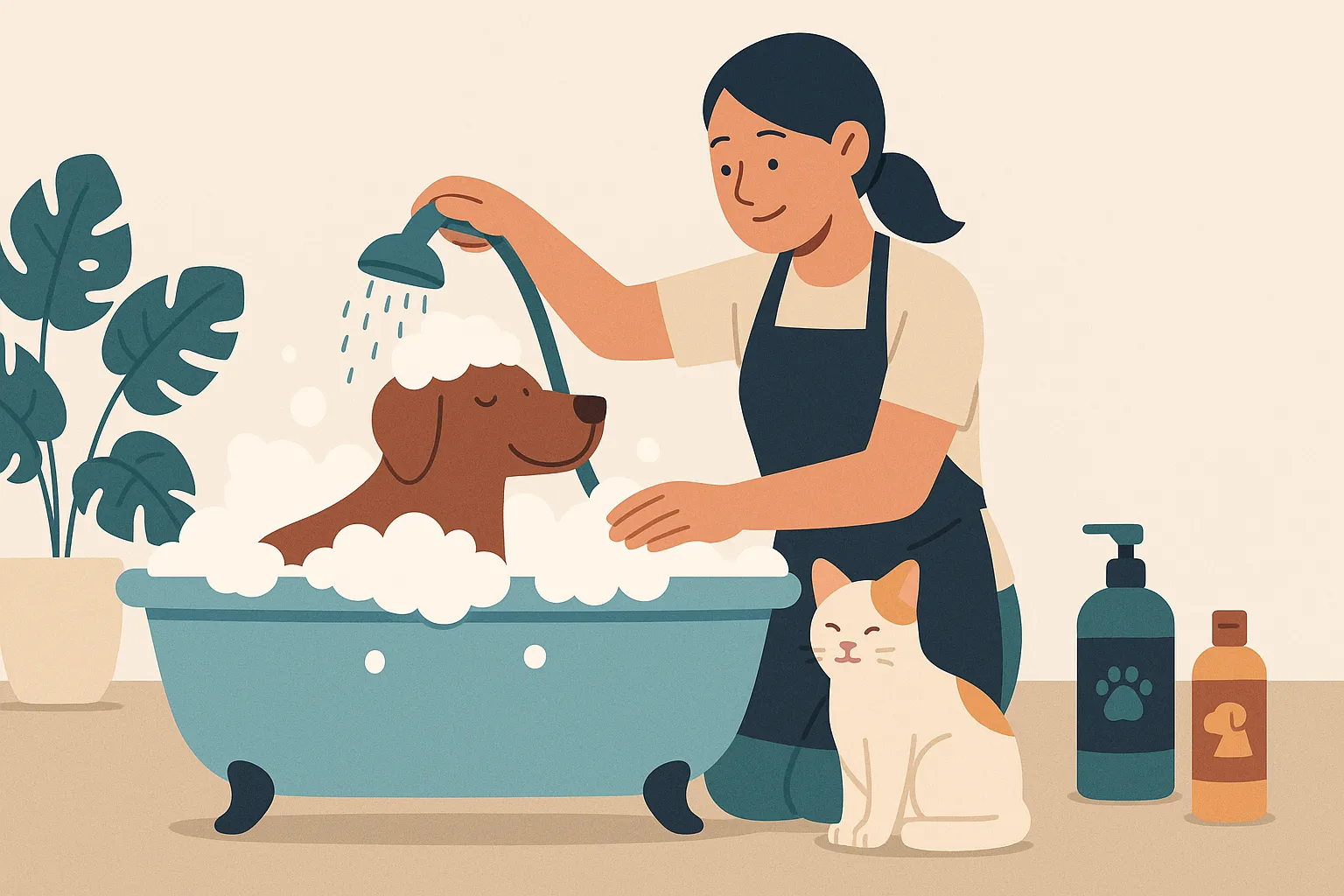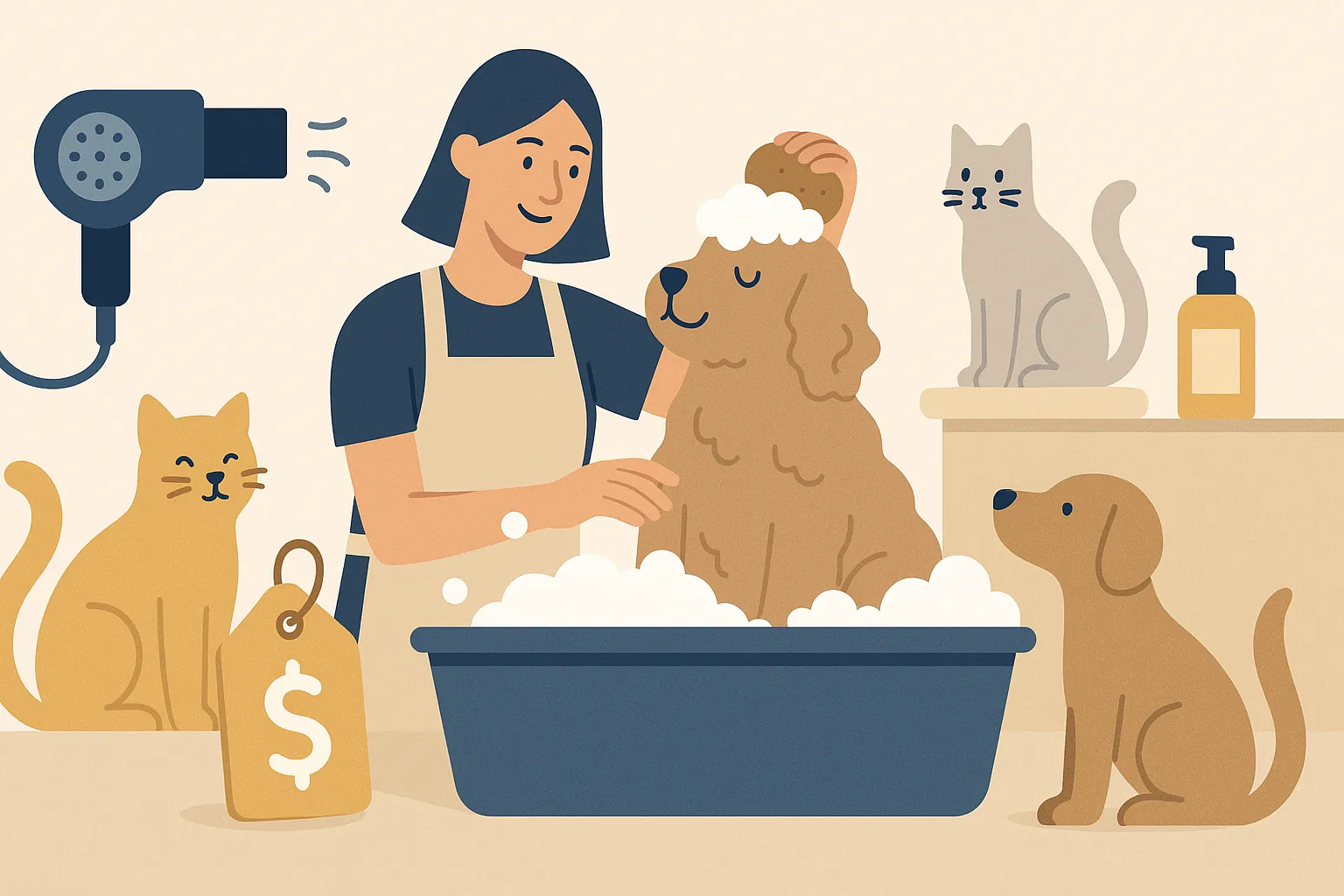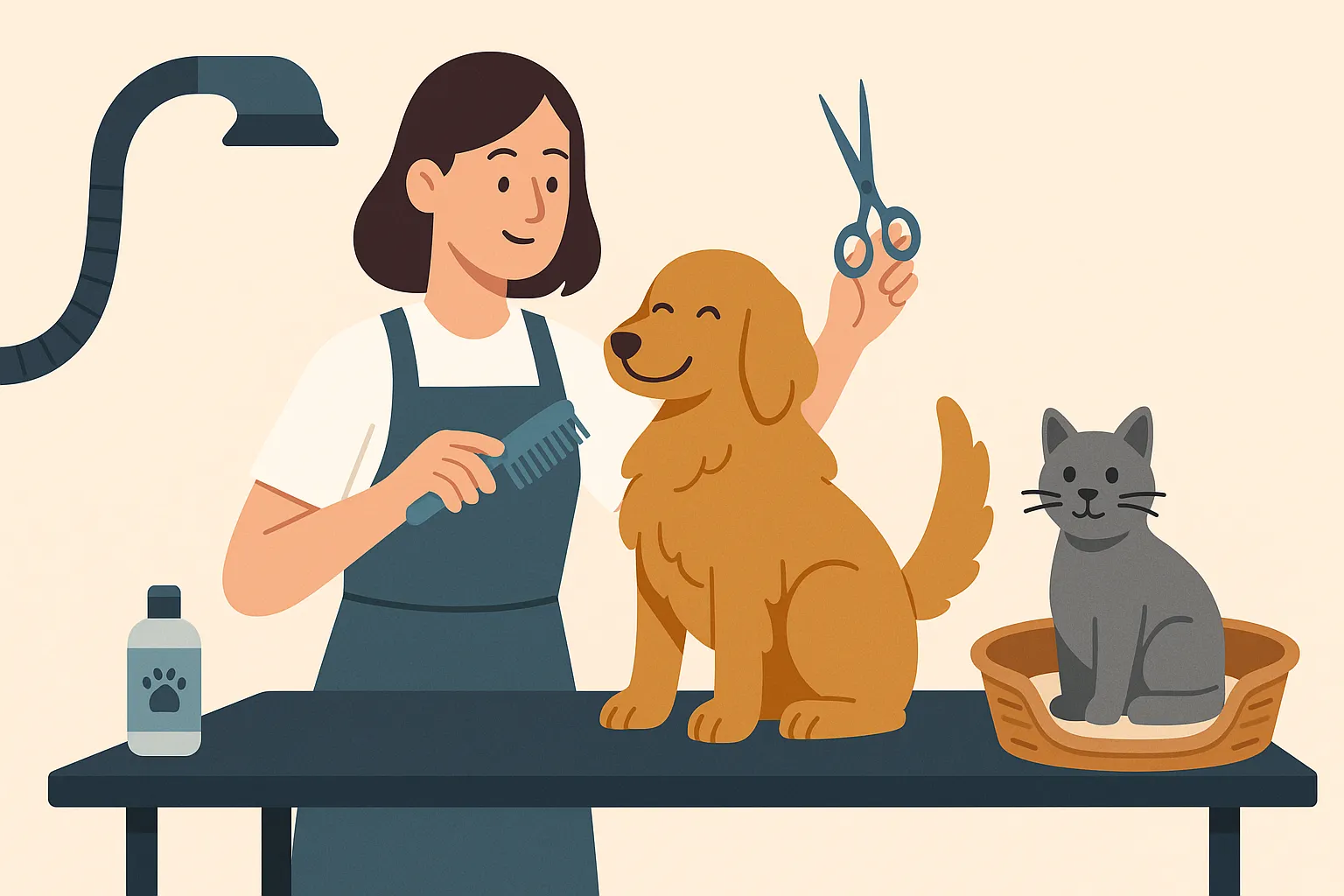
Dog grooming is not just about appearance: it is a fundamental part of your pet’s health and well-being. A well-kept coat, a bath done properly and at the right frequency, regular nail trimming, and cleaning the ears and eyes all help prevent skin issues, discomfort, and often extra vet visits.
However, many owners wonder:
- How often should you groom a dog?
- Is it better to do it at home or in a professional salon?
- How do you choose the right groomer for your dog safely?
- How do you prepare your dog for grooming, especially if they are anxious or it’s their first time?
In this practical guide, we cover everything: the ideal frequency based on coat type, how a salon session works, what to look for when choosing a groomer, how to organize appointments (also with the help of the PawsPet app), and a few extra tips to make the experience calm for both you and your dog.
1. What dog grooming really is (and why it’s not just “giving them a bath”)
With dog grooming we mean a set of hygiene and care tasks:
- Brushing and undercoat removal
- Bathing with specific shampoos
- Drying and, when needed, professional blow-drying
- Coat trimming or clipping (where appropriate)
- Nail trimming
- Ear cleaning and, sometimes, eye area cleaning
- Possible finishing touches for appearance (paws, tail, muzzle)
These tasks:
- help prevent painful tangles in the coat,
- allow you to check the skin more closely and quickly notice redness, dermatitis, or parasites,
- improve the dog’s comfort (less itching, less loose hair around the house, less odor),
- offer a chance for a general periodic check by an experienced professional.
2. How often should you groom a dog? It depends on the coat
There is no single answer to the question “how often should you groom a dog”. The frequency depends on:
- coat type,
- lifestyle,
- any specific needs (allergies, sensitive skin, etc.).
2.1. Short-haired dogs
Examples: Beagle, Boxer, Pit Bull, Dobermann, Bulldog.
- Brushing: 1–2 times a week.
- Bath at the groomer: every 6–10 weeks, unless there are special needs (mud, strong odor).
- Nails and ears: checked at every session.
Why not wash them too often: the skin could dry out, causing itching or dandruff. An experienced groomer will choose gentle, moisturizing shampoos.
2.2. Medium-haired dogs
Examples: Golden Retriever, Setter, German Shepherd, Cocker Spaniel.
- Brushing: 3–4 times a week (every day during shedding season).
- Full grooming: every 4–8 weeks, especially if the dog lives indoors.
- Undercoat removal is important to reduce hair around the house and help the skin breathe.
2.3. Long-haired dogs
Examples: Shih Tzu, Yorkshire Terrier, Maltese, Poodle (with continuously growing coat), Afghan Hound.
- Brushing: daily or at least 4–5 times a week to avoid tangles.
- Professional grooming: every 3–6 weeks, depending on the chosen haircut style.
- If the coat tends to tangle easily, the dog should be seen more often to avoid needing a very short shave.
2.4. Curly-coated or continuously growing coat dogs
Examples: Poodles, Lagotto Romagnolo, Bichon Frisé, many “doodle” dogs (Labradoodle, Goldendoodle, Cockapoo, etc.).
- Brushing: at least every other day.
- Haircut and grooming: on average every 4–6 weeks.
- Watch out for hidden tangles in:
- armpits,
- collar/harness area,
- ears,
- groin and tail area.
2.5. Wire-haired dogs (stripping)
Examples: Schnauzer, Fox Terrier, some wire-haired Dachshunds.
- They require a specific technique: stripping or trimming, not just machine clipping.
- Grooming sessions: every 6–10 weeks, depending on coat regrowth.
- It is important to go to a groomer who knows these breeds well.
2.6. Other factors that affect frequency
Besides coat type, consider:
- Environment: city dog vs. dog living in the countryside and getting dirtier.
- Family allergies: in some cases, more regular grooming helps reduce hair and allergens at home.
- Dog’s age: puppies and seniors may need shorter, gentler grooming sessions.
- Season: during shedding periods (spring and autumn), it can be helpful to increase frequency.
3. Signs that tell you it’s time for a grooming appointment
Even if you have a schedule, some practical signs can help you know when it’s time to book:
- Tangled or matted coat, difficult to brush.
- Strong odor despite keeping the dog clean at home.
- Long nails that touch the floor or make a “click click” sound when walking.
- Dirty ears or bad smell.
- Hair that covers the eyes or limits visibility.
- Hair between the paw pads that is too long, collects dirt, and forms snow/mud balls.
- The dog scratches a lot or shakes their head (in this case, first consult your veterinarian).
4. Home grooming or professional grooming?
You can handle part of the grooming at home, but in many cases a professional groomer is a valuable ally.
4.1. What you can safely do at home
- Brush regularly (with tools suited to the coat type).
- Gently clean the eye area with gauze and specific products recommended by the veterinarian.
- Help your dog get used to:
- having paws and nails touched,
- being handled on the head, ears, and tail.
- Small touch-ups with rounded-tip scissors, only if you feel confident and the dog cooperates.
4.2. What is better left to a groomer
- Hair trimming with scissors or clippers in delicate areas.
- Stripping/trimming for wire-haired breeds.
- Nail trimming, especially if the nails are very dark or you do not know where the blood vessel runs.
- Use of professional blow dryers and dryers.
- Managing very matted or uncooperative dogs.
For your dog’s safety, it is always better to avoid DIY if you are not sure what you are doing.
5. How to choose the right groomer for your dog
Choosing the groomer is an important step, especially if it’s your first time or if you’ve had negative experiences before.
5.1. Essential criteria to evaluate
-
Training and skills
- Have they taken specific grooming courses?
- Do they know the proper techniques for your dog’s coat type (for example, stripping)?
- Can they recommend shampoos and treatments in a personalized way?
-
Salon hygiene and safety
- Clean, dry, orderly environment.
- Tables and tubs sanitized between dogs.
- Tools (scissors, combs, clippers) well maintained and clean.
- Non-slip mats in the tub and on the tables.
-
Dog handling and well-being
- A calm, patient, and empathetic approach.
- The groomer asks you about:
- the dog’s health,
- any behavior issues,
- habits and sensitivities (fear of blow dryers, difficulty being touched on the paws, etc.).
- Willingness to take breaks if the dog is stressed.
-
Transparency
- They explain what they will do to the dog: type of cut, products used, session length.
- They are open to showing you where the dog will spend time, whether they will stay in a crate, etc.
-
Reviews and word of mouth
- Ask:
- other dog owners,
- dog trainers or behaviorists,
- your veterinarian.
- Check online reviews on Google, social media, and pet service marketplaces.
- Ask:
5.2. Positive signs during the first appointment
- The groomer takes time to get to know the dog and lets them sniff the environment.
- They ask detailed questions about:
- any health issues,
- past grooming incidents,
- preferred haircut style.
- They are clear about:
- timing,
- costs,
- any extras (nail trimming, specific products).
5.3. Red flags you should not ignore
- The groomer forces the dog with rough handling.
- They do not ask you anything about the dog’s condition.
- They are unwilling to explain how they will work.
- The environment is visibly dirty or disorganized.
- Excessive use of physical restraint without considering alternatives or breaks.
If in doubt, it is always better to change facilities. Your dog’s well-being comes first.
6. How to prepare your dog for grooming (especially the first time)
Preparing your dog for grooming is essential to avoid turning the experience into something traumatic, especially for puppies and sensitive dogs.
6.1. Start early: grooming a puppy
If possible, take your dog to grooming while still a puppy:
- First “soft” visit:
- they get to know the place,
- they get on the table without any trimming,
- they hear the blow dryer from a distance,
- they receive treats and cuddles.
- Short, positive sessions, without expecting a full service right away.
Many salons offer puppy packages with gradual steps specifically to help them get used to the process.
6.2. Getting used to it at home: simple exercises
To make the groomer’s work easier:
- Frequently and gently touch:
- paws,
- tail,
- ears,
- muzzle.
- Reward with treats when they allow handling.
- Get them used to:
- standing on a slightly raised surface (similar to a grooming table),
- hearing the sound of the blow dryer from a short distance (start far away and pair it with rewards).
- Introduce brushes and combs gradually, without pulling the coat.
6.3. On the day of the appointment
To reduce stress and avoid surprises:
- Take them for a walk beforehand so they can burn off energy and relieve themselves.
- Avoid feeding them right before the session to prevent nausea.
- Bring:
- a comfortable harness/collar,
- any veterinary instructions (allergies, products to avoid),
- a phone number that is always reachable.
If it is the first appointment, arrive a few minutes early so the welcome can be handled calmly.
7. What happens during a grooming session
Every salon has its own method, but generally dog grooming follows these steps:
- Welcome and check-in
- Short conversation with the groomer.
- Together you decide: type of bath, any haircut, what to avoid.
- Pre-brushing
- Removal of loose hair before the bath.
- Check for tangles and undercoat condition.
- Bath
- Shampoo chosen based on:
- coat type,
- skin sensitivity,
- any veterinary instructions.
- Careful rinsing to avoid irritating residue.
- Shampoo chosen based on:
- Drying
- Towel + blow dryer or special drying equipment.
- The dog is always supervised.
- Cut/stripping/trimming (if planned)
- Execution of the agreed haircut.
- Finishing touches on muzzle, paws, and hygiene areas.
- Ear cleaning and nail trimming
- Gentle removal of visible dirt from the outer ear area.
- Check and, if necessary, nail trimming.
- Final check and handover
- Brief visual check of the dog.
- The groomer updates you on anything noticed (redness, particular tangles, etc.).
In some cases, they may advise you to consult your veterinarian if they notice anything unusual (bumps, nodules, significant irritation).
8. How to manage appointments, reminders, and grooming history with PawsPet
Grooming is even more effective when it is part of an organized dog care routine.
This is where the PawsPet app can help you in a practical way:
8.1. Plan the right frequency
- Save in your dog’s profile:
- coat type,
- habits,
- any recommended products.
- Based on the frequency agreed with the groomer (for example every 6 weeks), you can set recurring reminders:
- to book the next appointment,
- to remind yourself about extra brushing during shedding seasons.
8.2. Keep track of history
- Record each grooming session in the health and care history:
- date,
- salon/groomer,
- type of treatment (bath, haircut, stripping, extras).
- This way:
- you always know when the last grooming appointment was,
- you can share information with a new groomer or your veterinarian.
8.3. Find grooming services in your area
If you don’t have a regular salon yet, the pet services marketplace in PawsPet (where available) can help you:
- search for groomers in your city,
- compare:
- services offered,
- opening hours,
- reviews left by other owners,
- save as favorites the professionals you like best.
9. Quick checklist: when grooming is truly “done well”
To tell whether your dog’s grooming has been done properly, you can use this checklist:
- Clean, soft coat, with no shampoo residue.
- No unpleasant smell immediately after the bath.
- No obvious tangles (especially under the armpits, ears, tail).
- Nails filed/trimmed without bleeding.
- No obvious redness or shaving irritation.
- The dog does not show extreme fear when going back the next time (maybe not thrilled, but manageable).
- Clear and helpful communication from the groomer about what was done.
If you notice recurring problems (irritation, cuts, a terrified dog), it is worth reassessing the salon or calmly and clearly discussing the issue with the professional.
10. Practical tips for a calm grooming experience
Quick tips box
- Take your dog out to relieve themselves before the session.
- Avoid arriving rushed and late: your stress passes on to them too.
- Always communicate:
- physical issues (for example joint pain),
- fear signals (noise sensitivity, fear of water).
- If needed, bring treats the groomer can use to reinforce calm behavior.
- Don’t keep changing salons unless necessary: routine and familiarity help a lot.
Conclusions: grooming as part of your dog’s well-being routine
Well-done dog grooming, at the right frequency and by a skilled professional, is not an “aesthetic luxury” but a real basic care routine: it helps keep the coat healthy, the skin clean, reduces tangles and discomfort, improves the dog’s comfort and the quality of life at home.
To manage everything without stress:
- agree with the groomer on how often to groom your dog based on their coat;
- create a brushing routine at home;
- choose a professional who truly respects your dog’s well-being;
- use digital tools like PawsPet to:
- record appointments,
- set reminders,
- keep a history of all sessions and pet services you use.
Organizing your dog’s care in a simple way helps you prevent problems and enjoy your time together more.
Try the PawsPet app to always keep grooming, health, and appointments under control for your dog, all in one solution designed for pet lovers.
FAQ about dog grooming
How often should a dog be groomed?
It depends on the coat type and lifestyle. In general:
- short coat: every 6–10 weeks,
- medium coat: every 4–8 weeks,
- long or curly coat: every 3–6 weeks,
- wire coat (stripping): every 6–10 weeks.
It is always a good idea to talk with an experienced groomer or your veterinarian to adapt the frequency to your specific dog.
Can I wash my dog at home instead of taking them to the groomer?
You can bathe your dog at home, provided that:
- you use shampoos specifically made for dogs,
- you dry them completely (especially in winter),
- you do not overdo the frequency so as not to irritate the skin.
For complex cuts, stripping, heavily matted dogs, or uncooperative dogs, it is best to rely on a professional groomer.
How can I tell if a groomer is reliable?
Look at:
- the cleanliness of the salon,
- the way they approach the dog (calm, respectful),
- their willingness to explain what they will do,
- the questions they ask about the dog’s health and habits,
- reviews from other clients.
If you have doubts about how they handle the dog or notice signs of excessive stress, consider another facility.
How do I prepare an anxious dog for grooming?
- Make short “meet and greet” visits to the salon without any treatments.
- Get them used to being touched at home on the paws, ears, tail, and back.
- Ask the groomer to proceed gradually, with shorter sessions at the beginning.
- Reward every positive experience with play and treats.
If anxiety is very strong, it is useful to consult a dog trainer/behaviorist or your veterinarian to rule out physical causes.