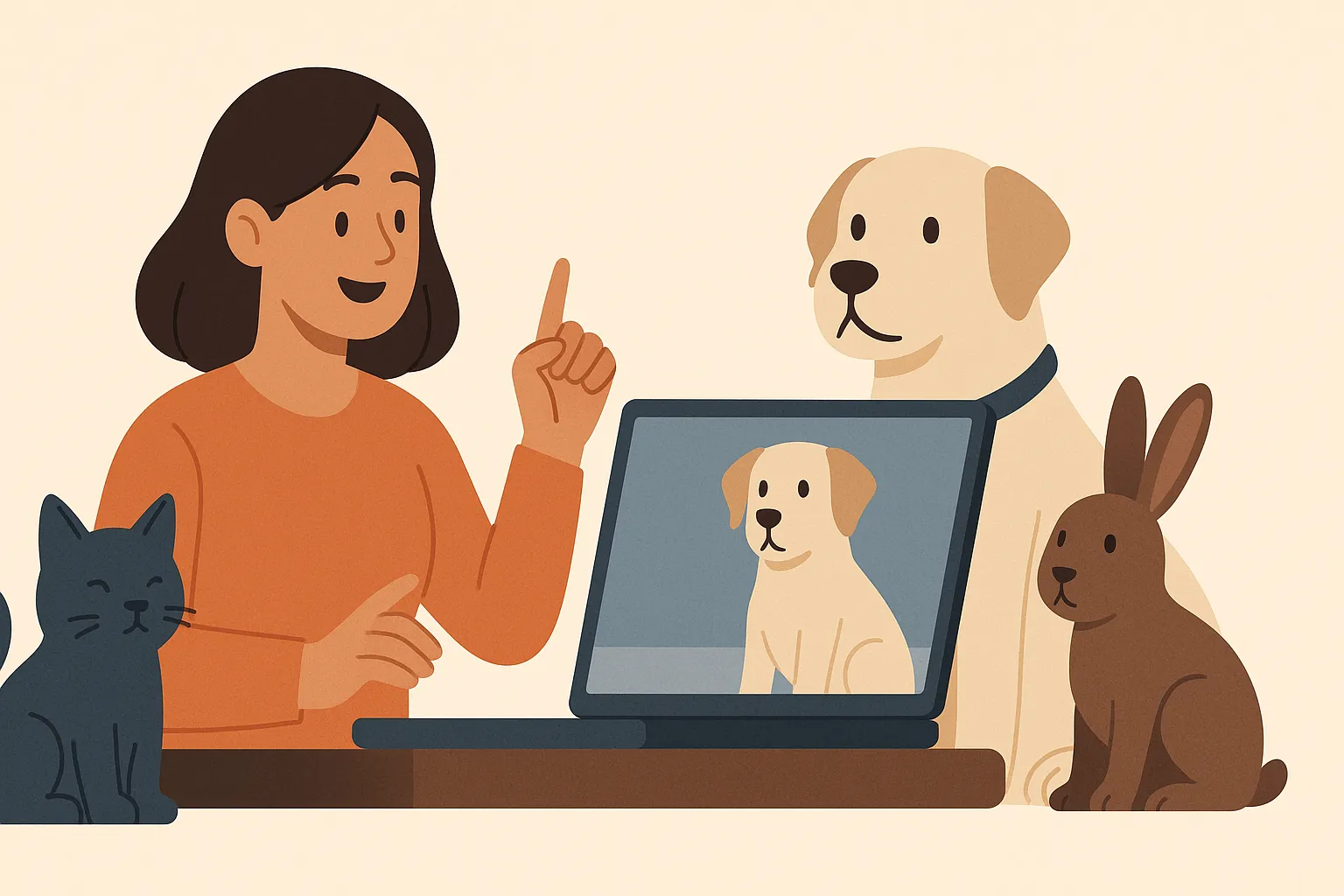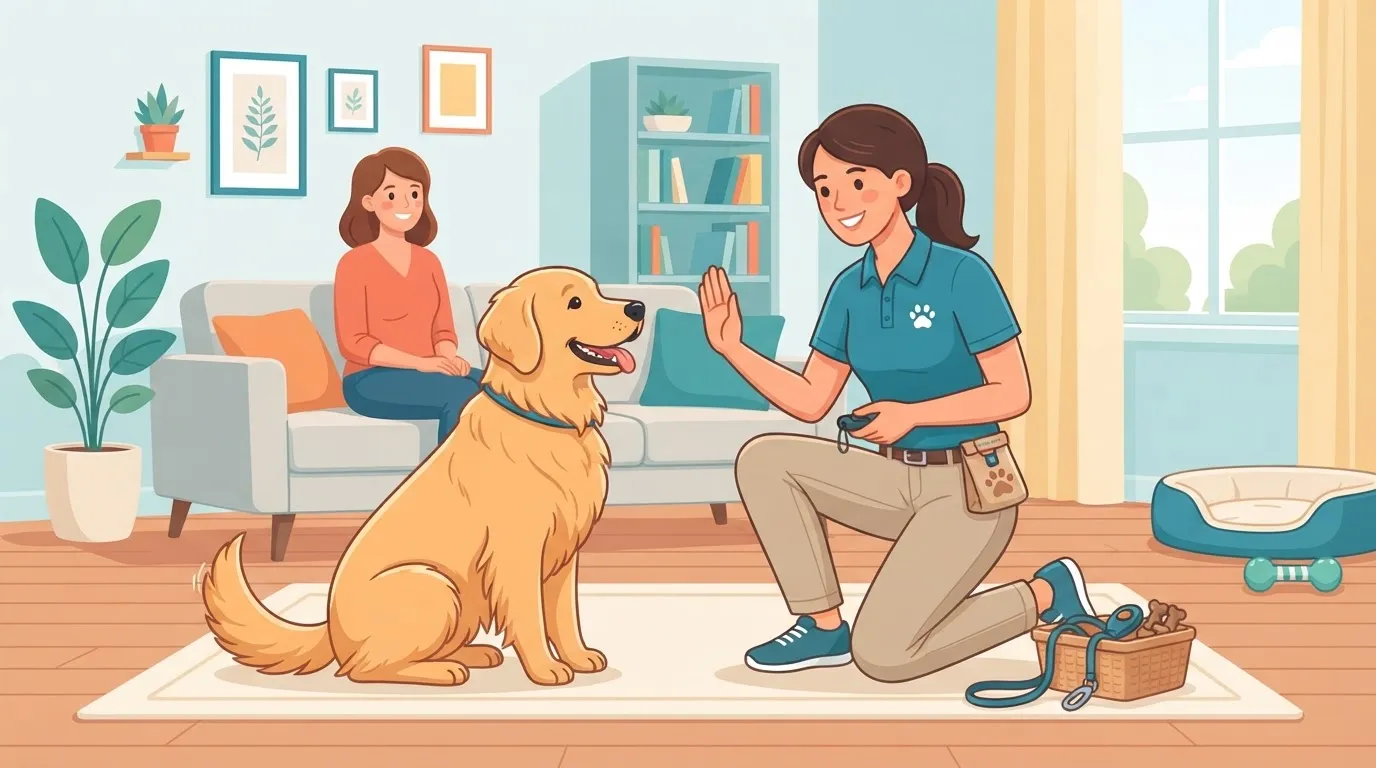
If you’re looking for an adult dog trainer, you probably want to improve your dog’s day-to-day management with practical, knowledgeable support. Choosing the right professional really makes all the difference: it’s not just about teaching commands, but about understanding the dog, the family environment, and the real goals.
When you need an adult dog trainer
An adult dog can benefit from a dog training program in many situations: unreliable recall, pulling on the leash, reactivity toward other dogs, difficulty being left alone, or challenging behavior at home. Even a dog that was recently adopted may need guidance to adapt to a new routine.
A good adult dog trainer helps work on:
- basic manners and house rules
- leash handling
- recall and self-control
- controlled socialization
- unwanted behaviors in a gradual way
Before getting started, though, it’s important to distinguish between a simple class and a truly personalized program. Every dog has a different history, motivations, and pace.
What to consider before choosing a professional
Finding the right dog trainer shouldn’t be based only on price or proximity. The quality of the method and the ability to adapt it to the dog matter much more.
Here are the main criteria to keep in mind:
-
Training and expertise Check whether the professional has specific qualifications such as a dog behavior specialist, ongoing professional development, and experience with adult dogs.
-
Training approach A clear, respectful approach based on observation and positive reinforcement is generally more effective than one-size-fits-all solutions.
-
Initial assessment The professional should observe the dog, the environment, and daily habits before suggesting a plan. Be wary of anyone who promises immediate results without knowing the case.
-
Owner involvement The best dog training always includes the person too. If the dog only changes behavior during sessions but not at home, the work is incomplete.
-
Transparency about results A serious dog behavior specialist explains goals, realistic timelines, limits, and possible difficulties. No responsible program can guarantee miracles.
Method, communication, and relationship with the dog
When working with adult dogs, the relationship matters as much as the technique. Watch how the professional interacts with the dog during the first meeting: do they speak calmly? Can they read signs of stress? Do they adjust the exercise if the dog is struggling?
A good adult dog trainer should:
- explain exercises clearly
- avoid unnecessary force
- propose gradual progressions
- reward correct behaviors
- adapt the program to the dog’s age, breed, and history
The language used is important too. If you hear overly rigid or punitive phrasing, take a closer look. Today, effective dog education focuses on understanding behavior, not correction for its own sake.
Prices and services: how to make sense of them without mistakes
The cost of an adult dog trainer can vary widely depending on location, experience, lesson length, and included services. There isn’t a single “correct” price for everyone, but there are factors that help you judge whether the offer is fair.
Usually, pricing is influenced by:
- individual or group lessons
- in-home sessions
- pre-program consultation
- online support between sessions
- any more in-depth behavioral assessments
When comparing professionals, always ask:
- how many sessions are included
- whether an initial assessment is part of the package
- how progress is tracked
- whether the program is adjusted based on results
If you use PawsPet to stay organized, you can keep track of appointments, reminders, and your dog’s health management all in one place. That makes it easier to remember sessions, checkups, and routines that support training.
How to find a professional near you
Searching for “adult dog trainer near me” is a good starting point, but it’s not enough. Check reviews, the website, service clarity, and whether they’re open to an initial consultation.
Before booking, ask yourself:
- does the professional work with adult dogs or only puppies?
- do they offer one-on-one programs?
- do they have experience with your dog’s specific issue?
- do they answer your questions clearly?
If available, an introductory meeting is often the best way to see whether you click. Your dog should feel comfortable, and you should also feel that the method is solid and easy to understand.
Conclusion
Choosing the right adult dog trainer means investing in well-being, safety, and quality of life for both you and your dog. Evaluate skills, method, communication, and transparency: these are the elements that truly make the difference.
With the right tools and professional support, dog training can become a concrete and calm journey. If you want to organize appointments, reminders, and pet services easily, PawsPet can help you keep everything under control.
FAQ
How long does it take to see results with an adult dog trainer?
It depends on the behavior being addressed, how consistent you are at home, and the dog’s history. In some cases, a few weeks are enough; in others, a longer program is needed.
Is it better to choose a dog behavior specialist or a dog trainer?
The roles often overlap, but what matters most is experience with adult dogs and the ability to build a program suited to your situation.
Can an adult dog learn new behaviors?
Yes, absolutely. With the right method, patience, and consistency, even an adult dog can learn new rules and improve daily management.