If your dog eats too fast, it may seem like they are simply very hungry or particularly food-motivated. In reality, swallowing kibble without chewing can make the meal less comfortable and, in some cases, increase the risk of regurgitation or other digestive problems. You can slow down your dog’s meals with small changes to their routine, without turning mealtime into a stressful experience.
Why Dogs Gulp Down Their Food
A dog that gulps down food is not necessarily “greedy”: this behavior can be influenced by habits, the environment, and individual needs. Understanding the reason can help you choose the most suitable solution.
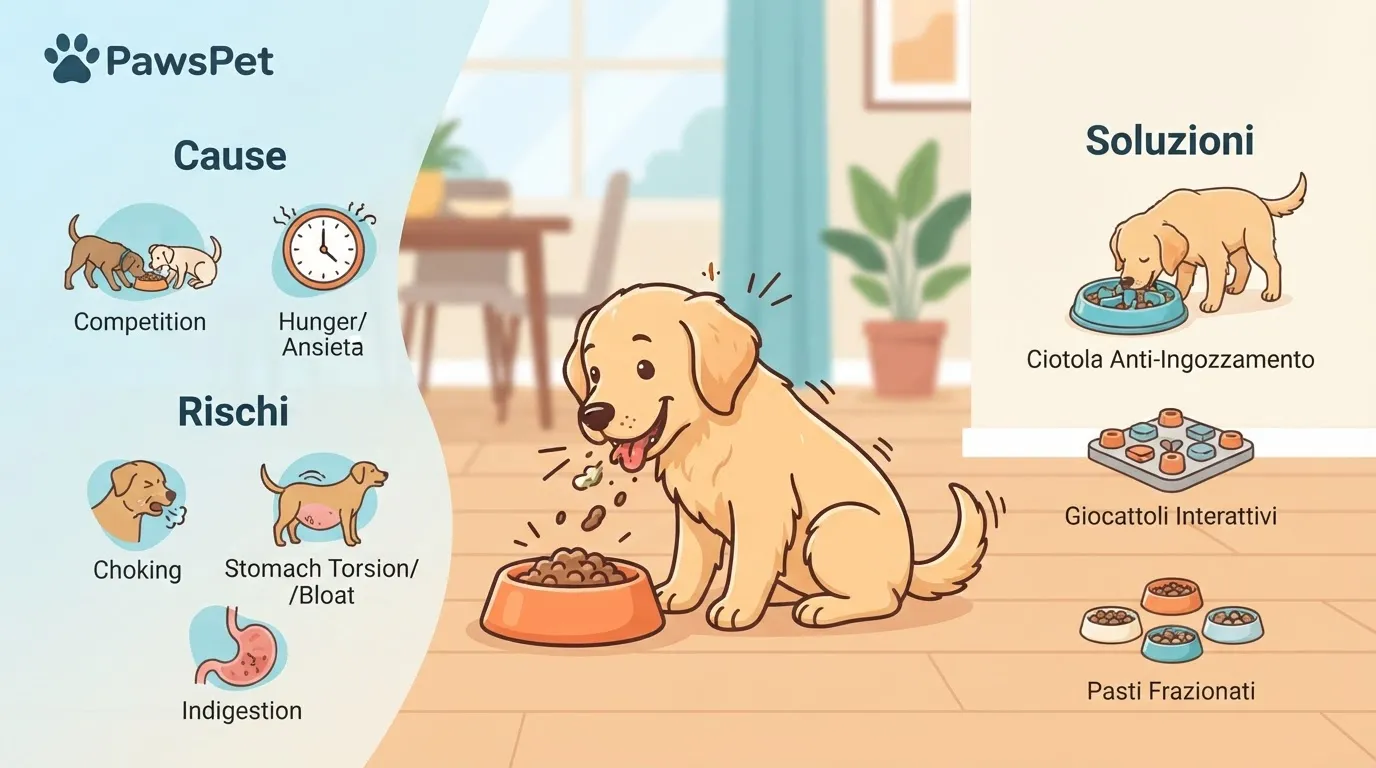
Common causes include:
- Perceived competition: When other animals are nearby, your dog may feel the need to finish before the others, even if no one is actually taking their food.
- Learned habits: Some dogs have learned to eat quickly from puppyhood, especially if they shared a bowl or were fed irregularly.
- Portion size or meal frequency: A long wait between meals can increase excitement when food is offered.
- Limited daily stimulation: For some animals, mealtime is one of the few interesting events of the day.
- Sudden changes: Moving house, adding new animals, changes in schedule, or stress can affect eating behavior.
Observe when the problem occurs: does your dog eat too fast every time, only around other animals, or after particularly intense walks? This detail can help you take a more targeted approach.
The Risks of Eating Too Quickly
When a dog swallows large bites or takes in a lot of air while eating, they may show discomfort shortly afterward. Not every dog develops problems, but persistent fast eating should not be overlooked.
Possible consequences include:
- regurgitation shortly after eating;
- gagging, burping, or excessive drooling;
- abdominal bloating and restlessness;
- difficult digestion;
- persistent requests for more food, even when the portion was adequate.
If your dog has a very swollen abdomen, repeatedly tries to vomit without producing anything, seems weak, unusually agitated, or shows clear signs of pain, contact a veterinarian or an emergency veterinary facility immediately. These signs require prompt assessment, especially in large dogs or dogs with deep chests.
Even when there is no emergency, it is wise to speak with your veterinarian if your dog suddenly changes appetite, always seems hungry, loses weight, or vomits frequently. The veterinarian can rule out health-related causes and assess the most appropriate diet.
How to Safely Slow Down Your Dog’s Meals
The best approach is to make mealtime slower and more engaging without causing frustration. Start with one change at a time and observe your dog’s response for several days.
Use a Slow-Feeder Bowl
A slow-feeder bowl has raised sections and pathways that encourage your dog to take smaller amounts of food at a time. Choose one that suits your dog’s muzzle size and usual food quantity.
To use it effectively:
- make sure it is stable and easy to clean;
- check that your dog can reach the food without becoming agitated;
- avoid overly complex designs if your dog shows frustration;
- supervise the first few meals, especially if your dog tends to bite or push the bowl.
You can also spread kibble across a snuffle mat or use food-dispensing toys designed for dry food, provided they are suitable for your dog’s size.
Divide the Daily Portion and Establish a Routine
If compatible with your veterinarian’s recommendations and your dog’s diet, dividing the daily portion into multiple meals may reduce rushing. Keep mealtimes reasonably regular and offer food in a quiet area.
If you have multiple animals, prepare separate eating areas: a different room, a baby gate, or enough distance between bowls can reduce competition. Avoid leaving bowls unattended if one dog tends to finish the others’ meals as well.
Useful Exercises for a Calmer Mealtime
Slowing down your dog’s meals is not only about changing the bowl: waiting calmly and managing the environment also matter. Before putting down the bowl, ask for a simple behavior your dog knows, such as sitting or waiting for a few seconds. Then release your dog calmly, without creating excitement through an animated voice or hurried movements.
You can use part of the daily portion for short activities:
- searching for kibble hidden in safe areas of the home;
- using snuffle mats under supervision;
- training exercises based on small treats taken from the daily portion;
- problem-solving games suited to your dog’s abilities.
Do not automatically increase the amount of food: always include food used during activities in the daily portion. For puppies, senior dogs, animals with health conditions, or dogs on veterinary diets, ask the professional who cares for them for advice first.
FAQ
Is a slow-feeder bowl suitable for every dog?
It can be useful for many dogs, but it must be appropriate for the animal’s muzzle, size, and abilities. If your dog becomes nervous or cannot eat comfortably, choose a simpler design or ask your veterinarian for advice.
Can I add water to kibble to make my dog eat more slowly?
Adding water can change the food’s texture and the speed at which it is eaten, but it is not a universal solution. Consider how your dog tolerates it and follow your veterinarian’s guidance, especially if your dog follows a specific diet.
When should I worry if my dog eats too fast?
Contact your veterinarian if the behavior starts suddenly or is accompanied by frequent vomiting, weight loss, pain, abdominal bloating, or unusual changes in appetite.
A calmer mealtime routine supports your dog’s everyday well-being and also makes it easier to notice changes. With PawsPet, you can use reminders to maintain regular mealtimes and record eating habits or signs to discuss with your veterinarian.