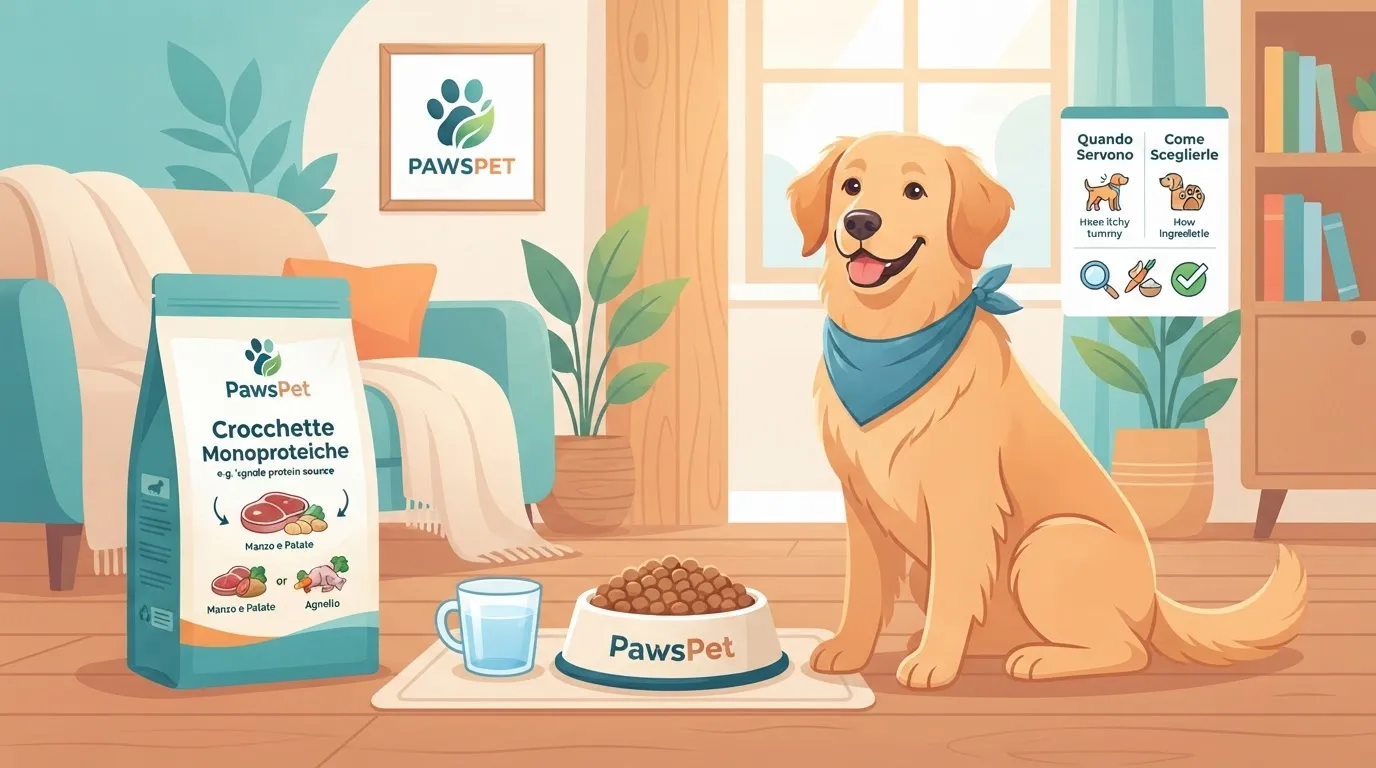
Single-protein dog food can make choosing a diet easier when a dog has a food sensitivity, is following a veterinarian-guided elimination trial, or needs a simpler feeding plan. However, it is not automatically “better” for every animal: ingredients, nutritional completeness, and individual needs matter most.
Understanding what single-protein really means can help you choose monoprotein dog food without relying only on claims printed on the packaging.
What single-protein dog food is
Single-protein dog food contains one declared source of animal protein, such as chicken, lamb, salmon, duck, or pork. This characteristic refers to animal protein sources and does not necessarily mean that every ingredient in the recipe comes from a single source.
Single-protein kibble may also include:
- one main animal protein source;
- carbohydrates such as rice, potatoes, peas, or grains;
- fats, fiber, vitamins, and minerals;
- functional ingredients, such as fish oil or prebiotics.
It is important not to confuse “single-protein” with “limited-ingredient,” “grain-free,” or “hypoallergenic.” A grain-free product may contain several animal proteins, while a single-protein food may include grains. In addition, having only one animal protein does not automatically make a food suitable for a dog with allergies or digestive problems.
When a sensitive dog diet may benefit from single-protein food
Single-protein dog food is often considered when an owner wants to observe the dog’s response to a specific protein source more clearly. It may be useful in certain situations, which should be assessed with a veterinarian.
For example:
- the dog has recurring gastrointestinal problems, such as loose stools or flatulence;
- itching, skin redness, or frequent ear infections are present, although these signs can have different causes and require a clinical assessment;
- the veterinarian recommends an elimination diet to investigate a possible adverse reaction to food;
- you want to avoid a protein that is already common in the dog’s usual diet.
If a food allergy is suspected, changing foods repeatedly without professional guidance is not advisable. An elimination diet should be planned and monitored by a veterinarian: treats, leftovers, chew products, and flavored medications can also affect the results.
A healthy dog can eat a complete single-protein food, but does not necessarily need one. The choice between variety and a single protein should be based on age, lifestyle, health status, appetite, and individual tolerance.
How to read a monoprotein dog food label
The packaging is the most useful tool for checking whether single-protein dog food matches your dog’s needs. Start with the ingredient list, which generally presents ingredients in order of quantity at the time of production.
Check these points carefully:
-
Declared protein source
If you are looking for a salmon-based food, check that chicken, turkey, or other animal species do not also appear among the animal protein sources. Also read entries relating to fats, broth, hydrolyzed proteins, and derivatives. -
Nutritional completeness
Look for the indication that the food is “complete.” This means it is formulated to meet the nutritional needs of the life stage stated on the label. A complementary food cannot replace the entire daily diet on its own. -
Intended use
Check that it is suitable for puppies, adults, or senior dogs and, where specified, for your dog’s size or activity level. -
Analytical constituents
Protein, fat, fiber, and ash provide an initial nutritional overview, but they are not enough on their own to assess quality. Read them together with the ingredients and your dog’s individual needs. -
Suggested daily portion
Use it as a starting point rather than a strict rule. Body weight, activity, neutering, and physical condition may require adjustments.
Be cautious about judging food solely by words such as “natural,” “premium,” or “gentle.” Concrete nutritional information should guide an informed choice.
Introducing new kibble without creating confusion
Even a high-quality food can cause temporary discomfort if introduced too quickly. Unless your veterinarian gives different instructions, make a gradual transition by mixing the new product with the previous one and progressively increasing the new portion.
During the transition, observe:
- stool regularity and consistency;
- itching, persistent licking, or skin changes;
- appetite and energy levels;
- weight changes;
- the amount and type of treats offered.
Keep the other parts of the diet stable, especially if you are checking for a sensitivity. Introducing new kibble, wet food, treats, and chews at the same time makes it difficult to understand what your dog actually tolerates.
Recording the start date, chosen food, and daily observations can be useful during a veterinary appointment. With PawsPet, you can keep notes about nutrition, symptoms, and checkups in your pet’s health management area, as well as set reminders for purchases or appointments.
FAQ about single-protein dog food
Is single-protein dog food suitable for every dog?
It can be a complete food suitable for healthy dogs if it is formulated for their life stage. However, it is not an essential choice for every dog: the diet should be assessed according to individual needs.
Does single-protein food mean that my dog will not have allergies?
No. Single-protein food does not automatically prevent or treat allergies or intolerances. If persistent symptoms appear, contact a veterinarian to identify possible causes and determine the most appropriate dietary approach.
Can I alternate between different single-protein foods?
It may be possible for a healthy dog, provided the transition is gradual and the foods are complete. If an elimination diet is underway, avoid making changes without your veterinarian’s instructions.
Choosing single-protein dog food carefully means looking beyond the name of the protein and observing your dog’s actual response. Organize nutrition data, reminders, and feeding routines in PawsPet so useful information is always close at hand.