
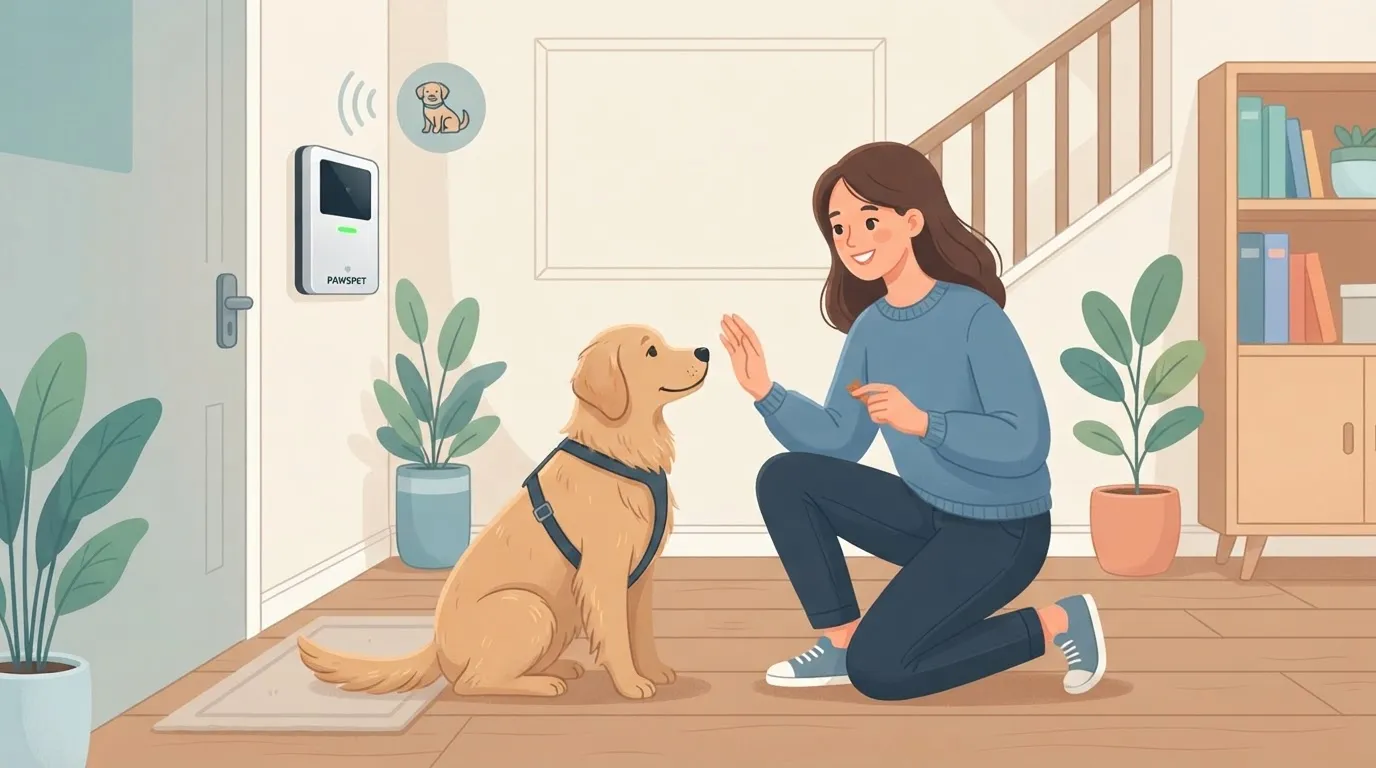
When a dog barks at the intercom, it is often not “being difficult”: it is reacting to a sudden sound that may signal the arrival of an unfamiliar person. With short, repeatable exercises based on positive training, you can reduce excitement and make it easier to welcome guests.
The goal is not to demand absolute silence, but to teach your dog what to do after hearing the signal: move away from the door, look to you and relax in a safe area.
Why dogs bark at the intercom or at guests
The intercom combines several elements that can trigger a dog’s reactivity: a sudden noise, vibrations, an unfamiliar voice and movement toward the entrance. Barking can serve different purposes:
- Alarm: the dog signals that it has noticed something unusual.
- Excitement: it associates the sound with people arriving, attention or movement.
- Protecting its space: it tries to move whoever is outside away from the door.
- Fear or insecurity: some dogs react because they do not know what to expect.
- Learned behavior: if the person leaves or comes in after the dog barks, the dog may associate the sequence with an important outcome.
Observe your dog’s body language. A stiff dog with raised fur, growling or attempts to lunge toward the door requires particularly careful management. If the dog barks, wags its tail and runs back and forth, the focus will be mainly on self-control and regulating excitement.
First rule: prevent situations that are too difficult
To calm a dog at the doorbell, you do not need to expose it immediately to real and challenging visits. During training, prevent your dog from repeatedly practicing an intense reaction: each episode can make the habit more established.
Prepare a small area away from the door with a mat, bed or open pen. Keep appealing, easy-to-eat rewards available, without making inappropriate changes to your dog’s diet. It may also help to block the view of the entrance if seeing people arrive makes your dog agitated.
When you are expecting a guest:
- ask the person not to ring without warning;
- settle your dog in its calm area before the guest arrives;
- use a leash, baby gate or separate room if necessary;
- ask the guest to ignore the dog at first, without staring at it or immediately attempting contact.
Safety comes before training: do not force close greetings and do not punish growling or signs of discomfort. They are useful forms of communication that should be respected.
Exercises to reduce reactivity to the intercom
Work in sessions lasting a few minutes, once or twice a day, when your dog is rested. Continue only if the dog can eat, listen and regain calm; if it breaks into prolonged barking, reduce the difficulty.
Teach an alternative behavior
Before working with the intercom, teach your dog to go to its mat. Say a simple cue, such as “place,” guide the dog toward the area and reward it when it steps onto the mat. Gradually increase the time it stays there, rewarding calm behavior.
The mat should not become a punishment. Offer it during calm moments too, together with suitable chews or small rewards, so it develops a positive value.
Pair the sound with something predictable
Use a recording of the intercom or ask someone to ring it at a controlled intensity. Start with a very low volume or from a distance that does not trigger barking. Immediately after the sound, offer a reward on the mat or on the floor away from the door.
The sequence is simple: sound → reward → return to calm. Repeat it only a few times and stop before your dog becomes agitated. Over time, gradually increase the volume, realism and proximity to the intercom.
Add the arrival routine
Once your dog handles the sound well, introduce a second person who knocks, speaks from outside or opens the door. Keep your dog in its designated area and reward it for orienting toward you, not toward the guest.
If your dog barks at guests, ask them to enter slowly and sit down without interacting. Contact should happen only when the dog shows signs of relaxation and chooses to approach spontaneously.
Mistakes that increase excitement
Some human reactions, although understandable, can make the moment even more difficult:
- shouting “quiet” over the barking, increasing noise and tension;
- opening the door while the dog is already out of control;
- pulling the dog toward the entrance or forcing it to be petted;
- applying different rules among family members;
- expecting progress too quickly and skipping gradual steps.
Recording triggers, barking duration and improvements can help you recognize genuine progress. PawsPet reminders can be useful for maintaining consistency during sessions and sharing the routine with the whole family.
When to seek professional support
Contact a qualified canine behavior professional who uses respectful methods if your dog’s reactivity is intense, if it attempts to bite, cannot regain calm or if the behavior worsens. A veterinarian is the right point of reference when the change is sudden, especially in an adult or senior dog: pain and health problems can affect its tolerance threshold.
A personalized plan takes the environment, the dog’s history, the family composition and the frequency of visits into account.
FAQ
How long does it take to reduce barking at the intercom?
It depends on the dog’s sensitivity, how often the episodes occur and how consistently you train. Look for small improvements, such as faster recovery or the ability to reach the mat, rather than aiming immediately for complete silence.
Should I ignore my dog when it barks at the doorbell?
Ignoring the dog is not always enough. It is more useful to prevent escalation, increase the distance from the door and reward an alternative behavior, such as turning toward you or going to its calm area.
Can I use the real intercom for training?
Yes, but only if your dog remains below threshold, meaning it can still focus and accept a reward. If the real sound is too intense, start with a low-volume recording and increase the difficulty gradually.
With a clear routine and progress that stays within your dog’s abilities, welcoming guests can become calmer for everyone. Organize exercises and reminders as part of your daily routine with PawsPet, always respecting your companion’s pace.


