After surgery, rest is important, but it is not always enough to support a complete functional recovery. Post-operative dog rehabilitation helps manage mobility, strength, balance and a gradual return to daily activities, always in agreement with the veterinarian caring for the case.
Every rehabilitation plan is different: the type of surgery, age, general health, pain and the dog’s behaviour all affect the timing and methods. The goal is not to force recovery, but to make it safe, gradual and monitored.
When post-operative dog rehabilitation is needed
Veterinary physiotherapy may be recommended after orthopaedic or neurological surgery, or when mobility remains reduced after an operation. It may be helpful, for example, when a dog struggles to bear weight on a limb, moves stiffly, loses muscle mass or needs to regain coordination and stability.
The veterinarian decides whether and when to begin. In some situations, the first phase requires controlled rest, wound care or specific restrictions; starting unauthorised exercises could interfere with tissue healing.
Contact your veterinarian without waiting for the rehabilitation session if you notice:
- sudden or increasing pain;
- a swollen, red, open wound or discharge;
- marked lethargy, loss of appetite or suspected fever;
- a complete refusal to move after an improvement;
- frequent falls or a clearly worsening gait.
Rehabilitation does not replace surgical or clinical check-ups: it is one coordinated part of recovery after surgery.
How veterinary physiotherapy works
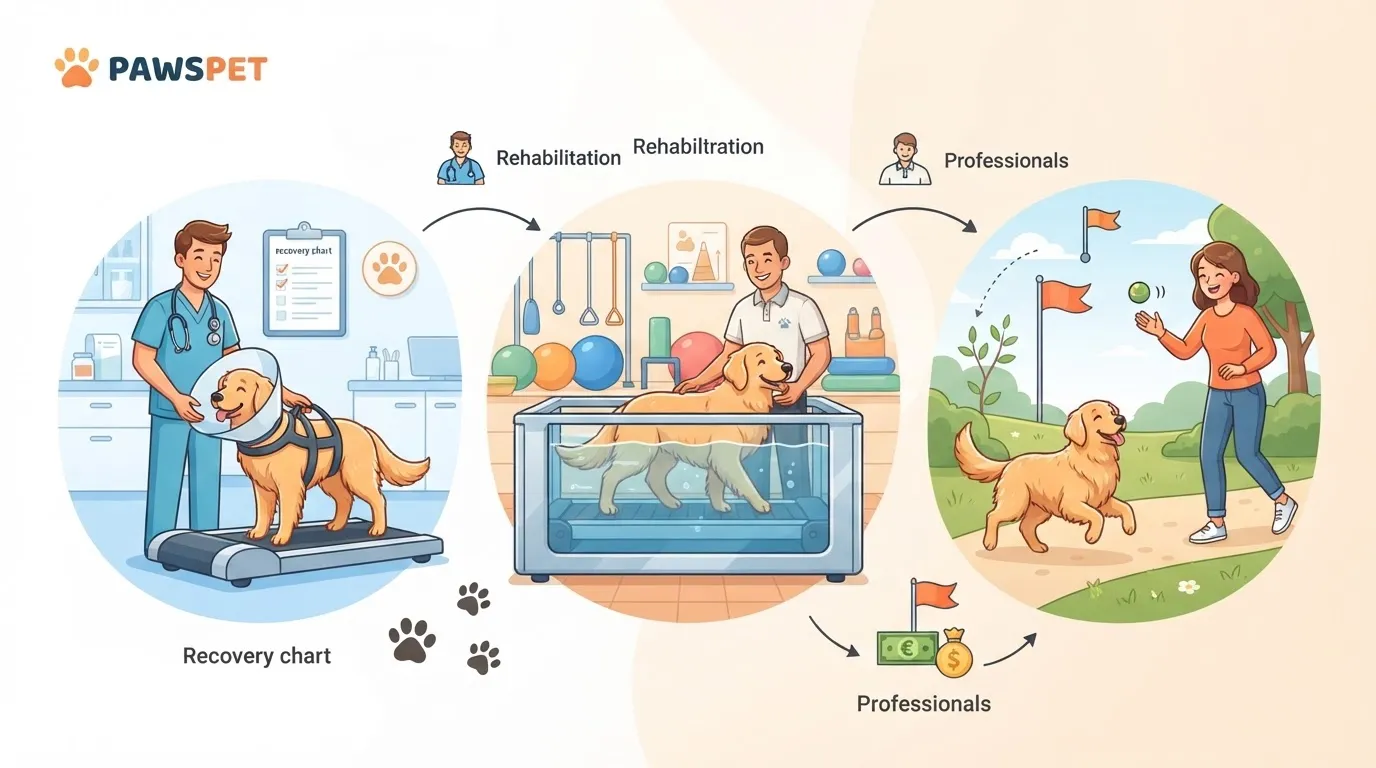
The process usually begins with a functional assessment. The professional gathers information about the surgery, the veterinarian’s instructions and the dog’s routine, then observes posture, weight-bearing, range of motion, muscle tone and the ability to perform simple movements.
Depending on the goals, activities and techniques may include:
- passive or assisted mobilisation, when indicated;
- controlled exercises for balance and weight-bearing;
- short, gradual walks on suitable surfaces;
- water-based work or an underwater treadmill, when appropriate;
- manual techniques and home exercise programmes;
- advice to reduce slipping, jumping and sudden movements at home.
Sessions should be adapted to the animal’s response. A tired, painful or frightened dog will not benefit from prolonged exercises: short, regular and correctly performed sessions are preferable. The professional may adjust the plan according to check-ups and observed progress.
At home, follow only the activities explained during the appointment. Avoid improvised massages, stretching or games intended to “make the dog move”, especially during the early post-operative stages.
Recovery times and daily management
There is no single recovery timeline for every dog. Recovery depends on the procedure performed, the dog’s condition before surgery, any other health problems and consistency in daily care. In some cases, the process may be brief; in others, it may require check-ups and gradual progression over a longer period.
To support your dog between sessions:
- Prepare safe spaces. Use non-slip mats, restrict access to stairs and sofas, and create a quiet resting area.
- Manage outings. Follow the duration, leash use and type of movement recommended by the veterinarian. Walks are not all the same: even a few minutes may be part of the therapy.
- Monitor weight. An appropriate weight reduces the load on the joints; ask your veterinarian for advice before making dietary changes or starting a specific diet.
- Record changes. Note appetite, energy, ability to stand, weight-bearing and reactions to exercises. Short videos of the dog’s gait, if requested by the professional, may be useful.
- Maintain a routine. Predictable schedules and calm activities can help the dog cope with temporary restrictions and appointments.
PawsPet reminders can help you organise check-ups, prescribed therapies and appointments while keeping health records in order.
Veterinary physiotherapist and costs: how to choose
When looking for a veterinary physiotherapist, first check that they work in collaboration with the dog’s attending veterinarian and request up-to-date clinical documentation. A responsible professional will not suggest a standard protocol without knowing the diagnosis, surgery and post-surgical restrictions.
During the initial contact, ask:
- what training and experience they have in animal rehabilitation;
- how they communicate with the veterinarian who performed the surgery;
- which realistic goals will be set;
- how progress will be reassessed;
- which exercises are planned for home and which signs require a phone call.
Dog physiotherapy costs vary depending on the city, facility, assessment length, number of sessions, equipment used and complexity of the case. Before starting, request a clear estimate that distinguishes the initial assessment, sessions, any additional treatments and follow-up checks. Consider the quality of clinical coordination, not only the price of each appointment.
FAQ about post-operative dog rehabilitation
When can physiotherapy begin after surgery?
Only when the veterinarian considers it safe. The right time varies according to the procedure, wound healing and the dog’s general condition.
Can I exercise my dog at home on my own?
Yes, but only with exercises recommended by the veterinarian or rehabilitation professional. Correct technique, frequency and intensity are just as important as the exercise itself.
How many sessions are needed?
It depends on the type of surgery, the dog’s response and the functional goals. The plan should be reassessed regularly rather than fixed rigidly from the beginning.
A well-organised recovery combines veterinary check-ups, a safe home environment and targeted activities. With PawsPet, you can keep appointments, reminders and useful information together to follow every stage of the process more consistently.