Cats naturally drink less than dogs, partly because their ancestors were accustomed to getting much of their fluids from prey. However, good hydration remains important for a cat’s daily well-being and helps support urinary health. Small changes to the water bowl, diet, and routine can encourage your cat to drink without forcing it.
How to tell whether your cat is really drinking too little
There is no single amount that is right for every cat: requirements can vary according to weight, age, diet, temperature, physical activity, and health conditions. A cat that mainly eats wet food, for example, may drink less from the bowl because it already gets some water from its meals.
Rather than comparing your cat’s behavior with that of other animals, look for changes from its normal routine. Pay attention to:
- a water bowl that remains at the same level for many days;
- very concentrated urine, small amounts of urine, or an unusually strong odor;
- more frequent or difficult urination, or urinating outside the litter box;
- reduced appetite, tiredness, or withdrawal;
- vomiting, diarrhea, or signs of dehydration after very hot days.
If your cat seems unable to urinate, repeatedly enters the litter box without producing urine, vocalizes, or appears distressed, contact a veterinarian immediately: urinary problems may require prompt assessment.
How to get a cat to drink with bowls and more appealing water
For many cats, drinking is not only about necessity: the way water is presented also matters. Some avoid deep bowls, materials that retain odors, or areas of the home that are too noisy.
Try these practical measures:
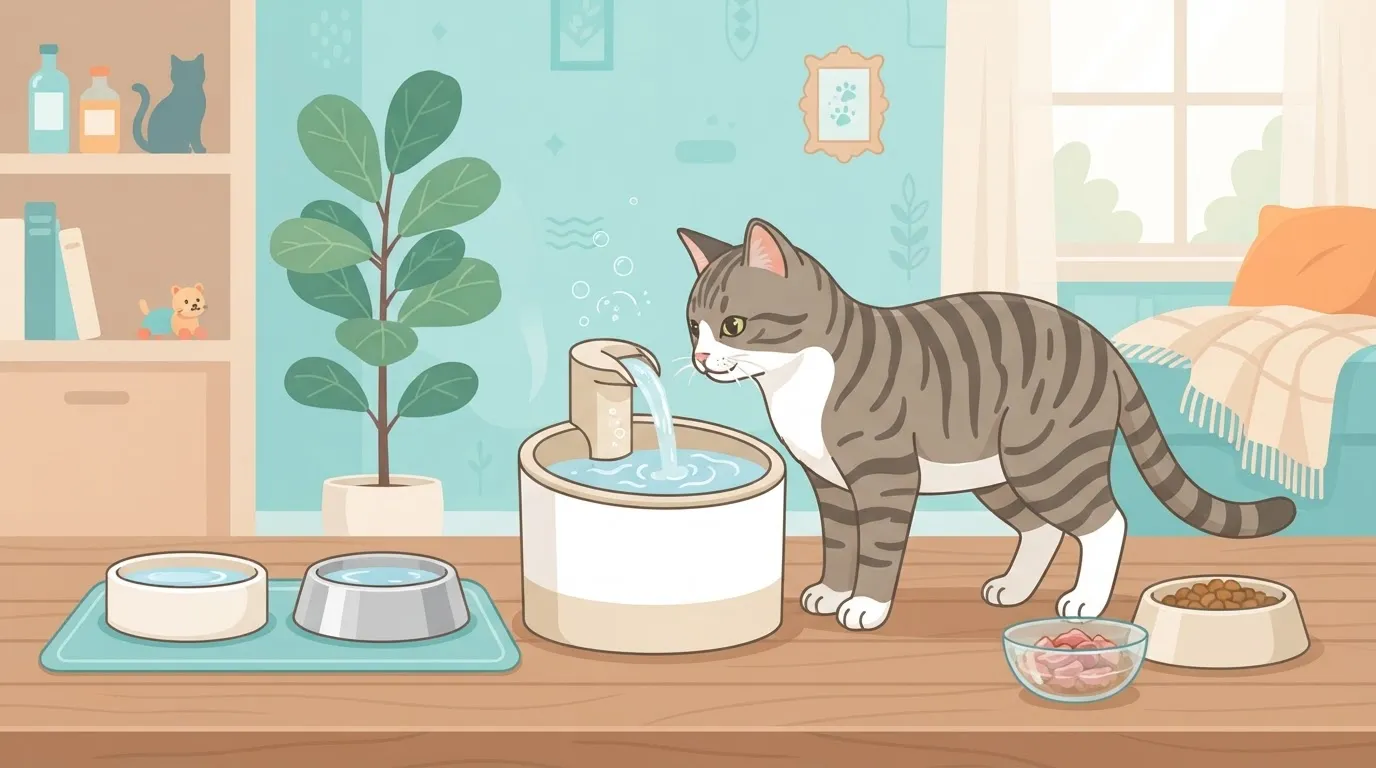
- Place several bowls around the home, especially if you live in a large or multi-level house.
- Keep water away from the litter box and food bowl. Many cats prefer to drink in a separate area.
- Choose wide, shallow bowls, which can help prevent the whiskers from repeatedly touching the sides.
- Choose materials that are easy to clean, such as ceramic, glass, or stainless steel.
- Change the water every day and wash the bowl regularly, making sure no detergent residue remains.
- Place water in quiet areas, away from appliances, busy walkways, or other animals that could make your cat feel intimidated.
It may help to try different locations for a few days and observe which bowl is used most often. Do not add ingredients or flavorings to the water without veterinary advice, especially if your cat follows a specific diet.
Cat water fountains and wet food: two hydration aids
A cat water fountain can stimulate curiosity and make water more appealing through movement. It is not essential for every cat, but it can be a good option for cats attracted to faucets or running water.
When choosing a fountain, consider:
- how easy it is to disassemble and clean;
- motor noise;
- base stability;
- filter availability and maintenance instructions;
- durable materials suitable for contact with food.
Even with a fountain, always keep at least one traditional bowl available. Some cats are initially wary of the noise or movement and may need time to get used to it.
Wet cat food is another useful way to increase fluid intake. You can introduce it gradually if it suits your cat’s nutritional needs, or add a small amount of water to wet food your cat already enjoys. Mix it well and proceed in small steps: a texture that is too watery may be rejected.
Before making dietary changes, or if your cat has known medical conditions or follows a veterinary diet, ask your veterinarian for advice.
Creating a stress-free monitoring routine
Cat hydration is best managed through simple, consistent observations rather than obsessively tracking every sip. Notice how often you refill the bowls, check the litter box, and monitor your cat’s overall appetite.
A useful routine may include:
- refreshing the water every day;
- scheduling regular cleaning of bowls and the fountain;
- checking the litter box while cleaning it;
- noting persistent changes in behavior;
- arranging periodic veterinary checkups, especially for older cats or cats with a history of urinary problems.
With PawsPet, you can use reminders for fountain maintenance, buying wet food, and veterinary appointments. Recording essential health information can also help you share more precise observations during a visit.
Cat hydration FAQ
My cat eats wet food but drinks very little: is that normal?
It can be, because wet food already contains a significant amount of water. Still, monitor the litter box, appetite, and any sudden changes in habits.
Can I give my cat tap water?
It depends on the water quality in your area and your veterinarian’s advice. In general, the most important thing is to offer water that is fresh, clean, and acceptable to your cat.
How long does it take for a cat to use a water fountain?
Some cats try it immediately, while others take several days. Place it next to the usual bowl and do not remove the alternative until you see that your cat uses the fountain regularly.