Choosing the best cat food is not just a matter of brand or price: it affects health, weight, the prevention of urinary problems, and your kitty’s everyday well-being.
Dry food or wet food? How many times a day should a cat eat? How should you adjust things if your cat is overweight or keeps asking for food? And which mistakes are best avoided so you don’t create habits that are hard to manage?
In this article, we’ll look at:
- pros and cons of dry food and wet cat food
- how to build a balanced diet (dry, wet, or mixed)
- how to tell whether your cat is eating too much or too little
- common cat-feeding mistakes and how to avoid them
- a few practical tips for using technology (like the PawsPet app) to better manage meals, weigh-ins, and checkups.
1. The Basics of Cat Nutrition
1.1 Cats Are Obligate Carnivores
Unlike dogs, cats are obligate carnivores. This means they need:
- a high intake of good-quality animal protein
- certain essential nutrients found almost exclusively in animal tissue (for example taurine, preformed vitamin A, arachidonic acid)
- very few carbohydrates compared with a typical “human” diet.
That’s why, in the best cat food, the first ingredients on the label should ideally be:
- fresh or dehydrated meat or fish
- not mostly grains, plant by-products, or sugars.
1.2 Energy Needs and Ideal Weight
Every cat has different needs depending on:
- age
- current weight and ideal weight
- activity level (quiet indoor cat vs. cat that goes outside a lot)
- physiological status (neutered, intact, pregnancy, nursing)
- any health conditions.
Broadly speaking:
- a neutered indoor adult cat tends to consume fewer calories
- leaving too many kibble available all the time (“free feeding”) is one of the main reasons cats become overweight.
2. Dry Cat Food: Benefits, Limits, and How to Choose It
Cat nutrition with dry food is very common, mainly because it’s convenient. But not all kibble is created equal.
2.1 Benefits of Dry Food
Dry cat food has several advantages:
- Convenient: stores well and is easy to portion
- Simple to manage: ideal if your cat likes to eat small amounts throughout the day
- Cost-effective: usually cheaper than high-quality wet food
- Teeth: chewing can provide a slight mechanical benefit, although it does not replace proper tartar prevention.
2.2 Drawbacks and Things to Watch
On the other hand, a diet based only on dry food has some risks:
- Low water content: dry food contains about 7–10% moisture, much less than wet food
- some cats make up for it by drinking, but many do not (cats naturally have a low thirst drive)
- this can increase the risk of urinary problems (crystals, cystitis, blockages), especially in predisposed cats
- if left out without control, kibble can promote overweight.
2.3 How to Choose Good Dry Cat Food
When choosing dry food:
- read the ingredient list
- consider the price-to-quality ratio
- take your cat’s specific needs into account (age, neutered, indoor, health conditions).
Some general criteria:
- among the first ingredients, you should ideally find:
- fresh or dehydrated meat/fish (chicken, turkey, salmon, beef, etc.)
- limit formulas where the top of the list includes only:
- grains, grain flours, plant by-products, sugars
- protein and fat levels should be appropriate:
- “sterilized” or “indoor” lines often have slightly reduced calories
- choose brands that clearly state ingredients (e.g. “20% dehydrated chicken” is better than “meat and derivatives”).
3. Wet Cat Food: Why It Matters
Wet cat food (cans, pouches, pâtés, chunks) is often underestimated, but it can be a major ally for health.
3.1 Benefits of Wet Food
- High water content: usually 70–80%
- helps daily hydration
- dilutes urine, supporting the prevention of some urinary issues
- High palatability: more fragrant and tasty
- useful for picky eaters or senior cats
- often provides greater satiety at the same calorie level, thanks to its volume.
In many cases, when it comes to dry or wet cat food, veterinarians now suggest:
3.2 Drawbacks and Things to Watch
- doesn’t keep as long once opened
- slightly more expensive than dry food, for the same quality level
- cats may become very picky about textures (pâté, mousse, chunks).
3.3 How to Choose Good Wet Food
As with kibble, the label is key:
- look for complete wet foods (“complete feed”) rather than complementary ones only (use those only as extras if they’re not complete)
- give priority to products with:
- a high percentage of meat or fish
- little or no grain
- be wary of products where:
- the actual meat content is very low
- sugars, caramel, or colorants appear.
4. Dry or Wet? How to Choose the Right Combination
The question “dry or wet cat food?” does not have a one-size-fits-all answer. It depends on:
- health status
- the cat’s preferences
- the owner’s lifestyle
- the vet’s advice.
4.1 Possible Feeding Plans
-
Dry food only
- pros: convenient, lower cost
- cons: little water, greater risk of portioning mistakes, tendency toward overweight if not controlled.
-
Wet food only
- pros: excellent hydration, good satiety, often great for urinary health
- cons: higher cost, storage management, some cats prefer crunching.
-
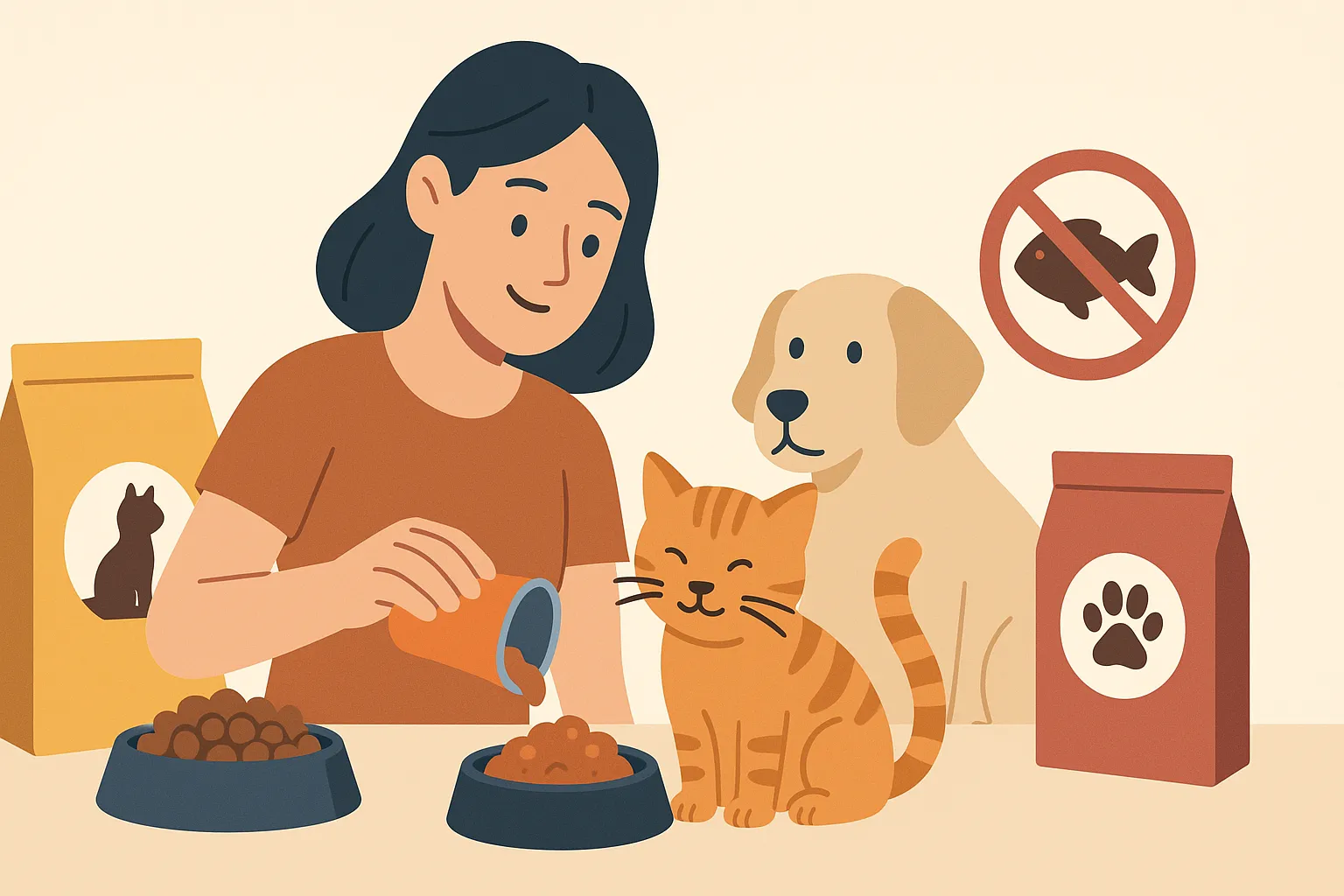
Mixed feeding (dry + wet)
- often the most balanced solution:
- one or two portions of complete wet food per day
- a carefully measured amount of kibble.
- often the most balanced solution:
4.2 Practical Daily Example (Adult Neutered Cat, 4 kg)
Amounts should always be adjusted according to each product’s instructions and your vet’s advice, but an indicative example could be:
- morning: 1/2 serving of complete wet food (for example 40 g if the can is 80 g)
- afternoon/evening: 1/2 serving of wet food + a measured portion of kibble (for example 30–40 g, depending on needs)
Or:
- wet food in the morning
- kibble divided into 2–3 small portions during the rest of the day.
5. How Many Times a Day Should a Cat Eat?
One of the most common questions is exactly this: how many times a day should a cat eat?
5.1 Kitten
- from 2 to 6 months: 3–4 meals a day
- small stomach, high energy needs
- best to use a specific kitten food, richer in energy, calcium, and nutrients.
5.2 Adult Cat
- generally, 2–3 meals a day is a good baseline
- many cats prefer small, frequent meals: in nature, cats would hunt several times a day for small prey
- you can therefore:
- split the daily kibble ration into 2–3 micro-portions
- offer wet food in 1–2 fixed moments.
5.3 Senior Cat
- it may help to increase meal frequency (smaller portions more often)
- consider softer textures (mousse, pâté) if dental issues are present
- always under veterinary supervision, including for possible kidney or special diets.
6. Overweight Cats: Diet, Signs, and Management
The overweight cat is very common today, especially among neutered indoor cats with little activity. Overweight is not just a cosmetic issue: it increases the risk of:
- diabetes
- joint problems
- liver disease
- reduced life expectancy.
6.1 How to Tell if a Cat Is Overweight
Beyond the number on the scale, there are a few signs:
- from above: you can barely see the waist (a slight narrowing behind the ribs)
- by touch: it’s hard to feel the ribs with light pressure
- a very full, swinging belly.
Your veterinarian can use a Body Condition Score (BCS), a scale for assessing overweight.
6.2 Basic Principles of a Diet for an Overweight Cat
Never put your cat on a diet drastically, and always involve your vet, especially if the cat is very overweight: cutting calories too abruptly can cause serious problems (such as hepatic lipidosis).
In general:
- gradually reduce calorie intake, under veterinary guidance
- if needed, switch to a specific food for neutered or light cats
- prefer feeding plans that increase satiety:
- more wet food or foods with higher water and fiber content
- avoid constant snacks between meals.
6.3 How to Monitor Weight and Progress
- weigh your cat regularly (for example every 2–4 weeks)
- note the weight, type of diet, and any behavior changes.
With PawsPet, you can:
- log the weight at each check
- attach photos (useful for seeing body changes over time)
- set reminders for weigh-in days and vet checkups.
7. Common Cat-Feeding Mistakes (and How to Avoid Them)
Many problems can be prevented by avoiding a few common mistakes.
7.1 Leaving Endless Kibble Out All Day and Night
Many cats, if they always have kibble available, end up:
- eating out of boredom
- exceeding their calorie needs
- gaining weight slowly, without us noticing.
What to do instead:
- measure kibble with a scale or measuring cup (following the label and your vet’s advice)
- divide the ration into 2–3 meals
- if you want to leave something “available,” make it only part of the daily ration, not an unlimited bowl.
7.2 Changing Food Too Often and Too Quickly
Cats are sensitive to diet changes: switching brand or type (dry/wet, flavor, composition) too abruptly can cause:
- gastrointestinal issues (vomiting, diarrhea)
- refusal of the new food.
How to change food properly:
- gradual transition over 7–10 days:
- Days 1–3: 75% old, 25% new
- Days 4–6: 50% and 50%
- Days 7–10: 25% old, 75% new
- then only the new food
- monitor stools and behavior; if problems arise, check with your veterinarian.
7.3 Giving Human Food Too Often “Because They Ask”
Bits of ham, cheese, leftover seasoned meat: cats love them, but they can:
- be too salty or fatty
- unbalance the diet
- create persistent begging habits (constant meowing at the table).
It’s best to severely limit human food and, if you want to give something extra:
- choose good-quality cat treats
- count them in the daily calorie total.
7.4 Ignoring Water and Bowls
Good cat nutrition is not just about food, but also about:
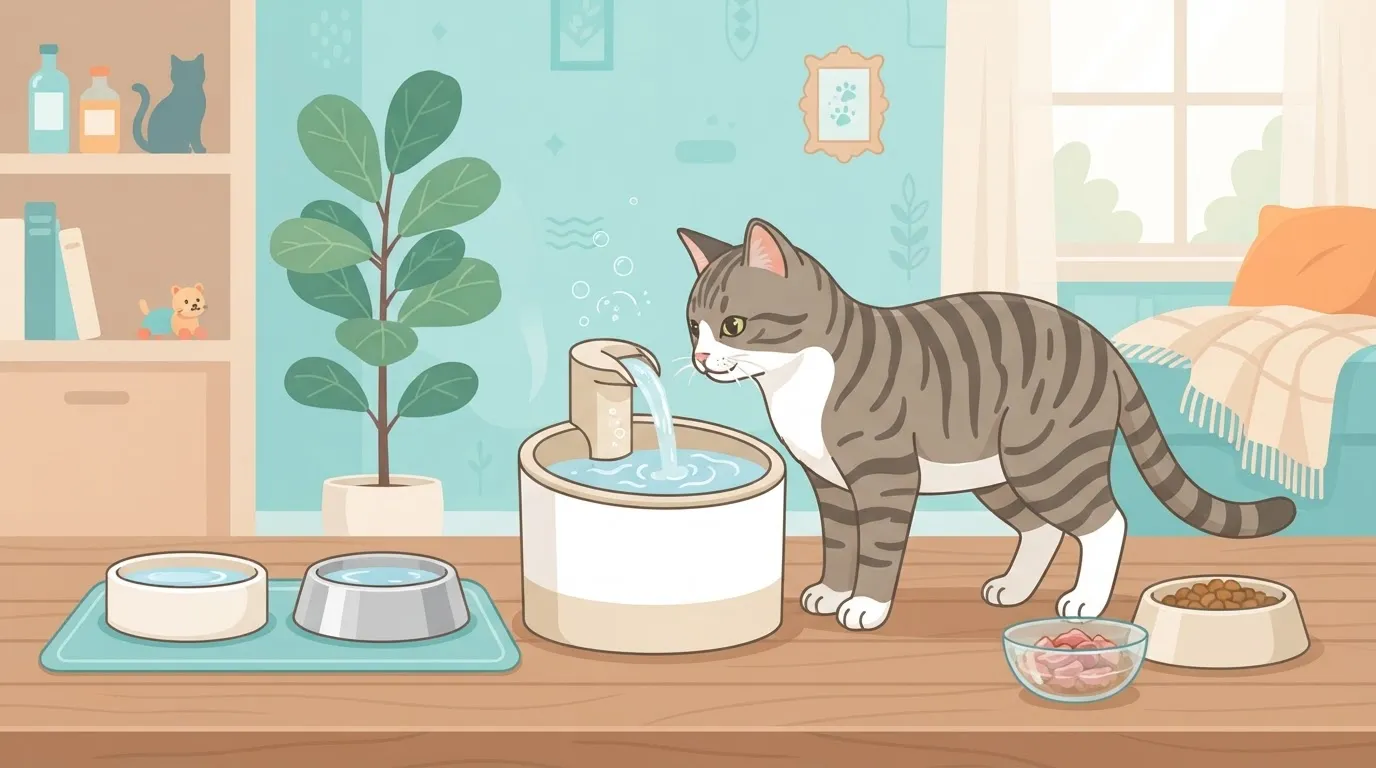
- fresh, clean water always available
- multiple bowls around the house, especially if there are several cats
- many cats drink more if the water is flowing (fountain/water feature).
8. Practical Tips for a Healthy Feeding Routine
8.1 Daily Checklist
Every day, check:
- Did they receive all planned meals (dry and/or wet)?
- Were the portions measured, not estimated by eye?
- Is the water fresh and clean?
- Did the cat eat with appetite, without vomiting or unusual stools?
8.2 Monthly Checklist
At least once a month:
- weigh your cat and note the value
- check coat condition (shiny, without excessive dandruff)
- observe behavior and activity (more lethargic, hungrier than usual?)
- verify whether you’re giving too many snacks without realizing it.
9. When to Contact the Vet About Cat Nutrition
Contact your vet if you notice:
- a sudden, marked decrease or increase in appetite
- noticeable weight loss or gain in a short time
- recurring vomiting or diarrhea
- changes in drinking and urination habits (darker or lighter urine, different frequency, difficulty urinating)
- lethargy, dull coat, poor grooming.
In particular, if you’re thinking about:
- radically changing the type of diet (for example from dry only to wet only)
- starting a weight-loss diet for an overweight cat
- using homemade foods or special diets (BARF, home-cooked, etc.), it’s essential to discuss it with a veterinary nutritionist.
10. Conclusion: Building a Good Diet for Your Cat
To sum up the key points of proper cat nutrition:
- there is no single answer to dry vs. wet food: often the best solution is a thoughtful combination
- wet food greatly helps hydration and urinary tract health
- dry food is practical, but it must be carefully portioned
- avoid endless bowls of dry food and constant snacks
- weigh your cat regularly to prevent or manage overweight
- consult your vet for personalized feeding plans.
If you want to better manage your cat’s feeding routine:
- note the brand, flavor, and amount of dry and wet food on your phone
- use an app like PawsPet to keep feeding, weight, visits, and treatments in one place, so you always have an organized history to show your vet.
Taking care of your cat’s nutrition means taking care, every day, of their health and quality of life. Small daily habits can make a big difference over the years.
FAQ on Cat Nutrition, Dry Food, and Wet Food
1. Is dry food or wet food better for cats?
It depends on the individual cat and their health status. In general:
- wet food is excellent for hydration and urinary health
- dry food is convenient and more affordable
- mixed feeding (dry + wet) is often a good middle ground.
Cats with urinary issues or those that drink little can benefit greatly from a larger share of wet food in the diet, always under veterinary guidance.
2. How many times a day should an adult cat eat?
A healthy adult cat can eat 2–3 times a day. Many owners choose:
- 1–2 portions of wet food
- a kibble ration divided into 2–3 small meals.
The important thing is that the total daily amount matches the cat’s needs and that there are no excessive snacks or unlimited kibble.
3. How can I tell which is the best cat food?
There is no single “best cat food” for every cat, but you can guide your choice like this:
- choose products with clear ingredients, where meat/fish appears near the top
- look for specific lines (kitten, neutered, indoor, senior)
- avoid foods with lots of added sugar or colorants
- watch how your cat does: appetite, stools, coat, energy.
For cats with health conditions or special needs, it’s essential to follow your vet’s advice.
4. My cat is overweight: can I just give less food?
Reducing the amount a little may be necessary, but doing it without a plan or too drastically can be dangerous, especially if the cat is very overweight. It’s always better to:
- have the vet assess the ideal weight and overall health
- agree on a feeding plan (food type and portions)
- monitor weight over time, adjusting the ration gradually.
A well-managed weight-loss diet is safer and more effective than a rushed DIY approach.