Caring for a dog or cat doesn’t just mean stepping in when they’re sick, but staying one step ahead with a solid prevention plan: routine checkups, vaccinations, blood and stool tests, dental checks, weight monitoring, and behavior assessment.
Many pet owners ask themselves:
- How often should I take my dog or cat to the vet for a checkup?
- Which tests should be done every year?
- When are blood tests needed for dogs and cats?
- How much do annual veterinary checkups usually cost?
In this guide, you’ll find a practical prevention plan for dogs and cats, with:
- an overview of the recommended annual checkups by age group
- a focus on visits, tests, vaccines, teeth, weight, and parasites
- indications of average estimated costs
- tips for organizing your pet’s health plan with the help of technology (such as apps and reminders).
1. Why the annual checkup for dogs and cats is essential
Dogs and cats tend to hide pain and discomfort. By the time symptoms become obvious, the illness is often already at an advanced stage.
An annual veterinary checkup makes it possible to:
- catch early-stage conditions (kidney, liver, heart disease, diabetes, tumors);
- keep weight, muscle mass, and joints under control;
- check oral health (gingivitis, tartar, loose teeth);
- update vaccination and parasite prevention plans;
- review diet and lifestyle (exercise, play, indoor management);
- update protection against internal and external parasites.
For senior pets or animals with chronic conditions, checkups may become twice a year.
2. How often dogs and cats should see the vet
2.1 Puppies and kittens (0–12 months)
At this stage, multiple visits are expected for:
- core vaccinations and boosters;
- growth monitoring;
- owner education (feeding, home care, socialization).
Usually there are several appointments between 2 and 6 months, then a checkup around one year of age, which becomes the first real “annual checkup.”
2.2 Adults (1–7 years for dogs, 1–8 years for cats)
For adult dogs and cats, the recommendation is:
- 1 veterinary checkup per year
- vaccination updates, if needed;
- a full physical exam;
- evaluation of basic tests (blood, stool, urine, depending on the case).
2.3 Senior and geriatric pets
Dogs:
- small/medium breeds: senior from 7–8 years old;
- large breeds: senior from 6 years old.
Cats:
- senior from 8–9 years old, geriatric from 12 years old.
For senior dogs and cats, it is advisable to have:
- 1 visit every 6–12 months, often with annual blood tests (or every 6 months if there are known issues);
- more frequent monitoring in case of chronic diseases (kidney, heart, endocrine, etc.).
3. What an annual dog/cat checkup includes
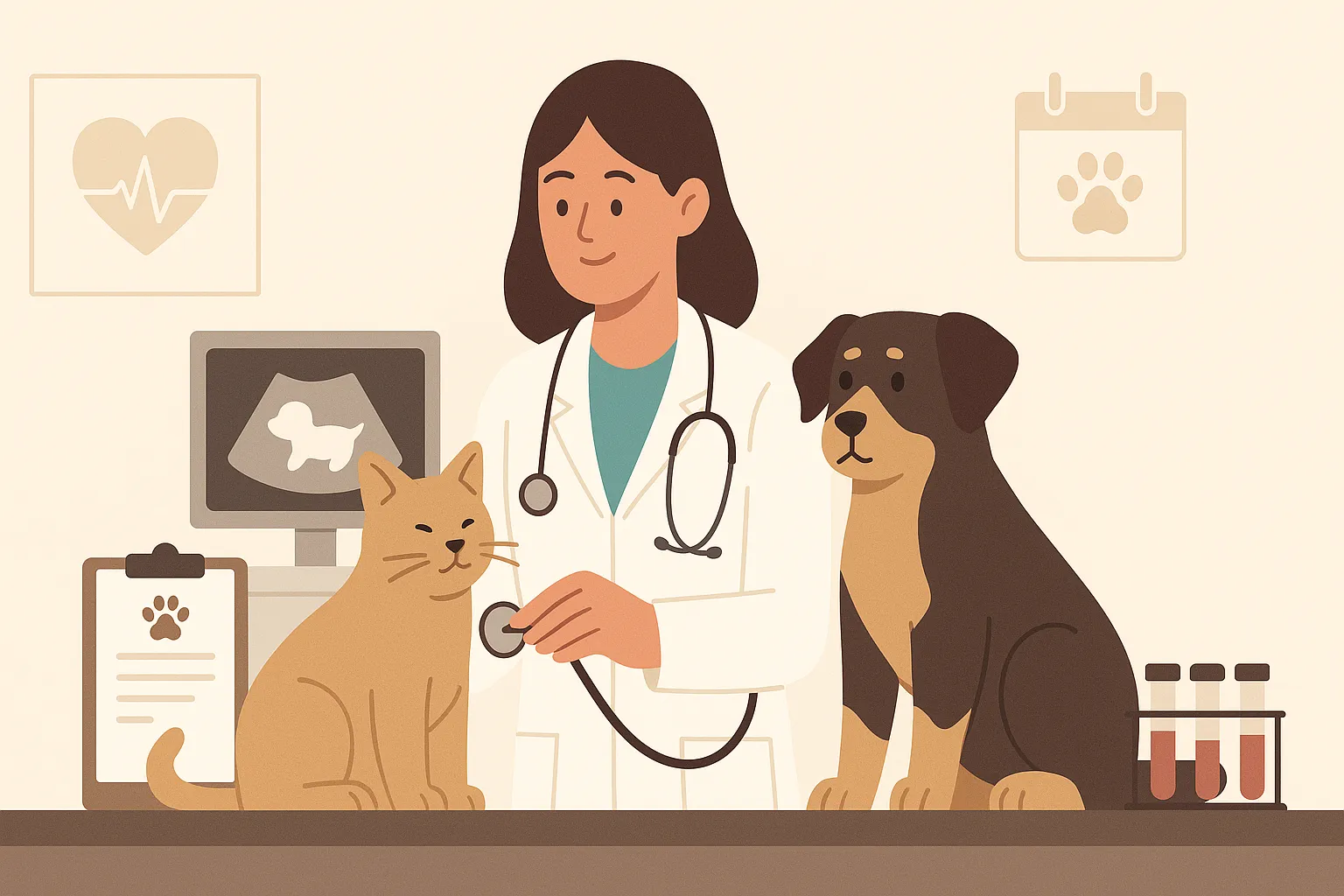
3.1 Full physical examination
During a well-performed veterinary checkup, the professional will usually:
- weigh the animal and assess body condition (fat, muscle);
- listen to the heart and lungs with a stethoscope;
- palpate the abdomen, lymph nodes, muscles, and joints;
- inspect the eyes, ears, mouth, skin, and coat;
- check for possible lumps, pain, stiffness;
- ask about:
- appetite and drinking;
- stool and urination;
- any vomiting;
- activity, play, sleep;
- behavior changes.
This exam is often the core of the dog/cat checkup and may already indicate whether further testing is needed.
Average cost of a checkup visit:
- dog/cat: €30–60, depending on the city, the clinic, and the professional’s experience.
(These are approximate figures and can vary widely.)
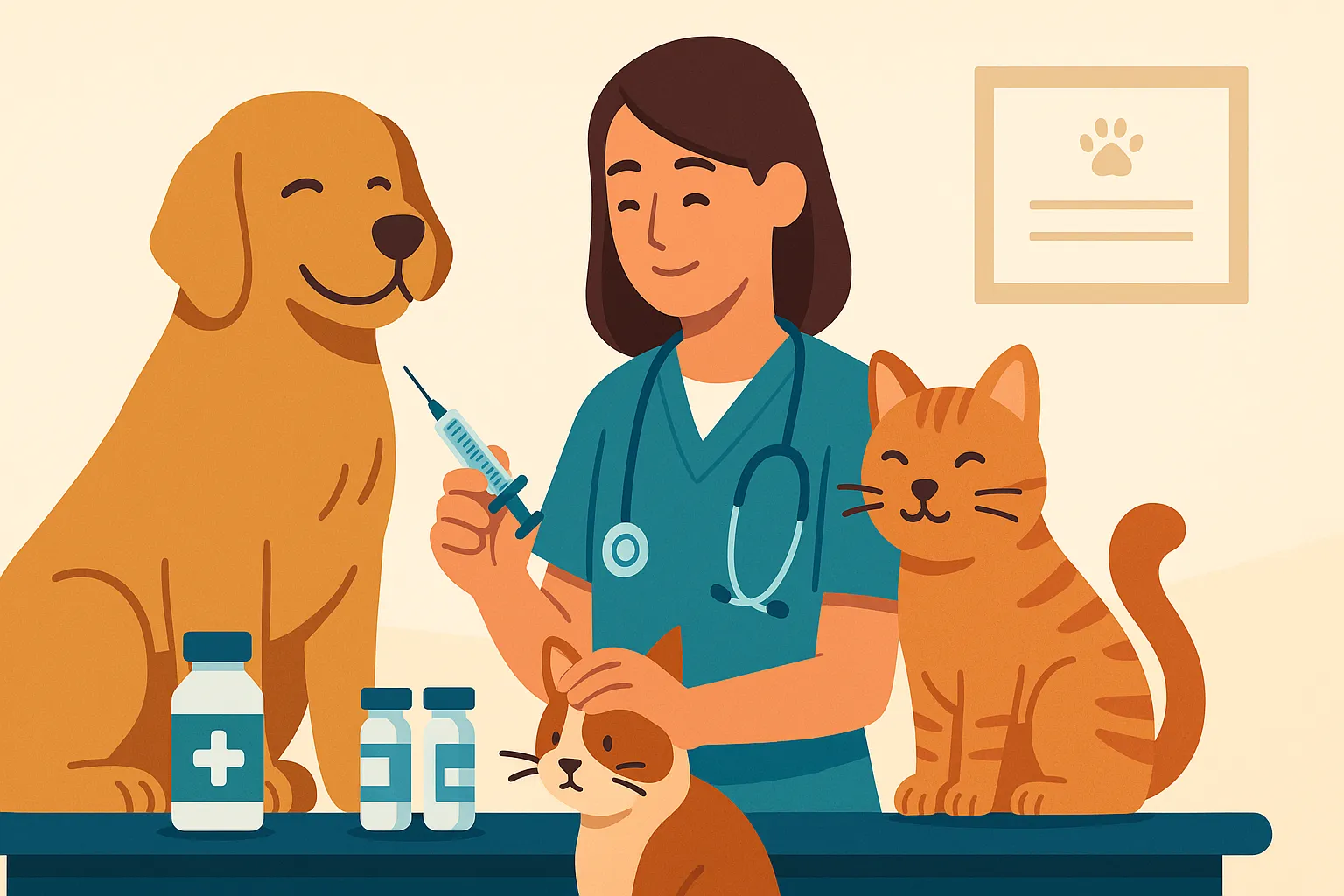
4. Vaccines: annual or three-year boosters?
Vaccines are part of annual veterinary care, but the administration is not always yearly: in many cases, boosters are every three years or follow personalized protocols.
4.1 Dog
Main vaccinations:
- Distemper, Parvovirus, Infectious Hepatitis (core)
- Leptospirosis
- Possible non-core vaccines:
- rabies (mandatory in some countries, recommended in certain situations);
- kennel cough;
- leishmaniasis (in risk areas, based on veterinary advice).
The modern approach is:
- complete the puppy vaccine series,
- then give periodic boosters (for some diseases, even every 3 years), always considering the dog’s health status and lifestyle.
4.2 Cat
Main vaccinations:
- Feline panleukopenia;
- Feline calicivirus and viral rhinotracheitis (upper respiratory complex);
- possible FeLV (feline leukemia virus) for at-risk cats (outdoor lifestyle, contact with other cats).
In cats too, the veterinarian may recommend boosters that are not always yearly, especially for indoor-only cats.
Average cost of vaccine + visit:
- dog/cat: €40–80, depending on the vaccine type and the clinic.
5. Blood tests: when should dogs and cats have them?
Many owners ask: “When should dogs and cats have blood tests?”
The answer depends on:
- age;
- health status;
- any symptoms;
- medications being taken (e.g., long-term treatments).
5.1 Healthy adult dog/cat
For an apparently healthy adult dog or cat, many veterinarians recommend:
- a complete blood and biochemistry profile about every 1–2 years,
to assess:- CBC;
- kidney function (urea, creatinine, sometimes SDMA);
- liver function (ALT, AST, ALP, bilirubin, etc.);
- blood sugar (glucose);
- electrolytes;
- any specific markers at the veterinarian’s discretion.
This helps build a personal health baseline for each pet, useful for future comparisons.
5.2 Seniors, animals with conditions, or on treatment
For senior dogs and cats or those with known diseases (kidney, heart, endocrine, etc.):
- annual blood tests,
- or even every 6 months in the case of chronic disease or potentially nephrotoxic/hepatotoxic therapies.
5.3 Average blood test costs
As a rough guide:
- basic profile: €40–70
- full profile with more parameters: €70–120 (or more, if very extensive)
Prices vary greatly depending on:
- the city/area;
- whether the lab is in-house or external;
- the complexity of the test panel.
6. Stool tests and intestinal parasites
A stool test is an important part of dog health prevention and cat care, especially for animals that:
- live outdoors or go outside;
- visit dog parks, cat colonies, boarding facilities;
- live with children, seniors, or immunocompromised people (greater attention to zoonoses).
6.1 Recommended frequency
In general:
- at least 1 stool test per year for dogs and cats;
- more often (2–3 times a year) for:
- puppies/kittens;
- animals that go out frequently;
- environments where feces from other animals may be present.
The test can detect:
- nematodes (roundworms);
- cestodes (tapeworms);
- coccidia and other protozoa;
- sometimes eggs or larvae of specific parasites.
6.2 Average stool test cost
- around €15–40, depending on the type of test and the lab.
7. Urinalysis and urinary tract monitoring
A urine test is often underestimated, but it is essential for:
- monitoring kidneys and urinary tract;
- identifying:
- infections;
- crystals and stones;
- metabolic problems (e.g., diabetes).
It is especially important in:
- cats, especially males (predisposed to urinary blockages);
- senior dogs and cats;
- animals that drink or urinate a lot;
- cases of straining to urinate, blood in the urine, peeing outside the litter box or usual spot.
7.1 Recommended frequency
For healthy animals:
- 1 urine test every 1–2 years,
with more frequent checks for senior or at-risk pets.
7.2 Average urine test cost
- €20–50, depending on the parameters analyzed and whether a urine culture is needed (which is more expensive).
8. Teeth, gums, and oral hygiene
Oral health has a direct impact on the quality of life of dogs and cats.
Common problems:
- tartar;
- gingivitis;
- periodontal disease;
- loose or broken teeth;
- chronic pain (the animal keeps eating, but suffers).
8.1 Annual dental check
During annual veterinary checkups, it is a good idea to:
- assess tartar and plaque;
- look for redness or bleeding gums;
- check breath (bad breath often means disease);
- inspect chipped teeth, fractures, and retained baby teeth in young animals.
In many cases, the veterinarian may suggest:
- scaling under anesthesia (professional dental cleaning);
- possible extraction of damaged teeth.
8.2 How often to do a dental cleaning
The frequency depends on:
- individual predisposition;
- size (small-breed dogs are often more affected);
- diet;
- at-home oral hygiene (brushing, dental chews).
For some animals:
- a dental cleaning every 2–3 years may be enough;
for others, especially small dogs or predisposed cats, it may be needed more often.
8.3 Average cost of dental cleaning
Includes:
- anesthesia;
- professional cleaning;
- any pre-anesthetic tests (often recommended or required).
Estimated range:
- €150–400 or more, depending on:
- number of teeth extracted;
- pre-op tests;
- clinic type (private practice, veterinary hospital, etc.).
9. Weight control and obesity prevention
Weight assessment is always part of a dog and cat checkup.
The veterinarian:
- records the weight;
- evaluates the BCS (Body Condition Score), meaning body condition:
- too thin;
- ideal weight;
- overweight;
- obese.
Obesity increases the risk of:
- arthritis;
- diabetes (especially in cats);
- heart and respiratory problems;
- liver disease;
- shorter life expectancy.
9.1 How to monitor weight at home
You can:
- regularly weigh the dog using:
- a bathroom scale (with or without the owner holding them, using the difference);
- for cats, use a pet scale or baby scale;
- record the weight month by month.
An app like PawsPet can help you:
- save weight values over time;
- add notes about diet and activity changes;
- have a trend chart that is useful during the veterinary visit.
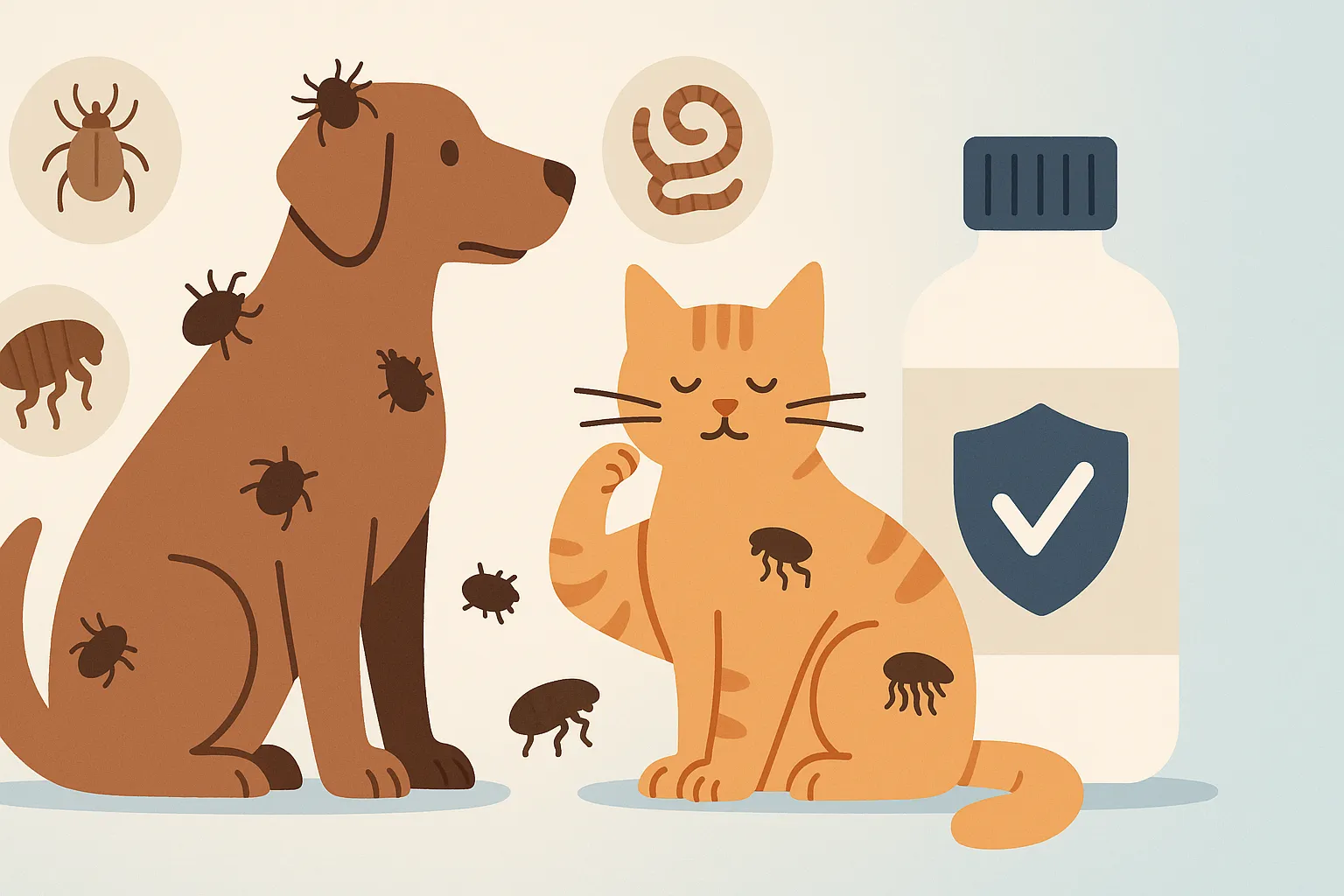
10. External parasites control (fleas, ticks, sand flies) and internal parasites
Parasite prevention is part of dog and cat health prevention plans.
10.1 External parasites
Main ones:
- fleas;
- ticks;
- sand flies (which transmit leishmaniasis in dogs);
- lice, mites.
Prevention tools:
- spot-on treatments;
- antiparasitic collars;
- chewable tablets;
- sprays and topical products.
Frequency and product choice depend on:
- geographic area;
- lifestyle (city/countryside, indoor/outdoor);
- specific risk (leishmania-endemic areas, etc.).
10.2 Internal parasites
These include:
- roundworms, hookworms, whipworms;
- tapeworms;
- intestinal protozoa (giardia, coccidia, etc.).
Periodic deworming can be:
- scheduled by the veterinarian;
- preceded by a stool test to determine which parasites need treatment.
11. Other checks to consider in the prevention plan
These are not all “mandatory” for every animal, but they may be suggested by the veterinarian based on age, breed, and medical history.
11.1 ECG, echocardiography, and X-rays
Useful in case of:
- suspected heart problems (murmur, coughing, fatigue);
- predisposed breeds (brachycephalic dogs, some cat breeds, etc.);
- pre-anesthetic screening in at-risk pets.
11.2 Abdominal ultrasound
Often recommended for:
- checkups in senior dogs and cats;
- suspected abdominal problems (liver, spleen, kidneys, pancreas, bladder).
11.3 Hormonal tests
Examples:
- T4, TSH for thyroid in dogs and cats;
- cortisol for suspected Cushing’s/Addison’s disease;
- other specific endocrine profiles.
12. Example annual checkup plan for dogs
12.1 Healthy adult dog (3–7 years old, medium breed, mixed indoor/outdoor life)
Once a year:
- full physical exam;
- vaccine boosters (according to the established protocol);
- parasite control check and yearly plan;
- dental, gum, and ear check;
- stool test;
- weight and nutrition assessment.
Every 1–2 years:
- basic blood tests;
- urine test (especially from 5–6 years of age onward, or on the veterinarian’s advice).
When needed:
- dental scaling;
- additional tests (X-rays, ultrasound, hormonal tests) if suspicions arise during the checkup.
13. Example annual checkup plan for cats
13.1 Indoor adult cat (3–8 years old, indoor only)
Once a year:
- routine physical exam;
- vaccine boosters (if needed based on lifestyle);
- assessment of weight, diet, exercise, and environmental enrichment;
- check teeth, gums, eyes, and ears;
- stool test (especially if raw food is introduced or there is contact with other animals).
Every 1–2 years:
- basic blood tests;
- urine test (highly recommended in cats to help prevent urinary issues).
For cats that also go outdoors:
- greater attention to:
- vaccination plan (including possible FeLV);
- external/internal antiparasitics;
- more frequent testing for infectious diseases.
14. How to organize the prevention plan in practice
14.1 Owner annual checklist
To make prevention easier, you can prepare an annual checkup checklist:
- General physical exam
- Vaccine review and updates
- Stool test
- Annual parasite prevention plan
- Dental and breath assessment
- Weight and body condition tracking
- Blood tests (if recommended by age or health status)
- Urine test (especially for senior or at-risk pets)
For senior pets:
- Kidney and liver function assessment
- Blood pressure check (if offered by the veterinarian)
- Any cardiac tests / abdominal ultrasound, if recommended
14.2 Using technology so you don’t forget checkups
Managing vaccines, visits, tests, and parasite prevention can become complicated, especially if you have more than one pet.
An app like PawsPet can help you:
- create a complete profile for your dog or cat (age, breed, conditions, medications);
- store vaccines, blood tests, visits, and reports, so they are always at hand;
- set reminders for upcoming checkups (vaccine booster, yearly stool test, checkup visit);
- keep track of:
- weight over time;
- special episodes (recurrent vomiting, appetite changes, unusual behavior);
- search for and contact veterinary clinics, grooming services, pet sitters, and other local services (marketplace section), making pet management easier.
15. Practical tips to save money without skipping prevention
- Plan ahead: if you know you’ll do vaccines + tests in March, you can spread out expenses over the year.
- Look into health packages: some clinics offer annual prevention plans with checkups, tests, and vaccines at a flat rate.
- Keep everything tracked: with a record (even through an app), the veterinarian may avoid redundant tests.
- Prevention is cheaper than treatment: many conditions, if diagnosed late, require costly and invasive therapies.
16. Frequently asked questions about checkups and dog/cat health prevention
How often should a dog and cat have a full checkup?
For most healthy adult dogs and cats, at least one veterinary checkup per year is recommended, including a physical exam and, if indicated, basic tests (stool, blood, urine).
For senior pets or those with chronic conditions, a checkup every 6 months is often advisable, with targeted tests depending on the illness.
How much does an annual vet checkup usually cost?
It depends on how many tests are included:
- just a checkup visit: around €30–60;
- visit + vaccine: €40–80;
- visit + blood tests + stool test + urine test: the total can reach €100–200 or more, depending on the type of tests, the city, and the clinic.
These are approximate figures: always ask your veterinarian for a personalized estimate.
When are blood tests mandatory for dogs and cats?
Blood tests become especially important:
- before surgical anesthesia, especially in non-young animals;
- when symptoms are present (weight loss, vomiting, increased thirst/urination, lethargy…);
- in senior pets (annual or semiannual monitoring);
- during long-term treatments, to monitor effects on the liver and kidneys.
For a healthy adult dog or cat, many veterinarians suggest a full profile every 1–2 years to establish a reference baseline.
What happens if I skip my dog’s or cat’s annual checkups?
If you skip annual checkups:
- you may miss diseases in their early stages, when they would be easier to manage;
- your pet may develop dental problems, obesity, kidney disease, or heart disease without obvious signs;
- you risk having outdated vaccines and parasite prevention, increasing exposure to infections and parasites.
An annual visit is an investment that helps extend and improve your dog’s or cat’s quality of life.
17. Conclusion: build your personalized prevention plan
A good prevention plan for dog and cat health is not a rigid list of tests, but a personalized path that changes with:
- age;
- lifestyle;
- past illnesses;
- geographic area;
- your veterinarian’s recommendations.
In short, aim for at least:
- 1 annual checkup visit;
- updated vaccines and antiparasitic protection;
- stool test once a year (or more often if at risk);
- blood and urine tests according to age and your veterinarian’s advice;
- regular checks of teeth, weight, and behavior.
To make everything easier, you can use a digital assistant:
- register your pet on PawsPet,
- store visits, vaccines, reports, and tests,
- set automatic reminders for upcoming checkups,
- find local pet-friendly professionals and services near you.
That way, prevention becomes an organized routine, and you can spend the rest of your time on what matters most: living well with your dog or cat.