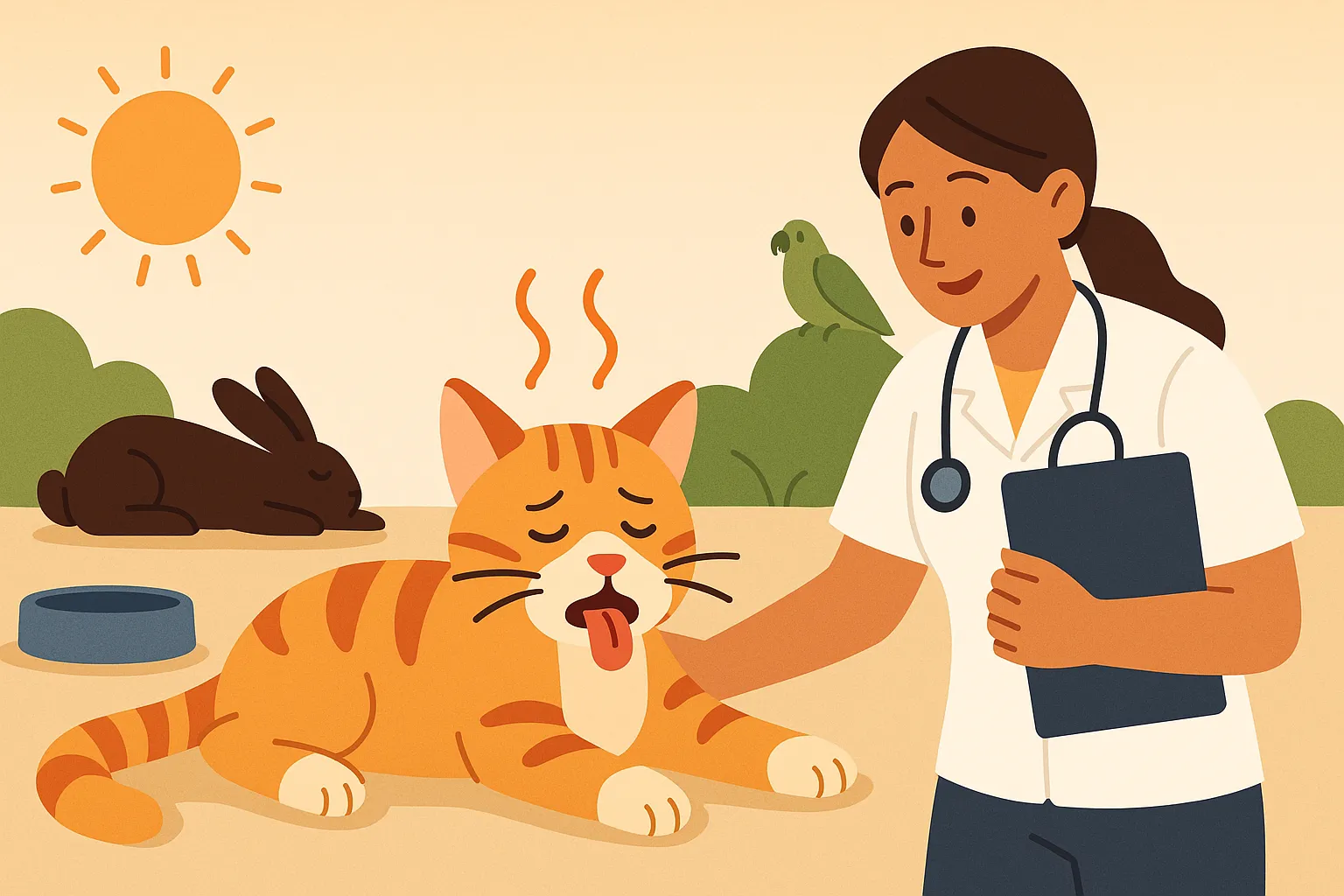
When intense heat arrives, cats can suffer greatly from high temperatures, even if they often try to hide it. Heatstroke in cats is a real emergency: it can progress quickly and, if not recognized and treated in time, can seriously endanger the animal’s life.
In this article we’ll look clearly and practically at:
- the symptoms of heatstroke in cats;
- what to do right away (and what to avoid) if you suspect heatstroke;
- how to prevent heatstroke, especially in summer or in very hot environments;
- when it is essential to take your cat to the vet without waiting.
What Heatstroke in Cats Is
Heatstroke (hyperthermia) is a rapid and excessive rise in a cat’s body temperature beyond what its body can safely regulate.
- Normal cat temperature: around 38–39.2 °C.
- With heatstroke, the temperature can rise above 40–41 °C.
When this happens, the body’s natural thermoregulation mechanisms are no longer enough: organs begin to suffer, blood circulation is impaired, and cardiac, neurological, liver, kidney, and intestinal damage can occur.
Unlike dogs, cats pant much less under normal conditions and tend to hide discomfort: this makes heatstroke more insidious and harder to notice right away.
Why Cats Struggle With Heat: How They Cool Down (Only a Little)
To understand a cat that is too hot in summer, it helps to remember that:
- They do not sweat like humans: they have very few sweat glands (mainly in the paw pads).
- They are not big “pants”: panting (breathing with the mouth open) is rare and, if it appears, it is already a sign of significant distress.
- They mainly cool themselves by:
- evaporation of saliva during grooming;
- seeking cool spots (tiles, shaded surfaces);
- reducing activity to use less energy.
In an environment that is too hot, closed, humid, or lacking airflow, these systems are not enough: the risk of heatstroke in cats rises quickly.
Main Causes of Heatstroke in Cats
Heatstroke does not depend only on air temperature, but also on humidity, ventilation, sun exposure, and the cat’s condition.
The most common causes are:
1. Closed, Poorly Ventilated Spaces
- A cat left in a car even for a few minutes.
- A cat left in small rooms, porches, attics, or enclosed balconies with windows, without shade or air.
- Carriers exposed to the sun or placed in very hot places (cars, trains, waiting rooms).
2. High Temperatures at Home
- A very hot home, with blinds or curtains open and direct sunlight.
- Lack of cool areas (accessible tiled floors, darker rooms).
- Poor ventilation or no air conditioning during periods of extreme heat.
3. Direct Sun Exposure
- Cats that like to sleep on balconies, windowsills, or rooftops in the sun without shade.
- Environments such as sunrooms, covered porches, or home greenhouses.
4. Physical or Medical Conditions
Some cats are more vulnerable to heatstroke:
- Brachycephalic cats (short-nosed, e.g. Persian, Exotic Shorthair): narrower airways, less efficient breathing.
- Very young kittens and very old cats.
- Overweight or obese cats.
- Cats with heart, respiratory, or kidney problems.
- Cats with a very thick or long coat that is not properly maintained.
5. Stress and Exertion
Even though cats are generally less “athletic” than dogs:
- Long periods of intense play in a very hot and humid environment.
- Severe stress situations (travel, moving house, new household companions) in hot places, which increase breathing and energy consumption.
Heatstroke Symptoms in Cats: What to Watch For
Recognizing the symptoms of heatstroke in cats quickly is essential. Here are the most important signs, which may appear together or in sequence.
Early Signs (Warning, Alarm)
- Very lethargic cat, less responsive than usual.
- Constantly looking for cooler places, but seeming unable to find relief.
- Faster and deeper breathing than normal.
- Slightly increased salivation.
- Red tongue and gums.
- Very hot paws and ears to the touch.
More Severe Symptoms
If the temperature keeps rising, the following may occur:
- Obvious open-mouth panting.
- Excessive drooling.
- Tremors or muscle weakness.
- Difficulty standing, unsteady gait.
- Vomiting and/or diarrhea, sometimes with traces of blood.
- Very red or, conversely, pale gums.
- Rapid heart rate (tachycardia).
Critical Phase (Absolute Emergency)
At this stage, heatstroke can become fatal if not treated:
- Collapse (the cat falls and cannot get back up).
- Loss of consciousness or severe confusion.
- Possible seizures.
- Weak or irregular breathing.
- Very high body temperature (above 40–41 °C, if measured).
What to Do Right Away If You Suspect Heatstroke in a Cat
If heatstroke symptoms in cats are present, acting in the first few minutes can make all the difference, but it is essential to do it the right way.
1. Immediately Move the Cat Away From the Heat Source
- Bring the cat to a cool, shaded, and well-ventilated area.
- If you are in a car, turn on the air conditioning but do not aim the airflow directly at the cat.
- Avoid fans that are too close and too strong: gentle, indirect air is better.
2. Contact the Vet Immediately
- Calmly explain:
- the symptoms you see;
- how long they have been present;
- the type of environment the cat was in (car, balcony, closed room, etc.).
- Ask whether you should:
- start gradual cooling at home/on the way;
- go directly to the clinic (often the best choice).
Many veterinarians can give you specific instructions by phone while you get ready to leave.
3. Cool the Cat, but Very Carefully
The goal is to lower the temperature gradually, not to cause thermal shock.
You can:
- Dampen with cool water (not ice-cold):
- paws;
- inner thighs;
- belly;
- neck area and behind the ears.
- Use wet, well-wrung cloths: place them on the cat and change them often so they stay cool.
- If the cat is alert and cooperative:
- you can run wet hands over the coat to help evaporation.
What NOT to do:
- Do not immerse the cat in ice-cold or very cold water.
- Do not use ice directly on the body.
- Do not force a full bath if the cat is agitated or frightened: stress makes things worse.
- Do not cover the cat completely with wet, cold towels for too long: they can trap heat.
4. Offer Water, but Do Not Force It
- Provide a bowl of fresh water.
- Never force the cat to drink by pouring water into its mouth: it could aspirate and end up in the lungs.
- If the cat is conscious and drinks on its own, great; otherwise do not insist.
5. Prepare for Transport to the Clinic
Even if the cat seems to improve, heatstroke can have internal effects you cannot see (e.g. organ damage and blood clotting issues). It is important to:
- Transport the cat in a well-ventilated carrier, not covered with thick layers of fabric.
- Place an ice pack or gel pack wrapped in a cloth under the carrier, only on the bottom, so it provides coolness without direct contact with the body.
- Keep the car environment cool and ventilated.
What the Vet Will Do
Depending on severity, the veterinarian may:
- Check body temperature and vital signs.
- Continue gradual cooling using controlled methods.
- Administer intravenous fluids to hydrate and support circulation.
- Monitor the heart, breathing, and blood pressure.
- Perform blood tests to assess the liver, kidneys, and clotting.
- Keep the cat hospitalized for observation if the heatstroke was significant.
Even if the cat seems to recover after a few hours, internal damage can appear later, which is why it is important not to underestimate the episode.
What You Should NEVER Do in Case of Heatstroke in a Cat
To summarize, in case of heatstroke in cats:
Absolutely avoid:
- Immersing the cat in ice-cold or very cold water.
- Applying ice directly to the skin.
- Using DIY home remedies (alcohol, various sprays, very strong fans in direct contact).
- Forcing food or water into the mouth.
- Giving human medications (e.g. fever reducers) or drugs not prescribed by the vet.
- Waiting “to see if it passes” when severe symptoms are present: it can be dangerous.
Preventing Heatstroke in Cats
Preventing heatstroke is much easier than treating it. Let’s look at how to organize your home, routine, and daily care for a cat that gets too hot in summer.
1. Managing the Home Environment
- Keep at least one room cool and shaded during the hottest hours.
- Use curtains, blinds, or shutters to block direct sun.
- Ensure air exchange (windows safely ajar, ventilation).
- If you use air conditioning:
- do not aim the airflow directly at the cat;
- keep the temperature moderate (not excessively low).
- Always allow access to cool floors (e.g. tiles, bathroom, hallway).
2. Water Always Available (and Encouragement to Drink)
- Place several water bowls in different rooms, away from litter boxes and dry food bowls.
- Change the water several times a day: cats are sensitive to smells and tastes.
- Many cats drink more with:
- water fountains with running water;
- wide, shallow bowls made of ceramic or glass.
- Consider, with your vet, whether to introduce wet food (higher in moisture) during the hottest periods.
3. Never Leave a Cat in a Car, Not Even “for 5 Minutes”
- The cabin can turn into an oven in just a few minutes, even with the windows slightly open.
- Avoid unnecessary summer car trips and plan travel during the coolest hours.
- If you must travel:
- make sure the carrier is well ventilated;
- do not place it directly in the sun;
- check often for signs of excessive heat.
4. Shade and Safety Outdoors
If your cat has access to balconies, gardens, or terraces:
- Always provide real shade, not just translucent roofing.
- Make sure it cannot get trapped in greenhouses, enclosed porches, or wooden shelters in the sun.
- Consider protective netting to prevent escape into even hotter or more dangerous places.
- In the garden, keep multiple water sources within easy reach.
5. Coat Care
Coat care helps thermoregulation:
- Brush regularly, especially long-haired or very thick-coated cats: mats trap heat.
- Avoid drastic DIY shaving: some overly close cuts can expose the skin to direct sun and cause burns.
- For cats with difficult coats, consider help from a professional groomer and always ask your vet for advice.
6. Physical Activity and Play
In intense heat:
- Reduce the most energetic games during the middle of the day.
- Prefer short sessions early in the morning and late in the evening.
- Watch your cat: if it stops often, keeps its mouth slightly open, or breathes very quickly, stop the play.
Practical Box: Summer “Anti-Heatstroke” Checklist for Cats
Use this list to check whether your home is ready to face the hottest days with your cat.
Environment:
- The cat has access to at least one cool, shaded room.
- There are areas with cool floors (tiles) that are always reachable.
- Balconies/garden have real shade and not just translucent roofing.
- There is no space where the cat can be shut in the sun (storage rooms, porches, cars).
Water and Feeding:
- There are multiple bowls of fresh water in different areas of the home.
- Water is changed often throughout the day.
- You have considered increasing the amount of wet food (if your vet agrees).
Travel and Movement:
- You never leave the cat alone in the car, even for a few minutes.
- The carrier is well ventilated and not covered with too many layers.
- You schedule travel during the coolest hours.
Observation:
- You know the main heatstroke symptoms in cats.
- You have the phone number of your vet and an emergency clinic on hand.
How to Cool a Cat Down Safely
Many owners wonder how to cool a cat down without stressing it.
Here are some simple and safe ideas:
Cat-Friendly Solutions
- Cooling mats for pets, placed where the cat likes to rest.
- Slightly damp cloths to lie on, if the cat likes them.
- Play with ice in bowls (the cat may lick a few cool drops, always without overdoing it).
- Leave cool rooms accessible with doors slightly open, so the cat can come and go freely.
What to Watch For
Every cat has its own preferences:
- Some love being rubbed with wet hands, others do not.
- Some will naturally approach bowls with ice cubes, others will ignore them.
The important thing is to never force anything and always observe the cat’s behavior.
Monitoring Your Cat’s Health and Routine With the Help of Technology
When temperatures rise, it can be useful to track your cat’s behavior and any changes (appetite, water intake, signs of discomfort).
An app like PawsPet can help you:
- record a complete profile of your cat (age, breed, any respiratory/heart issues that increase heatstroke risk);
- log episodes of vomiting, diarrhea, lethargy, or other symptoms to report to the vet;
- set reminders for vet visits, routine tests, and summer checkups;
- note the advice your vet gives you about heat management and hydration.
That way, you always have an organized history ready to share quickly with the professional if needed.
When to Worry: Signs Not to Underestimate in Summer
To sum up, contact your vet immediately if:
- the cat is very lethargic and breathing faster than usual;
- you notice open mouth, panting, or excessive drooling;
- vomiting, diarrhea, or tremors appear together with intense heat;
- the cat faints, collapses, has seizures, or does not respond as usual;
- the temperature (if you can measure it safely) exceeds 39.5–40 °C.
When the environmental temperature is high and humidity is high, it is always better to err on the side of caution: an early phone call to the vet can prevent the situation from getting worse.
Conclusions: A Calm Summer With Your Cat, Without the Risk of Heatstroke
Heatstroke in cats is an emergency, but with a few precautions it is often preventable:
- a cool, shaded home environment;
- clean water always available;
- no cars or enclosed sunlit spaces;
- attention to early symptoms and prompt action.
Remember: if in doubt, do not wait. Contact your veterinarian and follow their instructions.
If you want to manage your cat’s health all year round as effectively as possible, you can use the PawsPet app to:
- record important clinical information;
- keep track of heat-related episodes or other issues;
- always have useful data with you to share in an emergency.
Good organization and a few simple precautions will help you enjoy summer peacefully with your cat, minimizing the risk of heatstroke.
FAQ About Heatstroke in Cats
1. How can I tell if my cat is hot?
Common signs of a cat that is too hot in summer include:
- constantly seeking cool places and cold floors;
- being more lethargic and playing less;
- breathing a little faster;
- sometimes keeping the mouth slightly open (already a sign to monitor).
If you notice obvious panting, excessive drooling, tremors, vomiting, or collapse, consider heatstroke and call your vet immediately.
2. Can I wet my cat to cool it down?
You can help your cat cool down with:
- wet hands passed over the coat;
- damp, well-wrung cloths on paws, belly, and inner thighs.
Avoid forcing full baths if they cause stress. Never use ice-cold water or sudden immersion: gradual, gentle cooling is better.
3. At what temperature is a cat at risk of heatstroke?
There is no single fixed threshold for every cat, because it also depends on humidity, ventilation, the cat’s health, and how long it has been exposed. In general:
- environments above 30 °C, if closed, humid, and without air exchange, are risky;
- cars in the sun reach temperatures well above 40 °C in just a few minutes.
If the cat’s body temperature exceeds 39.5–40 °C, it is already a situation that should be considered urgent and evaluated by a vet.
4. Can heatstroke in cats happen again?
Yes. A cat that has already had heatstroke may be more sensitive to heat in the future, especially if the heart, kidneys, or other organs were affected. That is why, after an episode:
- follow your vet’s instructions carefully;
- adopt even stricter prevention measures in summer;
- keep track of any suspicious symptoms (lethargy, reduced appetite, vomiting) and always report them to the vet.