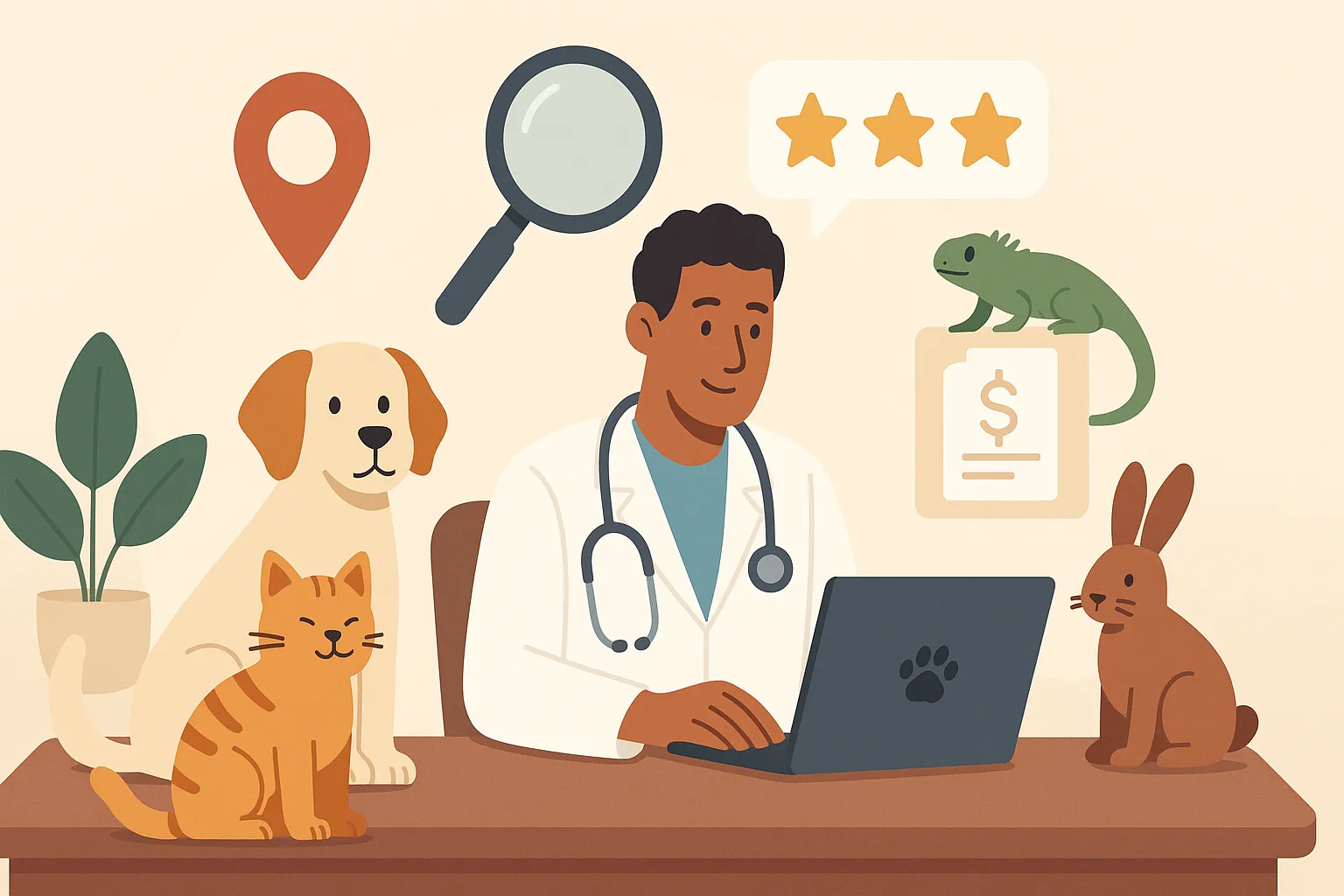
Finding a good veterinarian near you is one of the most important decisions you can make for your dog’s or cat’s wellbeing. It’s not just about “who is closest” or “who is cheapest,” but about:
- trusting the person who will look after your pet’s health over time
- having a reliable point of contact in an emergency
- being able to count on a practice with trustworthy reviews, suitable services, and clear prices
In this article, we’ll walk through, step by step, how to:
- search for “veterinarian near me” in a truly effective way (going beyond Google Maps)
- understand which veterinarian reviews are actually useful and which aren’t
- compare veterinary prices and services without getting caught out by confusing quotes
- prepare for the first visit with a practical checklist
- use digital tools (like the PawsPet app) to keep documents, appointments, and emergency contacts organized
1. Where to start when looking for a veterinarian near me
When you type “veterinarian near me” into Google, you’re immediately faced with:
- maps with lots of pins
- lists of practices
- phone numbers, opening hours, and a few reviews
It’s a good starting point, but not enough to make the right choice.
1.1 Main channels to use for your search
Combine several sources instead of relying on just one:
-
Search engines (Google, Bing)
- Search for phrases like:
- “veterinarian near me open now”
- “24-hour veterinary clinic + [city/neighborhood name]”
- “best dog cat vet + [area]”
- Check map results and the website (if available).
- Search for phrases like:
-
Maps (Google Maps, Apple Maps)
- Filter by distance, opening hours, and rating.
- Check the practice photos and the services listed.
-
Word of mouth
- Ask friends, neighbors, or coworkers who have pets.
- Check in:
- local Facebook/WhatsApp groups
- animal welfare associations
- dog trainers, groomers, or trusted pet sitters
-
Social media and review sites
- Search the practice name on Google, Facebook, and Instagram.
- See how they respond to comments (tone, response time, clarity).
-
Pet-specialist apps and services
- Apps like PawsPet let you:
- find veterinary practices based on your location
- quickly see reviews, services offered, and contact details
- save your chosen vet as your main reference with a tap
- Apps like PawsPet let you:
1.2 Not just “nearby”: other essential criteria
Distance matters, but it’s not the only factor. Also evaluate:
-
Type of facility
- Single-practitioner clinic
- Multi-specialist clinic
- 24-hour veterinary hospital
-
Species and size
- Not all vets are experienced with exotics (rabbits, reptiles, small mammals).
- Large dogs need adequate space and specific equipment.
-
On-site services
- Diagnostics (X-rays, ultrasounds, blood tests)
- Surgery, day hospital, hospitalization
- 24/7 emergency care or extended hours
-
Accessibility
- Easy parking
- Close to public transport
- Barrier-free access if you have mobility difficulties
2. How to really read veterinarian reviews
Veterinarian reviews are valuable, but they need to be interpreted carefully. A simple average rating isn’t enough: you need to understand why people are happy or unhappy.
2.1 Where to find useful reviews
-
Google Maps
- Reviews are often numerous and up to date.
- Look at the date and the detail (not just the star count).
-
Facebook / official page
- Comments on posts, public messages, reports.
- You can also get a sense of the staff’s human touch.
-
Sites dedicated to the pet world
- Portals and apps (like PawsPet) with sections dedicated to veterinary practices, where you’ll often find more specific reviews about services, waiting times, and emergency handling.
2.2 Positive signs to look for in reviews
Pay attention to comments that mention:
-
Clarity and communication
- the doctor explains diagnoses and treatments in an easy-to-understand way
- no pressure for unnecessary tests
- willingness to answer questions
-
Empathy toward the animal
- kind manner, gradual approach
- attention to fear management (especially for anxious dogs and cats)
-
Transparency on costs
- estimates explained in advance
- clear invoice with details of visits, tests, and medications
-
Emergency handling
- ability to act quickly in urgent situations
- initial phone support to understand whether it’s really an emergency
-
Continuity of care
- follow-up after major procedures
- reminders for vaccines and periodic checkups
2.3 Red flags in reviews
Don’t dismiss a practice because of one negative review, but pay attention if you notice:
- many comments about unexplained costs or sudden price increases
- recurring complaints about poor hygiene or neglected premises
- multiple reports of extreme delays and constant disorganization
- aggressive or unprofessional replies from the owner to dissatisfied customers
3. Veterinary prices: what to really expect
Many pet owners search for “veterinary prices” or “veterinary costs” hoping for a fixed price list. In reality, prices:
- are not regulated uniformly
- can vary by city, type of practice, and case complexity
- depend on tests, materials, time spent, and urgency
3.1 Make a targeted first phone call
Before booking, call 1–2 practices and ask for basic information:
Useful questions:
- “How much does a basic visit for a dog/cat cost?”
- “Can you give me a price range for an annual vaccination?”
- “Does the visit cost increase in urgent cases or in the evening/on holidays?”
- “Do you provide written estimates for procedures or complex tests?”
Not every case allows for an exact quote, but a good veterinarian:
- explains which cost items may be needed
- gives you at least an estimated range to help you decide
3.2 Typical cost items at the vet
You’ll usually find:
- Clinical visit (basic, follow-up, urgent)
- Vaccinations (including visit, certificate, vaccine)
- Laboratory tests (blood, urine, stool, rapid tests)
- Imaging diagnostics (X-rays, ultrasounds, CT scans, MRI in larger facilities)
- Surgery (spaying/neutering, mass removal, orthopedic procedures)
- Medications (administered in the clinic or prescribed)
- Therapies (injections, IV fluids, repeated dressings)
3.3 Lower price does not mean better choice
Especially when it comes to health, the “cheapest one” approach can be risky. Better to choose:
- a veterinarian who is clear and transparent about costs
- someone who reviews treatment alternatives with you
- someone who helps you plan expenses over time (e.g., vaccination plan, annual checkups)
4. Questions to ask the vet before choosing them
Once you’ve identified 1–2 possible practices, you can:
- book an introductory visit
- or make a more in-depth informational phone call
4.1 Checklist of useful questions
You can use this list as a guide (even copy it into your phone notes):
-
Organization and hours
- What are your opening hours?
- Do you offer emergency care or work with a 24-hour clinic?
- How do you handle urgent appointments?
-
Services and expertise
- Do you treat dogs, cats, or also other species (exotics)?
- Do you perform blood tests in-house or rely on an external lab?
- Do you offer surgical procedures on site?
- Do you work with specialists (cardiologists, orthopedic surgeons, dermatologists, etc.)?
-
Patient care and communication
- Do you provide a personalized vaccination plan?
- How do you communicate test results (phone, email, app)?
- Is it possible to get a short phone update after major procedures?
-
Costs and payment methods
- Can you give me a price range for visits and vaccinations?
- Do you issue a receipt/invoice with a breakdown of services?
- Do you accept card payments, bank transfers, and possibly installment payments for large expenses?
4.2 Checklist for the first visit with the new vet
To make the most of the first appointment:
-
Bring:
- the pet health booklet (if available)
- any previous reports, tests, or X-rays
- a list of medications your pet is taking
-
Prepare:
- a list of observed symptoms (since when, in which situations)
- questions about nutrition, vaccines, parasites, and neutering/spaying
-
Observe:
- the veterinarian’s attitude toward your pet
- how much time they spend listening to you
- whether they calmly explain what they’re doing during the visit
5. How to know if you’ve found your “right” veterinarian
There is no absolute “best veterinarian,” but there is one who is best suited to you and your pet.
5.1 Signs of a good veterinarian
After a few visits, ask yourself:
- Do I feel heard? Can I ask questions without feeling judged?
- Are the explanations easy to understand and free of too much jargon?
- Am I offered treatment alternatives when possible, with honest pros and cons?
- Based on how they treat my pet, does my animal seem calm (as much as possible) during the visit?
- Do I receive clear instructions for home (doses, timing, length of treatment)?
If most of these answers are “yes,” you’ve probably found an excellent point of reference.
5.2 When to consider switching vets
You may want to look for a new veterinarian if:
- you consistently feel ignored or rushed
- no alternatives are explained, even when you ask for them
- you notice sudden changes in pricing or a lack of transparency
- you feel there’s a lack of empathy toward your pet
Changing veterinarians is a delicate decision, but the priority is always your pet’s wellbeing and your peace of mind as an owner.
6. Primary vet, specialists, and emergencies: how to organize yourself
A good approach is to think of a kind of care network around your pet.
6.1 Primary veterinarian
This is the professional who follows:
- vaccinations and boosters
- annual checkups
- parasite prevention
- long-term monitoring (weight, teeth, aging)
Ideally, they should:
- know your pet’s medical history
- be the first contact for doubts and minor issues
- refer you to specialists when needed
6.2 Veterinary specialists
In some cases, it may be advisable to consult a:
- veterinary cardiologist
- orthopedic specialist
- dermatologist
- neurologist, etc.
Usually your primary veterinarian will:
- explain why a specialist visit is useful
- suggest trusted colleagues
- stay in touch with them to coordinate treatment
6.3 Emergency and 24-hour facilities
It’s important to know in advance where to go in case of a serious emergency, instead of searching at the last minute.
What to do:
- ask your primary vet which emergency department or 24-hour clinic they work with
- save the number in your contacts and pin it
- note the hours, address, and average travel time
7. How to use digital tools to manage health, visits, and documents
Beyond finding a veterinarian near you, it’s essential to manage everything that comes after: visits, vaccines, medications, follow-ups.
7.1 Why tracking everything matters
Keeping an organized history is useful for:
- remembering when the last vaccine was given
- quickly showing past treatments to a new vet or specialist
- monitoring weight, recurring symptoms, and allergies over time
7.2 What you can do with an app like PawsPet
With an app designed for the pet world, you can:
-
create a digital profile for your dog or cat
- personal details
- characteristics (breed, age, size, any chronic conditions)
-
record:
- veterinary visits (date, reason, outcome)
- vaccinations and boosters
- deworming / parasite prevention cycles
- known allergies or contraindicated medications
-
set reminders for:
- upcoming vaccine boosters
- periodic checkup tests
- medication doses at exact times
-
save key contacts:
- primary vet
- 24-hour clinic
- any specialists
That way, when you call or go in for a visit:
- you have all the essential information right at hand
- you reduce the risk of forgetting medications or treatments already tried
8. Quick practical guide: from “veterinarian near me” to a smart choice
If you’re short on time, here’s a 7-step process.
-
Search online
- Use Google Maps and type “veterinarian near me.”
- Note 3–4 practices within a distance that feels convenient.
-
Filter with maps and reviews
- Check the average rating and recent comments.
- Rule out places with many reports of poor hygiene or complete lack of communication.
-
Check services and hours
- See whether the website or social profile lists:
- opening hours, any 24/7 service or on-call availability
- types of patients (dog, cat, others)
- main diagnostic services
- See whether the website or social profile lists:
-
Call 1–2 candidates
- Ask 3–4 key questions about basic costs (visits, vaccines) and emergency handling.
- Pay attention to the tone and willingness to answer.
-
Book a first visit
- Bring documents and previous reports.
- Observe how they treat your pet and how they communicate with you.
-
Take a step back and assess
- After the visit, ask yourself whether you felt supported, listened to, and informed.
- If you still have doubts, you can try a second professional for comparison.
-
Organize everything with an app
- Save your chosen vet and their contacts.
- Record visits and vaccines, set reminders.
- Keep an “emergencies” section ready with numbers and addresses.
Conclusion: the right vet is a long-term ally
Choosing a veterinarian near you is not just a logistical matter: it means finding someone who will support you for years in caring for your dog or cat, through:
- prevention (vaccines, checkups)
- illness management
- nutrition and behavior advice
- support during the most delicate moments
Take the time to:
- compare reviews, services, and veterinary prices
- ask the right questions
- observe the relationship between doctor, animal, and family
If you want to make organization easier:
- try a dedicated app like PawsPet to:
- keep your pet’s profile and health info organized
- never forget boosters and appointments again
- always have the contacts of your primary vet and 24-hour clinic at hand
A bit of planning today can make a big difference to your pet’s safety and wellbeing tomorrow.
FAQ – Veterinarian near me, reviews, and prices
How do I choose the best veterinarian near me?
There is no single “best veterinarian,” only the one that best fits your pet and your needs. Start with:
- searching on Google Maps and specialized directories
- reading the most recent and detailed reviews
- checking services, hours, and emergency handling
- a first visit to assess empathy, clarity, and organization
Also listen to word of mouth from people you trust.
How much does a vet visit usually cost?
The cost can vary a lot depending on the area, type of practice, and case complexity. Usually:
- a basic visit has a relatively modest price
- specialist visits, emergencies, night visits, or holiday visits may cost more
- diagnostic tests, medications, and surgeries are charged separately
Always ask for an estimated price range by phone and a quote whenever possible.
Can I trust online veterinarian reviews?
Online reviews are useful if:
- you read them in detail, not just the star rating
- you consider the recent and well-explained ones
- you evaluate how the practice responds to negative comments
Don’t rely on a single extreme review, whether very negative or very positive, but on the overall trend.
Is it better to choose a cheap vet nearby or a more expensive clinic farther away?
It depends on:
- how complex your pet’s health issues are
- whether advanced tests or surgery are needed
- your ability to travel in an emergency
Often, it’s useful to have:
- a nearby primary vet for routine care, checkups, and minor issues
- a better-equipped clinic, even if a bit farther away, for complex cases or serious emergencies