Choosing depends on three things: coat length and density, where mats form, and what your cat will tolerate. For short coats, a glove or soft rubber brush is often enough; for medium and long coats, start with a wide- and fine-toothed comb, optionally followed by a slicker brush used with a light touch. Try each tool first on an area your cat accepts: this is a guide to tool types, not a product ranking.
Before choosing: observe the coat
Take two minutes to look at your cat’s coat when they’re calm, and check four things.
- Length. Short (close to the body), medium (longer on the tail, neck, and thighs), or long (long all over).
- Undercoat. Part the fur with your fingers: if you find a dense, soft layer underneath, the undercoat is thick.
- Problem areas. Note where mats form: often behind the ears, under the front legs, on the belly, on the thighs, and at the base of the tail.
- Age and sensitivity. A cat who doesn’t like being handled much, because of their temperament or age, needs gentler tools and shorter sessions.
Main tools and what they’re for
| Tool | Suitable coats | What it does | Caution |
|---|---|---|---|
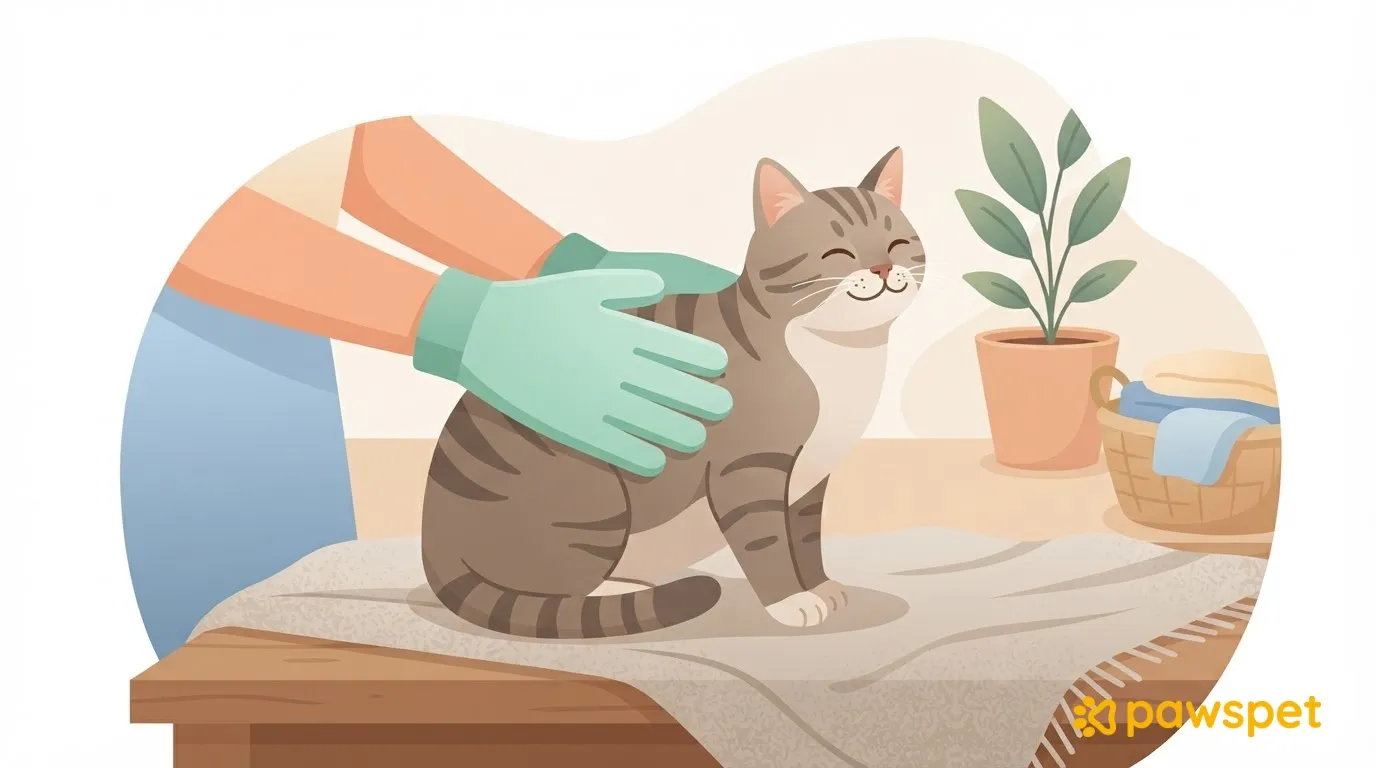
| Rubber or silicone glove | Short coats | Collects loose surface fur with a motion similar to petting | Too much pressure or too many strokes can irritate the skin; it isn’t enough on its own for medium and long coats |
| Soft rubber brush | Short coats | Removes loose fur with gentle strokes | Don’t press down; stop if the skin becomes red |
| Soft-bristle brush | Short and medium coats; finishing on long coats | Smooths the coat and distributes the fur | Pulls on existing mats and can break the fur |
| Metal comb with wide and fine teeth | Medium and long coats | Checks the coat and works through small mats: start with the wide teeth, then finish with the fine teeth | Work in small sections without pulling; never use near the eyes |
| Fine-toothed slicker brush | Medium and long coats | Finishes the coat and removes loose surface fur | Use light pressure: it can break the fur and redden the skin; never use on irritated skin |
| Undercoat tool | Thick undercoats | Removes excess undercoat when your cat is shedding more | Use only a few strokes and not too often; never use on irritated skin |
| Fine-toothed flea comb | All coats | Checks the fur for possible parasites; not for routine brushing | Never use near the eyes; if you find anything suspicious, talk to your veterinarian |
For a long coat, combine two tools: use a comb, moving from wide to fine teeth, to check the fur and find mats while they’re still small. Only then use a slicker brush or another brush to finish, with light strokes and without repeatedly going over areas where the fur resists.
How to try a new tool
Try just one new tool at a time, when your cat is calm.
- Let them sniff it. Set it near your cat and let them explore it, without forcing it closer.
- Use a few strokes in the direction of the fur. Start on the cheeks and neck, away from the eyes, if your cat accepts this; otherwise, choose an area they prefer.
- Stop at the first signs of discomfort: a lashing tail, rippling skin, ears turned back, or your cat turning away or moving off.
- End with something they enjoy: petting, play, or a treat.
- Check the skin. After the first session, look for redness or areas that seem to bother your cat.
How often to use it
There’s no schedule that works for every cat: these are general guidelines, not clinical rules. Short coats usually need fewer sessions; long coats need more frequent but shorter sessions. Increase the frequency when your cat is shedding more, and reduce it if the skin becomes red. If mats are already present, a few regular strokes are better than one long session.
To keep to your chosen schedule, you can create a “Brushing” activity (in the “Hygiene” category) in the PawsPet app from the “Activities” tab, using the yellow “+” button. Set the frequency with “Repeat” and add an alert using the bell icon row; then mark each repeat as done or skip it with “Ignore.” Reminders arrive only if app notifications are allowed on your phone; if you’ve denied them, you’ll need to turn them back on in your system settings.
When to switch tools and how to clean them
Switch tools if:
- it pulls or catches: switch to a gentler type, such as moving from a slicker brush to a wide-toothed comb;
- it leaves the skin red: stop using it and try a softer type (a glove for short coats, a wide-toothed comb for long coats); if the redness doesn’t go away, talk to your veterinarian;
- your cat always avoids it: switch to another type and shorten the sessions; sometimes a glove, which feels like petting, is more welcome than a brush;
- it’s too large for small areas: use a smaller one for the paws and tail.
After each use, remove the fur from the tool. If it’s washable, clean it with water and mild soap, then let it dry thoroughly before putting it away.
If the coat already has tight mats or felting close to the skin, don’t force any tool through them and don’t cut them out with scissors: pulling hurts and can injure the skin. A cat groomer or veterinarian should handle them.
Where to start
Observe the coat, choose one or two tools based on the table, and try them briefly on an area your cat prefers. Then check the skin: if something doesn’t seem right, switch tools.