When autumn arrives, daylight, temperatures and the conditions on familiar routes all change. For dogs in autumn, this does not mean giving up outdoor time, but adapting walks and daily routines to rain, mud, cold weather and shorter days.
A few simple adjustments can help keep your dog active, clean and comfortable while also reducing the organisational stress of getting home after a walk.
Autumn dog walks: duration, timing and safety
Autumn dog walks remain essential for physical and mental wellbeing, but they should be adjusted to the weather and your dog's individual needs. A young dog that is used to regular activity may manage longer outings than an older, very small or short-haired dog, or one with mobility difficulties.
When it is cold or raining heavily, it may be more practical to split activity into short, regular outings rather than taking one very long walk. Choose routes with stable surfaces and good visibility.
To make planning easier:
- go out during the brightest hours whenever possible;
- choose paths or pavements that are less slippery;
- avoid areas with very wet leaves, deep puddles or swollen streams;
- always carry water, waste bags and an absorbent towel;
- use a properly adjusted lead and harness, especially in low light.
At dusk, make both you and your dog more visible with reflective or illuminated accessories. If you use PawsPet, the GPS walk-tracking feature can help you find safe routes again and keep track of activity without having to remember everything yourself.
How to protect your dog from cold weather and rain
Not all dogs experience cold in the same way. Size, coat, age, health and familiarity with outdoor living can all affect tolerance to low temperatures. Shivering, a stiff posture, slowing down, repeatedly seeking shelter or reluctance to go outside may indicate discomfort.
To protect your dog from the cold, consider simple, proportionate solutions:
- dry their coat thoroughly after rain, especially the abdomen, chest and paws;
- for short-haired, older or particularly sensitive dogs, consider a coat in the correct size;
- do not leave your dog standing in the cold after activity;
- prepare a sheltered, dry area indoors, away from draughts;
- check that their bed or mat is always clean and dry.
A lightweight raincoat can be useful during wet weather, provided it does not restrict movement or irritate the skin. If your dog seems uncomfortable, do not force them to wear it: introduce the accessory gradually and pair it with positive experiences.
Mud and paws: cleaning after every outing
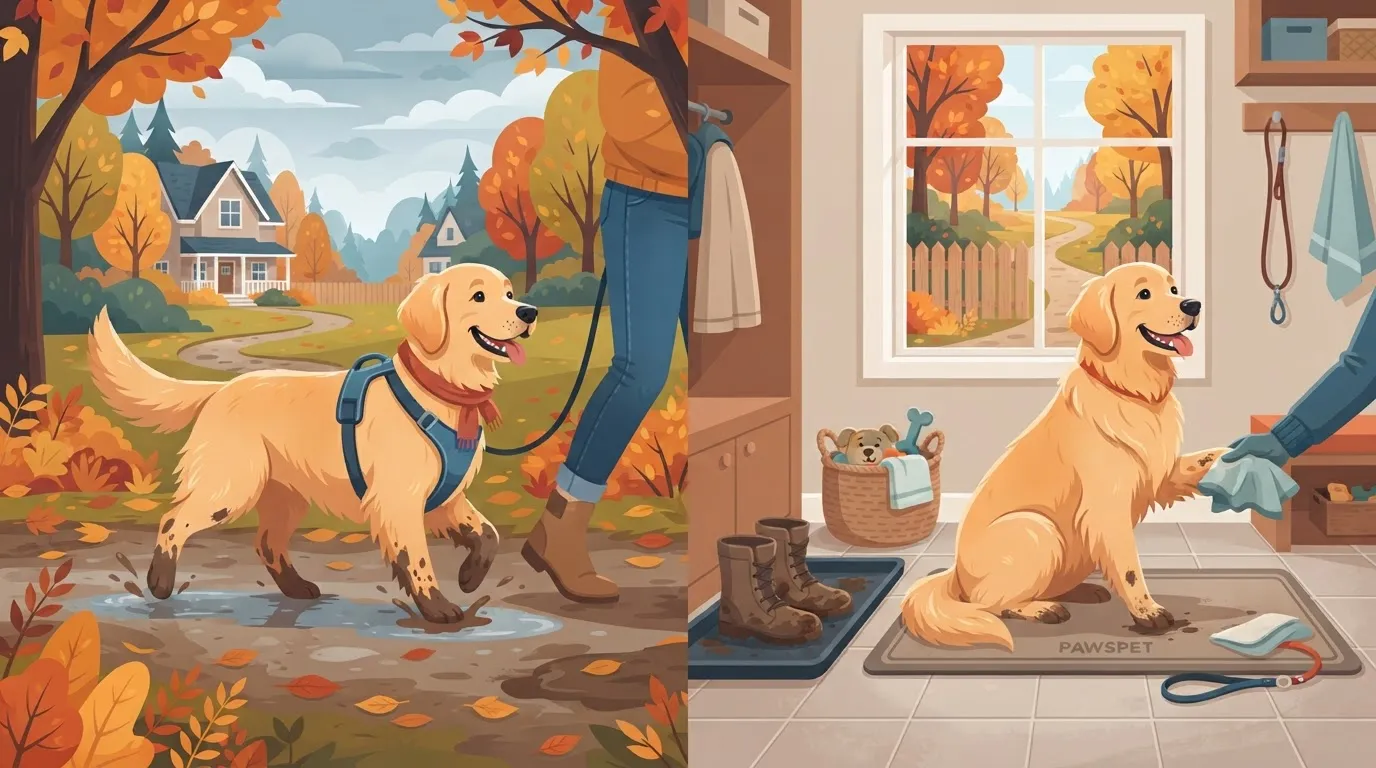
Muddy walks are often fun for dogs, but they require a few minutes of checking once you get home. Mud, moisture and small pieces of debris can collect between the toes, beneath the paw pads and in the long hair around the paws.
Set up a small cleaning kit near the entrance with a towel, microfibre cloth, a brush suitable for your dog's coat and, if needed, a bowl of lukewarm water. You do not need to wash your dog completely after every walk: in most cases, carefully cleaning the paws and visibly dirty areas is enough.
Gently check for:
- small stones, seeds or debris between the toes;
- redness, small cuts or cracked paw pads;
- tangles in the coat, especially in long-haired dogs;
- ticks, which can remain active outside the summer months.
If you notice limping, pain, an obvious injury or persistent irritation, contact your vet. Avoid harsh cleaning products or improvised remedies: dogs' skin has specific needs.
Autumn dog routine: activities, food and reminders
A good autumn dog routine is not only about outdoor walks. Shorter days can reduce the time spent outside, so it can help to add calm indoor activities such as scent games, problem-solving toys, familiar training exercises or suitable chewing activities.
Keep meal, walk and rest times reasonably predictable. If work, school or weather conditions change, adjust the routine gradually. Do not increase or reduce your dog's food simply because the weather has become colder: weight, nutritional needs and diet should be assessed with your vet, especially for older dogs or those with health conditions.
PawsPet reminders can help you organise parasite treatments, check-ups, useful product purchases and grooming appointments. These features can be particularly convenient during months when mud and moisture require extra attention.
FAQ about dogs in autumn
Can my dog go outside when it is raining?
Yes, if the rain is not heavy and your dog is comfortable. Shorten the outing if it is cold, very windy or the ground is unsafe, then dry your dog thoroughly when you get home.
When does a dog need a coat?
A coat may be useful for small, older or short-haired dogs, or for dogs that are sensitive to cold and damp. It should fit well, allow freedom of movement and never replace observing signs of discomfort.
How can I stop my dog from bringing mud all over the house?
Prepare a spot near the door with towels and cloths for cleaning the paws. Cleaning the paw pads, the spaces between the toes and the hair around the paws straight away can greatly reduce mud and moisture indoors.
With a flexible routine and a few extra checks, autumn can bring stimulating walks and enjoyable time together. Use PawsPet to organise your pet's reminders, health records and outings, helping you manage every change of season with greater peace of mind.