Bringing a dog into an apartment is a wonderful choice, but it does require organization. To help your dog feel good, you’ll need suitable spaces, a clear routine, and a few essential accessories—along with your time and consistency. This checklist will help you understand what you need for a dog in an apartment and how to prepare for a peaceful, well-run cohabitation.
1. First of all: space, safety, and home rules
A dog in an apartment doesn’t need “a lot of space,” but rather a space that’s been thought through. The priority is to create an environment that’s safe, predictable, and easy for your dog to read.
Start with these basics:
- a quiet area for resting
- constant access to fresh water
- floors that aren’t too slippery, if possible
- keep cables, small objects, and toxic substances out of reach
- clear rules about the sofa, bed, and access to rooms
If your dog is new to the home, avoid letting them explore everything right away. It’s better to introduce areas gradually, so they can orient themselves without stress. For the first few days, a simple, repetitive routine helps them feel safer.
2. Essential accessories for life in an apartment
When it comes to dog accessories, the goal isn’t to buy everything—you just need to choose what’s truly useful. A well-prepared setup makes daily management easier and helps your dog feel calmer.
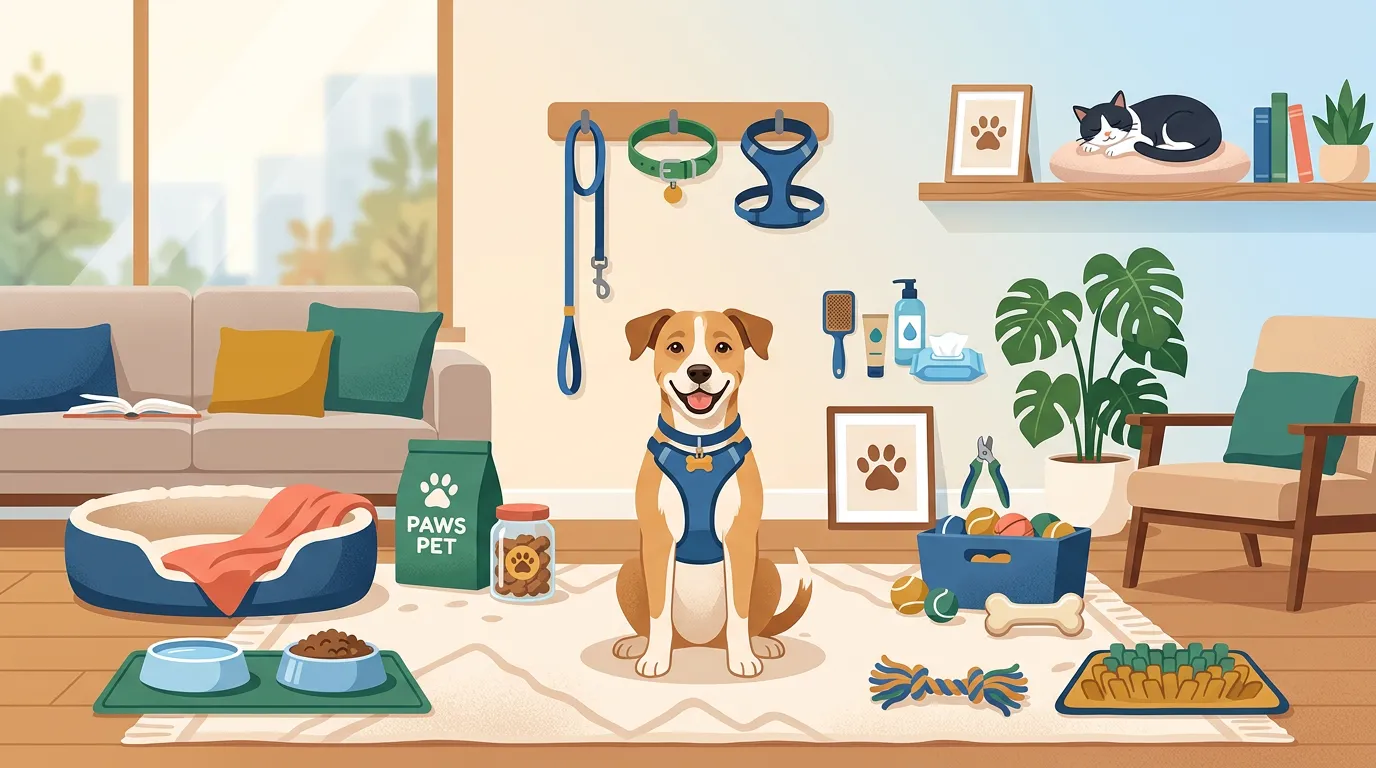
Here’s the essential checklist:
-
Dog bed or soft foldable mat
It should be comfortable, easy to clean, and placed in a sheltered, quiet spot. -
Food and water bowls
Choose stable bowls that are easy to wash. If your dog eats too quickly, consider a slow feeder bowl. -
Leash, harness, and collar
In an apartment, they’re mainly used for walks, emergencies, and safe training. -
Chewing toys and interactive games
Very helpful for keeping your dog occupied and preventing boredom and destructive behaviors. -
Absorbent mats or hygiene materials, if needed
They can be useful during the first period, but they don’t replace potty training for walks. -
Brush, appropriate shampoo, and a basic cleaning kit
They help maintain hygiene and order—especially if your dog sheds fur or comes inside often when wet.
A practical tip: set up a small “dog-friendly” area with everything within easy reach. It reduces clutter and makes daily management smoother.
3. The dog routine: the real secret to a peaceful cohabitation
Life at home works best when your dog knows what to expect. A dog routine is one of the most important elements for those who live in an apartment, because it reduces anxiety, channels accumulated energy, and prevents constant requests for attention.
A typical day should include:
- regular potty breaks in the morning, after meals, and before bedtime
- playtime and mental activities
- meals at fairly consistent times
- rest breaks in a calm, quiet spot
- short training sessions or positive reinforcement
Even if you work from home, avoid continuously stimulating your dog. Dogs need to alternate between activity and calm. If they learn to be relaxed at home, cohabitation improves a lot.
To stay organized, it can help to use a reminder system for walks, medications, flea/tick prevention, or veterinary check-ups. Digital tools like PawsPet can help you manage health and deadlines without forgetting.
4. Movement and stimulation: walks aren’t enough on their own
A dog in an apartment shouldn’t just “go outside,” but also release energy in a balanced way. Walks are essential, but they often aren’t enough by themselves—especially for young or very active dogs.
To prevent boredom and unwanted behaviors, add to the day:
- scent-search games
- short training sessions
- kong or fillable toys
- calm and waiting exercises
- simple mental activities, such as problem-solving
No need to go overboard: it’s better to do 10 minutes well than an hour of confusing activity. If your dog is alone for many hours, consider redistributing time more effectively—maybe with the help of a dog sitter or a family member.
5. Hygiene, health, and organization: small actions that make a difference
Living with a dog in an apartment also means keeping hygiene and wellbeing under control. An organized approach prevents stress, persistent odors, and practical problems.
Keep these points in mind:
- regular cleaning of beds, blankets, and bowls
- immediate cleanup of dirt and hair
- periodic checks of nails, ears, and coat
- parasite prevention according to veterinary instructions
- check-ups when needed
If you notice changes in behavior, appetite, or mobility, don’t improvise: talk to a qualified veterinarian. Prevention is always the best choice.
Final checklist: what you truly need for a dog in an apartment
If you want to start off on the right foot, focus on these essential elements:
- a safe space and a resting area
- bowls, bed, and basic accessories
- leash, harness, and suitable toys
- a clear, consistent dog routine
- regular walks and mental stimulation
- hygiene, health, and daily organization
With good preparation, a dog in an apartment can live well and stay balanced—even in spaces that aren’t huge. The key isn’t having a perfect home; it’s building habits that are consistent and attentive to your dog’s needs.
If you want to make daily management easier, PawsPet can help you keep everything under control—between health, reminders, and practical organization.
FAQ
Can a dog be happy in an apartment?
Yes, as long as it gets appropriate walks, mental stimulation, a stable routine, and a calm environment.
Which accessories are truly essential at the beginning?
A bed, bowls, leash, harness, toys, and basic hygiene and cleaning tools.
How many walks does a dog need in an apartment?
It depends on age, size, and energy level, but in general it helps to have multiple short breaks throughout the day, plus playtime and mental activity.