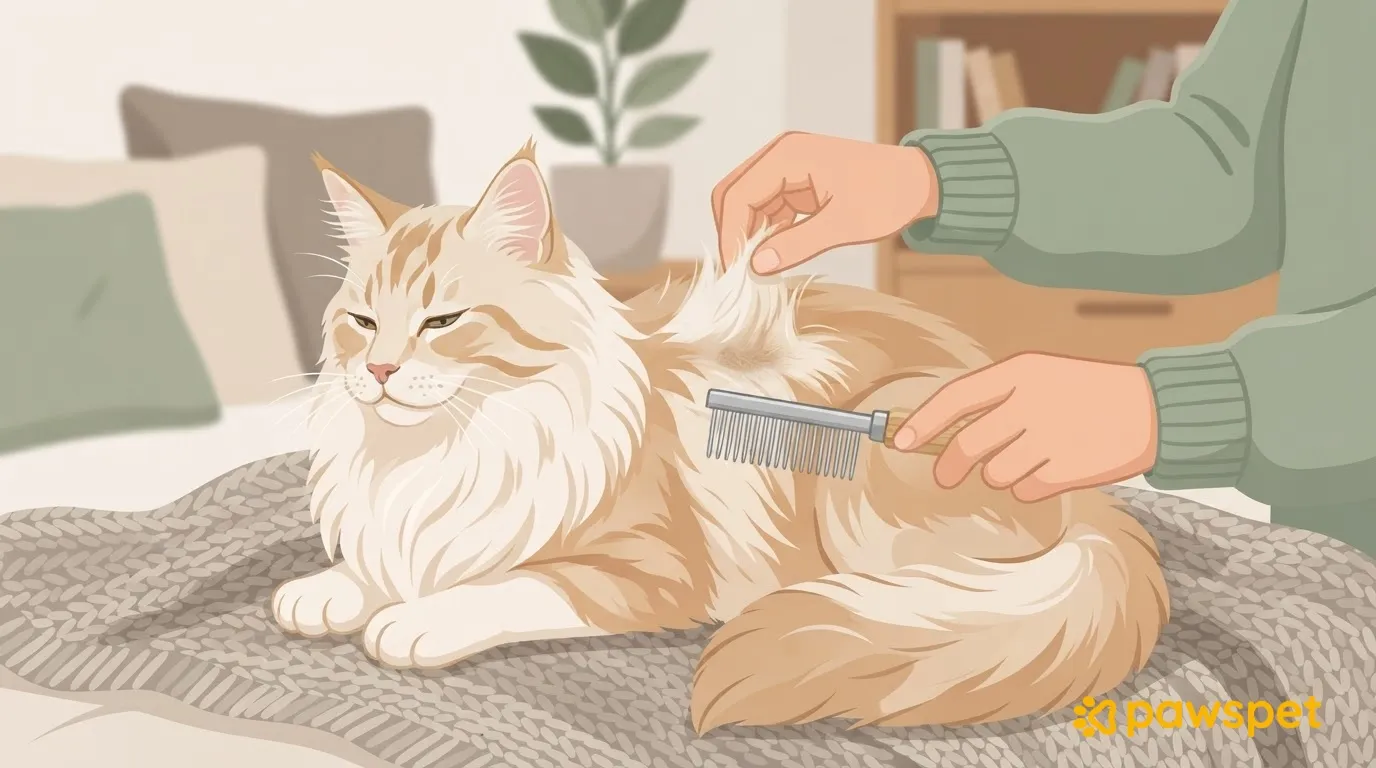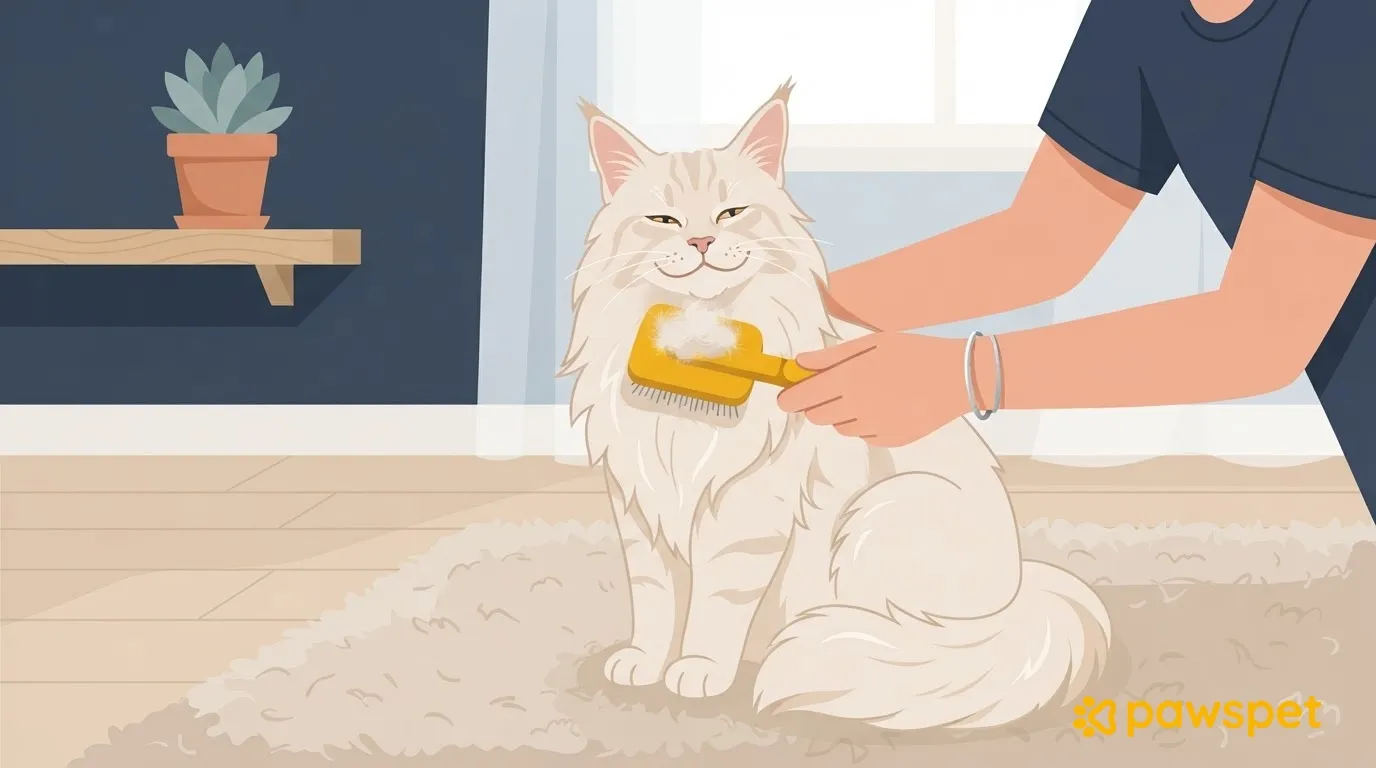
For a long-haired or medium-haired cat, regular, short brushing sessions during the cooler hours usually help more in summer by removing dead hair. Don’t decide to clip your cat just because it’s hot: talk it over with your veterinarian or a groomer who works with cats. These are two separate things: everyday care and an exceptional choice to consider on a case-by-case basis.
What really matters in hot weather
Dead hair left in the coat can become tangled and trap dirt. Removing it regularly helps keep the coat clean and easier to check: this is everyday care, while clipping remains the exception.
The basics don’t change, though: always have fresh water available and provide shady spots where your cat can lie down whenever they want. Brushing goes alongside these precautions; it doesn’t replace them.
When and how long to brush on hot days
Choose the coolest hours, early morning or evening, and a cool area of the house. Don’t start right after your cat has been in the sun or while they’re seeking a cool spot: at those times, they need to rest, not be disturbed.
A few-minute session, even split into two times during the day, is better than one long session. How often you brush depends on how much hair your cat sheds and how prone it is to tangles: for many long coats, daily or every-other-day brushing works well, but this is a general guideline to adapt as needed.
A wide-toothed comb and a fine-toothed comb are usually used, along with a slicker brush using light pressure; undercoat tools should be used sparingly and never on reddened skin.
Stop if your cat moves away, shows discomfort, or pants: it’s better to try again later than to insist. If your cat pants even while resting or seems weak, contact your veterinarian right away.
What to check while brushing
Brushing is also a chance to take a close look at your cat’s coat. Check for:
- skin issues: redness, scabs, damp areas;
- tangles, especially where they tend to form: behind the ears, under the armpits, on the belly, on the inner thighs, and at the base of the tail;
- visible parasites, especially if your cat goes outdoors;
- patches of hair loss;
- areas being licked insistently.
You don’t need to know what the cause is: these are signs to show your veterinarian, without making assumptions or trying remedies on your own. To get advice, in the PawsPet app you can search for veterinarians near you from the «Services» tab, with the «Veterinarian» type and the area and distance filters (results depend on the professionals available in your area).
Clipping your cat: when and who to talk to
Clipping isn’t a summer routine; it’s a decision to consider on a case-by-case basis. It makes sense to discuss it with your veterinarian or a groomer who works with cats when:
- there are extensive or tight mats (compact tangles) close to the skin;
- it’s difficult to keep the area around the rear clean;
- your cat can no longer groom itself;
- your veterinarian has already suggested it.
Before deciding, you can ask the professional which areas would be clipped, how short the coat would be, how they manage your cat’s stress, and how to protect the skin afterward.
What not to do at home
- No scissors or makeshift clippers: a cat’s skin is easily injured, and they may move suddenly.
- Don’t shave your cat out of habit or just because it’s hot.
- Don’t bathe your cat as a daily remedy for the heat.
- Don’t use any new coat or skin products without first asking a professional for advice.
Where to start
Choose a cool time when your cat is calmest, get a comb and brush ready, and do a short session. Make a note of what you find (tangles, skin, hair loss): if you need advice later, you’ll have something concrete to show your veterinarian. These are general guidelines: if you have any concerns about your cat, your veterinarian is the person to turn to.