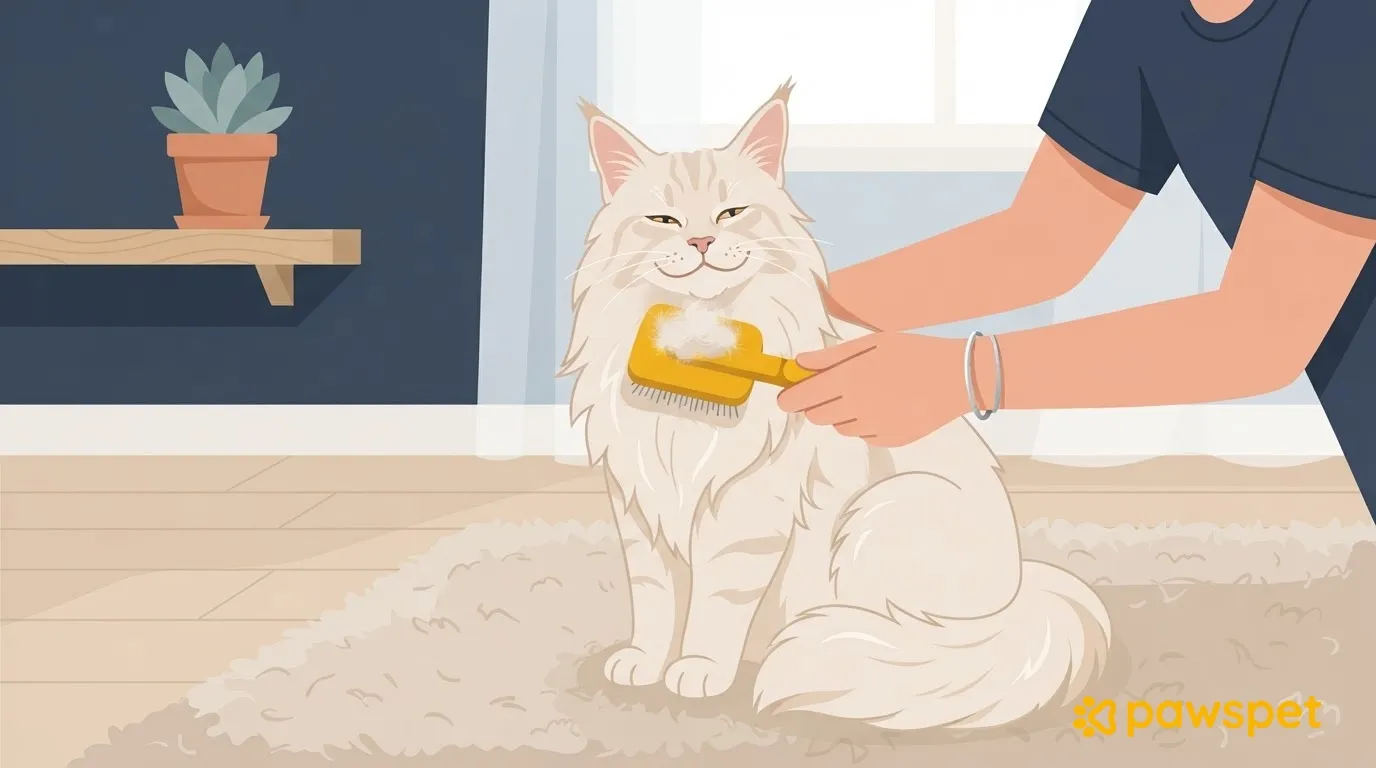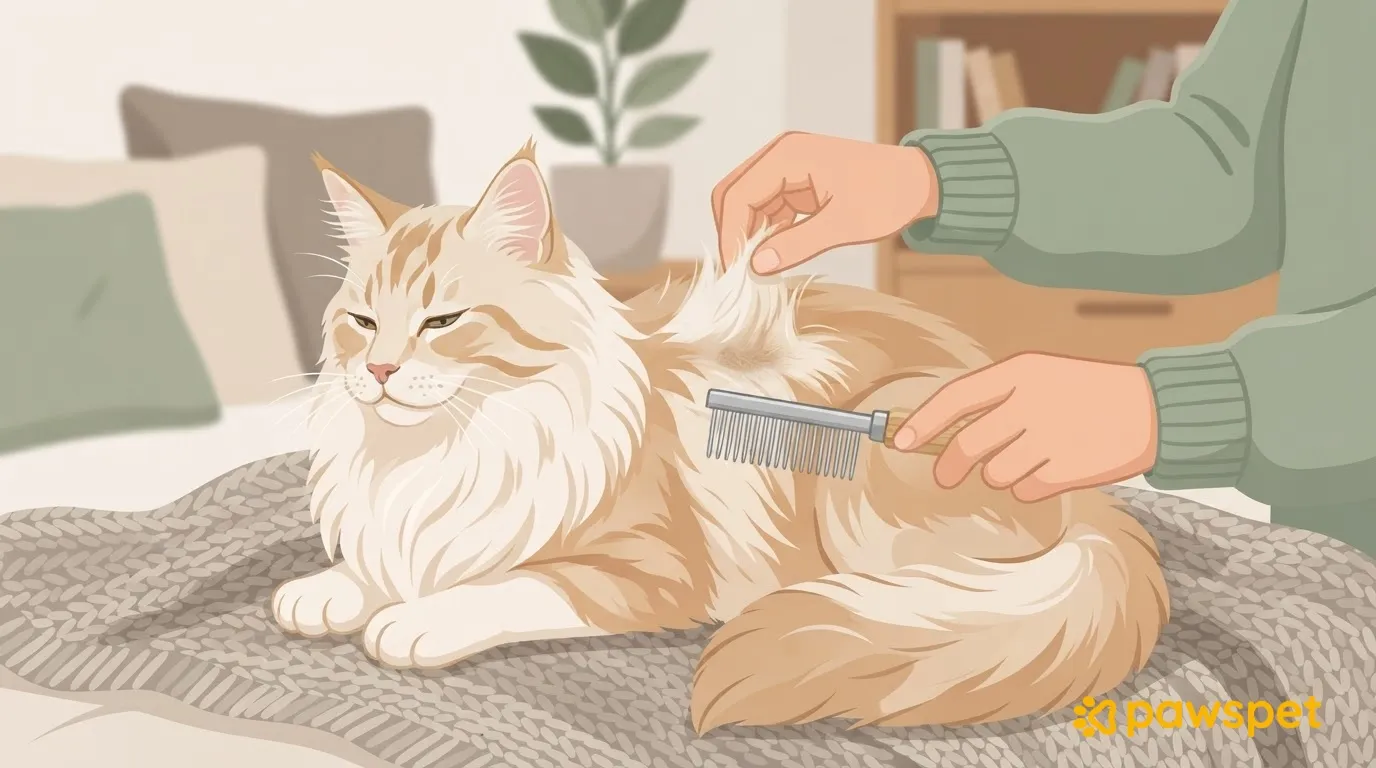
In semi-long-haired or long-haired cats, a small, loose tangle can often be worked out with your fingers and a wide-toothed comb: hold the fur at the base to avoid pulling the skin, and work from the tip toward the root. A dense mat, a large one, or one close to the skin should not be cut or pulled apart: leave it to a cat groomer or a veterinarian. To prevent mats from getting to that point, a brief, regular check of the areas where the fur tends to tangle most often is enough.
Where mats form most often
Tangles most often appear in these areas:
- behind the ears;
- on the neck and where the collar sits, if the cat wears one;
- in the armpits;
- on the belly;
- on the inner thighs and around the rear;
- at the base of the tail.
Friction (for example, under a collar), areas the cat has difficulty reaching or grooms less, and periods of heavier shedding can all contribute. If tangles suddenly become more frequent, or the cat seems to be grooming less than usual, it is a good reason to talk to your veterinarian without guessing what caused them.
Daily checks with a comb and your fingers
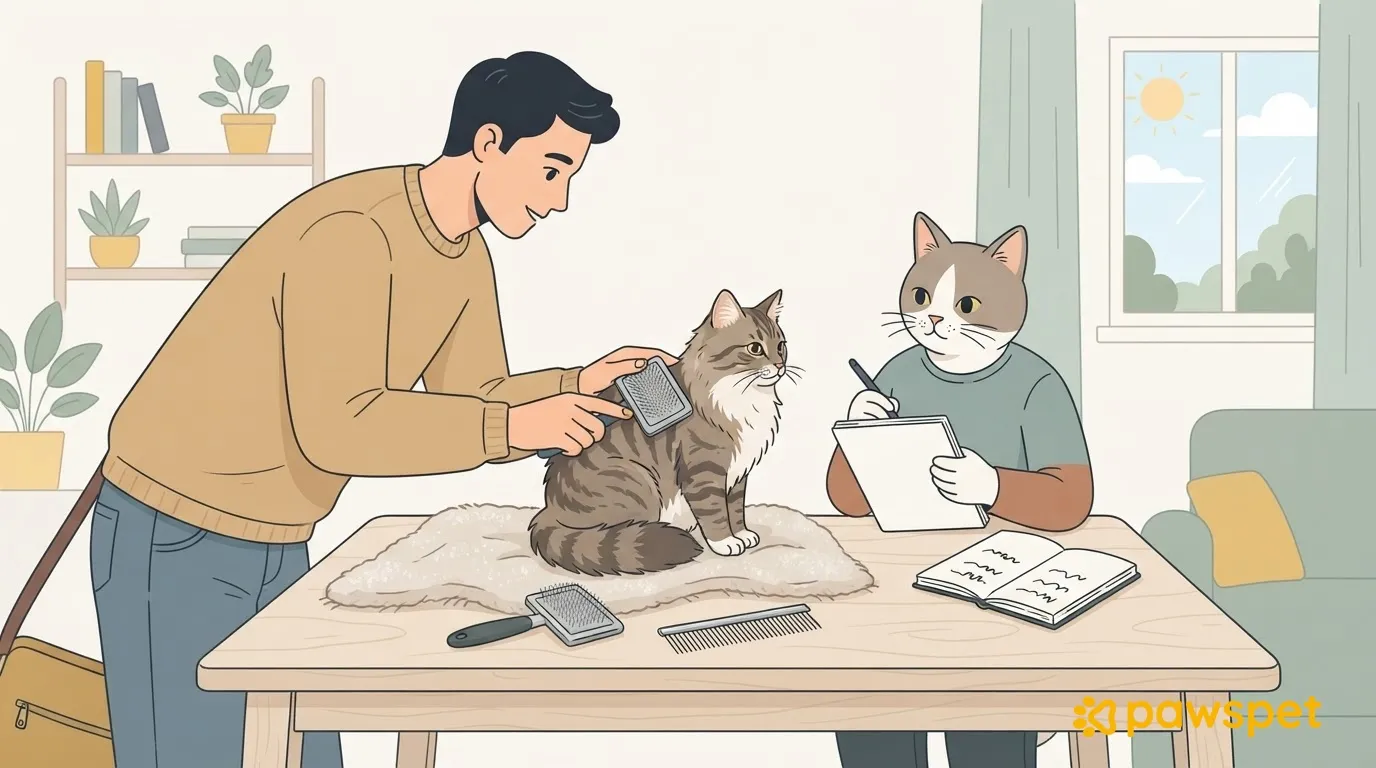
A few minutes a day is enough; choose a time when your cat is calm. First run your fingers through the fur to feel for clumps or tufts that resist; then use a wide-toothed comb on the areas at risk, one at a time, with short, gentle strokes.
One possible order is behind the ears, the neck, the armpits (when the cat stretches), and finally the belly, but only if the cat offers it. If your cat refuses to let you touch its belly or thighs, don’t hold it still: check visually when it stretches out, or do several short checks throughout the day. If the comb gets stuck, don’t force it: compare what you feel with the table below.
Small tangle or mat: how to tell the difference
| What you notice | Likely situation | What to do |
|---|---|---|
| A tuft that moves and opens between your fingers | Surface tangle | Gently work it out, holding the fur at the base |
| A dense clump that won’t separate | Mat | Don’t persist: leave it to a professional |
| The fur pulls the skin when you lift it, or the clump is attached to the skin | Mat close to the skin | No scissors or pulling: a professional is needed |
| Redness, dampness, odor, or a wound under the clump | Possible skin problem | See the veterinarian first |
| Mats in several areas | Extensive matting | Have a professional assess the whole coat |
To work out a surface tangle:
- Hold the fur at the base, close to the skin, between your thumb and index finger. This keeps the tension on your fingers, not on the cat’s skin.
- With your other hand, separate the tangle into smaller tufts using only your fingers.
- Comb from the tip toward the root, in short sections and without tugging.
- Take breaks and stop at the first signs of discomfort, such as a swishing tail, flattened ears, or attempts to move away. Try again later.
- If the tangle doesn’t open after a few attempts, treat it as a mat and don’t persist.
Why you shouldn’t use scissors or pull
A mat close to the skin can pull the skin along with it. If you cut it, the blade works right next to skin that is easily injured on a cat, and one sudden movement is enough to hurt them. Pulling it apart is no better: tugging hurts, and a cat that associates brushing with pain is likely to become more wary of it.
New detangling products should also be used only after speaking with your veterinarian or groomer, because cats lick their fur afterward.
What to do instead: take a photo of the mat, don’t touch it, and contact a professional. If the skin under the clump doesn’t show any of the signs described below, you can look for a groomer in the «Servizi» tab of the PawsPet app to have it removed: choose the «Toelettatura» type and, in the filters, «Modalità di erogazione» («Presso la sede» or «A domicilio»). Read the service description and options to check that it covers cats: you can’t message the provider before booking, and the search doesn’t guarantee that professionals or appointments are available.
When to see the veterinarian first
In some cases, the first step is the veterinarian, not the groomer. Contact them first if you notice:
- red, damp skin, wounds, or a bad smell under or around the clump;
- pain when you touch the area: the cat pulls away, hisses, or meows;
- dirty mats near the anal or genital area;
- a cat that stops grooming or behaves differently than usual.
You don’t need to figure out what’s going on: describe what you see to the veterinarian and let them assess it.
For tonight, try one simple thing: when your cat is calm, run your fingers over the areas at risk and note where you find the first tangles. That way, you’ll know where to focus your checks over the next few days.