The site visit is more useful if you bring observations about your cat, photos of every part of the balcony, and specific questions about fastenings, edges, maintenance, and the warranty, and ask for written answers. Checks and supervision are still necessary even with netting: no solution eliminates every risk.
What to prepare before the site visit
How your cat moves around
Note whether your cat jumps onto the railing, climbs curtains or furniture, scratches or bites netting, or has already tried to get out. If you have other cats, describe each one’s habits. This information helps the technician recommend a solution: it’s not enough to say that your cat is calm.
Which parts of the balcony to photograph
Photograph the whole balcony and details from several angles, without leaning out. Include:
- the top, sides facing neighbors, dividers, and corners;
- the space below the railing and gaps between the railing and wall;
- possible footholds: awnings, downspouts, outdoor air-conditioning units, planters, and furniture placed nearby.
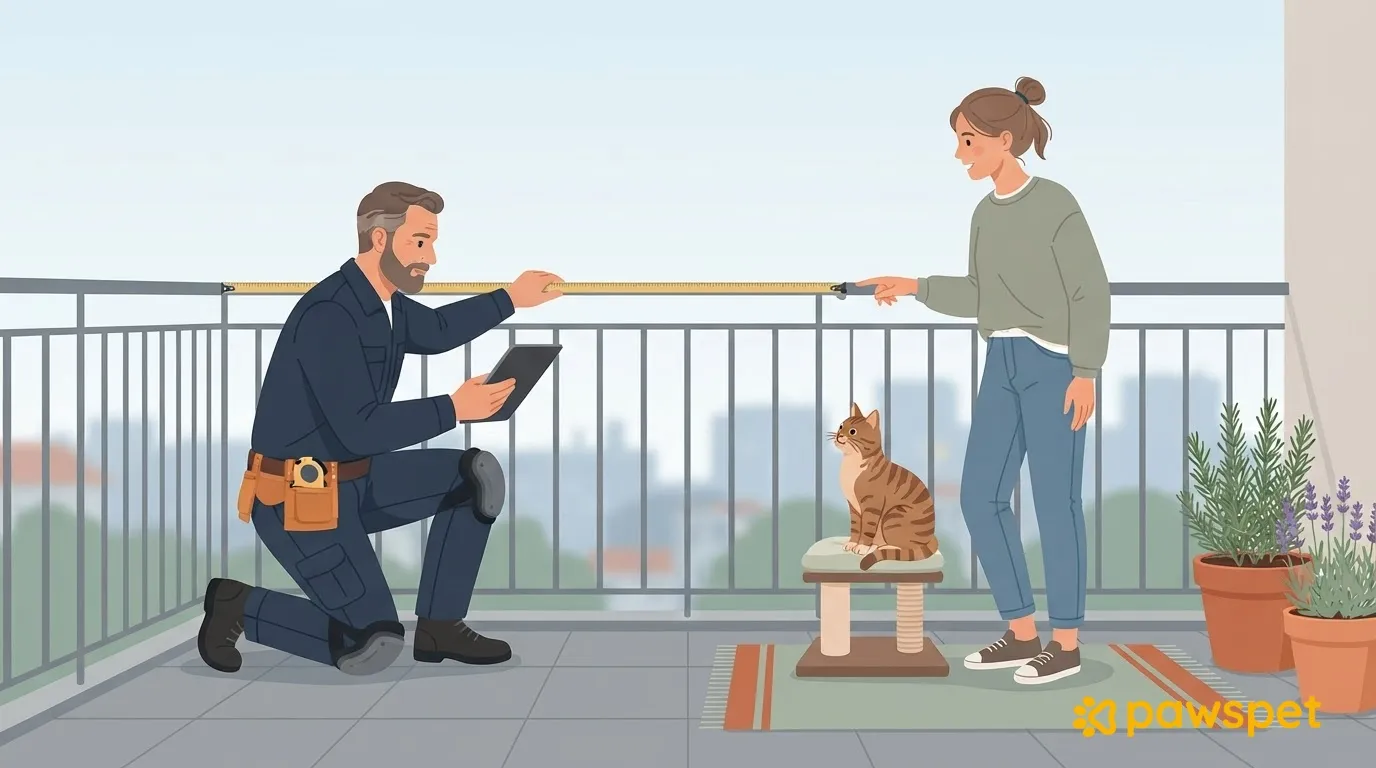
Take approximate measurements with a tape measure while staying in a safe position, and ask the technician to check them.
Permissions and consent
If you rent, ask the landlord for written consent for the planned work first. If you live in a condominium, ask the building manager whether the rules restrict work visible on the façade. Check what is required in your situation, without assuming that permission is always necessary or always unnecessary.
Questions to ask the installer
Ask for answers that address the parts you have inspected together, not just the product’s features.
- Proposed solution: “What solution do you recommend for this balcony, and why is it suitable for my cat’s habits?”
- Product: “What does the manufacturer say about resistance to scratching and weather? Can I read that information?”
- Fastenings: “Where and how will it be fastened? Are holes required? What work will be done to the railing?”
- Edges: “How will you close off the top, sides, corners, area below the railing, and gaps by the wall?”
- Access: “How do I open it to clean, hang laundry, or reach awnings and outdoor units? How do I check afterward that everything is properly closed?”
- Maintenance: “How often should the netting be checked, and who will do it? What signs of wear should I look for?”
- Estimate and warranty: “What does the estimate include, and what is excluded? What does the warranty cover, for how long, and under what conditions?”
If an answer is vague, ask the installer to show you the area in question and the proposed solution on the balcony. Have the estimate describe where the netting will run and how the edges will be closed off, along with the fastenings, access points, maintenance, and the warranty terms and duration.
What no netting can guarantee
“Cat-proof” is not enough to describe a protective barrier. The result also depends on installation, maintenance, your cat’s behavior, and items left on the balcony: moving a piece of furniture can change which areas your cat can reach.
Ask for clarification if you are promised total safety, if no one asks you questions about your cat, or if the technician refuses to put the answers in writing. Before you agree, look for concrete explanations rather than general reassurances.
Handover, first few weeks, and regular checks
At handover, walk around the balcony with the technician and check gaps, net tension, fastenings, and access closures together. Ask them to show you how to spot a problem.
For the first few weeks, always accompany your cat outside. Watch to see if they look for openings, climb, or bite the netting. Keep furniture and planters away from the barrier so they do not create footholds.
Agree on regular visual checks at the frequency recommended by the installer, and add one after strong winds or hail. Supervision remains important even after the first few weeks.
To help you remember to check, you can create a task in the PawsPet app from “Activities” → “+”: choose “Other” in the “General” category, enter “Balcony netting check” in the “Name” field, and set the frequency recommended by the technician under “Repeat,” for example, “Every N months.” Add an alert from the bell row, then tap “Save.” The reminder helps you remember the check, but does not inspect the netting; notifications arrive only if you have granted the app permission on your phone.
When to call the installer back
Call them back if you notice loose or torn netting, a fastening that moves, or an opening your cat has found. Another inspection is needed if façade work or replacement of the awnings or air conditioner has affected the barrier. Keep your cat indoors until the problem is fixed.
Before calling to schedule the site visit, take photos and copy the questions listed above onto a sheet of paper to keep in hand during the appointment.