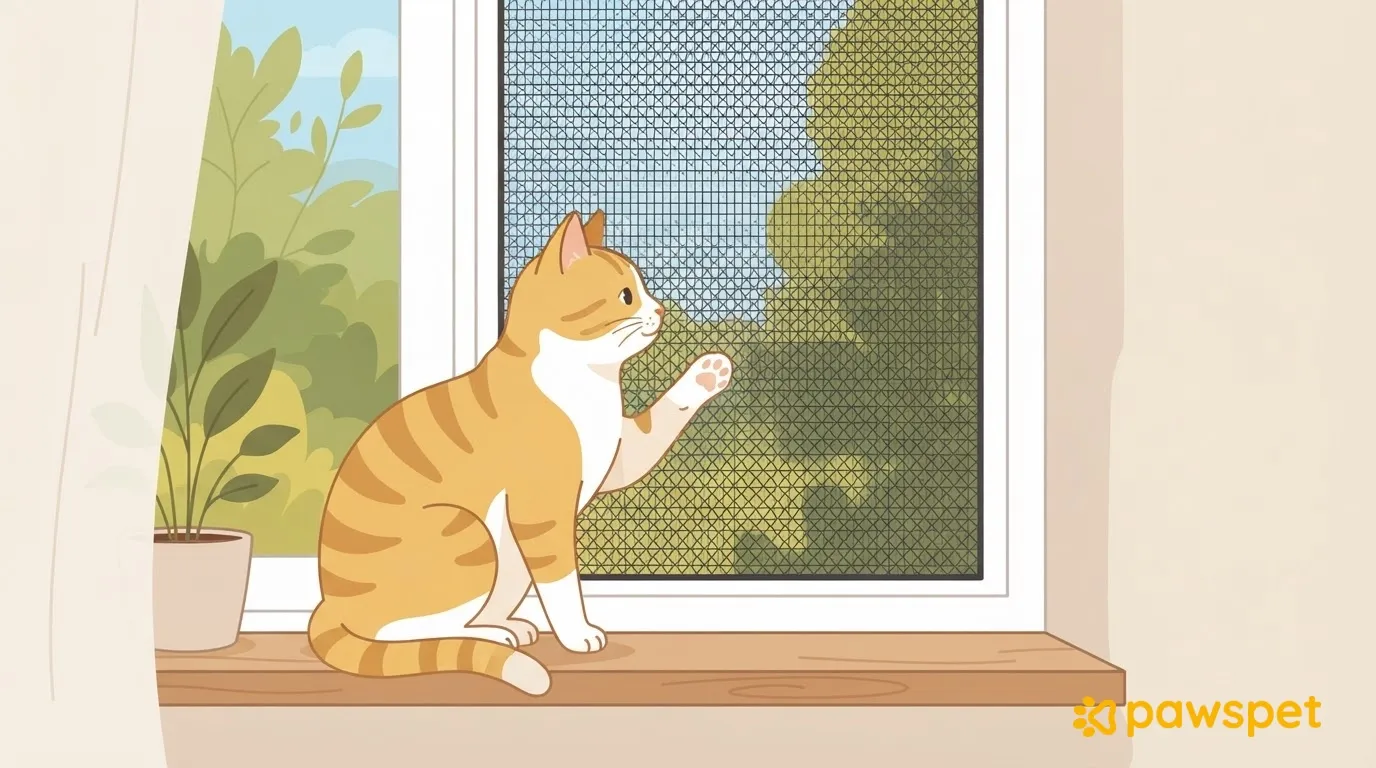
A window screen is made to keep insects out, not to keep a cat in. Unless the manufacturer explicitly says otherwise, and the installer confirms it, don’t consider it a barrier that will keep your cat indoors. Until you have clear answers, only open windows in rooms your cat cannot enter.
Why you shouldn’t rely on the window screen alone
Near an open window, a cat may lean against the screen to look outside, push it with its paws, scratch it, cling to it, or dart toward an insect or bird. These are natural behaviors, but they can put the screen and frame under sudden weight and force, often when you aren’t watching.
That doesn’t mean every window screen will give way. It means that without an explicit statement from the manufacturer, you can’t know whether the screen is designed to withstand pushing and scratching. If the screen or frame gives way, your cat could end up outside through an open window before you notice.
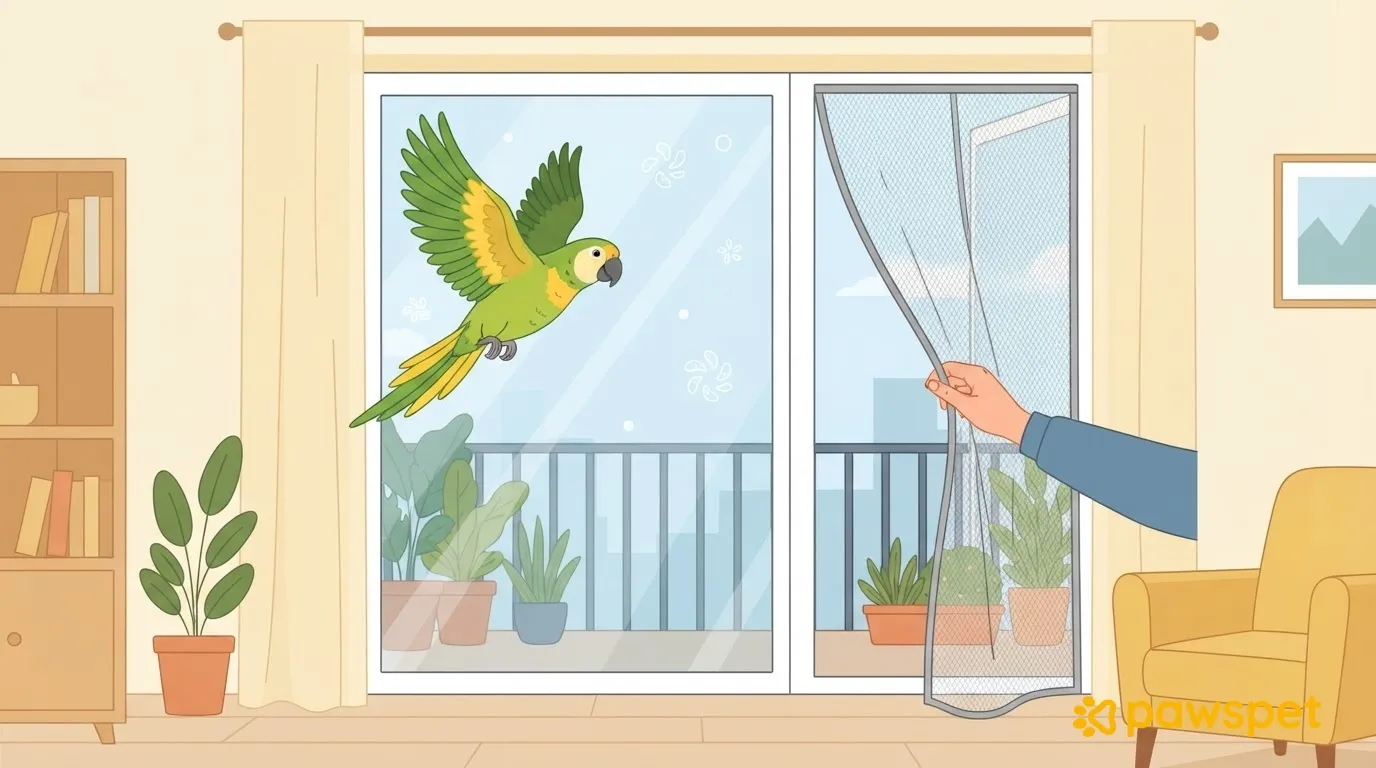
The same applies to sliding doors that open onto a balcony: their screens are also designed to keep insects out.
What to check on your home’s window screens today
Check one window at a time, and take your time:
- Tears and holes: Look for them around the edges and in the corners, too.
- Loose screen: Check that it hasn’t come out of its tracks or frame.
- Unstable frame: Try moving it gently with your hands; if it wobbles or comes loose, make a note.
- Latches: Check whether hooks and catches open with a gentle push.
- Launch pads: Furniture, shelves, or interior window sills your cat could climb onto to reach the screen.
Then watch your cat near the closed window: do they lean against it, push, scratch, or cling to it? This can help you anticipate what they might do when the window is open. Don’t test the screen by leaving your cat alone in a room with an open window: always observe them with the window closed.
If you find a defect, or if your cat has already damaged the screen, keep that window closed whenever your cat could reach it, until the screen is repaired or replaced. Take a photo of the problem to show the installer. If you don’t find anything, remember that these checks only reveal visible issues; they don’t prove the screen can withstand a cat’s force.
What to ask the window installer
Ask the installer these questions about the model you have or are considering. If a screen is described as suitable for cats, ask what that means in practice and request the manufacturer’s documentation.
- Is this model designed for pets, too? What does the manufacturer say about pushing and scratching?
- How is the screen held in place if it’s pushed?
- How is the frame secured? Could it come loose?
- Which latches can a cat not open?
- What maintenance is needed, and how often?
- What does the warranty cover, including scratches or force?
- Would a dedicated pet screen be worth considering in my case?
Ask for the answers to be included in the quote. If they’re vague or aren’t provided in writing, treat the screen as protection from insects and nothing more. Even if you get positive answers, keep watching your cat and repeat the checks.
How to air out your home in summer in the meantime
Until you have answers, you can air out your home with your cat without relying on the screen: the screen keeps insects out, while the closed interior door keeps your cat away from the open window.
- Choose a room your cat can’t enter, or can be kept out of: make sure they aren’t already inside, then close the interior door.
- Open the window only when you’re home and know where your cat is.
- Let family members and guests know: the room’s door must stay closed while the window is open.
- Close the window before opening the door again.
This rule also applies if you haven’t found any defects. Don’t use the tilt-and-turn opening as a shortcut: it poses a different risk, which we discuss in another article.
Today’s task: check every window screen in your home using the checklist and write down the questions to ask the installer.
Frequently asked questions
My cat fell or got out through the window: what should I do?
Contact your veterinarian immediately and follow their instructions, even if your cat seems fine: only an examination can assess possible injuries.