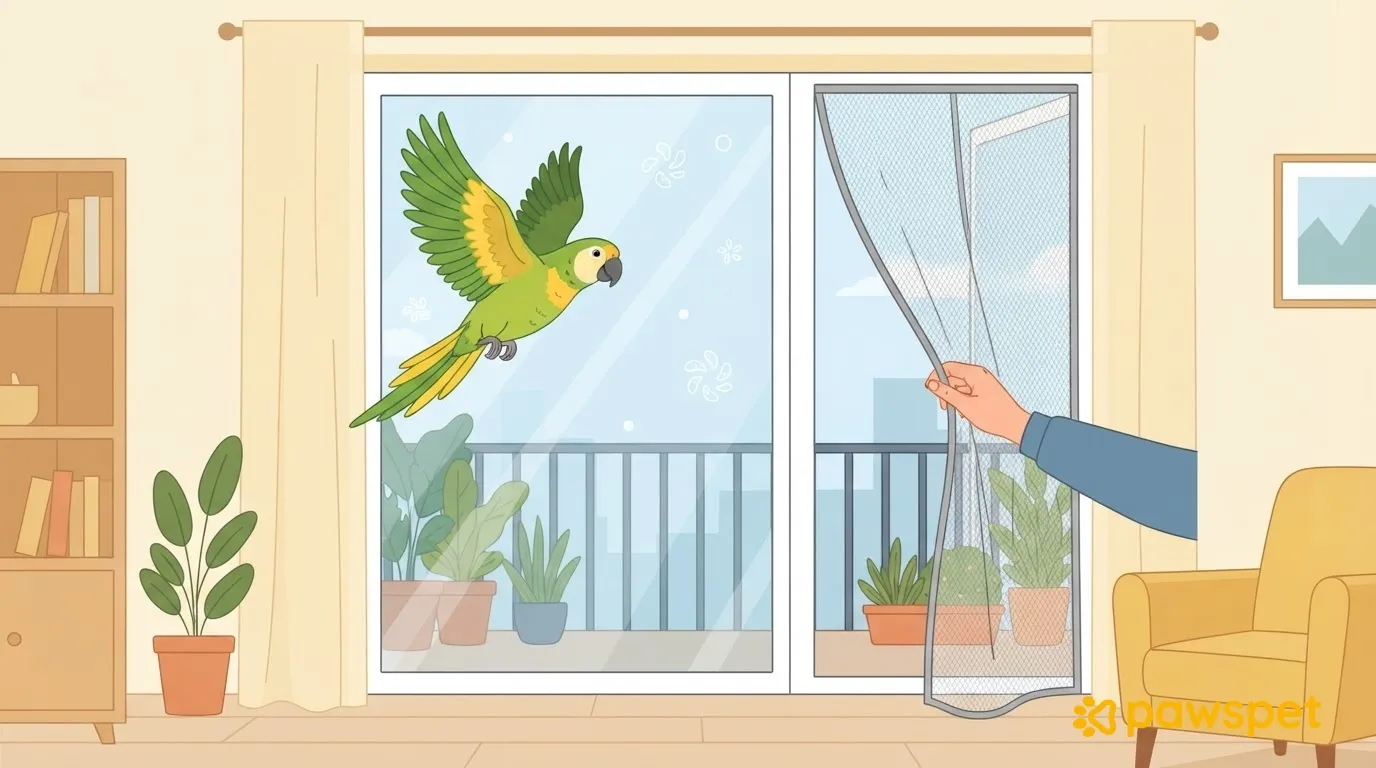
During the warmer months, windows and patio doors stay open for longer, and the basic rule is this: only open them when your parrot is in its cage or in another room with the door closed. This applies to everyone in the household and to guests. It is also a good idea to keep recent photos handy in case it does manage to get out: no precaution can guarantee zero risk, but a few shared habits can help reduce it.
The closed-door rule: who opens what, and when
Before opening a window, patio door, or front door, even for just a moment, always follow the same steps:
- Check where the parrot is and tell anyone else at home that you are about to open the door or window.
- Put it in its cage and check that the door is closed, or take it to another room and close the door.
- Only then open the window or door.
- Close everything again before letting it out.
Agree as a household on who checks where the parrot is before anything is opened, so no one assumes someone else has already checked.
The rule is most likely to be forgotten when people are in a hurry or acting out of habit:
- hanging laundry or watering plants on the balcony;
- receiving a delivery or a guest at the front door: it is best to secure the parrot first;
- cleaning and airing out rooms;
- having children or guests at home who do not know the rule and might open a door or window without thinking.
Explain the rule to everyone you live with and to guests, and leave a visual reminder: a note on the handle or next to the window can remind people who get distracted.
Glass, mirrors, and patio doors
When flying freely around the house, a parrot may not recognize glass as an obstacle, especially in a new room or in front of very clean surfaces. Mirrors and patio doors can also cause confusion because of reflections or because they offer a view of the outdoors.
To reduce the risk of collisions:
- let it get to know the rooms one at a time, staying with it;
- make larger surfaces visible with curtains or other items that break up reflections and transparency;
- watch how it reacts: if it gets scared or hits a surface, stop and make the surface more visible before continuing.
If you move furniture or hang new curtains, watch it again: the room may feel new to it all over again.
If your parrot often hits glass, or behaves unusually after an impact, contact a veterinarian who specializes in birds and ask for an assessment.
If it flies away: what to have ready
Preparing the information in advance means you will not have to improvise in the most stressful moment. It does not guarantee you will find your parrot, but it means you will be prepared. Keep the following close at hand:
- recent photos from several angles, clearly showing its colors and feather details;
- a brief description of distinctive features, such as a spot or a feather of a different color;
- the contact details of the veterinarian who looks after your parrot;
- the numbers of a few neighbors who have already been alerted and are willing to check balconies and terraces;
- a message written in advance to send, with a photo, description, and your contact details.
Make sure everyone in the household knows where to find this information. To keep it all in one place, in the PawsPet app you can store up to six photos, the color, and distinctive features in your parrot’s profile (species “Birds” or “Bird”), and, from the ⋮ » “Sharing” menu, activate a public read-only link to send to people helping you, even if they do not have the app.
Keep in mind that the page shows the animal’s photo and name, some identifying details (for example, its microchip or location, if filled in), and a health summary, and that anyone with the link can view it: share it carefully and turn off sharing when it is no longer needed, bearing in mind that if you turn it back on, the same link becomes valid again. The link will not find your animal; it only lets the people you choose to involve view that page.
Insect screens and balconies: what to check with a professional
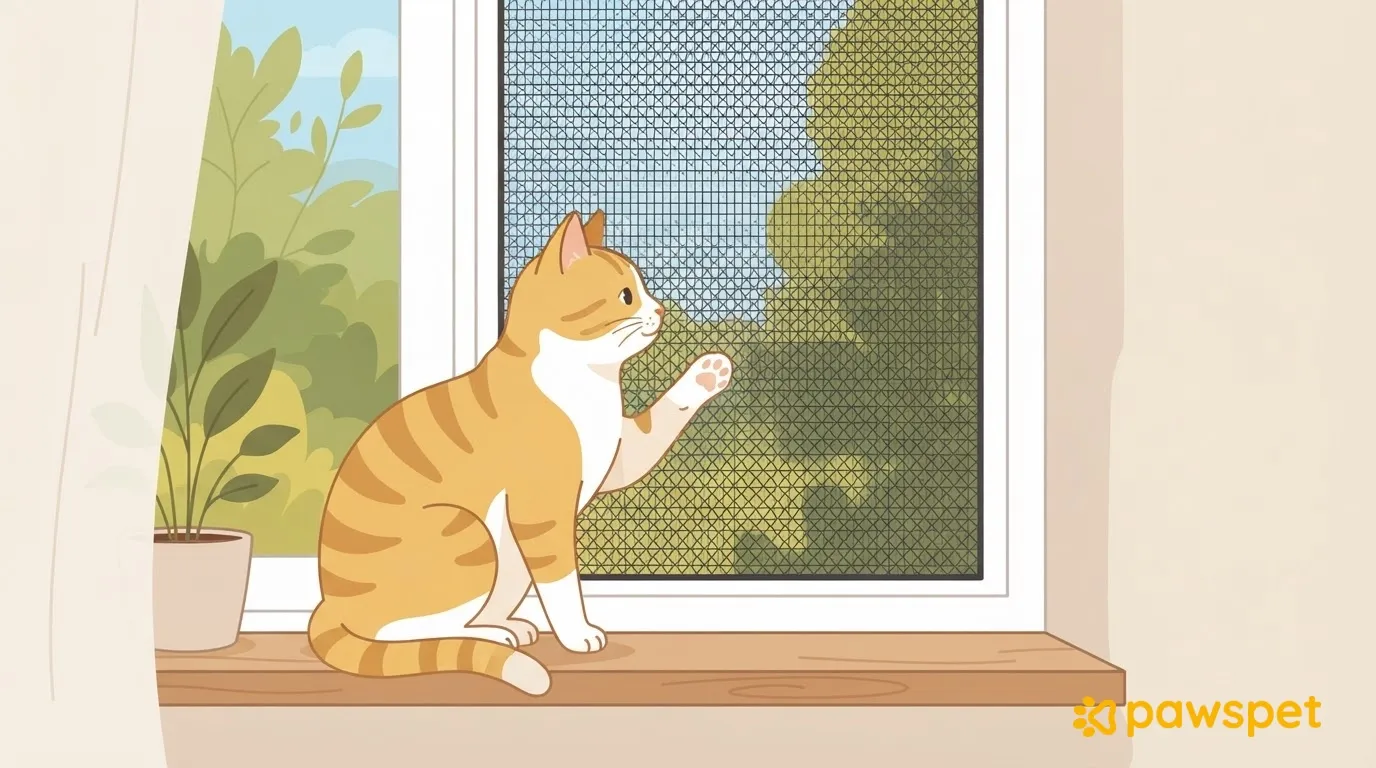
An insect screen may seem like a barrier, but it is not necessarily designed to withstand a parrot’s beak. If your parrot chews on screens, frames, or seals, ask the window and door specialist or installer:
- which materials and fastenings are suitable, and whether any parts could come loose and be swallowed;
- how insect screens and patio doors stay closed, and whether they could be opened accidentally;
- what maintenance they require and how often;
- what the warranty excludes.
From time to time, check screens, frames, and seals for bite marks or loose parts, and report any you find to the professional.
If you take your parrot onto the balcony, do so only in a cage or a closed carrier, in the shade and under supervision.
Today, write the closed-door rule on a note where everyone can see it, and update your parrot’s photos.
Frequently asked questions
Does trimming feathers prevent escapes?
This is a decision to discuss with a veterinarian who specializes in birds and can examine your parrot. Whatever you decide, the rules about doors and windows stay the same.