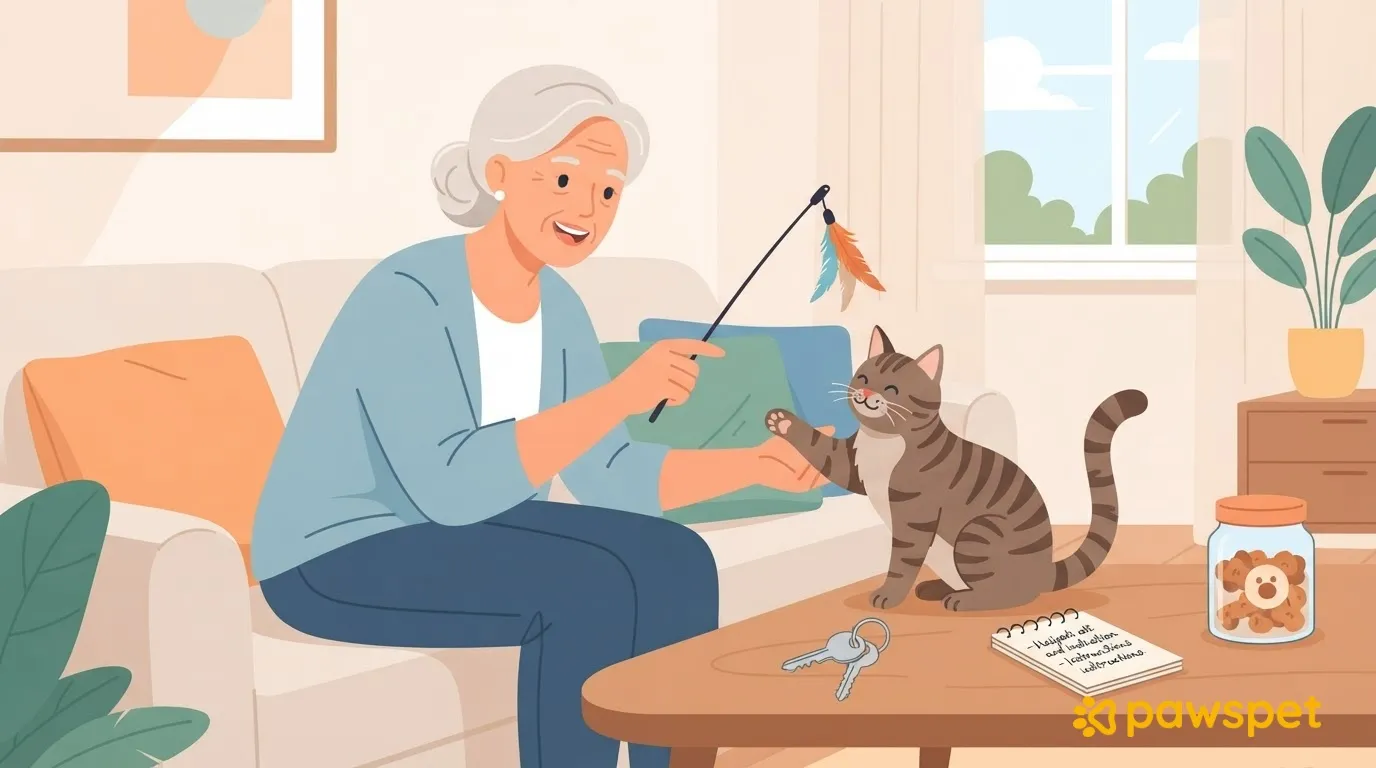
Before you leave, write down instructions for each room: which windows must stay closed, how to air out the home, when the balcony must stay closed, and what to do if a screen is damaged. Go through the house with the person who will care for your pet and show them the instructions, along with useful contacts. A short sheet is enough, but don’t leave any rules implied.
Why windows and balconies need extra care during a summer absence
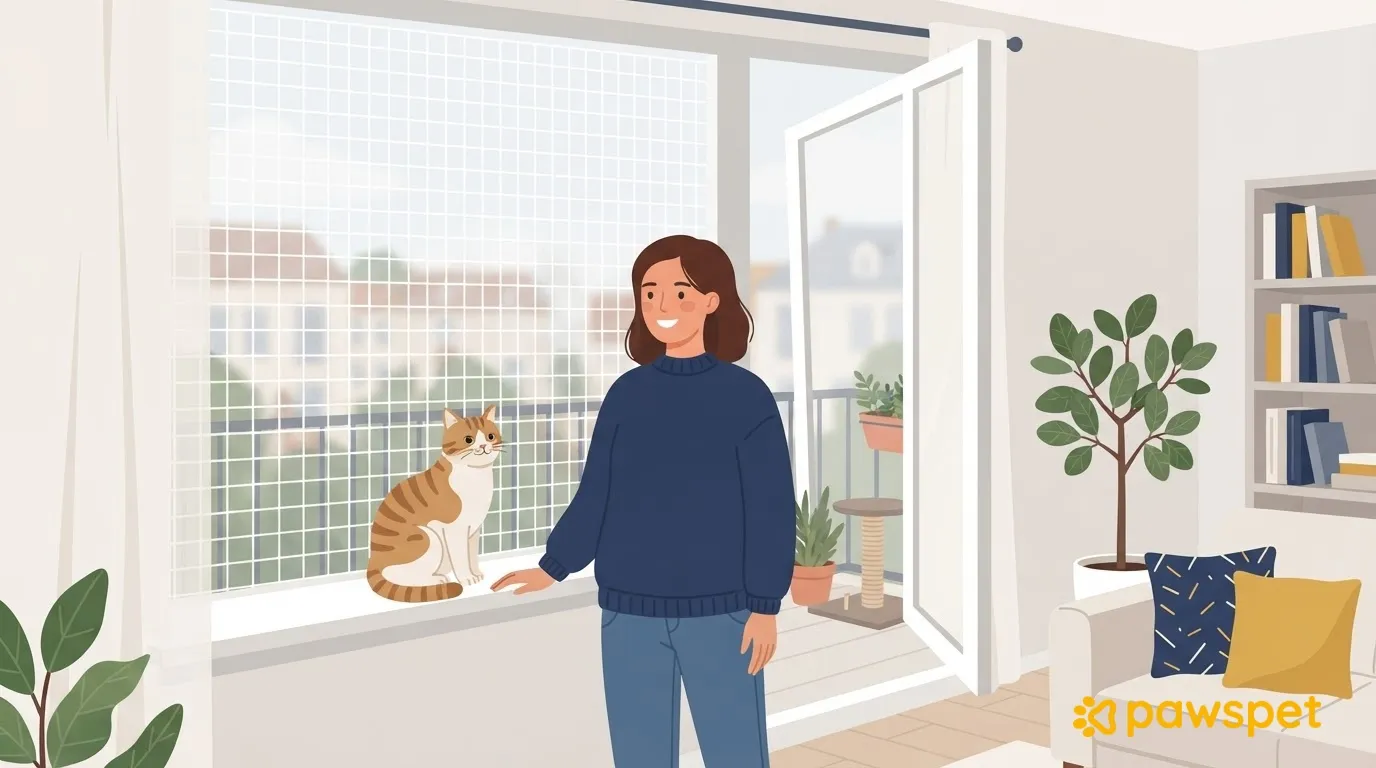
The heat may tempt someone to open a window while the cat is hiding somewhere else; a balcony door may be left ajar after watering the plants. Even moving a flowerpot near the railing or assuming a mosquito screen is enough can change a situation you know well. Anyone coming in to care for your dog, cat, or other animals may not know these details: make the rules explicit instead of leaving them open to interpretation.
The instruction sheet, room by room
Adapt this template to your home and your pet. If a room has more than one window, identify each opening: “facing the street,” “above the sink,” “next to the bed.” Avoid vague instructions like “leave it open a little.”
| Room | Windows and balcony doors | Rule |
|---|---|---|
| Kitchen | Window above the sink | Open only when the pet is shut out of the room; close it before opening the door again. |
| Bedroom | Window next to the bed | Do not open while you are away. |
| Living room with balcony | Balcony door | Open it to water the plants only when the pet is in another closed room; close it right away. |
Under the table, write a few rules that apply to everyone:
- Check where every pet is before opening a window or door.
- Specify which windows may be opened, how to open them, and which must never be opened while you are away.
- Air out only rooms the pet cannot access; close the windows before letting them back in.
- For the balcony, specify whether access is forbidden or allowed under the agreed conditions: never leave the pet alone. If in doubt, keep it closed.
- Don’t move furniture or flowerpots close to screens or railings.
- Don’t rely on mosquito screens as a safety barrier.
- Before leaving the house, check that everything is closed and count all the pets.
Print the sheet and hang it near the front door, where it will be visible at every visit.
The in-person handover
Arrange a meeting before you leave and go around to all the windows together. Show them the handles, locks, latches, and screens; don’t just point them out from a distance. Let the person who will take over try the locks while your pet is safe in another room. Show them your pet’s usual hiding places, too.
Then ask them to show you how they would air out a room and repeat the main rules. This is the time to clear up questions and correct the sheet, not to add more instructions verbally. If several people are taking turns, give each of them the same version.
Sharing your pet’s profile, details, and contacts
Leave these contacts alongside the rules:
- your phone number;
- your veterinarian and the agreed emergency contact;
- someone nearby who has a key;
- the screen technician or installer.
Agree in advance who can step in if you don’t answer: listing a number on the sheet doesn’t guarantee that person is available.
To make your pet’s details accessible, open their profile in the PawsPet app and go to ⋮ » «Collaborators» » «Add collaborator». Search for the family member or pet sitter by name or email address: they must already have a PawsPet account. Choose permissions for each area, for example, «View» for «Health» only, so they can consult health details without changing them. Access does not expire automatically: remove the collaborator when you return.
Alternatively, from ⋮ » «Sharing» you can activate a public read-only link, which anyone with the link can view, even without the app. Deactivate it when it’s no longer needed: if you turn it back on, the old link becomes valid again.
The passport and other documents in the Pet Records section are not visible to collaborators or through the link: leave a copy if they are needed. If you booked the service through PawsPet, use the chat linked to the order for updates. Leave home instructions on the sheet: the app does not have a dedicated field for them.
If a screen breaks or your pet gets out
If a screen or latch is damaged, the caregiver must move your pet to safety in another room, then close off the affected room. They should let you know and call the technician listed on the sheet, without attempting makeshift repairs.
If your pet falls or is injured, the person with them must contact the veterinarian immediately, without waiting for your reply. If your pet gets out of the house, they should search nearby and notify the neighbors, and let you know right away.
Prepare the sheet a few days before you leave and review it with the person who will stay behind as you walk through the house, correcting anything that isn’t clear together.