A short stay with a visiting dog takes preparation before they arrive: meet away from home, keep resources separate, supervise constantly, and schedule breaks. If tension keeps recurring, separate the dogs and switch to an alternative plan. No plan can guarantee that the dogs will get along, but these steps reduce opportunities for conflict.
Before they arrive: what to ask and decide together
Call the other owner and ask:
- their dog's age and size;
- how their dog behaves around other dogs and cats;
- whether their dog is used to sleeping away from home;
- whether their dog guards food, toys, or people;
- meal and walk times;
- fears (noises, doors, stairs);
- whether their dog is up to date on the preventive care recommended by their veterinarian.
If the answers concern you, consider the backup plan described below right away.
Then agree on three things: who handles which dog (usually each person handles their own), who can decide to separate them (ideally, either person can do so without discussion), and what to do at the first growl (calmly interrupt and separate them, without scolding).
For example, your older dog can't stand being disturbed while resting. Agree that their bed is off-limits to the visiting dog and that the visiting dog's owner will call them away if they approach.
The first meeting takes place away from home
Choose a quiet, neutral place near home, but not right outside the front door. Then:
- One person per dog, with loose leashes, since a taut leash can increase tension.
- Walk parallel at a distance, without letting them approach head-on.
- Reduce the distance gradually; if either dog stiffens, move farther apart again.
- Let them sniff briefly, then start walking again.
- Go inside together and keep the leashes attached for the first few moments at home.
Avoid greetings at the door or on the landing: pressure can build in tight spaces and at the threshold.
The home: duplicate resources and separable spaces
This is your dog's home: the goal is to make sure neither dog has anything to defend.
| What to prepare | Why it helps |
|---|---|
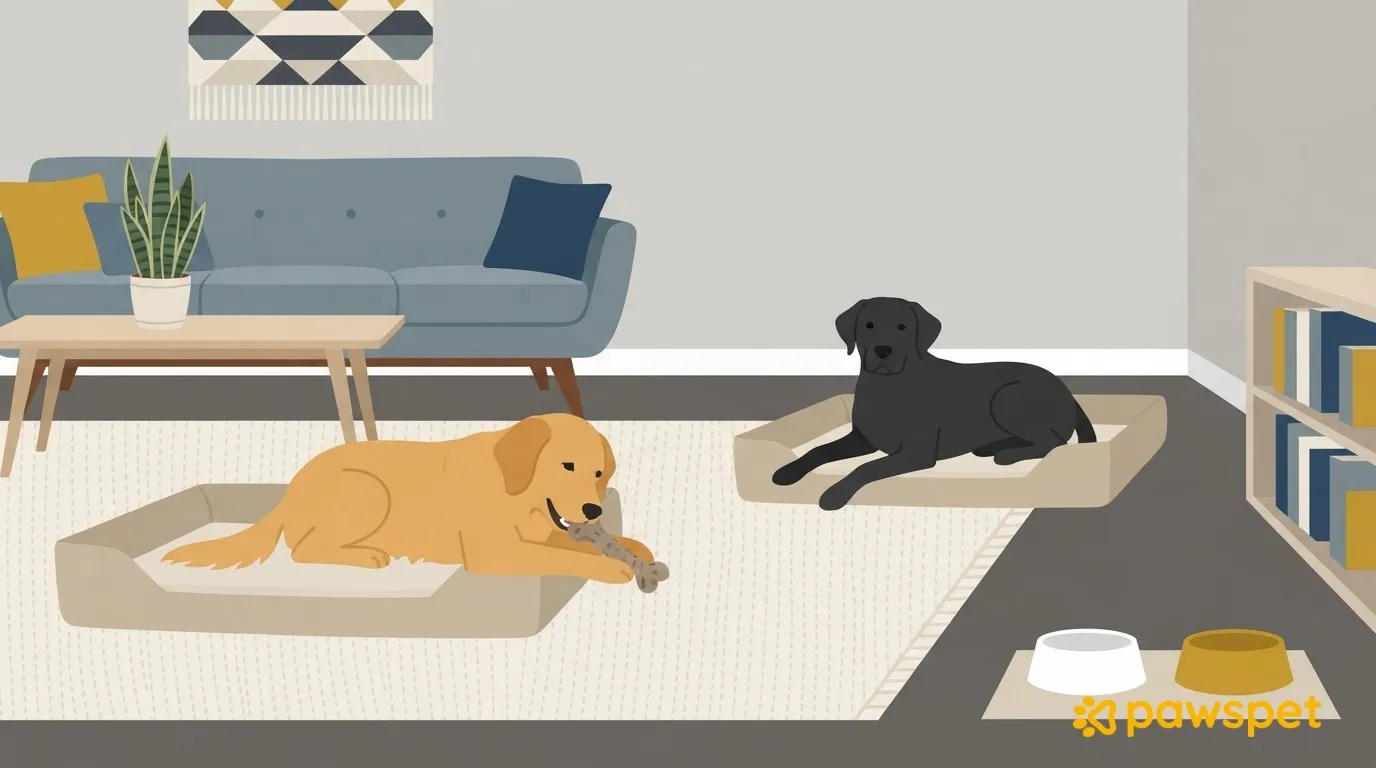
| Separate food and water bowls placed far apart | Neither dog can guard what the other eats or drinks |
| Meals in separate rooms or behind a closed door | Food is often a source of tension |
| Put away favorite chews and toys when the dogs are together | With no prized objects around, there's less to compete over |
| A resting area for each dog; your dog keeps their usual spots | Each dog has a safe place, and your dog keeps their familiar anchors |
| A baby gate or door to divide the spaces | Lets you separate them right away without putting your hands between the dogs |
| Decide the rules for the sofa and bed in advance | Avoids disputes over spots and permissions decided on the fly |
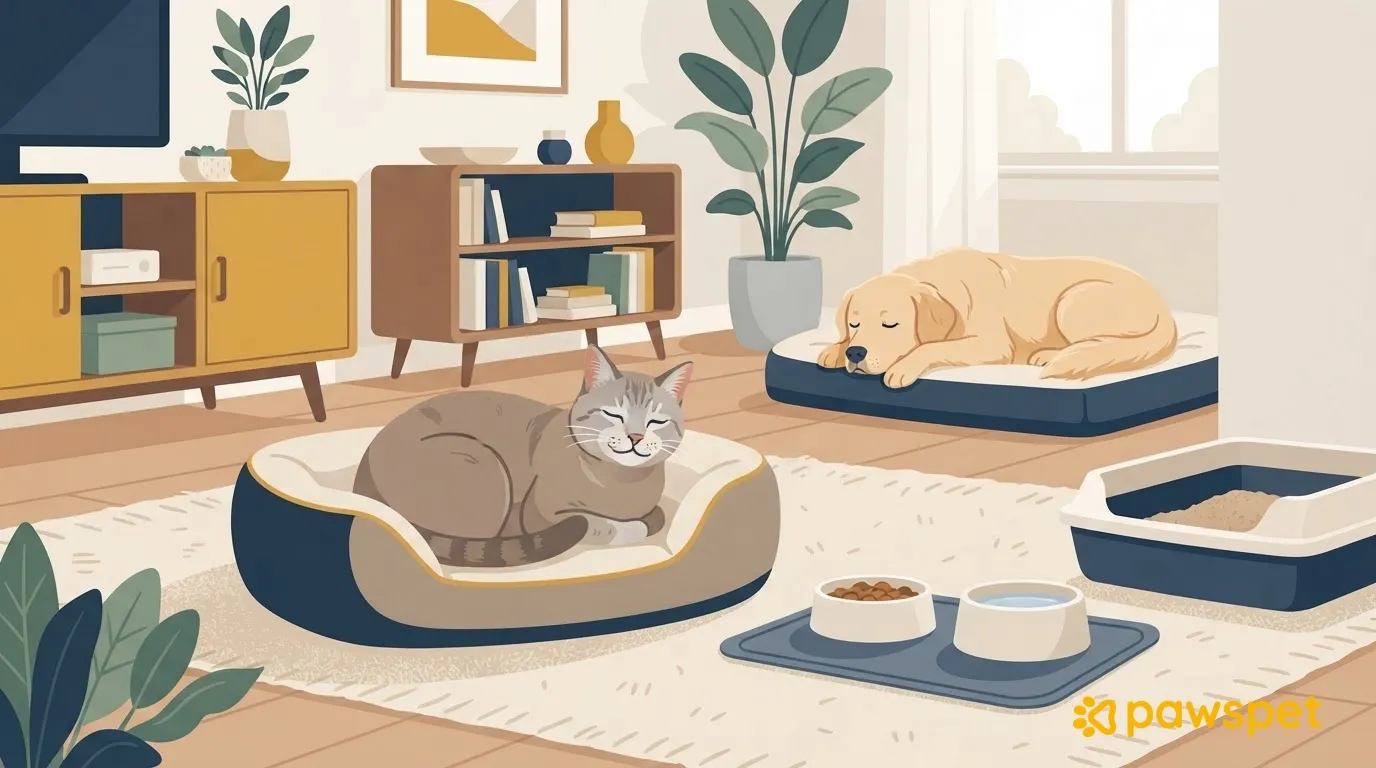
If you have a cat, keep them in a closed-off area with a litter box, water, food, and hiding places. There should be no contact with the visiting dog throughout the stay: tell your guests not to open that door.
A typical day with two dogs
Here's an example to adapt, with planned breaks apart:
- Morning: a quick trip outside as soon as they wake up, breakfast in separate rooms, then a parallel walk—or separate walks if either dog pulls or gets worked up at the sight of other dogs.
- Afternoon: separate rest time, each in their own area; then some time together in a spacious area, with you present and attentive, and no toys lying around.
- Evening: one last trip outside, dinner separately, some quiet time together under supervision, then each dog goes to their own area.
A firm rule: never leave the dogs alone together, not even for a quick errand. Before you go out, put each dog in their own area.
To manage marking, take the visiting dog out more often at first, clean without scolding, and roll up delicate rugs. At night, keep them in separate areas unless the dogs are already used to sleeping together.
Signs of tension and how to separate them
Some observable signs aren't enough to make a diagnosis, but they can tell you when to stop:
- a stiff body;
- a fixed stare at the other dog;
- growling or a raised lip;
- one dog avoiding or moving away from the other;
- one dog unable to settle and rest.
Calmly interrupt, put a barrier between the dogs, and try again later with more distance. If it happens again, switch to rotating access to the spaces for the rest of the stay: one dog in the shared area, the other in a room, then switch.
If there is a fight, separate them with a barrier (a door, baby gate, or panel), without putting your hands between the dogs. If either dog has injuries, even minor ones, contact a veterinarian. Then switch to rotating access to the spaces.
Backup plan: when living together doesn't work
If tension keeps recurring, changing the plan isn't a failure: those two dogs need more distance. Realistic alternatives include strictly rotating access to the spaces for the entire stay, taking the visiting dog to doggy daycare during the most challenging hours, boarding them for a few nights, or hiring a pet sitter.
It's best to consider these options before the dog arrives, since finding a place at the last minute isn't always possible. To compare facilities at your leisure, you can search for boarding facilities and doggy daycares in the «Services» tab of the PawsPet app: choose the service type «Boarding» or «Daycare», then check the details, availability, and reviews.
Departure and getting back to normal
When it's time to leave, take one last walk separately. Then put your dog's bowls, toys, and bed back in their usual places and keep their routine calm for a few days. Also check for chewed items or marked corners.
To get off to a good start, prepare the day before the dog arrives:
- spare bowls and a quiet spot away from the others to put them;
- a baby gate or door ready to use, and a resting area for the visiting dog;
- toys, chews, and delicate rugs already put away;
- the cat's closed-off area, if you have one;
- the location for the first meeting, chosen and agreed on with the other owner.