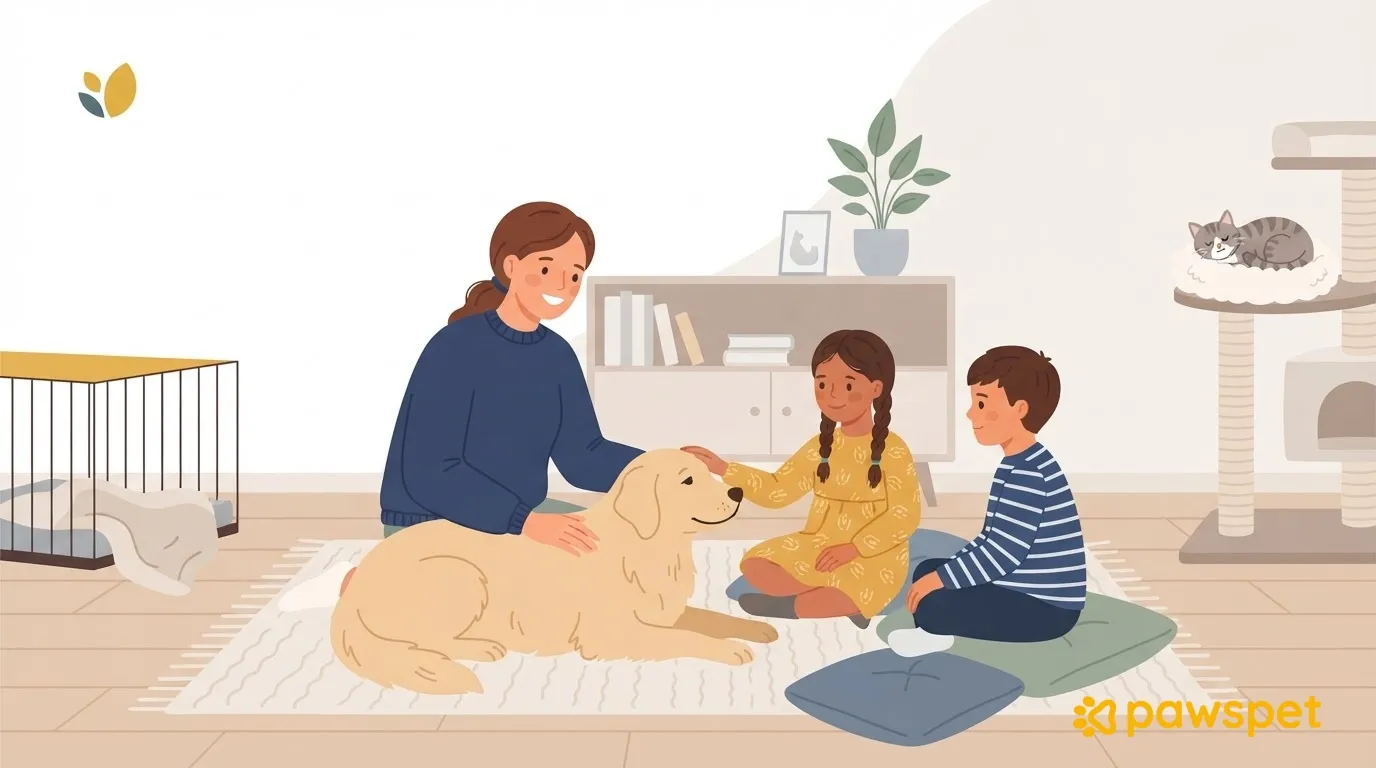
A calm visit needs three things: an adult actively supervising, a retreat where no one disturbs the pet, and a few rules explained to the children when they arrive. When no adult can supervise, keep the children and the pet in separate spaces.
What adults should do before and during the visit
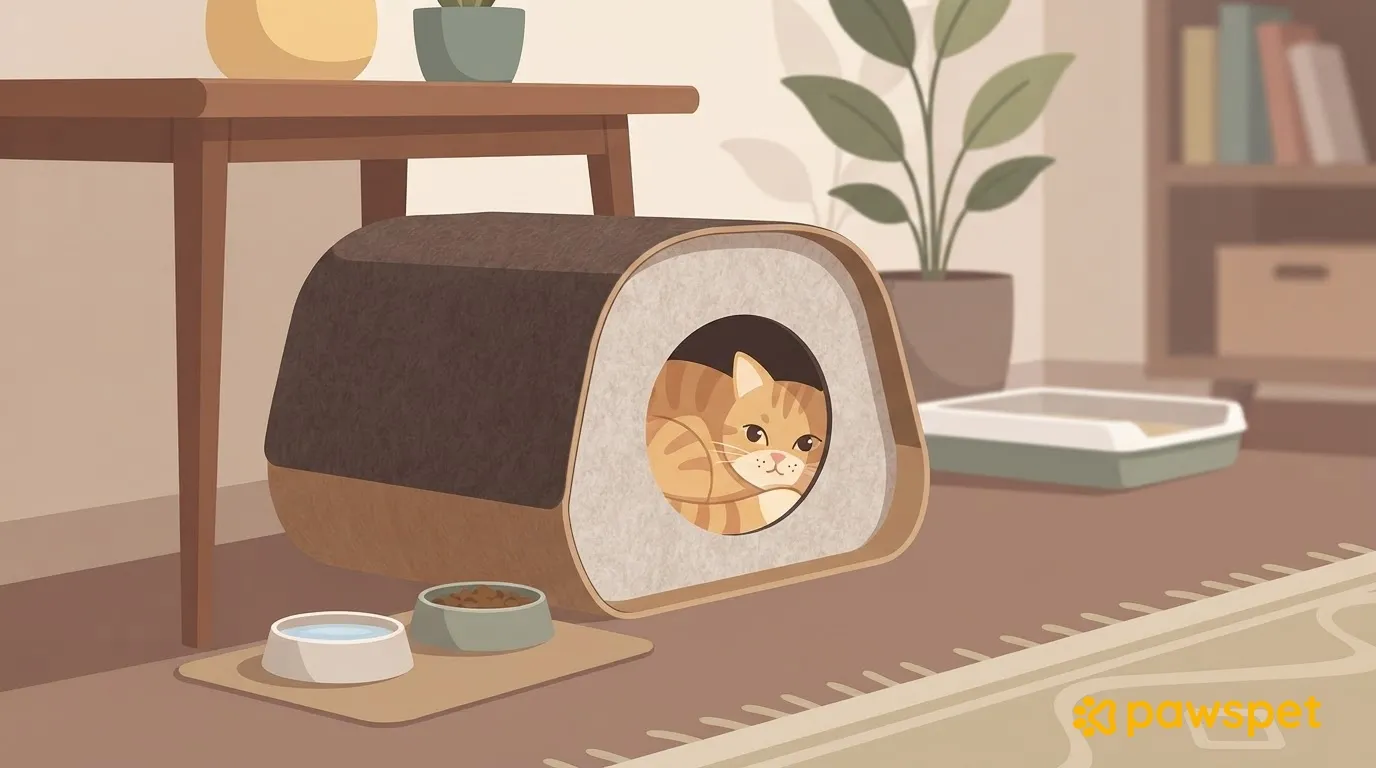
Set up a room or, for a dog, an area separated by a baby gate, with a bed and water. For a cat, also provide high-up places and a room with a litter box that is always accessible, without having to cross the children’s play area. The retreat is off-limits to young guests: if the pet retreats there, don’t follow.
Before the guests arrive, take the dog for a walk or have a play session. Move toys and food bowls out of the children’s reach, while keeping water in the retreat; also keep snacks away from the pet.
Ask the parents whether the child is afraid of or allergic to animals. Agree on who will be the adult on duty: for example, Grandma first, then a parent, making it clear when the handover happens. The person supervising should not look at their phone or cook: they should follow the interaction and be ready to stop it. If they need to step away, another adult must explicitly take over; otherwise, separate the children and the pet.
Three rules to explain to children
- “We wait for the pet to come to us.” Don’t chase the dog or cat, or block its way when it wants to leave.
- “If the pet is eating, sleeping, or in its own space, we leave it alone.”
- “A few gentle strokes, then we stop.” Brief strokes on the sides and chest, if the pet welcomes contact. No hugging, picking up, or putting your face near its muzzle. After a few strokes, stop and let the pet decide whether to stay.
Show these rules with a stuffed toy or by demonstrating them yourself. The child can also choose not to pet the animal: watching from a distance is a way to take part without having to face a fear through forced contact. With very young children, an adult mediates every interaction, with the child seated or held.
The most delicate moments
The pet doesn’t need to be involved throughout the visit: during hectic moments, plan to separate them in advance.
| Moment | What to do |
|---|---|
| Arrival and greetings | The pet waits in its retreat; for a dog, an adult can instead manage it on a leash. Make introductions once everyone is seated, without forcing the pet to approach. |
| Snacks and meals | With food falling and sticky hands around, keep the pet out of the room where people are eating. |
| Running and noisy games | Give the pet a break in its retreat, with no children following. |
| Naps | Children and pet rest in separate spaces. Don’t wake the pet to pet it. |
| Garden and gates | Supervise outside, too. An adult manages doors and gates: no chasing and no leaving exits open. |
Keep the retreat available throughout the visit: even when things quiet down, the pet may choose to stay there.
Signs not to ignore
These are general examples to observe in context, not diagnoses.
| Dog | Cat |
|---|---|
| Turns away, licks its lips, yawns out of context, stiffens, or growls. | Puts its ears back, swishes its tail, hides, or hisses. |
You don’t have to wait for a growl or hiss before giving the pet a break. At the first sign, the adult calmly moves the child away and leaves the pet an escape route. Don’t scold the pet for growling or hissing: stop the contact without trying to pet it again.
If the distress recurs at every visit, consult your veterinarian to rule out possible pain and a qualified behavior professional who works with the relevant species.
To arrange professional support for future visits, you can look for dog trainers and behavior consultants in the “Services” section of the PawsPet app, selecting “Behavior consultation” or “Training.”
If there is a bite or scratch
Immediately separate the child and the pet, without punishing the pet. Take care of the child: wash the area and contact a doctor or pediatrician. Inform the parents.
Once the situation is under control, note what was happening beforehand: where they were, what they were doing, and whether there was food or toys around. This information helps describe what happened to the veterinarian; it is not about finding someone to blame. Ask the veterinarian for advice about the pet; after a bite, also consult a behavior professional before arranging new encounters.
Decide today who will be the adult on duty and where the retreat will be.