For many cats, hiding is a common way to cope with new people and noises, and it doesn’t necessarily mean yours is “antisocial.” You shouldn’t pull your cat out of its hiding place: your job is to offer a safe haven with everything it needs and ask guests to leave it alone. Here’s how to prepare in advance and three sentences to repeat to everyone who comes in, word for word.
Why you shouldn’t pull your cat out
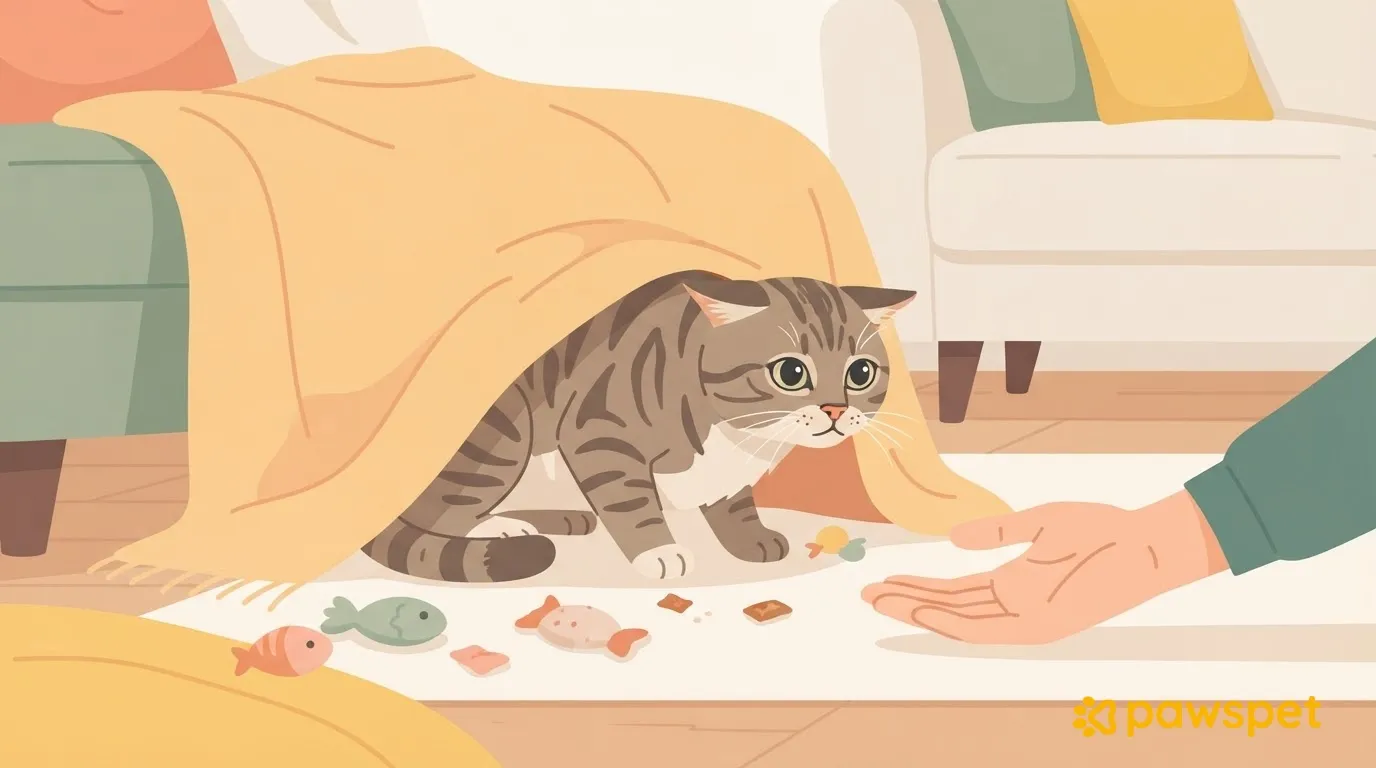
A cat pulled out by force may become even more frightened, scratch in self-defense, or look for less safe hiding places. When it feels safe, though, it often comes out on its own, as soon as the house seems quiet. It’s also best not to shut it in a room at the last minute: it needs a place it already knows. Your job is to prepare that place, not convince it to come out.
Prepare the safe haven a few days ahead
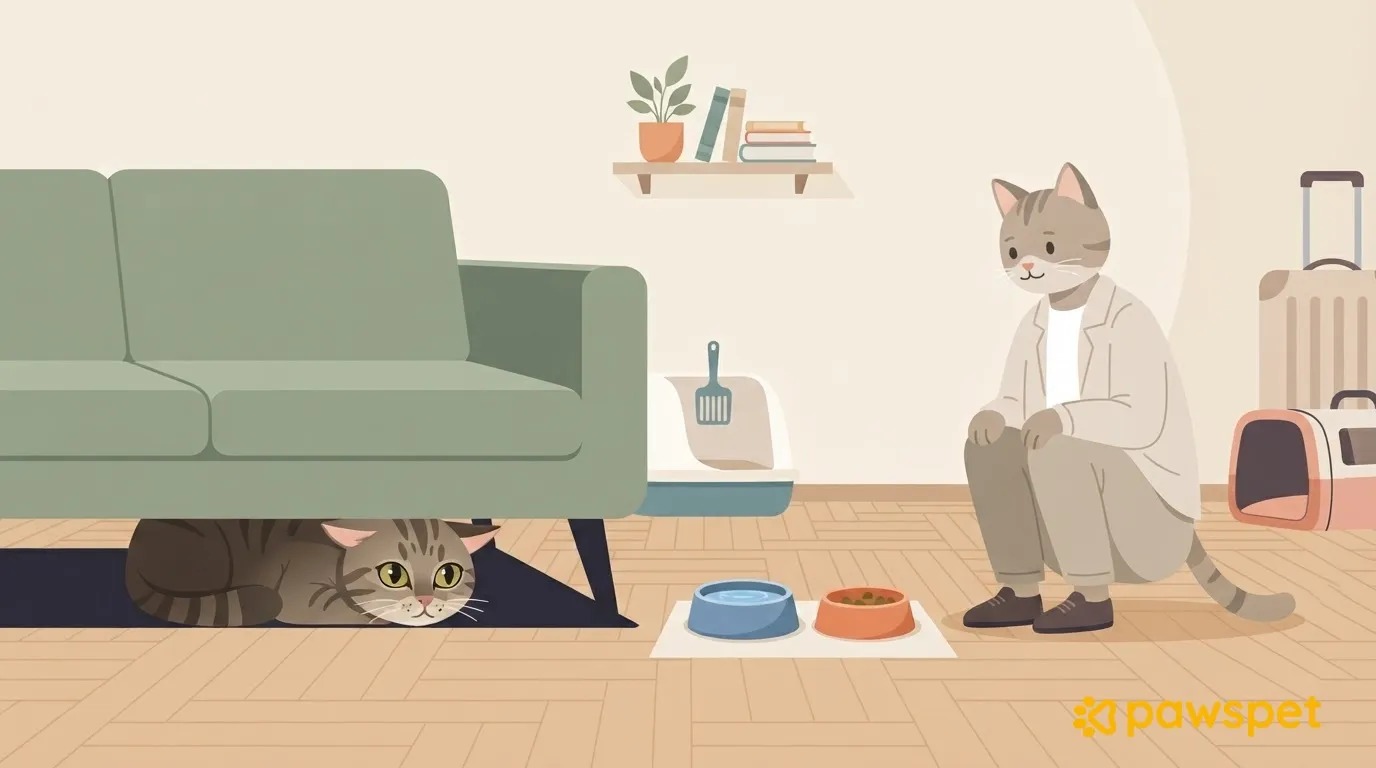
Set it up in advance, while the house is still quiet: your cat can explore it at its own pace and, when the doorbell rings, it already has a familiar place. Here’s the checklist:
- A room guests won’t use, such as a bedroom or study.
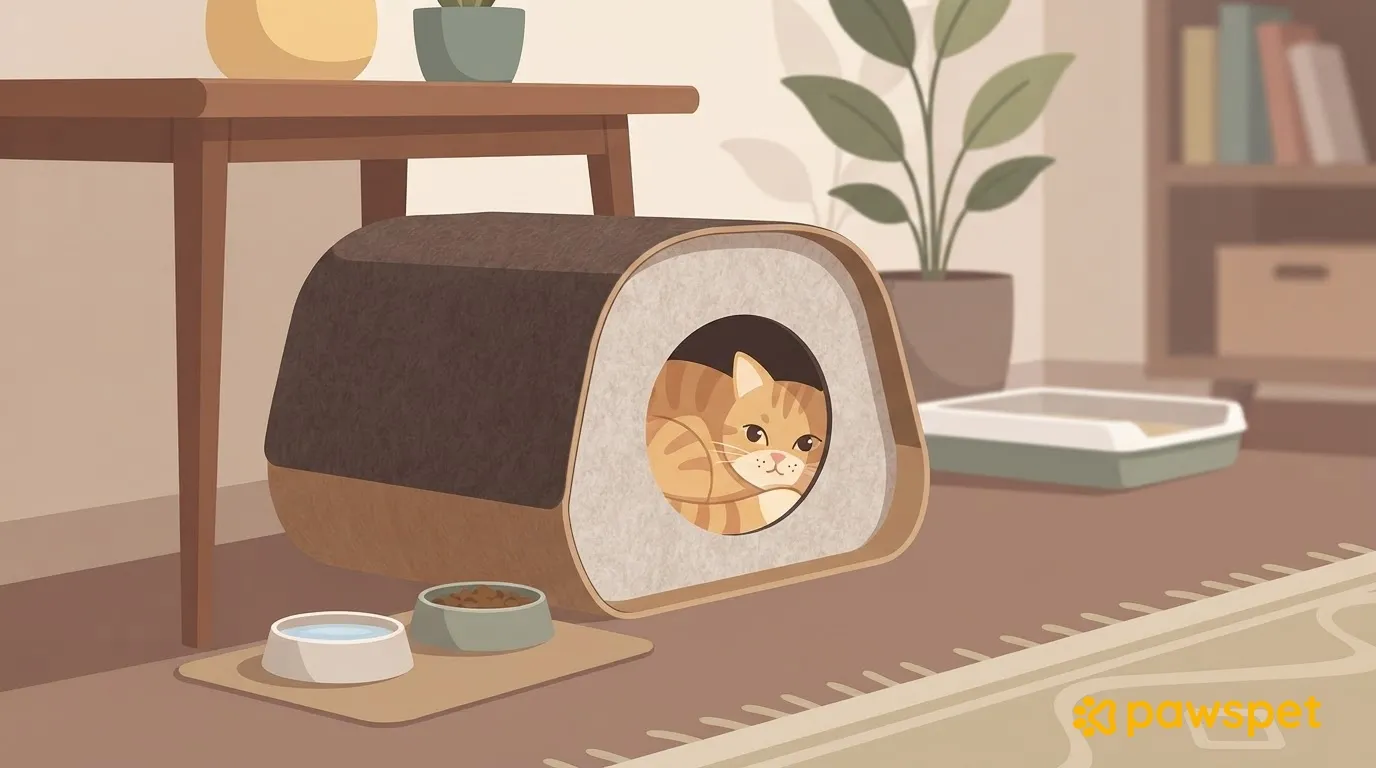
- Water, food, and a clean litter box, with the litter box away from the bowls.
- A hiding place: a box with an opening or an open carrier, with a blanket inside that your cat already knows.
- A clear high-up spot, such as a sturdy shelf, where it can watch without being reached.
- Closed or secured windows, with cables and fragile objects put away.
If you close the door to keep guests out, do so with your cat already inside, and open it again when the house has calmed down or if your cat asks to come out.
If your home is small
Set up a corner of the bedroom with a hiding place and a high shelf, and keep the door closed to guests. Don’t pile bags and coats there: they would take up space your cat needs and give everyone a reason to go in.
Three rules to give your guests
Repeat these three sentences to guests before they come in, aloud or by message, using the same words each time:
- “Don’t look for the cat or call it.”
- “Don’t pick it up or open the door to its safe haven.”
- “If it comes over, stay still, hold out a low hand for it to sniff, and pet it briefly, only if it seeks contact.”
Add three practical reminders:
- Don’t give the cat any table scraps.
- Close the front door immediately after anyone enters or leaves, and keep windows closed or secured to prevent escapes.
- An adult should supervise visiting children, who must not chase the cat.
During the visit: timing and noise
Stick to your usual routine: serve meals at the usual times, even bringing the bowl into the safe haven if your cat doesn’t come out, and keep the litter box clean. Don’t move the litter box while guests are there. Keep voices and music away from your cat’s room. If it comes out out of curiosity, don’t make it the center of the evening: offer a wand toy only if it joins in voluntarily. If it stays hidden all evening, leave it alone: that’s exactly what the safe haven is for. Just check the water and litter box from time to time without disturbing it.
Guests staying overnight
Don’t put guests in the room where your cat eats or has its litter box: that would be one more change at a time when the house is already busy. If there’s no alternative, move the litter box and bowls gradually, before the guests arrive. At night, always leave a clear path to water, food, and the litter box: don’t close any doors between your cat and what it needs. Before closing suitcases, bags, and closets, check that your cat hasn’t slipped inside. The three rules are easy to forget: write them on a sheet of paper and hang it in the entryway.
After the visit and when to be concerned
When your guests leave, let your cat reappear in its own time and return to your usual routine without going to look for it. If you moved the litter box and bowls, put them back gradually.
Contact your veterinarian if your cat:
- doesn’t eat, drink, or use the litter box;
- stays hidden long after the guests have left;
- has suddenly started hiding despite usually being sociable: it may be in pain or unwell.
Urgent: If your cat goes in and out of the litter box, straining without urinating, call your veterinarian immediately, even if you still have guests at home.
If your cat remains very afraid of people even after a veterinary checkup, consult a professional with expertise in feline behavior.
For your next visit, prepare the safe haven a few days ahead and repeat the three rules to everyone who comes in.