A cat who stays out of sight around someone they don’t know well isn’t necessarily showing signs of illness. What matters more is what they leave behind between visits: their food bowl, water, litter box, and the state of the home. There are situations, though, when you shouldn’t wait until the next visit to act: you’ll find them in the final section.
This guide is for two people: you, traveling and receiving a message saying, “I stopped by, but I didn’t see the cat,” and the person coming into your home, who may not know whether to be concerned.
Not seeing your cat isn’t enough to tell how they’re doing
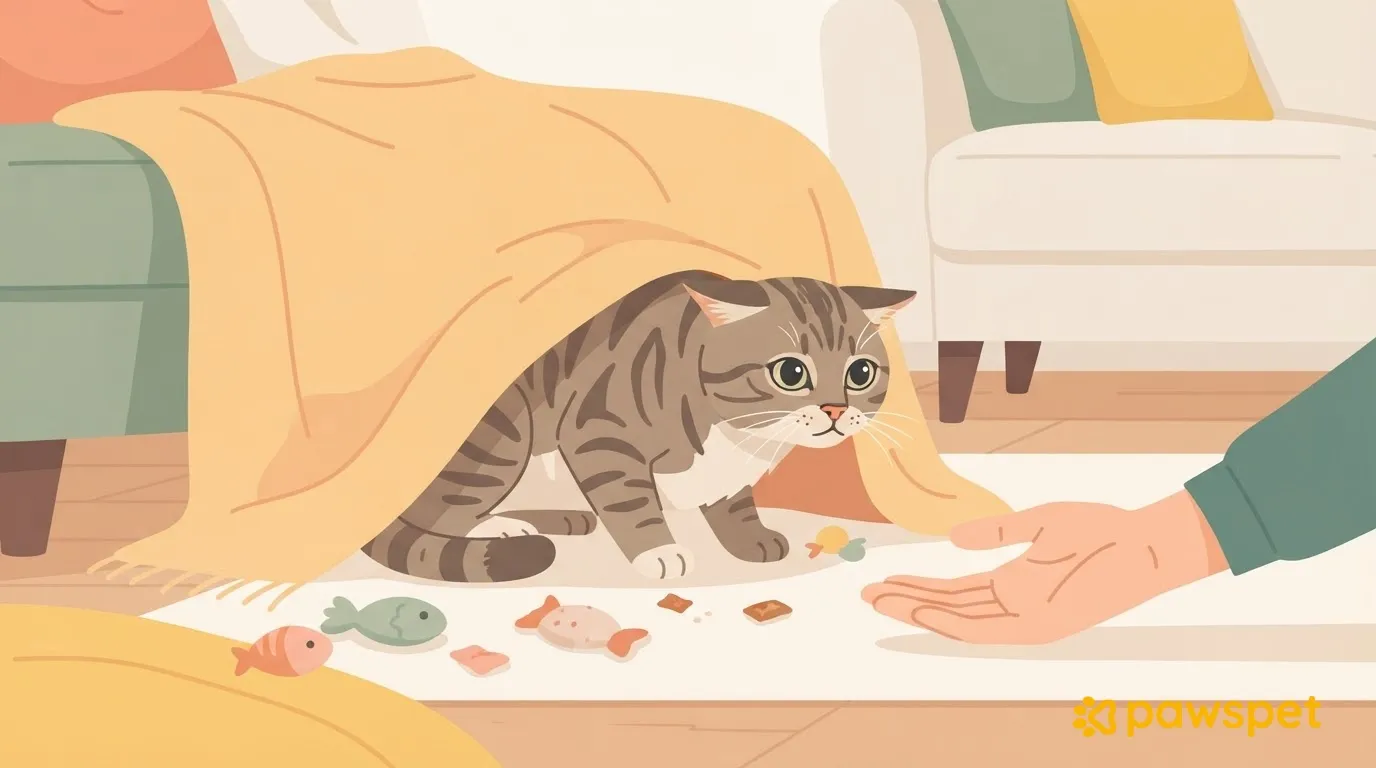
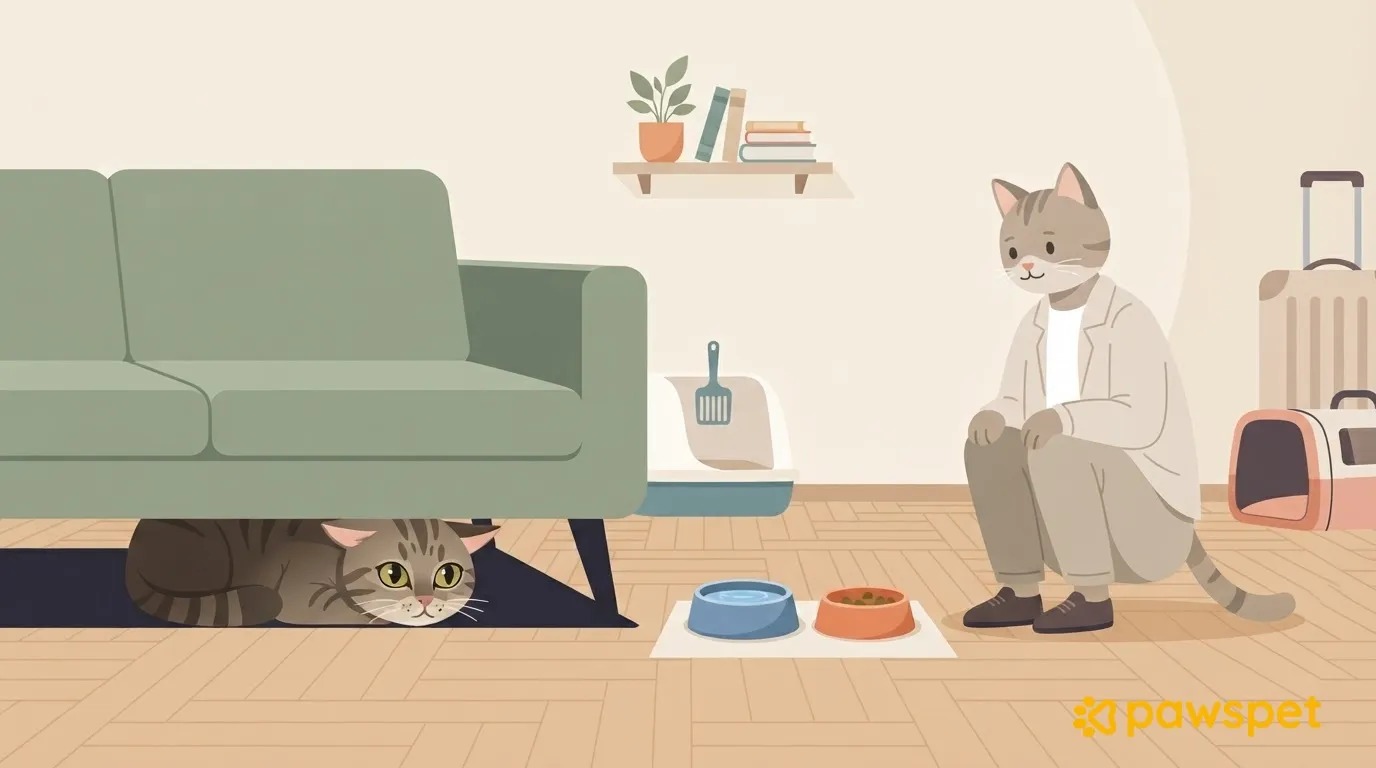
Many cats stay hidden around someone they don’t know well, whether that person is a friend or a cat sitter, or when the house is empty and everything feels different from usual. Some come out after a few minutes, some wait until the visitor has left, and others come right over to say hello: it varies from cat to cat. That’s why seeing them or not seeing them, by itself, doesn’t tell you much.
Before you leave, explain to the person who’ll be visiting how your cat usually behaves around strangers: Do they hide? Where? How long does it take them to come out, if they ever do? If they usually greet visitors, mention that: in that case, a cat who disappears deserves more attention.
Before you leave: map out the hiding spots
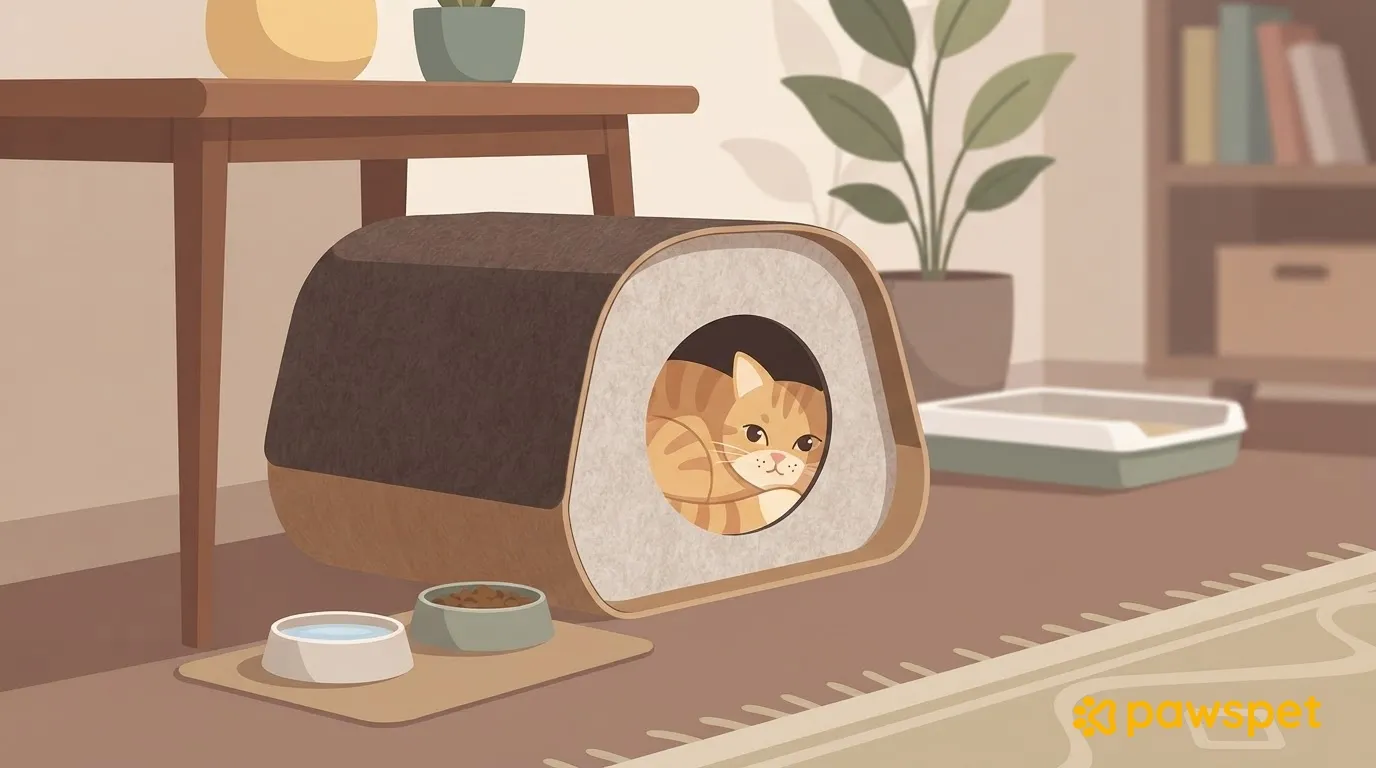
Show the person who’ll be visiting your cat’s usual hiding spots in person, such as under the bed or behind the sofa, and write them down room by room. Then get the house ready:
- keep closed any spaces where it would be hard to see them or where they couldn’t get out on their own, such as closets, drawers, and unused rooms, after making sure they’re empty;
- leave a flashlight somewhere handy, so the visitor can look under and behind furniture without moving it;
- agree on as regular a visit time as possible: observations made at the same time are easier to compare.
Also decide how you’ll receive updates, for example, a message with photos of the food bowl and litter box. If you still need to choose someone to visit, you can look for «Pet sitting» services in PawsPet’s «Services» tab (availability in your area isn’t guaranteed). Only after booking, use the order chat to agree on updates and exchange photos (attachments require an internet connection).
At each visit: signs your cat is doing well
At each visit, the person coming by should check the food bowl, water, litter box, and home, always in the same order. These checks aren’t a diagnosis, but they can show whether anything has changed.
| What to check | What to look for | What to include in the update |
|---|---|---|
| Food | Whether it’s gone, partly eaten, or untouched compared with the amount left | “Gone,” “partly eaten,” or “untouched,” and whether it’s different from last time |
| Water | Whether the level has gone down; whether the bowl has been tipped over | “Lower,” “the same,” or “tipped over” |
| Litter box | Pee and poop compared with the last visit; anything unusual or nothing at all | “Same as last time,” “more,” “less,” or “none”; what seems unusual; a photo is best |
| Home | Vomit, diarrhea, moved objects, signs of movement | What you found and where, or “nothing unusual” |
| Cat | Whether you saw or heard them, and where | “Seen under the bed, calm,” “heard in the bedroom,” or “not found” |
How things compare with the previous visit matters more than any single detail: a half-empty bowl by itself doesn’t tell you much.
If the food and water have been used, the litter box has been used, and nothing seems unusual in the home, you have good signs (not certainty) that your cat is okay, even if they haven’t shown themselves much.
How to look for your cat without dragging them out
These steps are for the person entering the home; if you’re traveling, send them to the visitor.
- Go inside and close the door right away so the cat can’t get out.
- Use a flashlight to check the known hiding spots without pulling the cat out.
- Speak softly and sit in the room for a few minutes without pressuring them.
- Don’t move furniture if the cat is behind it, and don’t leave windows or exterior doors open during the search.
- If you see or hear the cat and they seem calm, just make a note of it, perhaps with a photo from a distance; then complete the checks in the table. If you can’t find them in any known hiding spot, go straight to the next section.
When not to wait until the next visit
If you’re the person visiting, don’t wait until the next visit: contact the vet right away and then the owner, as agreed, in these cases:
- food is untouched and there are no signs of pee or poop in the litter box;
- the cat can’t be found in any known hiding spot;
- repeated straining or attempts to urinate without producing anything;
- labored breathing or breathing with an open mouth;
- repeated vomiting, diarrhea, injuries, limping, or a cat who isn’t moving.
If you can’t find the cat, also check balconies, windows, and closed rooms right away: they may have gotten outside or been shut in a room. If something worries you and it isn’t on the list, let the owner know anyway.
Before you leave, agree on how you’ll contact each other in these situations and who should be called first.