If your adult cat eats and uses the litter box but hides or hisses when you approach, insisting won’t help: trust grows when they can predict what you’ll do and choose the distance and contact. You offer a calm presence, food, and play; they decide the pace. Progress isn’t measured in days but in small, observable behaviors, and the scale below can help you recognize even the smallest steps forward.
How to tell if your cat is scared or relaxing
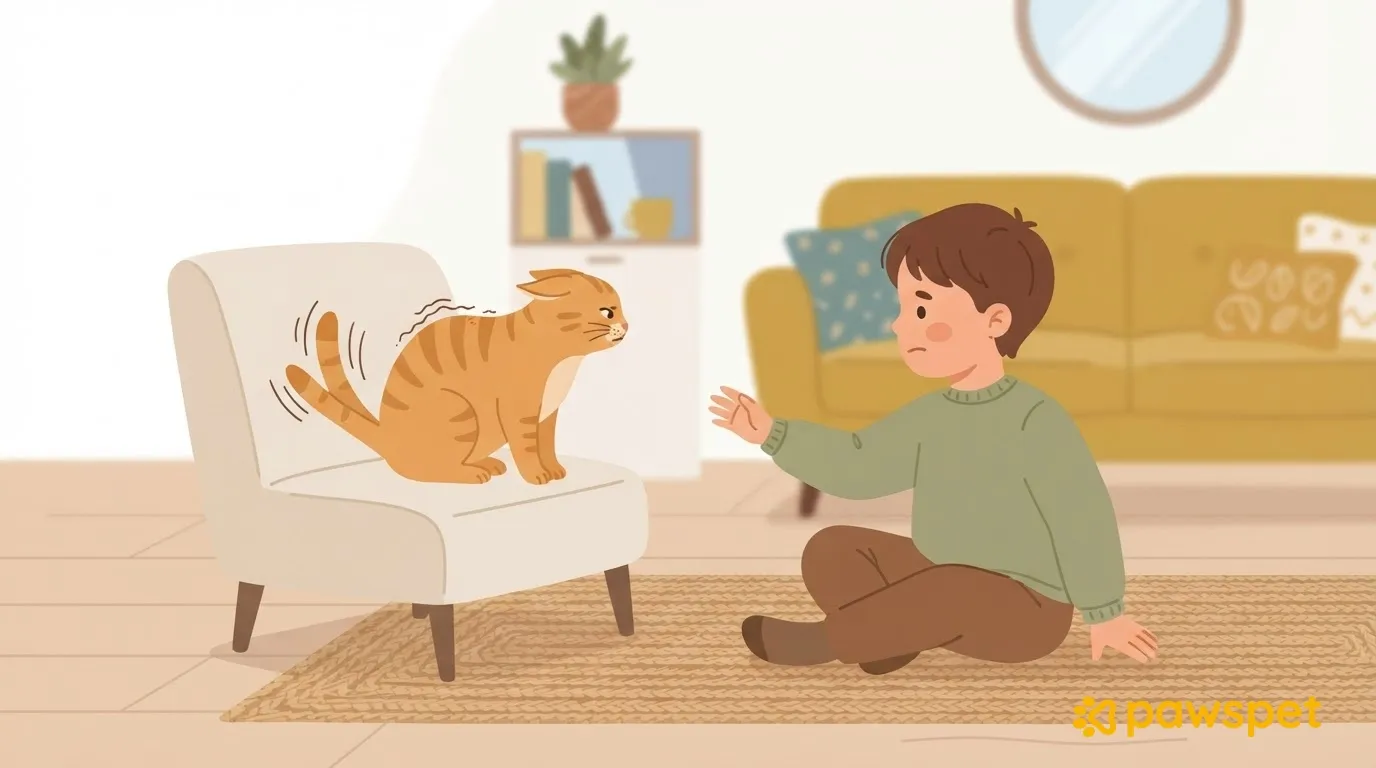
Hiding, hissing, or running away isn’t misbehavior: it’s how a frightened cat protects themself. Before approaching, watch their body language.
| Signs of tension | Signs of relaxation or curiosity |
|---|---|
| Body low or flattened | Tail held high or relaxed |
| Ears turned back or flattened | Grooms or stretches while you’re there |
| Very dilated pupils | Eats while you’re in the room |
| Tail tucked close to the body | Soft gaze and slow blinking |
| Rigid stillness | Rubs against objects |
| Hisses or runs away as soon as you enter | Watches you without tensing up |
These are clues, not verdicts: look at the overall picture in context, not just one signal. For example, pupils also dilate in low light or during play.
Be in the room without putting pressure on them
The goal is for your presence to become a calm, familiar part of their routine.
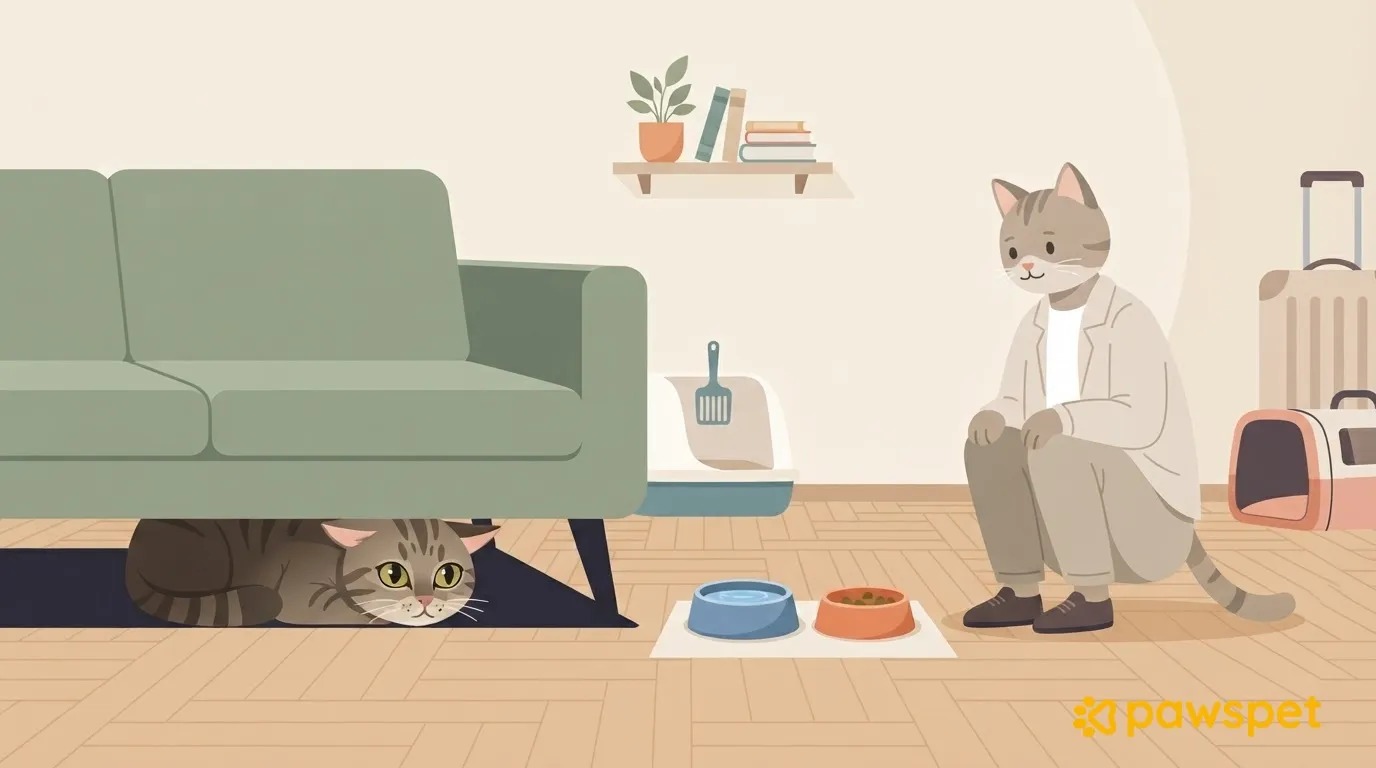
- Enter the same way each time, announcing yourself in a low voice.
- Sit on the floor, turned slightly sideways and at a distance, without staring: direct eye contact may seem threatening to them.
- If they look at you, try slow blinking: calmly close and open your eyes.
- Read a book or sit quietly and do something calm.
- Choose short, frequent visits, even just a few minutes, rather than one long, infrequent visit.
- Leave before their tension rises, as soon as you notice the first signs in the table.
Let them choose when to make contact
Only when they’re out in the open and relaxed, offer a finger or the back of your hand at nose level and wait without moving any closer: if they want to, they’ll come forward to sniff. If they don’t approach, calmly withdraw your hand and try again another day: it’s not a failure.
If they rub against you, offer a brief stroke on the cheeks or head, then stop and watch: if they ask for more, you can repeat it; if they move away or tense up, that’s enough for now. Avoid the belly, tail, and picking them up, and never put your hands inside their hiding place.
To recognize progress, even the smallest steps, use this general guide:
- Eats while you’re in the room.
- Comes out of hiding while you’re there.
- Grooms or rests in the open while you’re there.
- Approaches your hand.
- Accepts a brief stroke.
- Seeks you out.
The order and timing vary from cat to cat, and setbacks are normal, especially after a noise or something new: they don’t mean trust is lost.
Food and play as a bridge
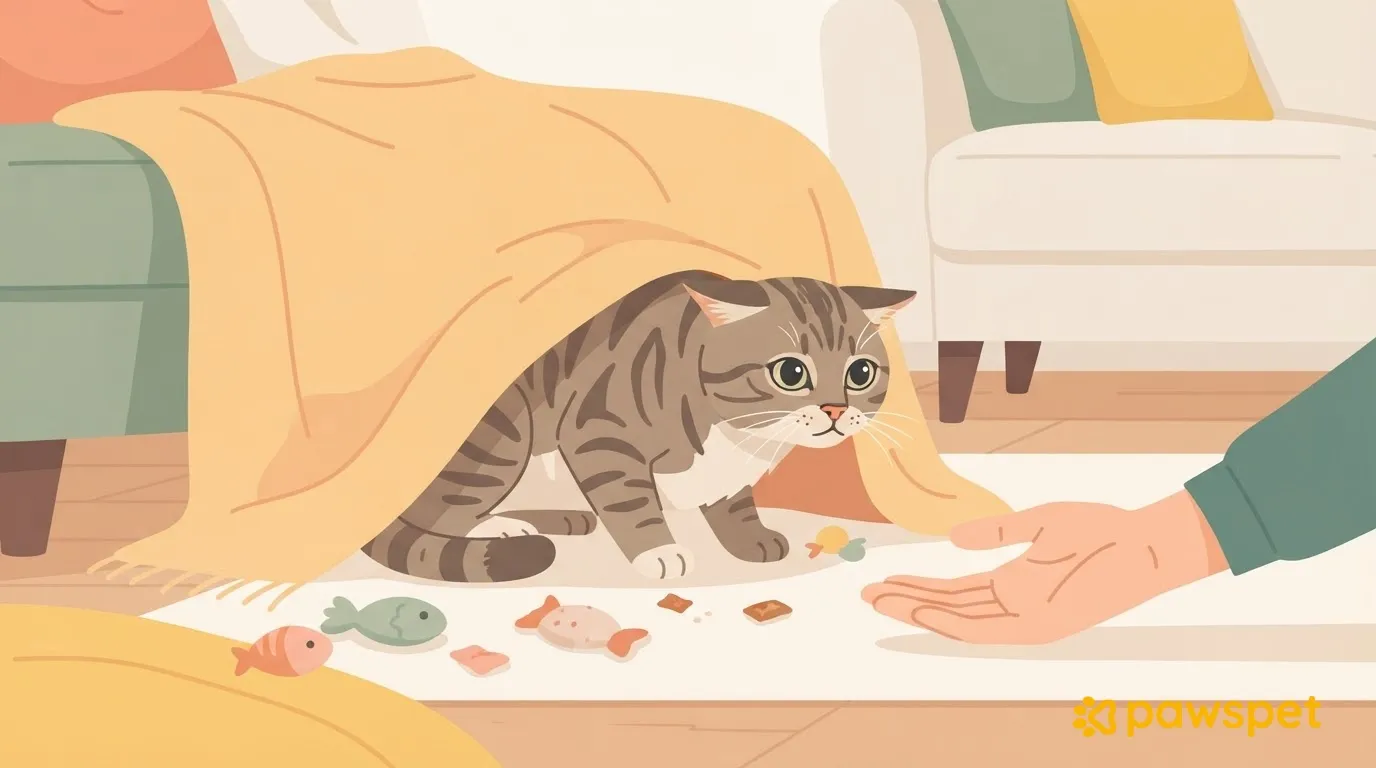
- Treats. Toss a treat they like, first far away from you and then, if they stay calm, gradually closer to you; never use it to lure them in and grab them.
- Meals. Make mealtime a positive experience: sit at a distance while they eat. If they tense up or stop eating, sit farther away next time.
- Play. Use a feather wand toy, moving it away from your body like prey escaping. Keep sessions short and always end with a catch.
- Safety. Don’t use your hands as toys, and put away toys with strings after use: your cat could swallow them.
A predictable routine
Keeping meals, litter box cleaning, and play at the same times makes your actions predictable, which helps a frightened cat. At first, have one trusted person take care of most of it; if you live with family, agree on shared rules (how to enter, who approaches, when to play) and change one thing at a time so you can see what your cat reacts to.
If several people in your household help care for your cat, you can set meals and playtime as recurring activities with reminders in the PawsPet app. On days when your cat isn’t ready to play, use “Ignore” for that occurrence only, leaving the series unchanged.
Mistakes that set you back
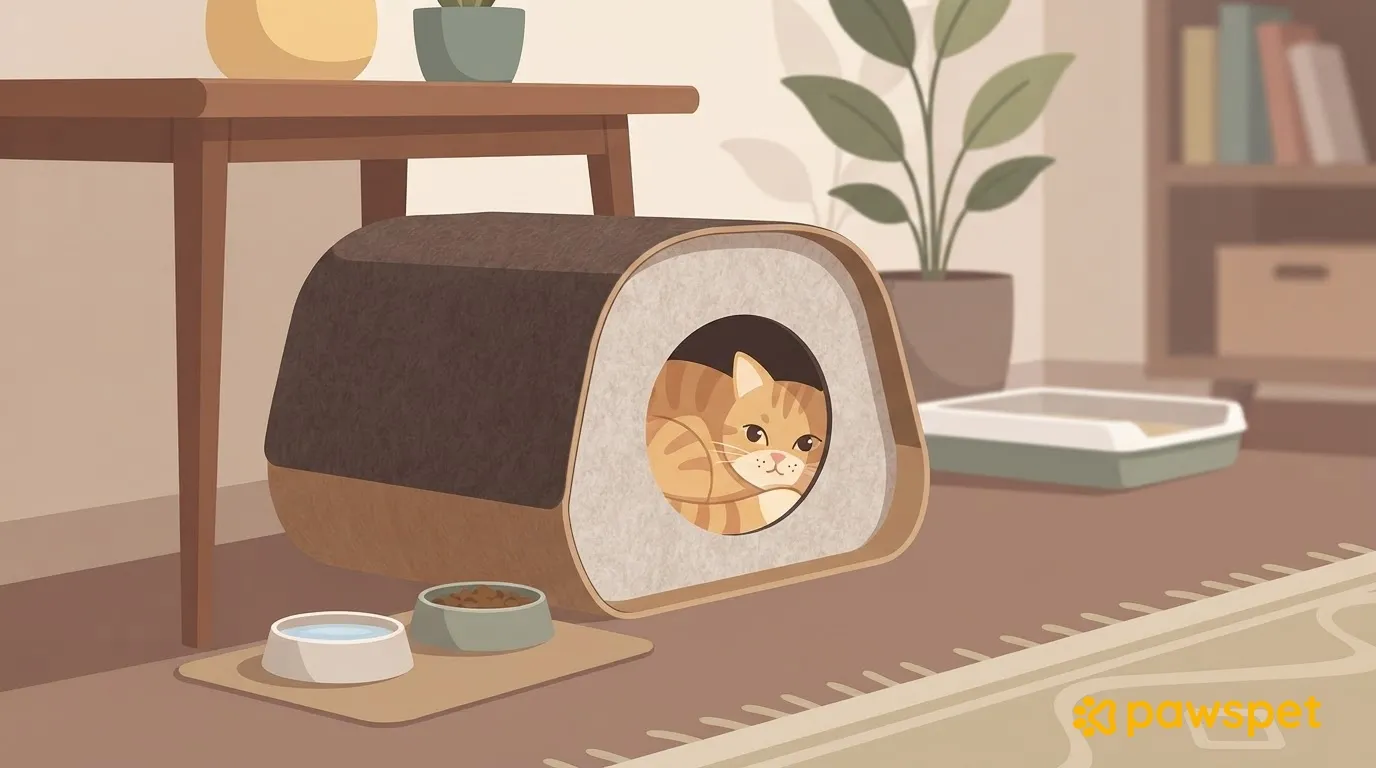
- Dragging them out of their hiding place: it’s their safe spot, so let them come out when they’re ready.
- Picking them up to get them used to it: wait for them to seek contact.
- Chasing them for a photo: take pictures from a distance, when they’re already relaxed.
- Having friends over: put visits off until your cat seems comfortable with you.
- Vacuuming or making sudden noises nearby: vacuum when they’re elsewhere and avoid loud noises in their area.
- Scolding or spraying them with water: a hiss is a warning; stop, give them more space, and try again later with a smaller step.
- Letting children approach without rules: teach them to sit down, speak softly, and let the cat come to them.
When to ask for help
Talk to your vet first if:
- their fear doesn’t improve despite a calm environment and a steady routine;
- they start biting or scratching;
- their appetite or litter box habits change (in this case, don’t wait);
- after making progress, they start hiding again without an obvious reason.
Health problems can also affect behavior, which is why the vet comes first. Then consider support from a feline behavior professional, who can guide you based on your cat’s individual needs.
A shy cat doesn’t need to be persuaded; they need the chance to choose. Even a reserved cat can learn to feel comfortable with you, in their own way and in their own time. Choose one step from the scale—the first one you haven’t seen yet—and offer it at the same time every day.