A cat can give a warning with its body before scratching: look together at its tail, ears, body, and skin, rather than focusing on just one signal. Use a traffic light for children: at yellow, put hands down and take a step back; at red, move away and call an adult. It is not about being “naughty”: the cat needs space. The cat must always be able to choose whether to come closer or leave; an adult should stay present with younger children.
The cat traffic light in three colors
The traffic light helps you decide what to do, not read the cat’s mind: at the first yellow signal, stop contact.
| Color | What you might notice | What the child should do |
|---|---|---|
| Green | The cat approaches on its own and rubs its head or cheeks against you; its tail is held high and relaxed, and its body is loose. | Give it a brief stroke, then pause. |
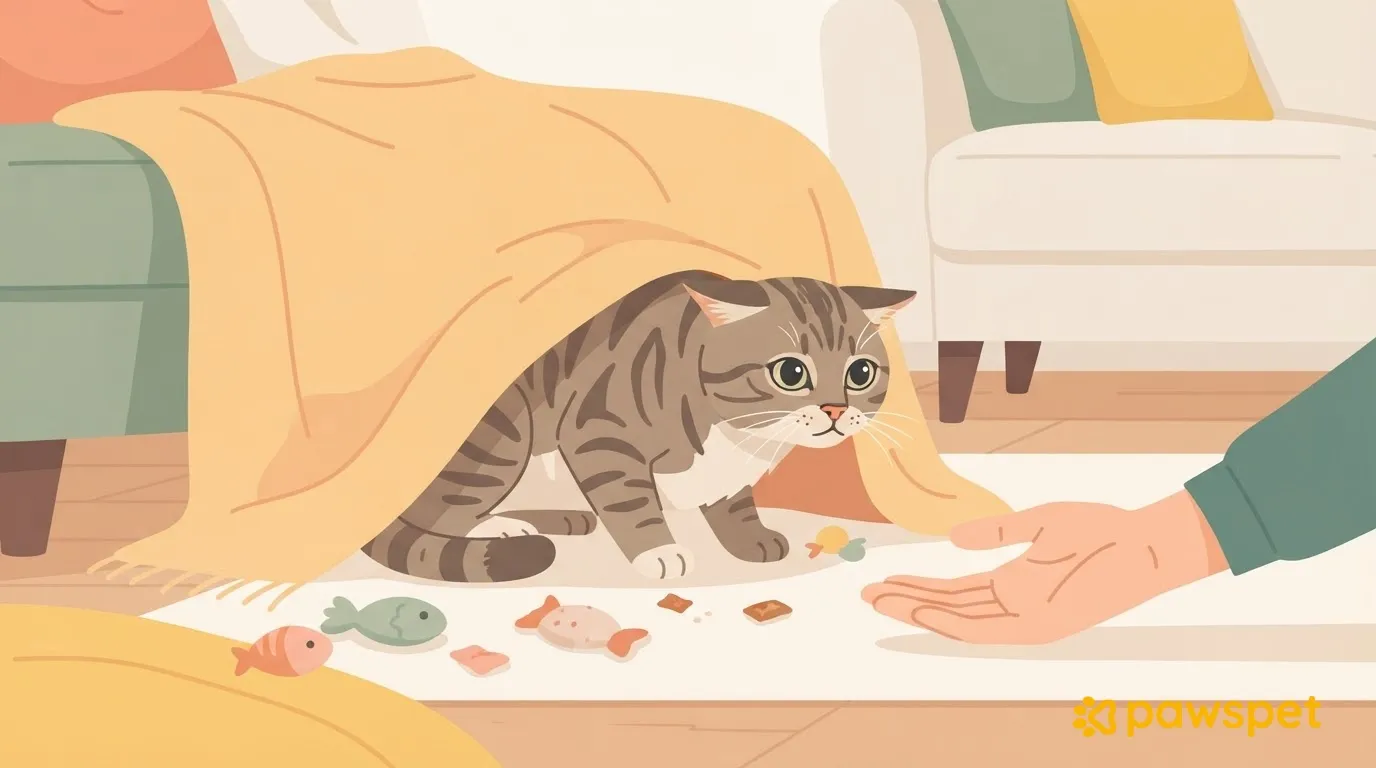
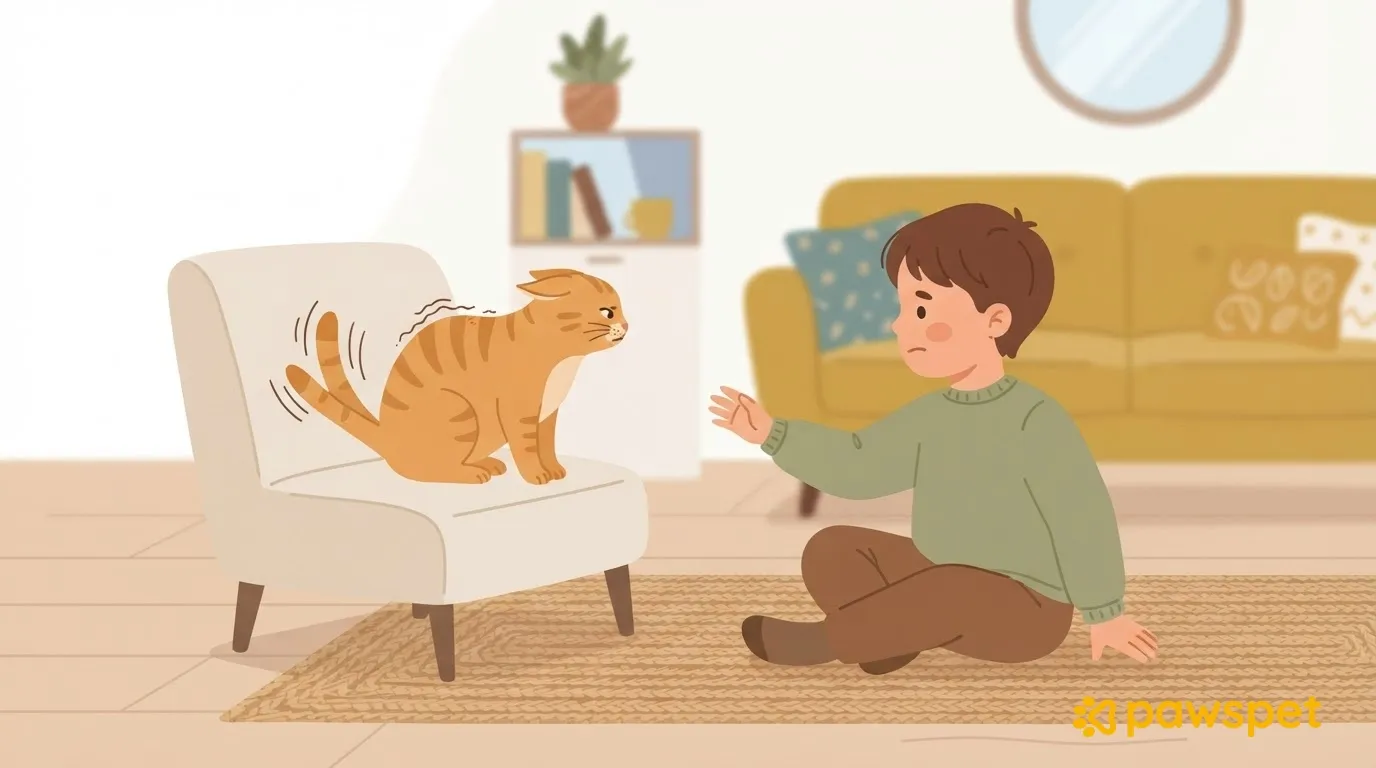
| Yellow | The tail flicks or lashes, the ears turn sideways or lower, the skin on the back twitches, the body stiffens, the cat turns its head toward the hand, or it tries to move away. | Put hands down, take a step back, and wait. |
| Red | The ears are flattened back, the cat hisses or growls, crouches or arches its back with puffed-up fur, or raises a paw. | Move away calmly and call an adult. |
Every cat is different: look at the signals together, not one pose on its own. Dilated pupils, for example, can also be caused by low light or play; when in doubt, treat it as yellow.
How to explain it by age
These ages are practical guidelines, not developmental milestones: adapt the suggestions to the child.
Ages 4 to 6
Repeat the same phrases each time: “Tail swishing, hands down” and “Is the cat leaving? Let it go.”
Try the statue game at a distance from the cat: when the adult gives the signal, everyone stays still until the cat decides what to do. The adult gives the signal; the child should not have to figure everything out alone.
Draw three little cat faces together, one for each color, and hang them near the cat’s favorite spots.
Ages 7 to 10
Watch the cat from a distance for a few minutes and try to “guess the color.” Keep a short diary of what it does before walking away: a few words are enough, such as “tail flicking, then walks away.”
The child’s job is to alert an adult, not to intervene alone.
Signals children often misunderstand
- Belly up: don’t interpret this as an invitation to rub the cat’s belly.
- Purring: it doesn’t always mean “keep going.” Look at the tail, ears, and posture too.
- Petting stops: if the cat first seeks contact and then turns away or gives a gentle bite, the petting may have become too much. Keep interactions brief and pause, without waiting for a bite.
- Sleep, meals, and litter box: don’t disturb a cat that is sleeping, eating, or using the litter box.
- Still, with a fixed stare: this doesn’t necessarily mean “let’s play.” When in doubt, treat it as yellow.
House rules that make these signals useful
Recognizing yellow only helps if the cat can still leave.
- Always leave an escape route clear.
- Don’t shut the cat in a room with the children.
- When the cat walks away, don’t follow it.
- Don’t try to get it out from under beds or wardrobes.
- Treat its bed, high-up spots, food and water bowls, and litter box as off-limits.
- Let the cat approach you.
Petting and calm play each have their own rules.
When red signals become frequent
A cat that was previously calm may suddenly become irritable, refuse to be touched in one area, hide much more, or change its habits. In these cases, the first step is a visit to the vet to rule out pain or illness.
Prepare for the visit by noting when it happens, who is present, and what happens beforehand. If the medical assessment finds no problems but the episodes continue, ask the vet how to proceed or contact a feline behavior professional.
If you need to find a nearby vet, in the PawsPet app for owners you can search in the “Services” section by choosing the “Veterinarian” service type.
An exercise to try tonight
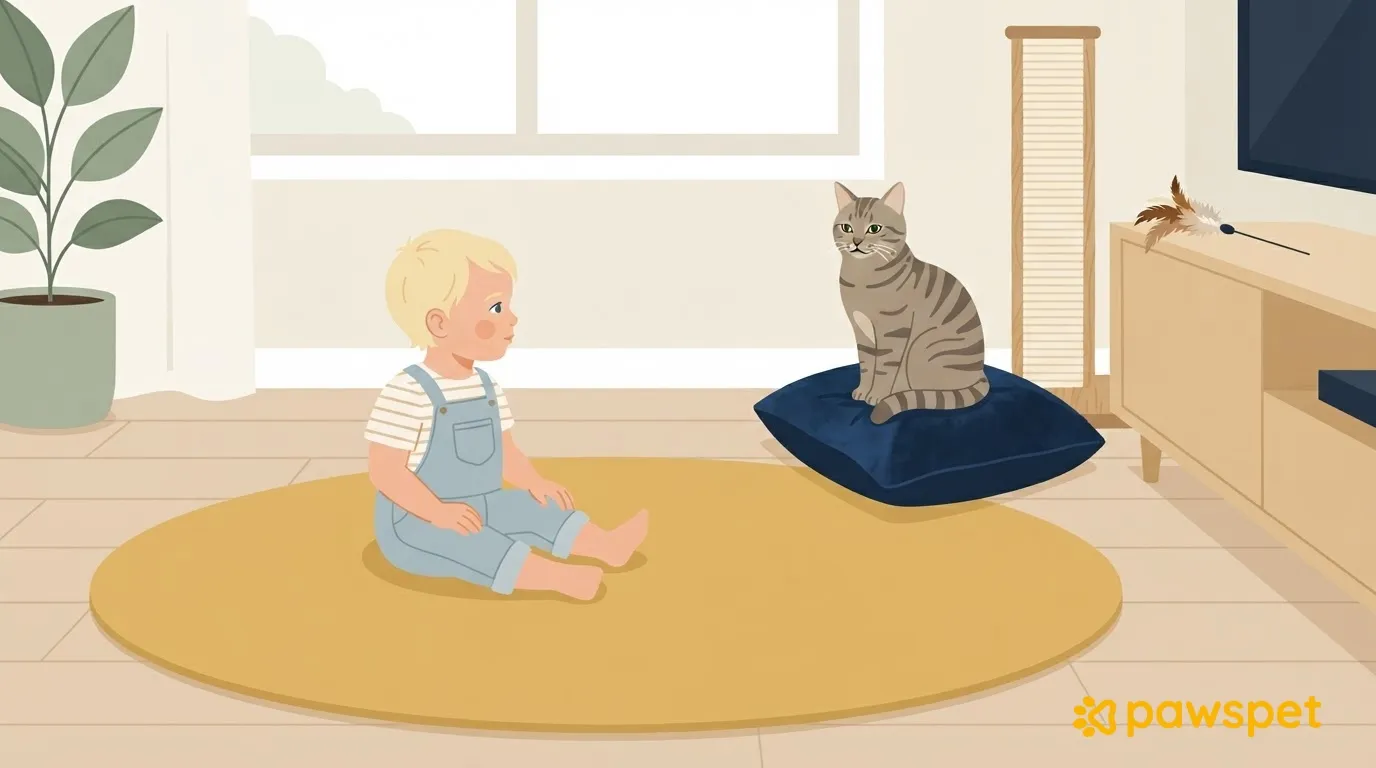
- Sit together at a distance from the cat for five minutes without calling it over or touching it. If it walks away, let it go: you don’t need to stay until the time is up.
- Take turns naming the traffic-light color and explaining which signals helped you decide.
- Choose the two most important rules for your family together and write them on a sheet of paper.
Repeat the observation over the following days: the goal is to learn when to stop, not to get more cuddles.