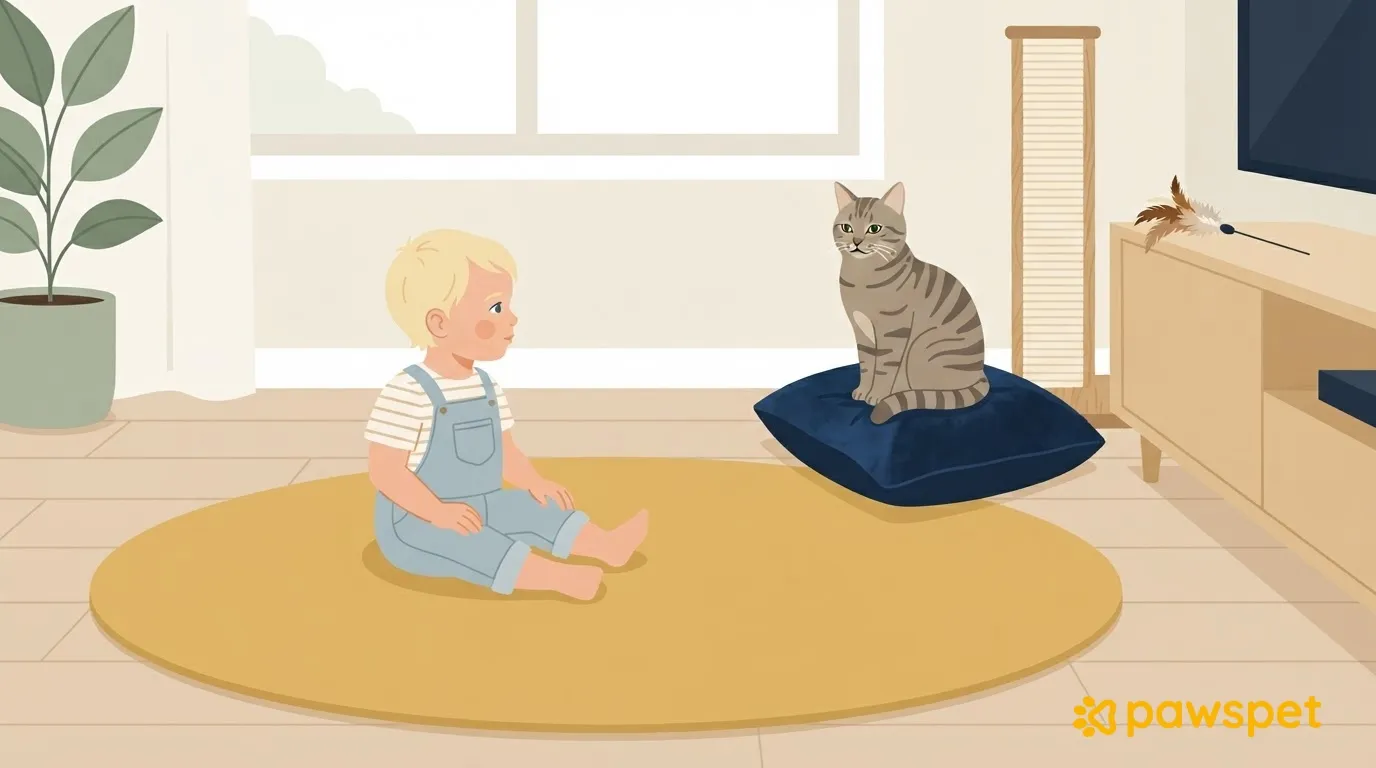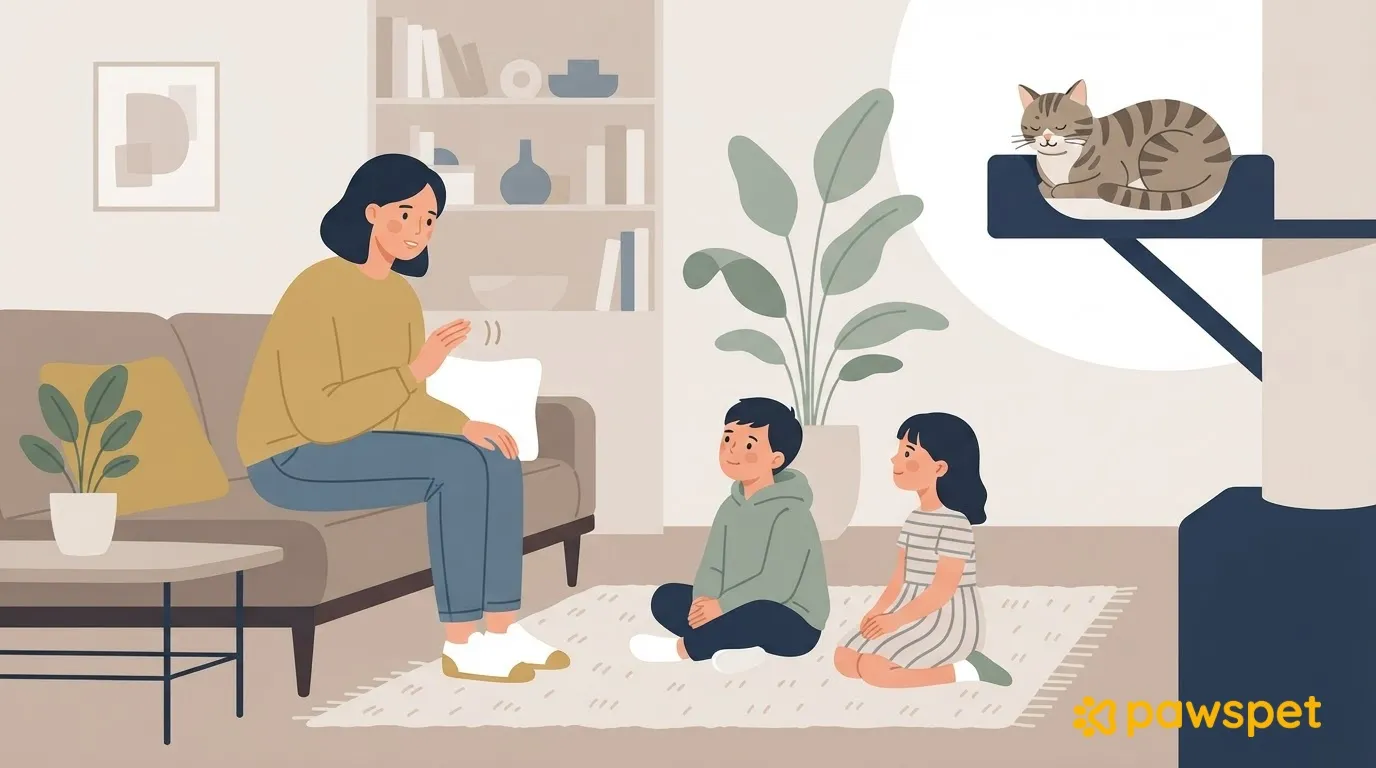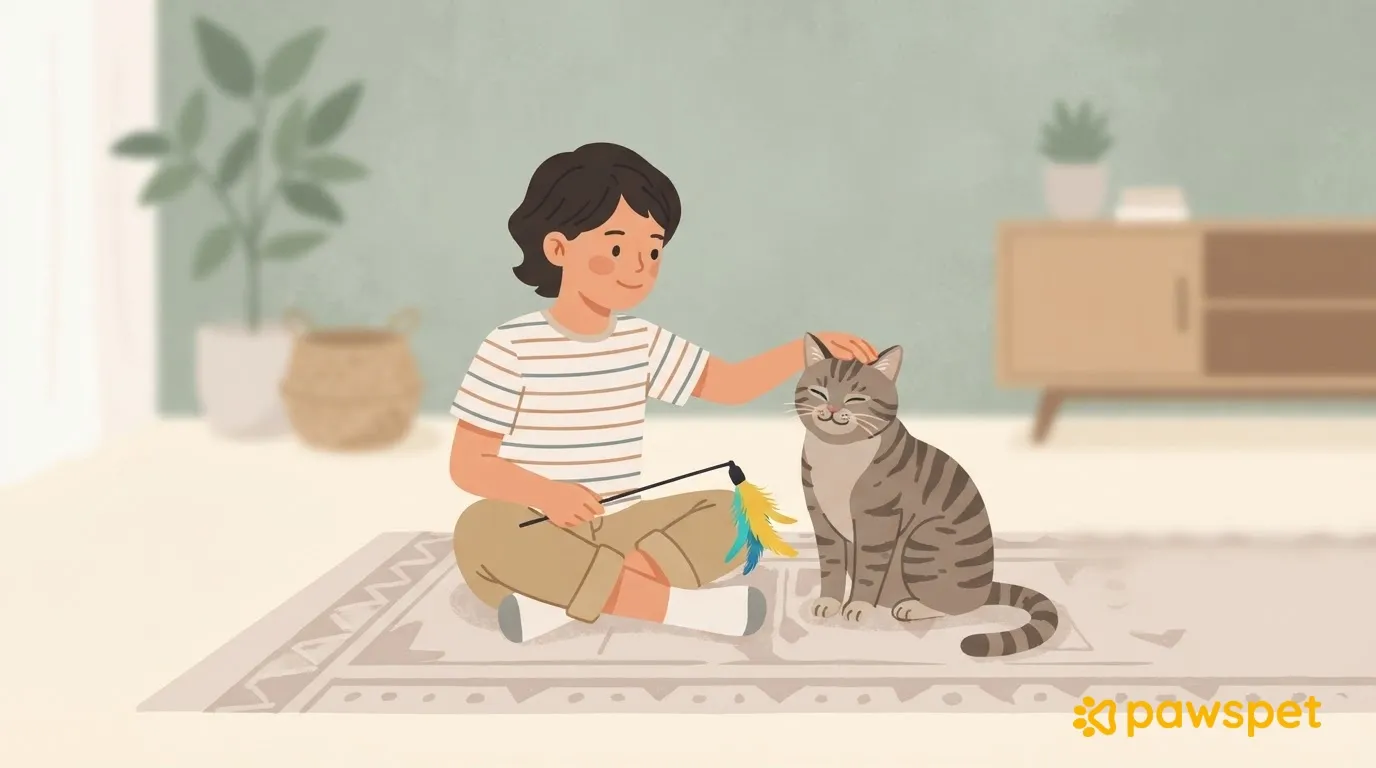
The calmest petting and play sessions are the ones the cat chooses. The child sits down, offers a still hand, gives a short pet on the head or cheeks, then pauses to see if the cat wants more. For play, use a toy that keeps hands at a distance: no picking the cat up, no chasing. An adult should be present, especially with young children. There’s a fun alternative for every action the cat doesn’t like.
The right way to say hello: hold still and wait
Four steps to read together with children:
- Approach slowly, without running, and sit on the floor or on a cushion.
- Offer a closed hand or one finger at the cat’s nose level, without touching it.
- Wait: the cat may sniff and perhaps rub against your hand.
- If the cat walks away, the greeting is over, and that’s okay.
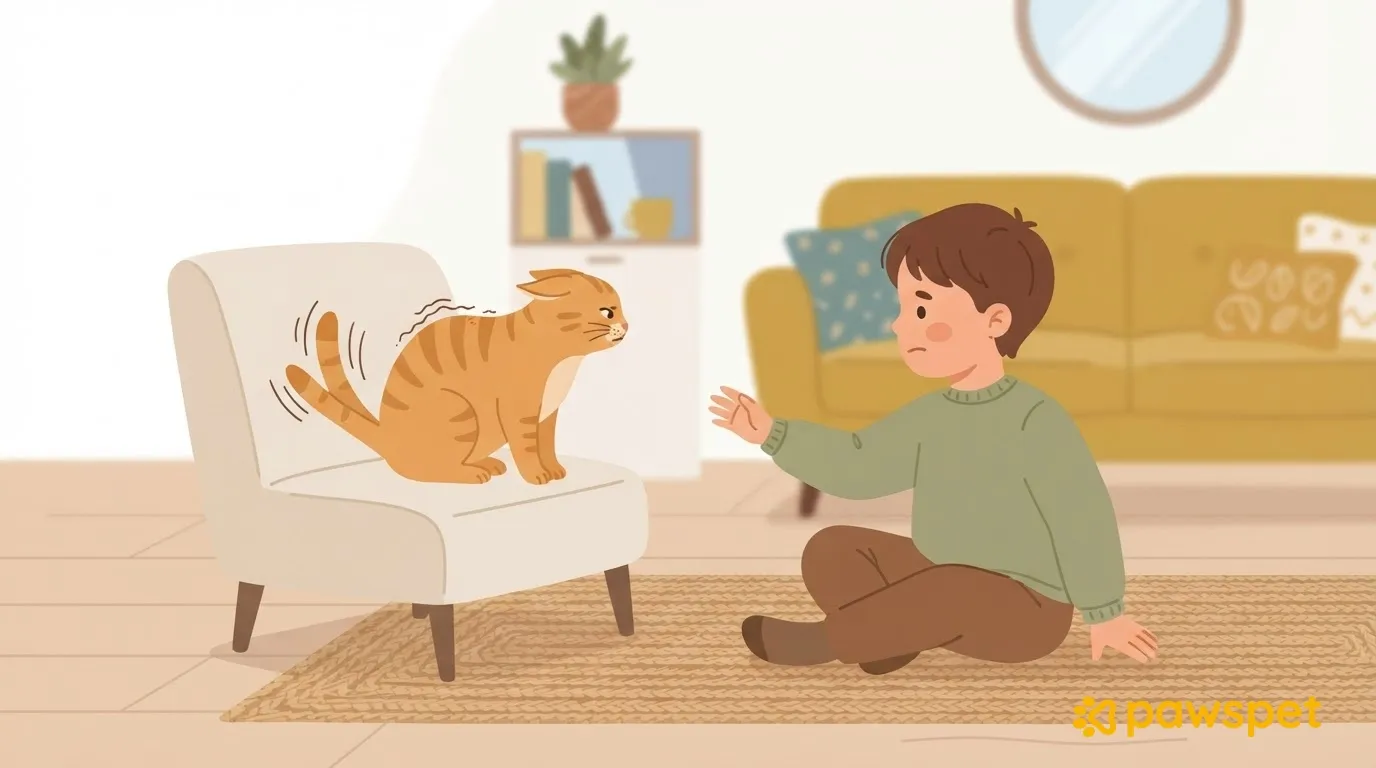
If the cat rubs against your hand, you can give it a short pet. Then comes the pause rule, in words a child can understand: count to three and stop. If the cat pushes its head against your hand during the pause, you can continue for a little longer; if it turns away, shakes itself, or leaves, stop. Stop right away, too, if its tail lashes or its ears turn back.
Where to pet and where not to
Many cats especially enjoy being petted on the head, cheeks, and under the chin. For children, the belly, tail, and paws are off-limits: even if a cat shows its belly, that doesn’t necessarily mean it wants to be touched.
Every cat has its own preferences: the adult should watch which areas their cat accepts and tell the children. The best pets are slow, in the direction of the fur, with an open, flat hand.
Calm games that keep hands at a distance
A feather or fabric wand
While seated, the child slowly moves the feather or fabric along the ground, like a little prey animal. They make it disappear behind a cushion and, at the end, let the cat catch it. After play, the adult puts the wand away, out of the cat’s reach: strings and ribbons should not be left lying around.
Balls and boxes
Roll a ball away: the child gently pushes it, and the cat decides whether to chase it. A cardboard box or a tunnel the cat can enter only if it wants to: the exit always stays clear, and no one puts their hands inside to look for the cat.
A kibble hunt
Only with an adult, and only if the cat eats kibble. Take a few pieces from its daily ration, without adding any extra, and hide them in easy-to-find places, for example beside a cushion or inside an open box. No human food.
How to end the game. Slow down the movements, let the cat make the final “catch,” then leave it in peace.
Instead of… try…
| Instead of… | Try… |
|---|---|
| Picking the cat up | Sit down and let it climb onto your lap, if it wants |
| Hugging or squeezing it | Give it a short pet with an open hand |
| Chasing it around the house | Play with a wand toy while staying seated |
| Waking it up to play | Watch it sleep from a distance or draw a picture of it |
| Playing with hands or feet | Always use a toy |
| Touching it while it eats or is in the litter box | Wait until it’s finished |
The reason is simple common sense: being lifted and held can frighten a cat, which will try to get away. And if hands become a toy, the cat learns to grab them, so it’s better to always offer a toy instead.
A simple play routine for the whole family
One or two short sessions a day are enough, at roughly the same time each day, with an adult present and play stopping at the first signs of discomfort. No timer needed: it’s better to stop a little before the cat gets tired or agitated. A set time also helps children wait their turn instead of seeking out the cat at every opportunity.
In the PawsPet app for pet owners, you can turn this into a recurring activity. On the “Activities” tab, tap the “+” button; under “Select activity type,” choose “General” » “Free play and walks,” then select the cat under “Pets.” Under “Repeat,” choose the frequency, for example “N times per day” with two times, and add a reminder from the bell row by tapping “Set”; finally, tap “Save.” Each time it comes up, tap the circle to mark it as done. The reminder tells you when it’s time, but the cat always decides whether to play.
If another adult in the household already has a PawsPet account, the owner can add them from the cat’s tab using the ⋮ menu, under “Collaborators,” and grant them “Activities” permission: they’ll then be able to see the pet’s “Activities” tab.
Get started today: three quick actions
- Choose three rules with the children and write them on a sheet of paper, for example, “the cat chooses,” “count to three,” and “play with the wand.”
- Have the first play session sitting on the floor, with one child at a time, using the wand and with an adult nearby.
- Put away toys with strings or ribbons afterward, out of the cat’s reach.
If the cat walks away, that’s okay: there will be another chance.