Take care of the child first. Then let the cat move away without scolding or punishing it. Once everyone is calm, piece together what happened. If the cat’s behavior has changed suddenly, have a veterinarian examine it. For a while, increase the distance between them and supervise more closely. It’s normal to feel scared for the child and angry with the cat, which is why it helps to follow a set order and avoid making decisions in the heat of the moment. The five questions below can help turn fear into a plan.
Right away: the child first, then the cat
For the child: stay with them and reassure them. Gently wash the area with soap and water. Contact the pediatrician or doctor for any bite that punctures the skin, deep scratches, and scratches on the face or near the eyes. Contact them as well if the area becomes red, swollen, or more painful over the next few days. Call emergency services right away if the wound is bleeding heavily or involves the eye. If in doubt, ask a doctor anyway. Follow the doctor’s instructions for wound care; if they ask for information about the cat or give you instructions, follow them.
For the cat: let it move away to a quiet place. Don’t chase, restrain, yell at, or punish it: punishment may increase its fear and won’t teach it an alternative. Don’t make any decisions about its future right now.
Piece together the scene with five questions
When everyone is calmer, write down the answers, perhaps with anyone else who was there:
- Where was the cat, and could it leave?
- What was happening: prolonged petting, playing with hands, being picked up, being woken, being cornered under a piece of furniture?
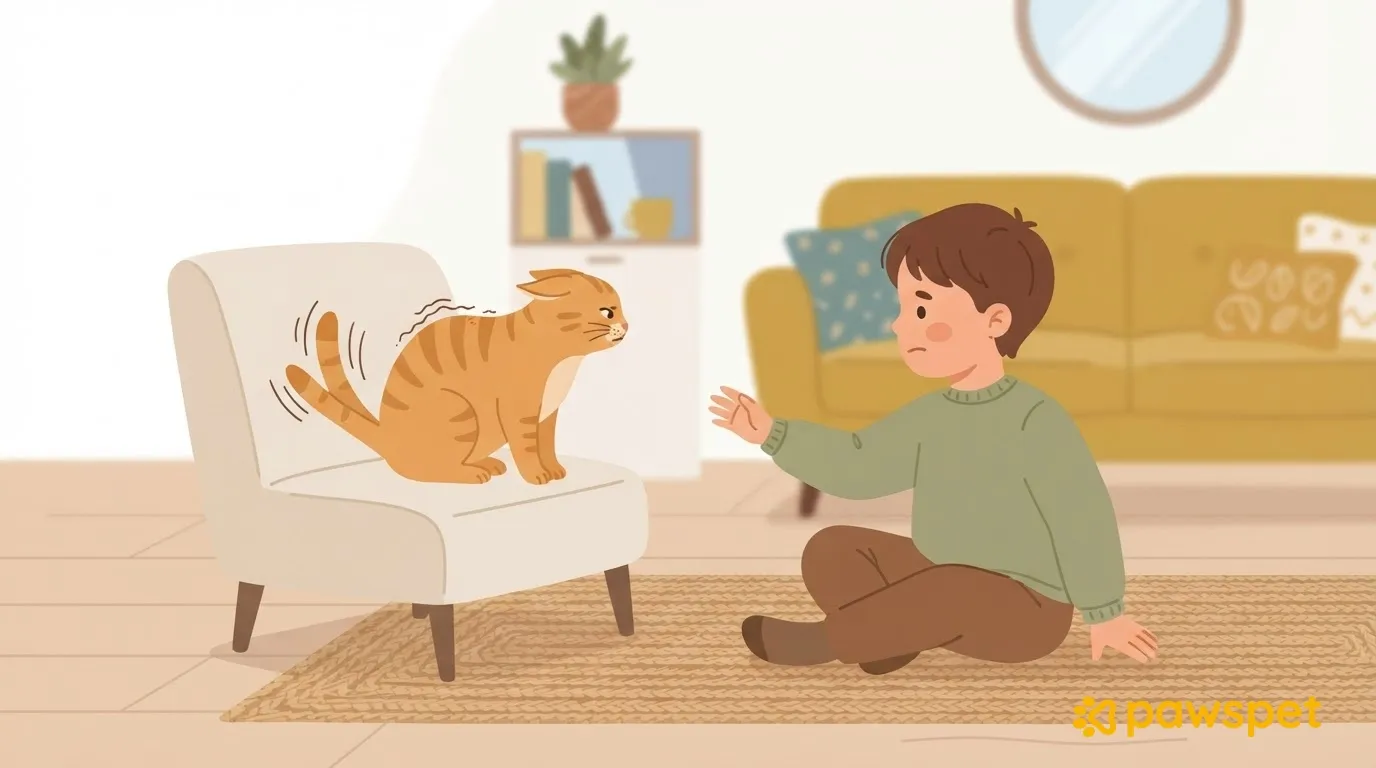
- Were there any warning signs beforehand: tail lashing, ears flattened back, a stiff body, attempts to move away?
- Had something frightened it shortly beforehand: noises, visitors, another animal seen through the window, a change at home?
- Was this the first time, or had it happened before?
The answers don’t provide a diagnosis, but they do suggest possibilities to investigate, and more than one may apply. The most common include:
- too much contact: petting that lasts longer than the cat likes;
- hands used as toys, which the cat may mistake for prey;
- the cat being restrained or having no escape route: if it can’t get away, it may defend itself;
- fear caused by something else, redirected toward the nearest person;
- pain or illness (more on this below).
You don’t need to find someone to blame; you need to understand what to change. Keep your answers: they’ll be useful when you speak with the veterinarian.
When to consider pain or illness
Pain can make a cat less tolerant of contact. Before addressing the behavior, have the cat examined by a veterinarian if you notice even one of these signs:
- a sudden change in a cat that was previously calm;
- a reaction when it’s touched in a specific spot;
- fewer jumps or less movement than usual;
- spending more time hiding;
- changes in appetite or litter box use;
- an older cat becoming irritable.
Tell the veterinarian about the incident and share the details you gathered by answering the five questions: only they can tell you whether there’s a medical cause. After the visit, you can record it in the cat’s “Health” profile in the PawsPet owner app: tap “+,” choose “Medical visit,” and add the date, who performed it, and notes. Later, you can add “Updates” to the same entry by tapping “New” to track how things are going. This helps keep information organized; it doesn’t provide a diagnosis.
Temporary house rules
Starting now, and until the situation is clearer, reduce opportunities for tension:
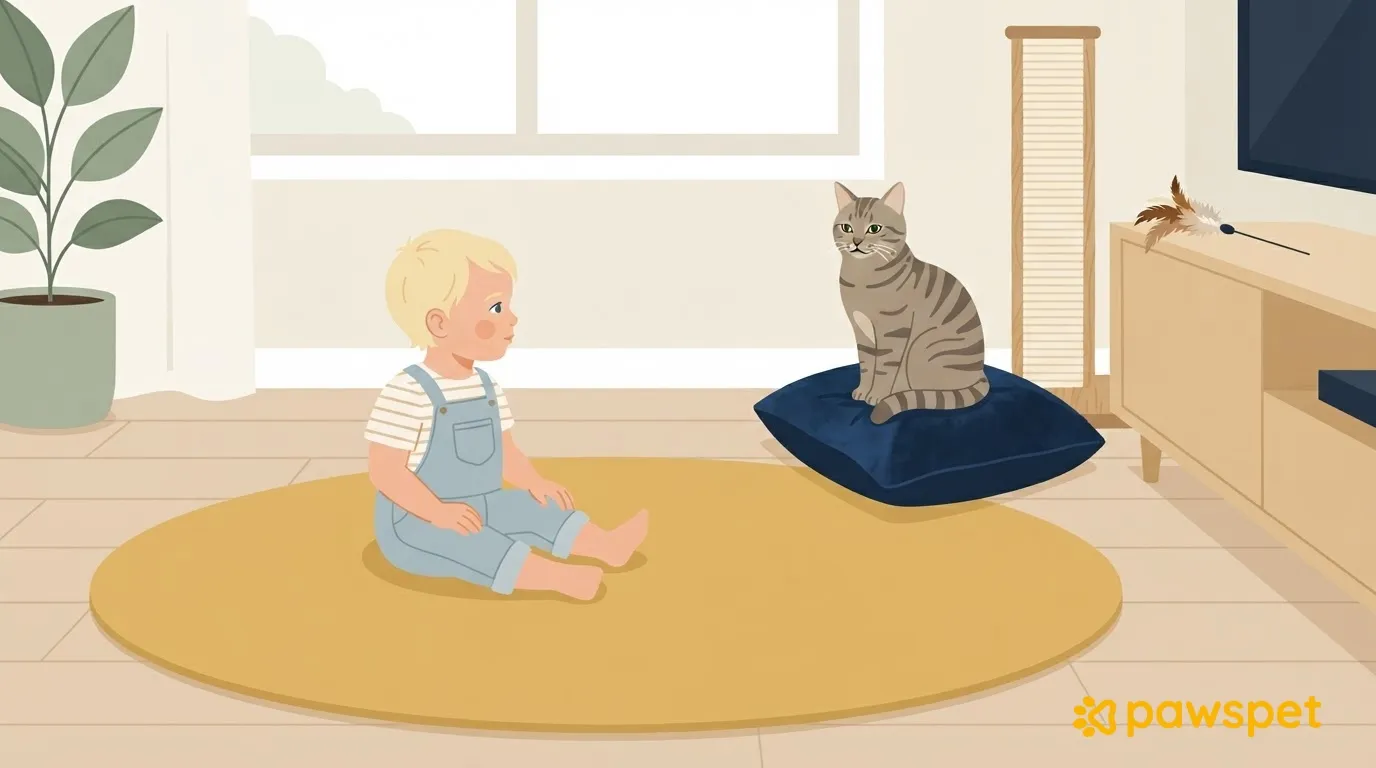
- interactions with the cat only when an adult is present;
- no picking up, hugging, or chasing;
- use only toys that keep hands away, such as a feather wand;
- children must leave the cat’s bed, high-up spots, bowls, and litter box alone;
- keep doors and escape routes clear at all times;
- review the warning signs in question 3 with the children: if they notice them, they should stop and move away.
Return to normal gradually, depending on how the cat responds: there’s no set time frame that works for everyone. Ease one restriction at a time, only if the cat remains relaxed; if warning signs appear, go back to the previous step. If the child is scared, don’t force them to get close again: let them move at their own pace.
Keep a diary of incidents
For every incident or tense moment, note the date and time, who was present, what was happening, what signs the cat showed, and how it ended. A few lines are enough, written while the details are fresh. The diary helps you spot recurring situations (always the same room, the same time of day, or the same person) and gives the veterinarian or a behavior professional concrete information.
In the PawsPet app, go to the “Activity” tab at the bottom, tap “+” to create an activity of type “General” » “Behavior monitoring,” select the cat under “Animals,” and write the details in the “Notes” field. Or just use a notebook.
When to ask a behavior professional for help
Ask for help if the incidents continue despite the new rules, if the cat attacks without an apparent cause, or if the child is afraid to be at home with the cat. In these cases, after ruling out medical causes with the veterinarian, consult a veterinarian with expertise in behavior or a feline behavior professional. Bring the diary and your answers to the five questions. There are no guaranteed results or timelines: they depend on the cat and your home.
For today, two things are enough. Write down your answers to the five questions and put the house rules above into practice.
Frequently asked questions
Should I give the cat away?
This isn’t a decision to make in the heat of the moment. First, make the home safer by creating distance and supervising interactions, then work out the causes with the veterinarian and, if needed, a behavior professional. If living together remains difficult after this process, discuss the options with them.