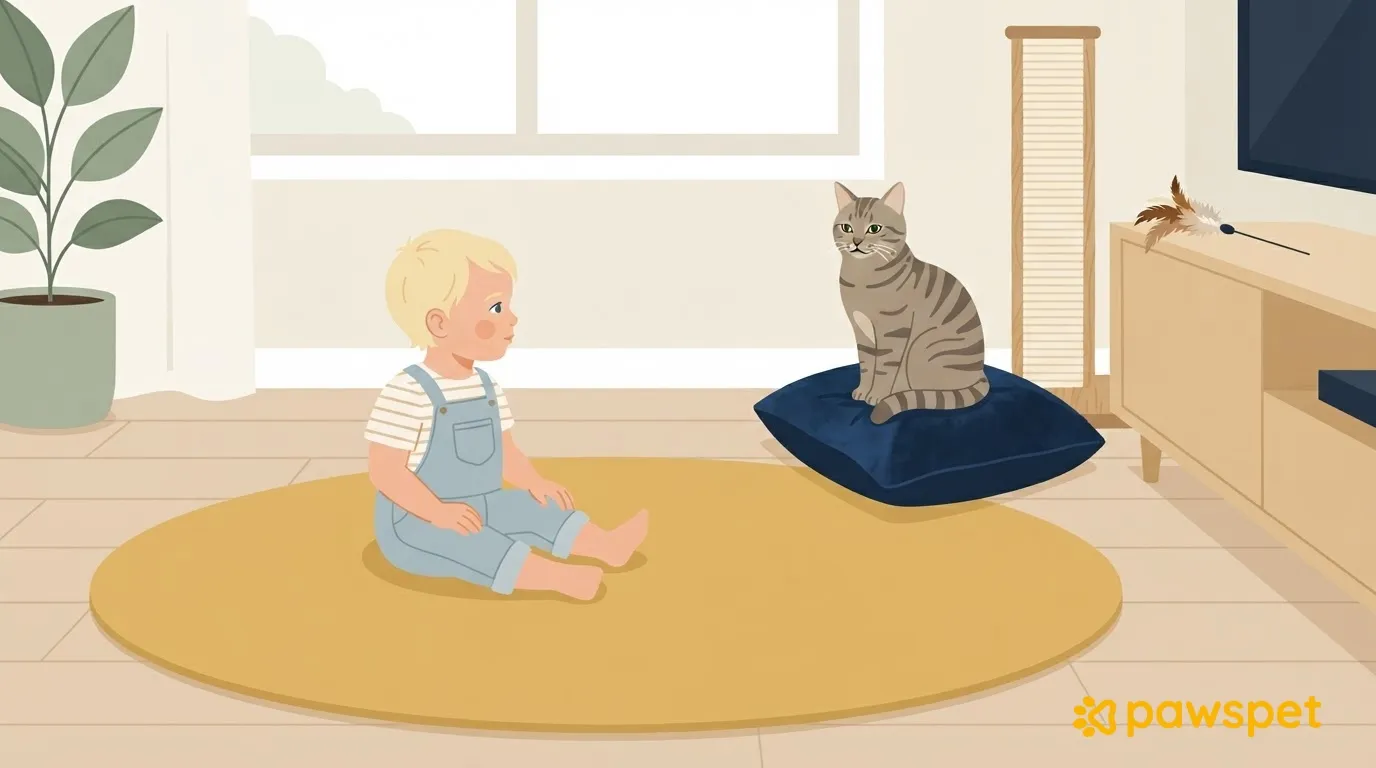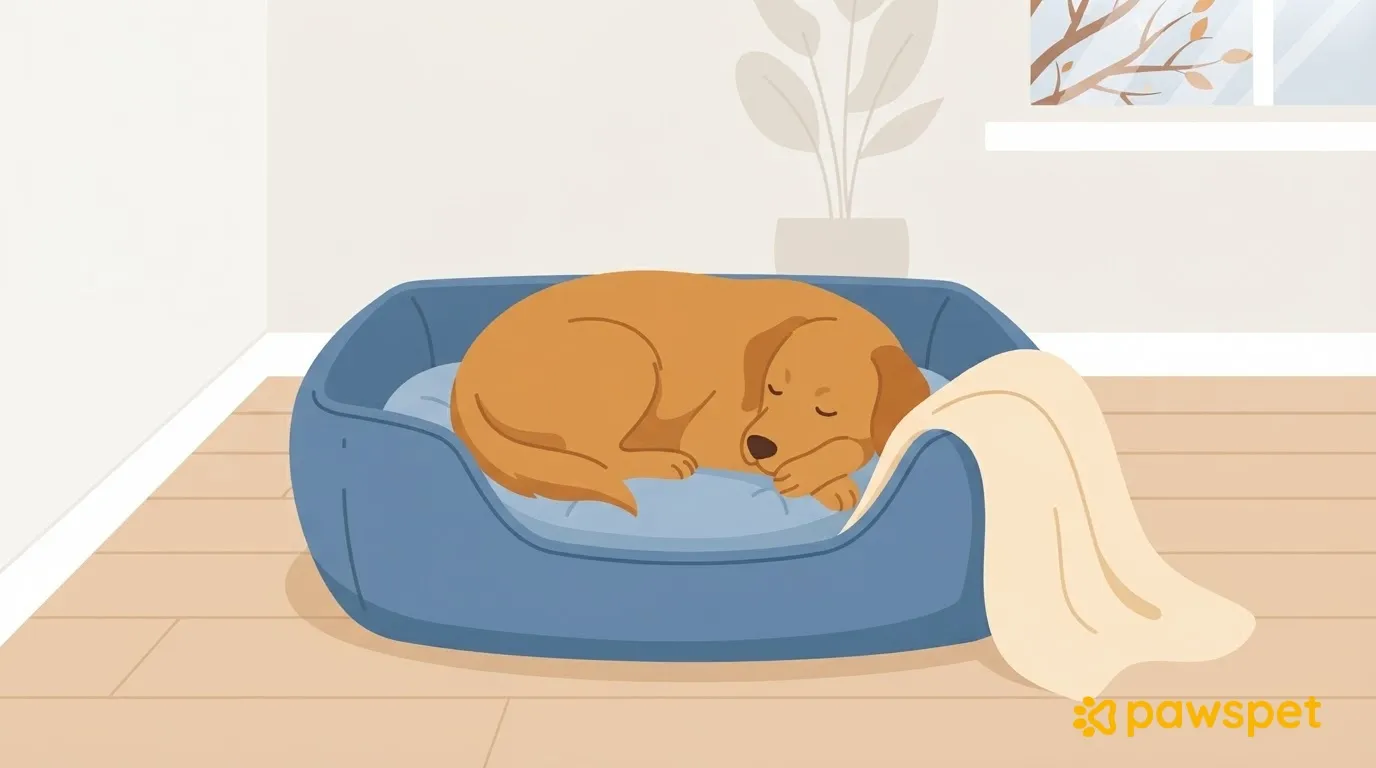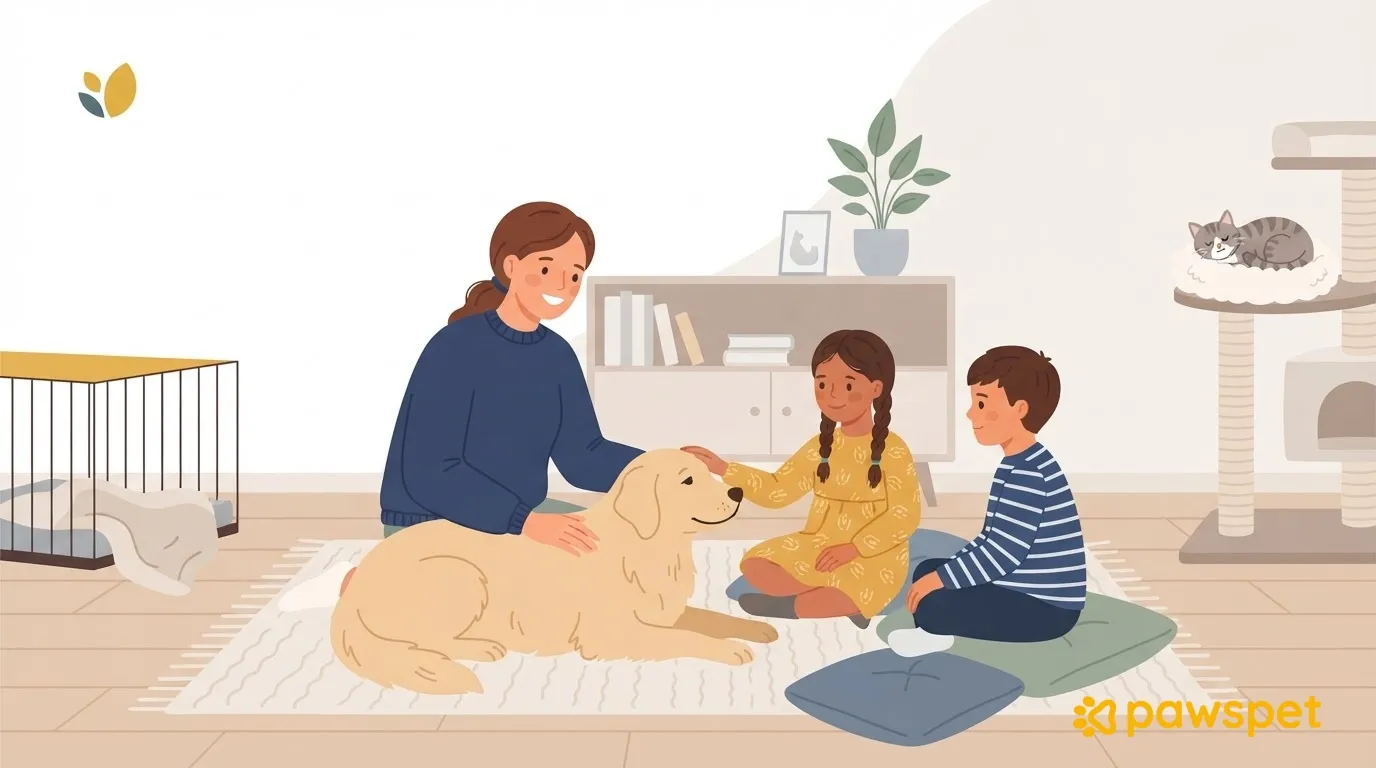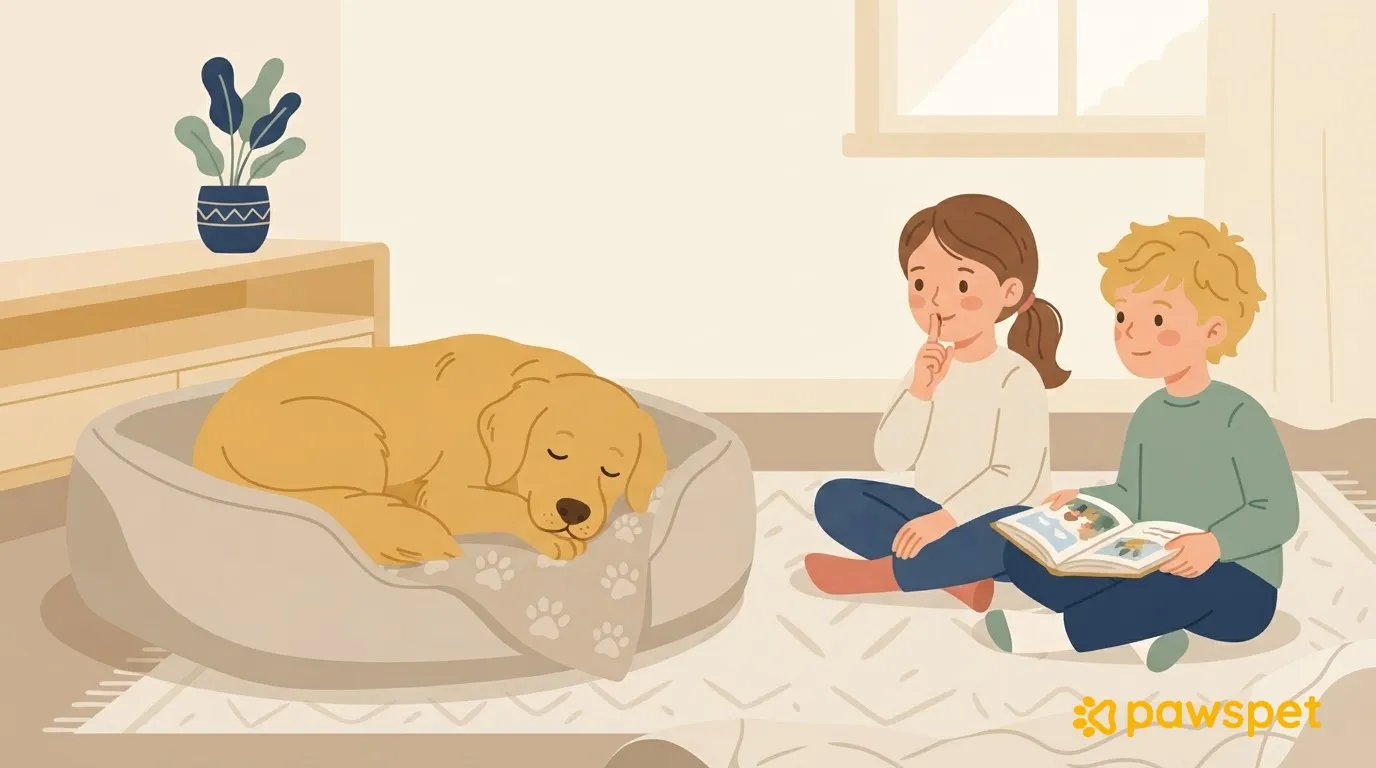
A dog’s rest is protected by three measures that work together: an area children don’t enter, a few age-appropriate rules, and an adult who is truly supervising. A growl is a warning to listen to, not punish. At the end, you’ll also find a family agreement to write with the children, along with a simple code for reading the dog’s signals.
Why rest is a delicate time
A dog who is suddenly woken or approached on their bed may be startled and unable to move away. If they feel trapped, they may react to defend themselves.
Many dogs don’t like being hugged or held, even by children who love them. Pain and older age can reduce tolerance, and a dog who has always accepted everything may stop doing so. Quick movements and high-pitched voices add stimulation for a dog who just wants to relax. Children also don’t always pick up on a dog’s signals: a dog who is still and quiet may seem approachable even when they aren’t. In a lively home, someone needs to protect a resting dog’s downtime for them.
A rest area children don’t enter
Put the dog’s bed in a quiet corner, away from play areas and busy walkways. When the house is lively, a baby gate or pen makes the boundary clear even to young children, without relying on them to remember the rule when they’re excited.
The dog must be able to leave the area freely, though: it’s a refuge, not a cage. The boundary is there to keep children out, not to confine the dog. Two rules are enough: children don’t climb onto the bed, and they don’t leave toys there, because a toy inside is an invitation to go in and retrieve it.
When friends come over, briefly explain that this is the dog’s area and no one goes in. The dog can rest behind the gate with something to chew, while snacks stay elsewhere: crumbs and dropped food attract both the dog and children to the same spot.
Rules explained by age
These age ranges are a guide: every child has their own pace, and an adult should always be present.
| Approximate age | Rules to teach | What the adult does |
|---|---|---|
| 3-5 years | Don’t touch a sleeping dog. No hugs. Say hello with a wave. | Stays nearby, reminds the child of the rule in a few words, and guides them to another activity if the dog is sleeping. |
| 6-9 years | Call the dog and wait for them to come over. Give a brief stroke on the chest or shoulder, then stop and see if they want more. | Watches both: if the dog stiffens or moves away, stops the child; praises them when they wait. |
| 10-12 years | Help with simple tasks: fill the water bowl or hide treats away from the dog’s bed. Learn to recognize the signals. | Explains what the signals mean and stays present: an older child can help, but does not replace the adult. |
One rule applies to everyone, at every age: if the dog walks away, let them go without following.
Signals that mean the dog needs space
Dogs communicate discomfort in many ways, often subtly. These signals, especially when they occur together, say, “I need space”:
- yawns or licks their muzzle for no obvious reason;
- turns their head away;
- shows the whites of their eyes;
- stiffens;
- gets up and walks away;
- growls;
- lifts their lip.
Every dog has their own way of saying “enough”: observe yours in calm moments to learn to recognize it.
For children, the signals code has three steps that are easy to repeat like a game: stop, take a step back, call an adult. The adult, in turn, calmly interrupts and calls the dog over or takes the child elsewhere. Don’t scold the dog: punishing a growl risks teaching them not to give a warning next time.
Active supervision or separation
Supervising means an adult is watching and close enough to intervene immediately: someone in another room isn’t supervising. When you can’t do that, separate the dog and children with a baby gate, a door, or a pen.
Keep a particularly close eye on waking, meals and snacks, parties, friends arriving, and energetic play: these are times when noise, excitement, and food can add up. In these situations, separation is a break that protects everyone, including the dog. When the dog wakes, let them stretch and take their time before involving them.
If the dog growls often or has already bitten
First, calmly separate the dog and child without shouting. If there’s an injury, have a doctor or pediatrician assess it right away.
As soon as you can, write down when and how it happened: where you were, what the child was doing, and what signals came first. Then book a veterinary visit to rule out pain or other health problems, and consult a behavior professional who can assess your family’s specific situation. Until then, manage their interactions by keeping them separated. To find a professional in your area, use the Services section of PawsPet to search for “Behavioral consultation” or “Training” services and compare reviews and availability before booking.
The family agreement
An agreement works best when the children write it with you. Tonight, check the rest area with them: is the dog’s bed in a quiet corner with no toys on it, and can the dog leave whenever they want? Then write down three rules, such as “don’t touch a sleeping dog,” “if they walk away, let them go,” and “call them and wait,” add the signals code, and put the sheet up near the bed. Read it again every now and then: it applies to everyone, including adults.