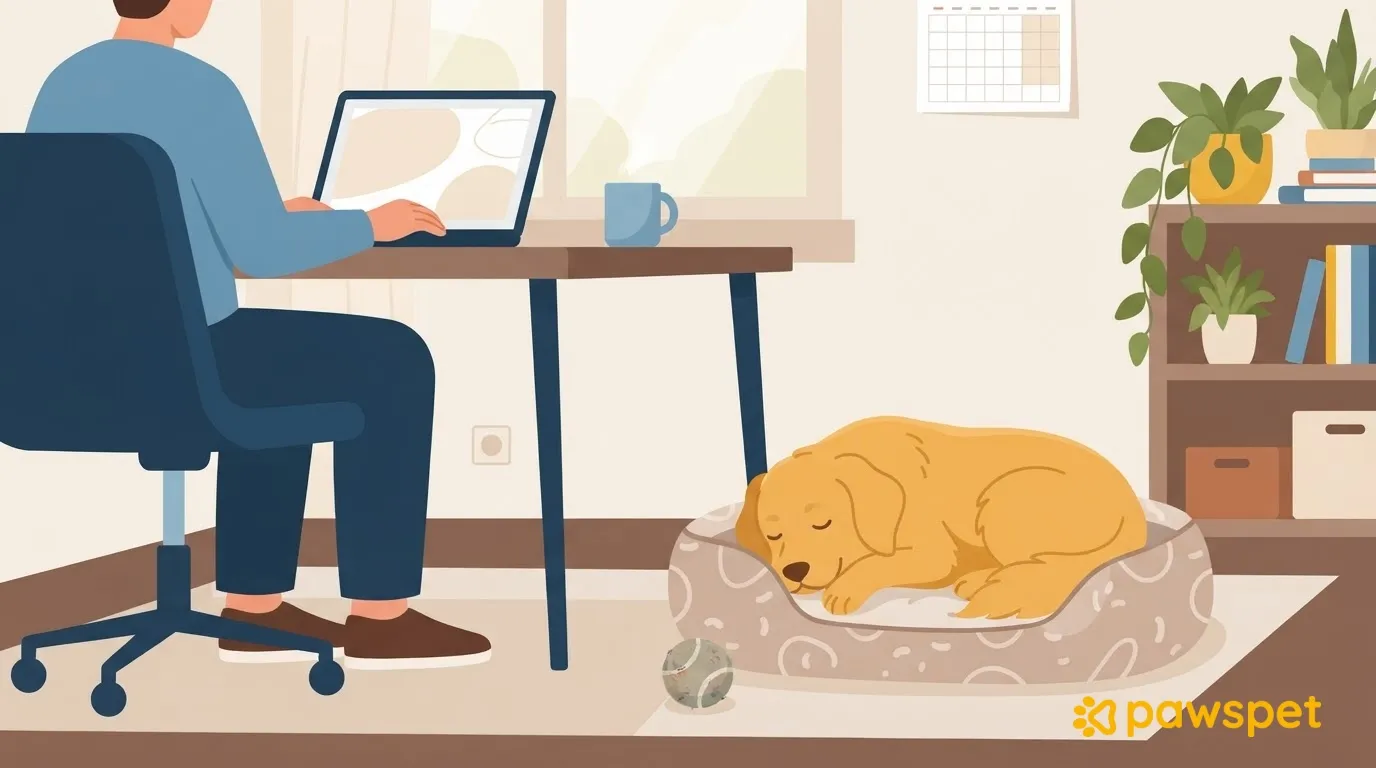
When you work from home with your dog, their day has no schedule: all they have is your presence, wherever you go. Give them a routine to go alongside your meeting schedule: a proper walk before you start, work blocks when they rest in their spot with something to chew, short, regular breaks, and an activity together when you finish work. In the meantime, reward calm behavior instead of responding to every request.
Being at home together doesn't mean they're resting
Your constant presence brings a steady stream of stimulation: you get up, open the fridge, the delivery person rings the doorbell, you talk on a video call. A dog that's always on alert may be restless by evening, even if they've had you by their side all day.
If your dog follows you everywhere, sighs, chews things, barks for no apparent reason, and doesn't nap, it may sometimes be a sign that they can't switch off. Their need for rest and walks varies with age, health, and temperament: there is no one-size-fits-all number. If their behavior changes suddenly, ask your veterinarian.
A day in predictable blocks
This table is an example to adapt to your dog, not a schedule to copy. A repeating routine can help them understand what's coming next and relax while they wait.
| Time | What your dog does | What you do |
|---|---|---|
| Before you start | Goes out with plenty of time to sniff, then has breakfast or a scent game | Take them out without rushing, before you open your computer |
| Work block | Rests in their spot with a chew suited to their size | Work and reward calm moments without responding to every request |
| Short break | Goes potty, drinks water, gets two minutes of attention | Get up, take them outside, then return to your desk |
| Lunch break | Goes for a longer walk | Go out with them, before or after eating |
| Afternoon | Rests or plays calmly | Second work block, with the same breaks as in the morning |
| End of work | Does an activity with you | Close your computer and go for a walk, play a game, or do a few exercises together |
Choose a chew suited to their size and watch how they use it the first few times. Puppies and senior dogs may need to go out more often: if in doubt, ask your veterinarian.
The length of the work blocks depends on your dog: start with intervals they can manage without becoming restless and gradually make them longer, keeping breaks at roughly the same times. If they ask for attention while you're working, check whether they need water or to go outside; if everything is fine, wait for a calm moment to reward them. That way, calm behavior becomes worthwhile.
To help you remember breaks when a meeting runs long, set a reminder: in the Activities section of the PawsPet app, you can create a recurring activity, for example, “Free play and walks,” with the “N times a day” frequency for up to six times and a notification. Mark each break as done, and the “Day” view shows the day hour by hour.
A place to rest: near your desk or somewhere else?
If your dog settles down beside you, put their bed near your desk, but not under your chair. If they get up every time you move, choose a quieter room and close the door most of the way. Keep them away from street-facing windows if they react to passersby, put chargers and cables out of reach, and always leave water available. Try it for a few days and see where they really relax.
Resting on the mat, one step at a time
Mat training gives your dog a place to relax even when something is happening around them. Here's how to do it:
- Choose a mat or blanket to use just for this.
- Reward them with a small treat when they step onto it.
- Reward them when they lie down.
- Reward them calmly while they stay relaxed: place the treat between their paws and speak quietly.
- Gradually increase the duration and your movements: stand up, take a step, type on the keyboard.
- Practice when they're already a little tired, in short sessions.
- Use it during a real video call only after a few successful practice sessions.
The mat is never a punishment, and you should never force them onto it. Every dog learns at their own pace, so don't set deadlines. If they can't settle down at all, check their basic needs (a walk, water, food) and ask a dog trainer for help.
Video calls, delivery people, and other noises
Before an important video call, take your dog outside to go potty and settle them on the mat with a chew. Close the room door, draw the curtains if they bark at passersby, and keep your microphone muted when you're not speaking. For deliveries, choose time slots away from meetings when you can. If your dog barks during video calls, don't raise your voice: calmly lead them to their spot and get back to your meeting. When the call ends, reward them if they stayed calm and take a break together.
Some time without you, too
Alternate time with the door closed between you and brief trips out of the house, so your dog keeps up the habit of being without you. Extend these periods only when they stay calm. Keep greetings low-key, both when you leave and when you come back. If they bark or whine for a long time when alone, destroy things, have accidents, or drool excessively, these are signs of distress that should be assessed: talk to your veterinarian and a dog trainer.
Your trial week
On Monday, write your dog's schedule next to your meeting schedule, line by line. Follow it for a week without expecting perfection, and observe how your dog is by evening. Then adjust what didn't work: a work block that was too long, a missed break, or a spot that doesn't help them settle.