To protect your dog’s or cat’s rest and safety during work at home or in your condo, it helps to plan ahead: ask for the schedule and the noisiest phases, prepare a safe room away from the work site, and agree on rules for doors and materials with the workers. Then adjust outings and meals around the worst hours and consider an alternative away from home for the heaviest workdays. At the end, you’ll find a one-page plan, including a sign for the safe-room door.
Before the work: schedule and plan
Ask the contractor, neighbor, or building manager about the days, hours, and phases expected to be noisiest, such as demolition and drilling. This will help you decide when to take your dog out, when to serve meals, and which days will be the most difficult. Mark the worst days on a calendar and share it with everyone in your household so they know when to take extra care.
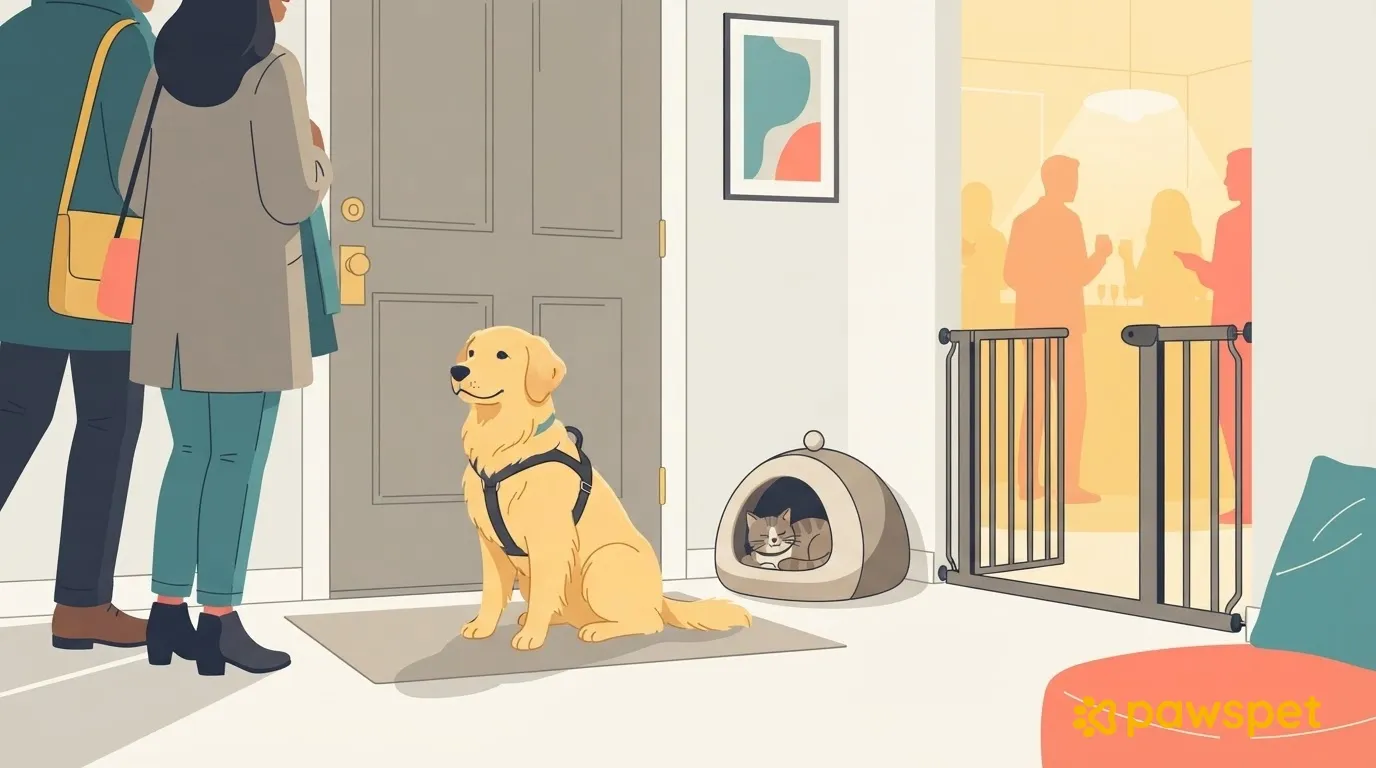
Next, identify the rooms that will be affected: where workers and materials will pass through, and which areas will remain outside the work site. Also consider the possibility of a door being left open: your dog’s collar tag should include your contact details, and if your pet is microchipped, make sure the registered contact information is up to date.
A safe room away from the work site
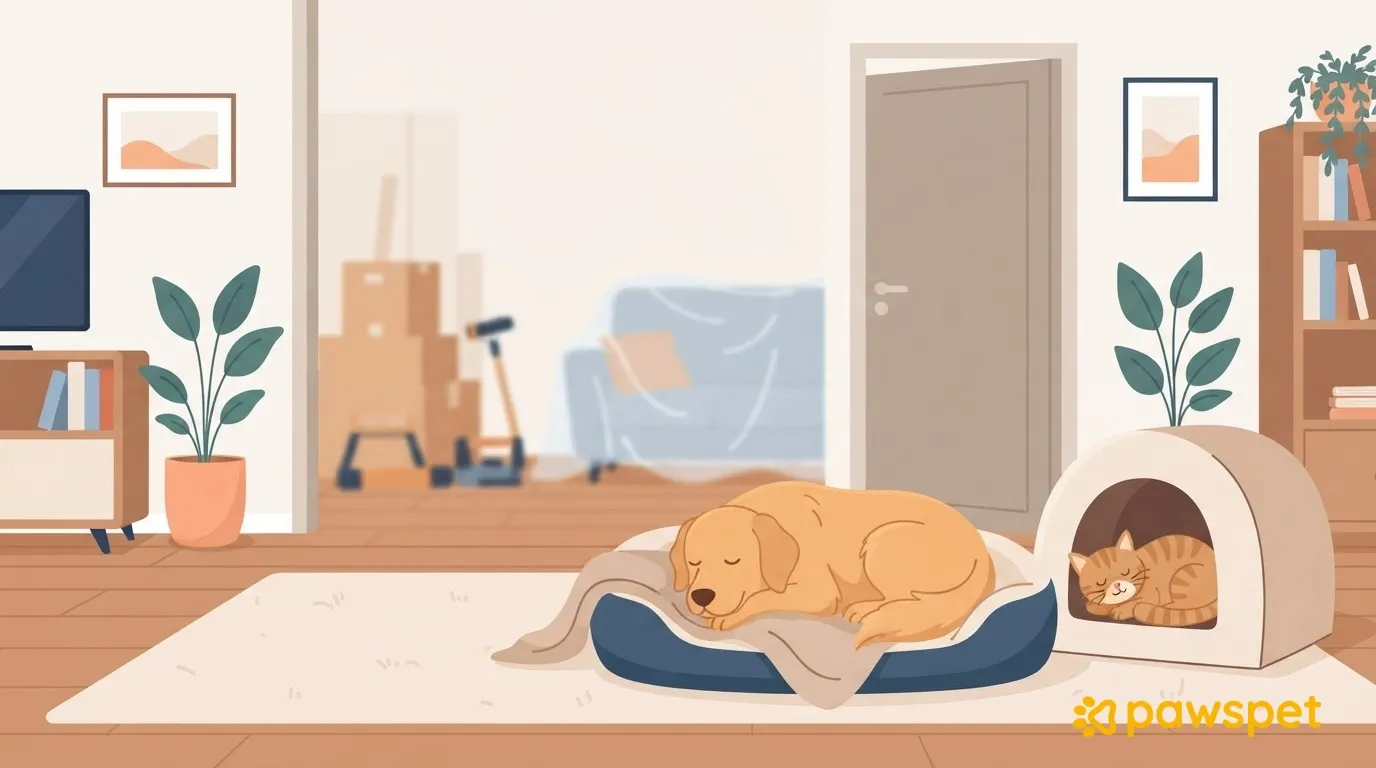
Choose the room farthest from the work site that the workers won’t need, avoiding hallways and thoroughfares. Set it up a few days beforehand and let your pet spend time there with the door open, perhaps eating or playing there, so they already know the room when the noise starts.
For your dog, provide a bed, water, and a chew suitable for their size and age. For your cat, provide a litter box, water, food, a hiding place, and a high perch. Keep the windows closed; if the work is being done by a neighbor, choose the room farthest from the shared wall. If you have both a dog and a cat, use two separate rooms if possible: each pet should be able to rest without sharing the space.
Workers in your home: doors, materials, and a sign
If workers will be entering your home, hang a clearly readable sign on the safe-room door: “Do not open: pet inside.” Repeat this verbally to everyone working in your home on the first day; the people may change from day to day, while the sign reminds everyone. Then agree on a few simple rules:
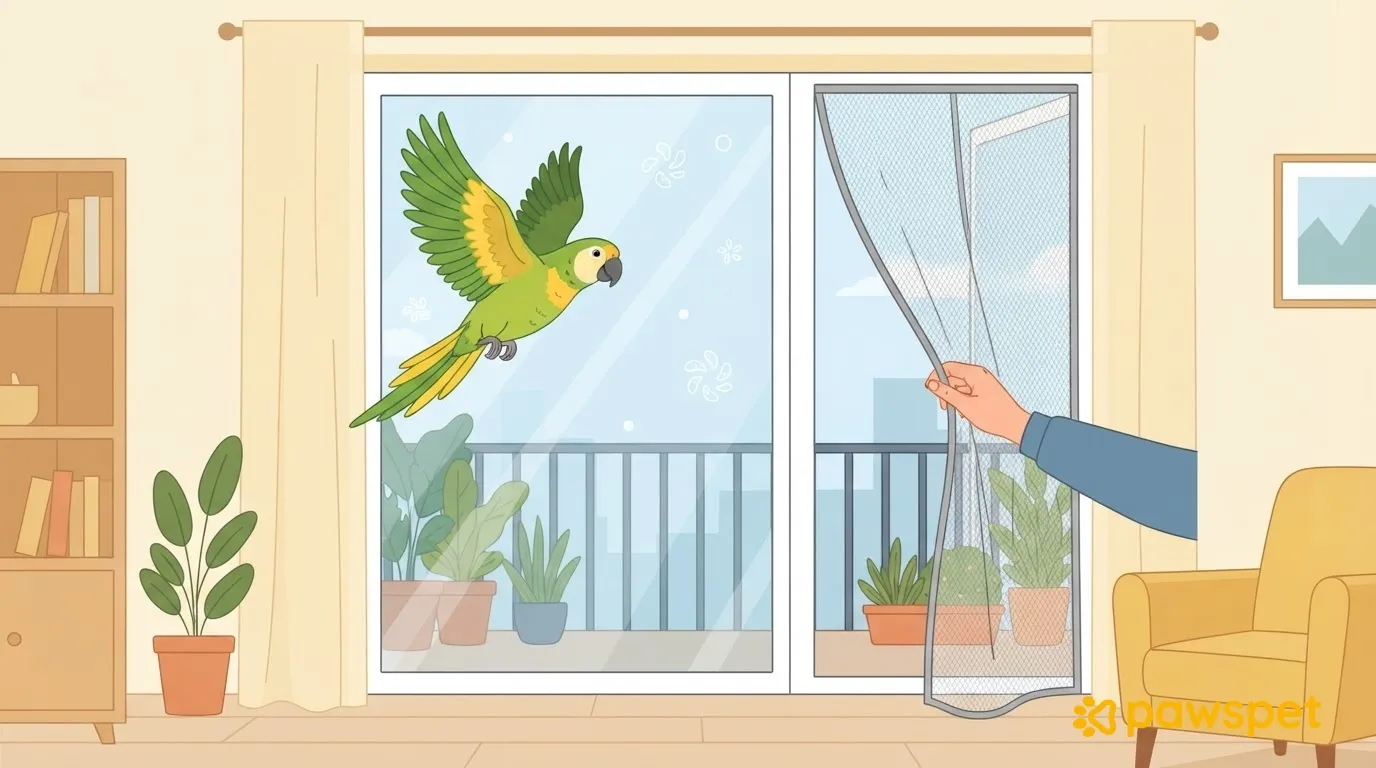
- keep the front door, balconies, and windows closed or supervised, especially when workers are coming and going with materials;
- keep paint, solvents, adhesives, filler, dust, screws, nails, and cables out of reach, and close all containers securely;
- clean the floor at the end of each day and check the area yourself before letting your pet out;
- for cats, check open furniture, boxes, and cavities before closing them up: cats can squeeze into places where you can’t see them;
- if you won’t be there, give the workers your contact details so they can let you know if your pet gets out or becomes unwell.
If your pet swallows a product or gets it on their coat, contact your veterinarian right away and keep the packaging or label handy.
Outings and meals during the noisiest hours
Take your dog for a long walk, with time to sniff, before the work begins and, when possible, another during peak hours, choosing a route away from the work site. Give meals and a chew in the safe room: this helps your dog associate the room with something pleasant and keeps them occupied when the noise is loudest.
For your cat, keep meals, playtime, and litter-box cleaning at the usual times, without introducing anything new. When the home is changing, familiar routines remain a steady anchor.
If the work is being done by a neighbor and you can’t control it, observe when the noise is loudest, adjust walks accordingly, and use the room farthest away.
When an alternative away from home may be a good idea
A safe room is not always enough: the longer, louder, and more widespread the work is, the harder it is to ensure rest and safety. Consider an alternative if at least one of these situations applies:
- demolition lasting several days;
- work in every room;
- no room that can be separated from the work site;
- a dog that panics at noises;
- an elderly or convalescing pet.
Possible alternatives:
- relatives or friends, for a few days;
- dog daycare, on the worst days;
- a dog walker, for outings during peak hours;
- boarding, for longer projects;
- visits from a pet sitter, if your cat stays at home.
For many cats, moving to another home is also stressful: assess the situation individually and talk to your veterinarian if you have concerns. If your pet has never been to daycare or a boarding facility, ask whether a trial visit is possible before the noisiest day.
Plan ahead: availability and openings depend on the area and dates. To find an alternative near home, use the “Services” tab in the PawsPet app to search for “Daycare” or “Boarding,” set “Search area” and “Distance,” then compare “Availability” and “Reviews” on the service page.
After the work: returning home and signs not to ignore
Before reopening the rooms, check that no debris remains: screws, nails, dust, or open containers. Then reopen spaces gradually, let your pet explore without forcing them, and return to your usual routine.
Talk to your veterinarian if your pet stops eating, stays hidden for a long time, vomits or has diarrhea, limps, coughs or sneezes after exposure to dust, or persistently licks their paws. Note when the signs began and how long they last: this information will be useful to your veterinarian.
The one-page plan
Before the work begins, take a sheet of paper and write down:
- the work dates and noisiest phases;
- the safe room and what it contains;
- the sign text: “Do not open: pet inside”;
- outing and meal times;
- contact details for your chosen alternative and your veterinarian.
Hang the sheet near the front door so anyone entering knows what to do right away, and put the sign on the safe-room door. You’ll have everything decided before the toughest days.