While you’re packing, the main risks for dogs and cats are materials and small items they could swallow, chemicals found while clearing out cupboards, boxes and closets where a pet could get trapped, unstable piles, and open doors with people coming and going. You can reduce these risks by packing room by room, leaving your pet’s area until last, keeping materials put away, and preparing a pet box that travels with you.
What becomes dangerous while you pack
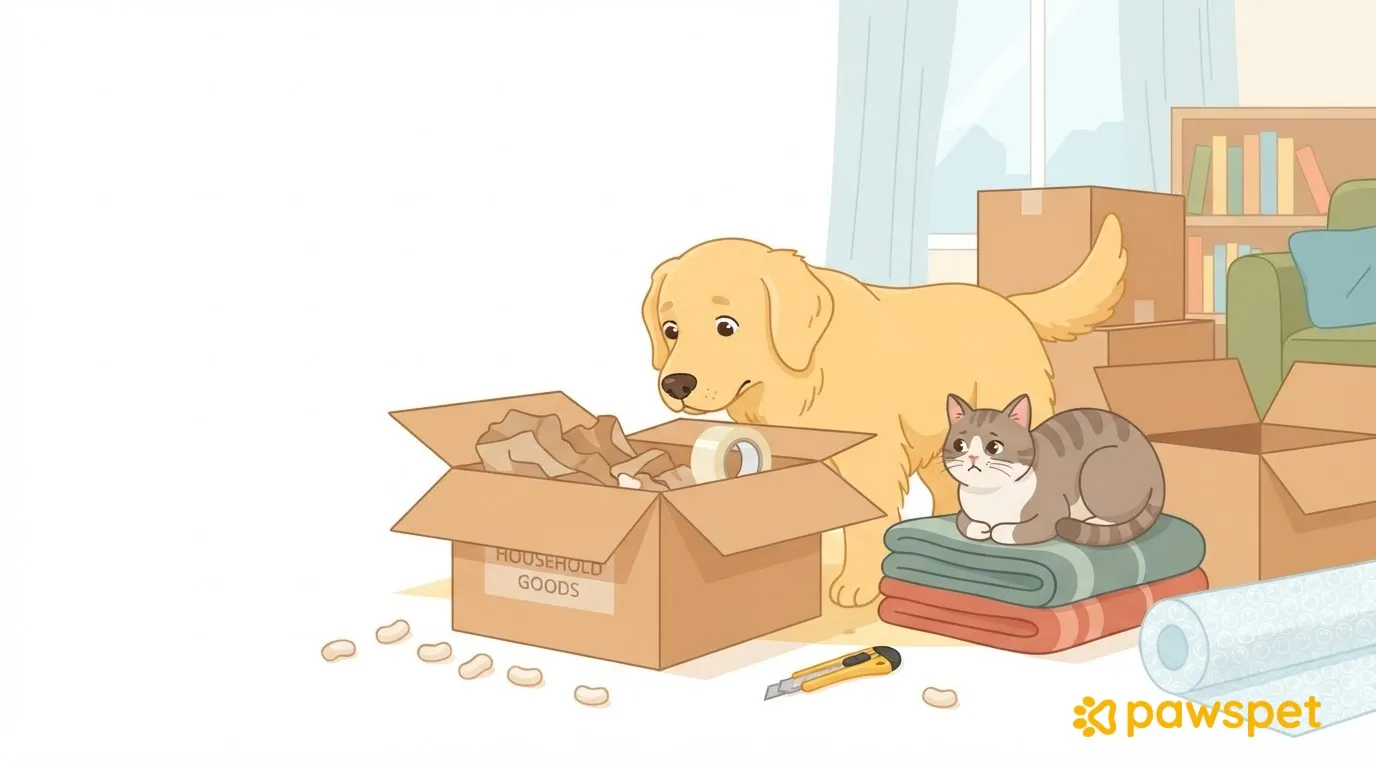
- Adhesive tape, bubble wrap, polystyrene, and cable ties: pets may chew or swallow them, especially scraps left lying around.
- Utility knives, screws, nails, and small hardware from disassembled furniture: these can cause injuries or be swallowed, and even one piece dropped on the floor is enough to pose a risk.
- Cleaning products, solvents, insecticides, and bait: these may turn up while emptying cupboards, the basement, or the garage and must be kept out of your pet’s reach.
- Open boxes, drawers, and closets: a cat or small dog could climb inside and get trapped without you noticing.
- Stacks of boxes and disassembled furniture leaned against a wall: these could fall if your pet walks past or climbs on them.
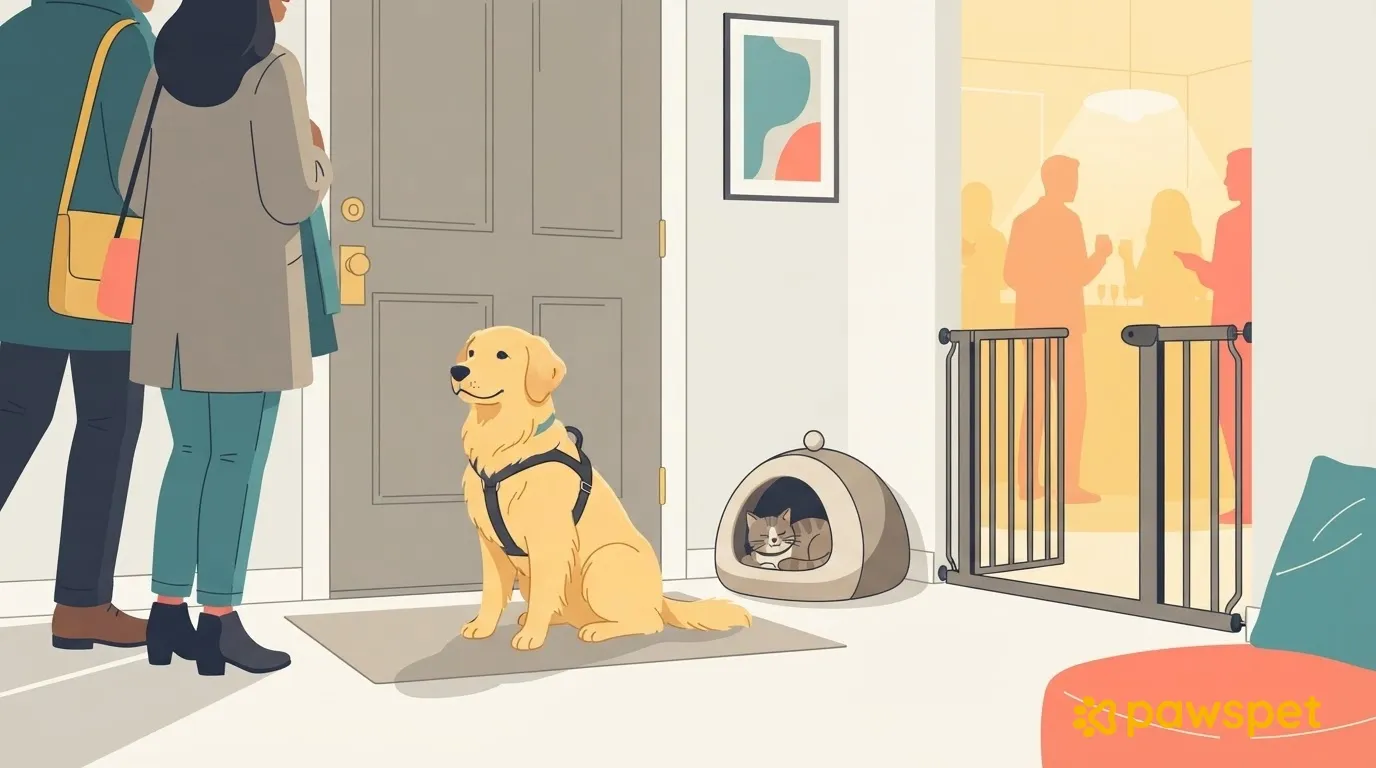
- Doors left open: when someone comes to collect furniture or boxes, your pet could get out without anyone noticing.
What order to pack in so you don’t disrupt your pet’s routine
- Start with rooms and belongings your pet uses less: the basement, books, and seasonal clothes.
- Then pack the rest of the home, one room at a time, finishing each room before starting the next.
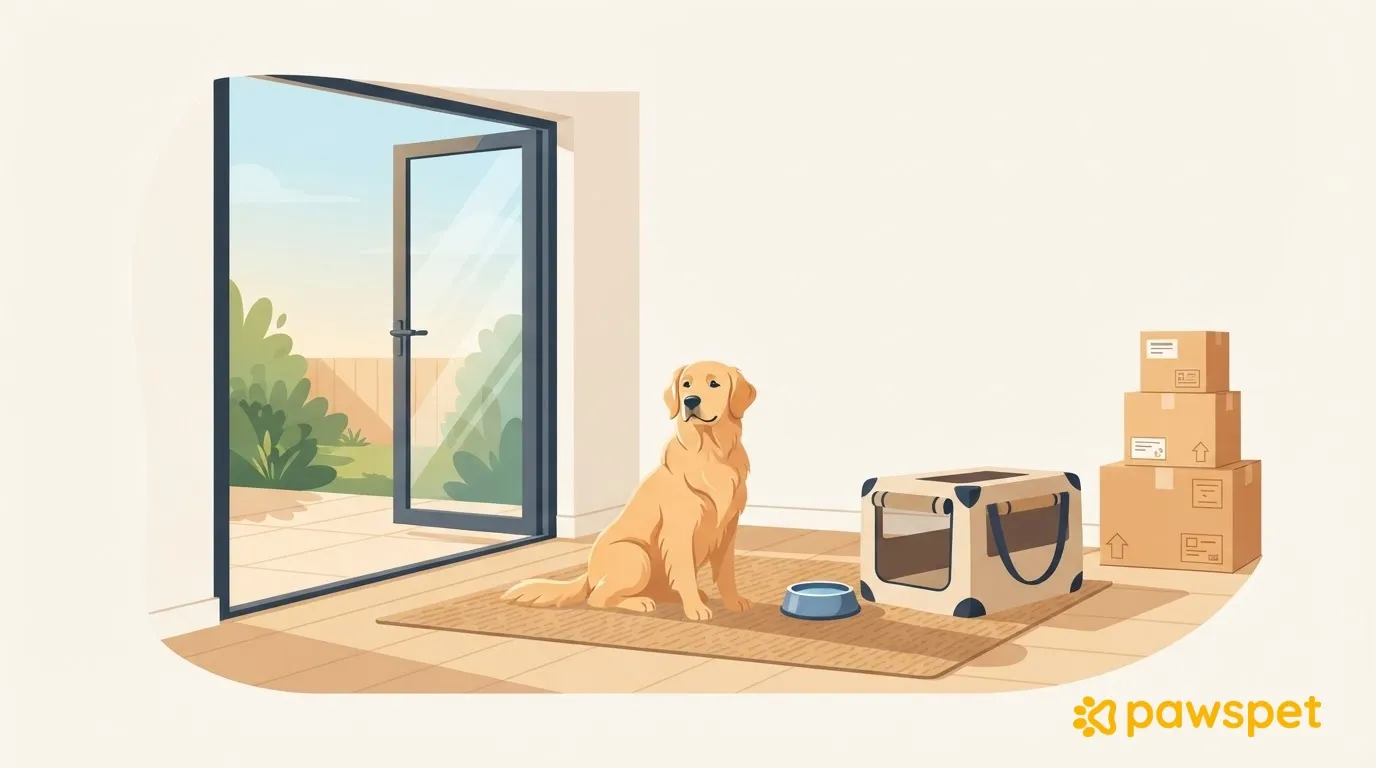
- Leave your pet’s area until last: a room with a door that can be closed, ideally one where your pet already has its bed and bowls, where it can stay while there’s more activity in the home.
Keep your pet’s bed, bowls, litter box, mat, and favorite toys where they are until the last day, without moving them suddenly. Then put what you’ll need for the first few days in the pet box (more on that below). Keep meal, walk, and play times close to your usual schedule, too: your pet will have familiar routines while the home changes.
Practical rules for boxes and packing materials
- Keep rolls of tape, scissors, utility knives, and bags in a closed container or locked room.
- Pick up tape scraps, bubble wrap, and polystyrene right away; don’t leave them on the floor.
- Put screws and small hardware in sealed bags and attach them to the piece of furniture they belong to.
- Check inside every box before sealing it, and count your pets before closing a closet, room, or trunk.
- Stack boxes securely and not too high; lay disassembled furniture parts flat instead of leaning them upright against a wall.
- Put cleaning products and other chemicals in a sealed, labeled box, away from your pet’s area.
- While clearing out the basement, garage, or closets, keep your pet in its room with the door closed.
- When someone rings the doorbell, put your pet in the closed room before opening the door.
No precaution eliminates all risk, but these habits can reduce it.
The pet box that should not go on the moving truck
Prepare a box or bag to travel with you, not on the truck: many boxes will stay closed for the first few days, and this can help you avoid sudden changes to your pet’s food and routine. Here’s what to pack:
- For eating and going out: your pet’s usual food for the first few days, bowls, leash and harness, waste bags.
- For cleaning: litter and a litter tray for cats, supplies for cleaning up small accidents.
- For feeling at home: a blanket or bed with a familiar scent, toys.
- For health: any current medication with its prescriptions, a copy of the health record or pet passport, your veterinarian’s contact details.
Think about identification, too: a tag with a phone number where you can be reached during the move, a recent photo, and your pet’s microchip number at hand in case it gets out in all the comings and goings. To avoid looking for them among the boxes, in the PawsPet app, on your pet’s profile, you can keep up to 6 updated photos and quickly copy the microchip number from the «Anagrafica» tab if you have recorded it.
Signs to watch for and when to call the veterinarian
With boxes and people coming and going, your pet may show signs of stress: hiding more, eating less, licking or scratching more than usual, marking, or toileting in the wrong places. If these signs persist, talk to your veterinarian, as they may not always be due to stress.
If you think your pet has swallowed tape, polystyrene, screws, or a chemical product, call your veterinarian or an emergency veterinary service right away, even if your pet has no symptoms. Bring the product packaging with you, if available, and don’t try home remedies.
Today, choose the room you’ll pack last. Then prepare your pet’s box.