Before a summer move, decide where your dog will stay during loading: in a cool, closed-off room or away from home with someone you trust or a pet-care service. Schedule loading, walks, and travel during the cooler hours: never leave your dog alone in a car or transport them in the moving van. When you arrive, keep them on a leash until you have checked and secured the new home.
The day’s plan in four stages
Assign one person to be responsible for your dog throughout the day and introduce them to the movers. Everyone should know who is handling the dog’s movements and checking on them.
- Before loading: Take a relaxed walk during the cooler hours, and provide water and food according to your dog’s usual routine. If they get carsick, ask your vet in advance what to do about feeding before the journey.
- During loading: Your dog stays in the prepared room or with their caregiver away from home.
- Travel: Set off during the cooler hours, with the car ready and your dog’s essentials within easy reach.
- Arrival and unloading: Keep your dog on a leash and take them to the new safe area while people are still coming and going.
The safe room: secure and cool
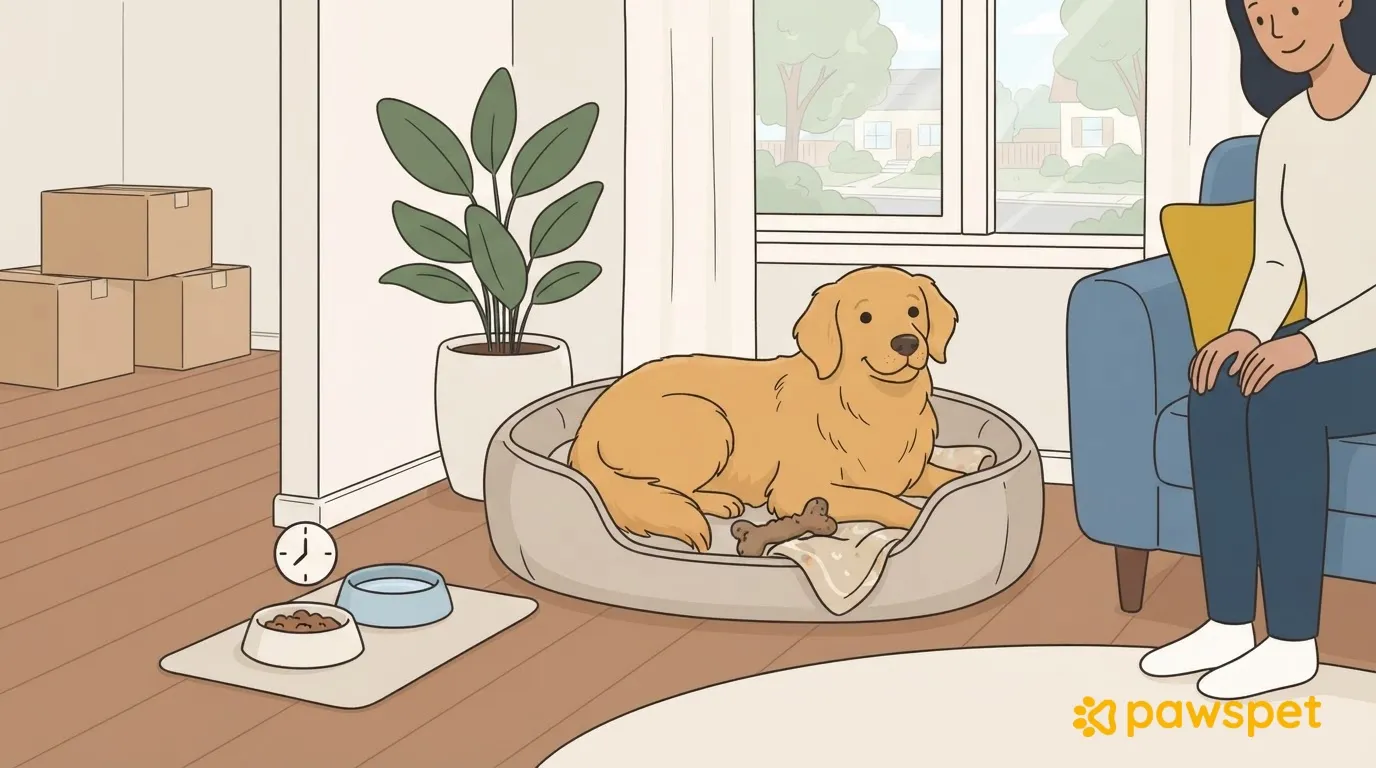
Choose a shaded room away from the entrance that won’t need to be emptied—or will be emptied last. It must stay cool and have good airflow, without wide-open windows or accessible balconies.
Leave fresh water available at all times, along with a familiar bed or blanket and a safe chew toy. Put a sign on the door such as “Do not open: dog inside” and let anyone carrying furniture know.
The person responsible should check on the dog, water, and room regularly. If the room gets warm or your dog keeps barking, panting, or scratching at the door without settling down, don’t insist on this arrangement: switch to the away-from-home option. If the panting is intense or your dog seems unwell, call the vet immediately.
When it’s better for your dog to spend the day away from home
Choose this option if your dog is distressed by noise or strangers, tends to run off, the move will take a long time, or there isn’t a cool room available. They can stay with a family member or friend they know, a dog sitter, or at a dog daycare facility. In any case, choose a cool environment where they can be supervised.
Provide a harness or collar with an ID tag and a phone number where you can be reached that day, a leash, their usual food, water, and a bowl. Leave their meal and walk times, along with useful contact details, including your vet’s number. Arrange drop-off before loading and pick-up once the home is secure.
To arrange care for the day, use the “Services” section of the PawsPet app to search for “Daycare” or “Pet sitting,” set your area in the filters, and, if you find a suitable option, book an available time. You can chat with the provider only after placing an order.
Traveling by car in hot weather
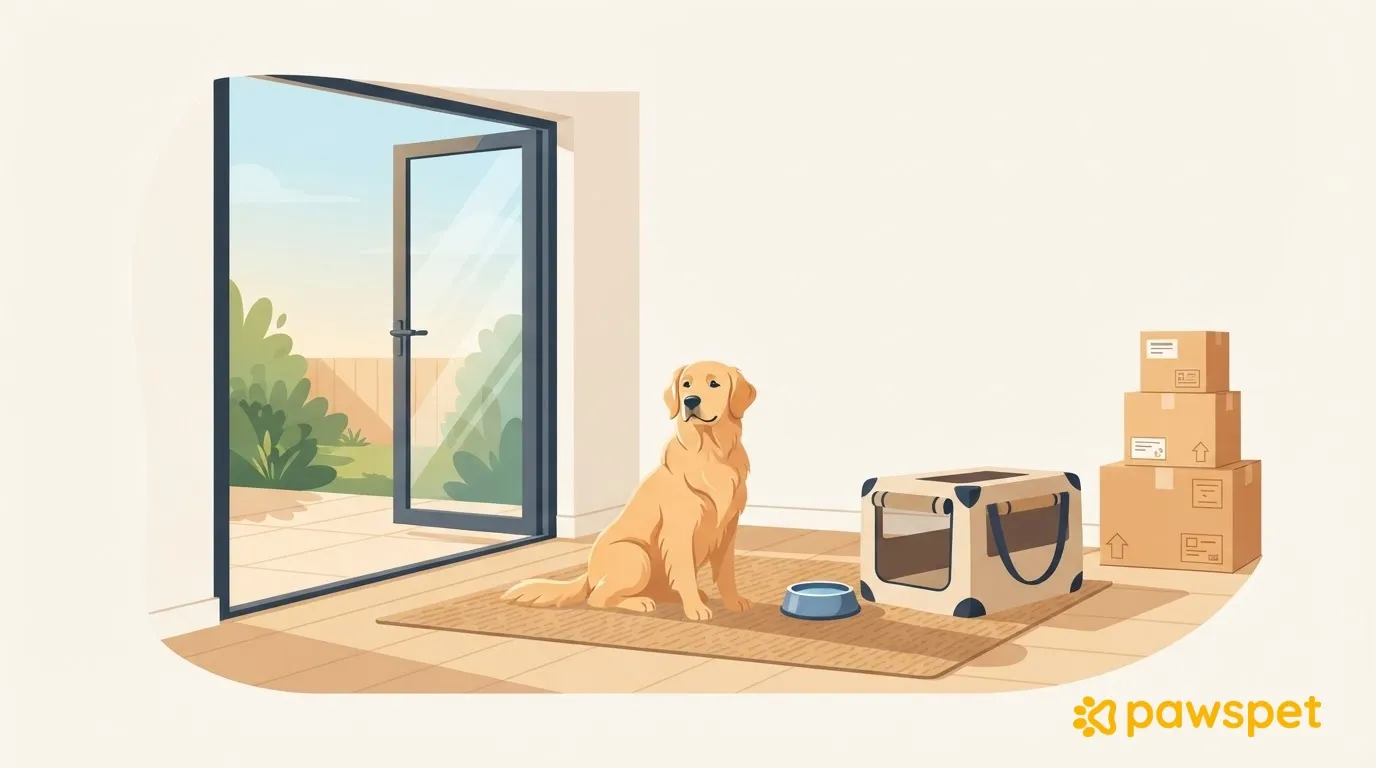
Use a carrier or a suitable restraint system for your dog: they must not travel loose in the passenger compartment. Never put them in the cargo area of a van or among the boxes, even for a short trip.
Cool the car before letting your dog in, and keep water and a bowl within easy reach. For long trips, plan stops in the shade; use a leash when your dog gets out.
Never leave your dog alone in the car, not even for a few minutes or with the windows slightly open. The car must not become a waiting room during loading or unloading.
Signs of heatstroke
Intense panting that doesn’t ease, excessive drooling, weakness, an unsteady gait, or vomiting can be signs of heatstroke. This is a veterinary emergency: don’t wait for all the signs to appear. Older dogs, brachycephalic dogs (with short muzzles), overweight dogs, and dogs with heart or breathing problems are at greater risk.
If you suspect heatstroke, move your dog into the shade immediately and call the vet. Offer water if they are alert and able to drink, without forcing them, and follow the advice you receive.
On arrival, before unclipping the leash
Check gates, fences, balconies, and windows before letting your dog off the leash. If the movers are still coming in and out, you’ll also need a cool, closed-off room in the new home, with a sign on the door.
Remove materials and tools from the floor. Look for any cleaning product residue or rodent bait left by the previous occupants and remove it before your dog can reach it.
Put fresh water, their bowl, and their familiar bed in the safe area. The first walk should be short, on a leash, and during the cooler hours.
Write down who is looking after the dog, where, and at what time, and give the note to everyone involved in the move.