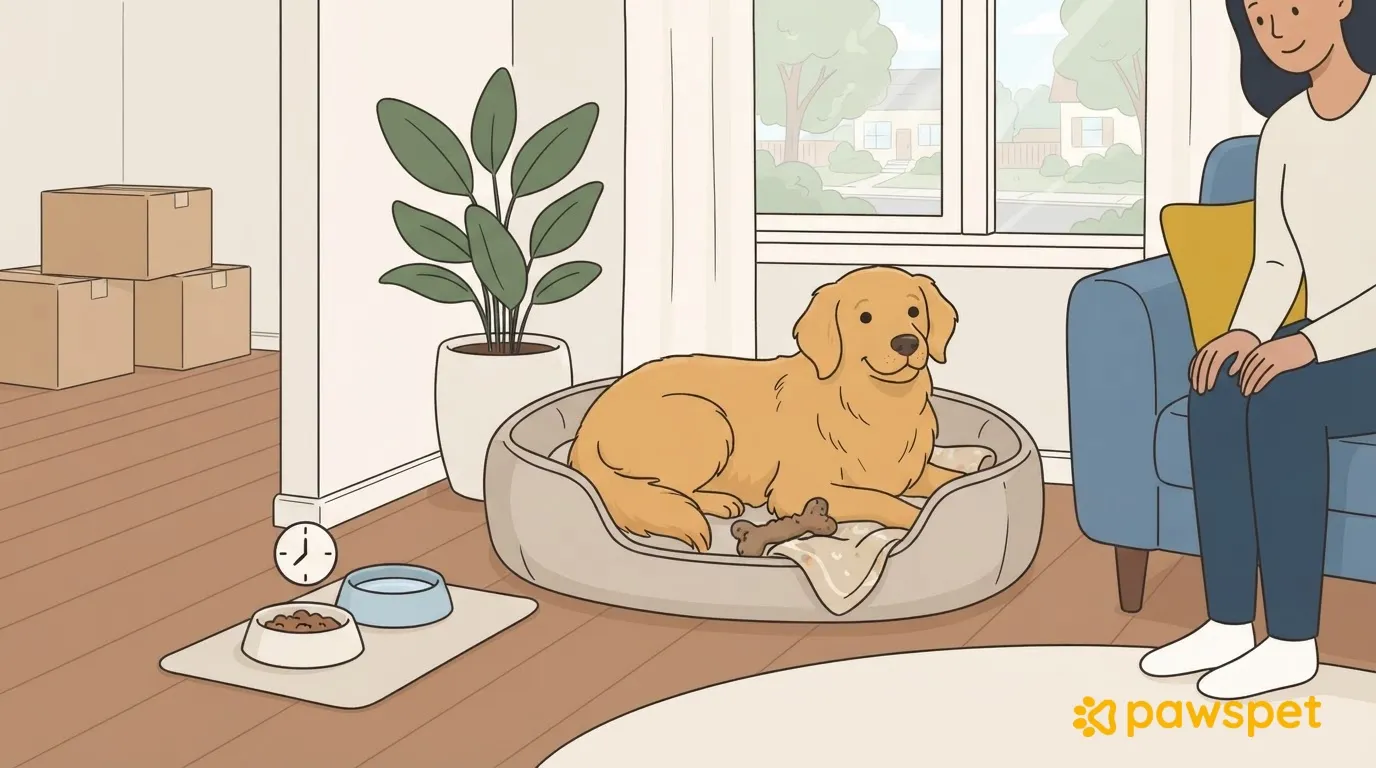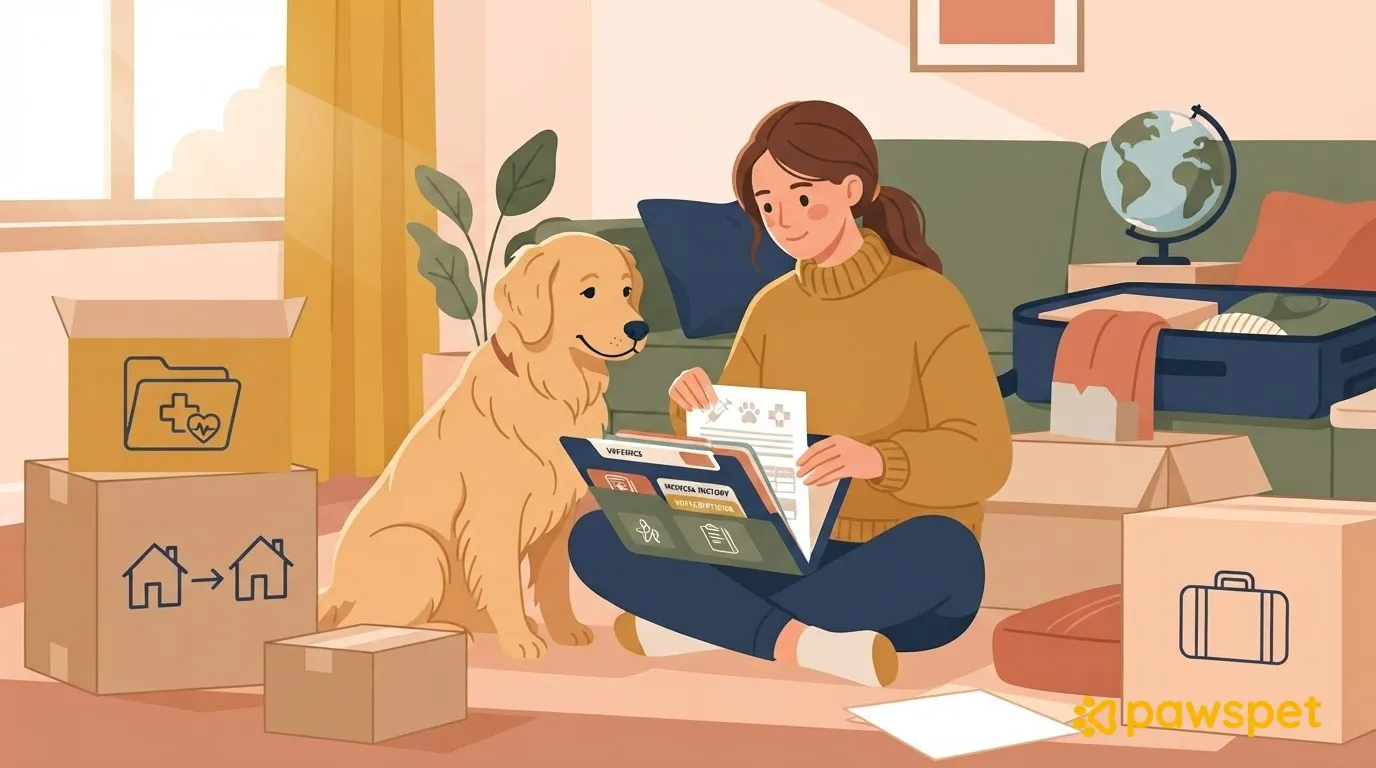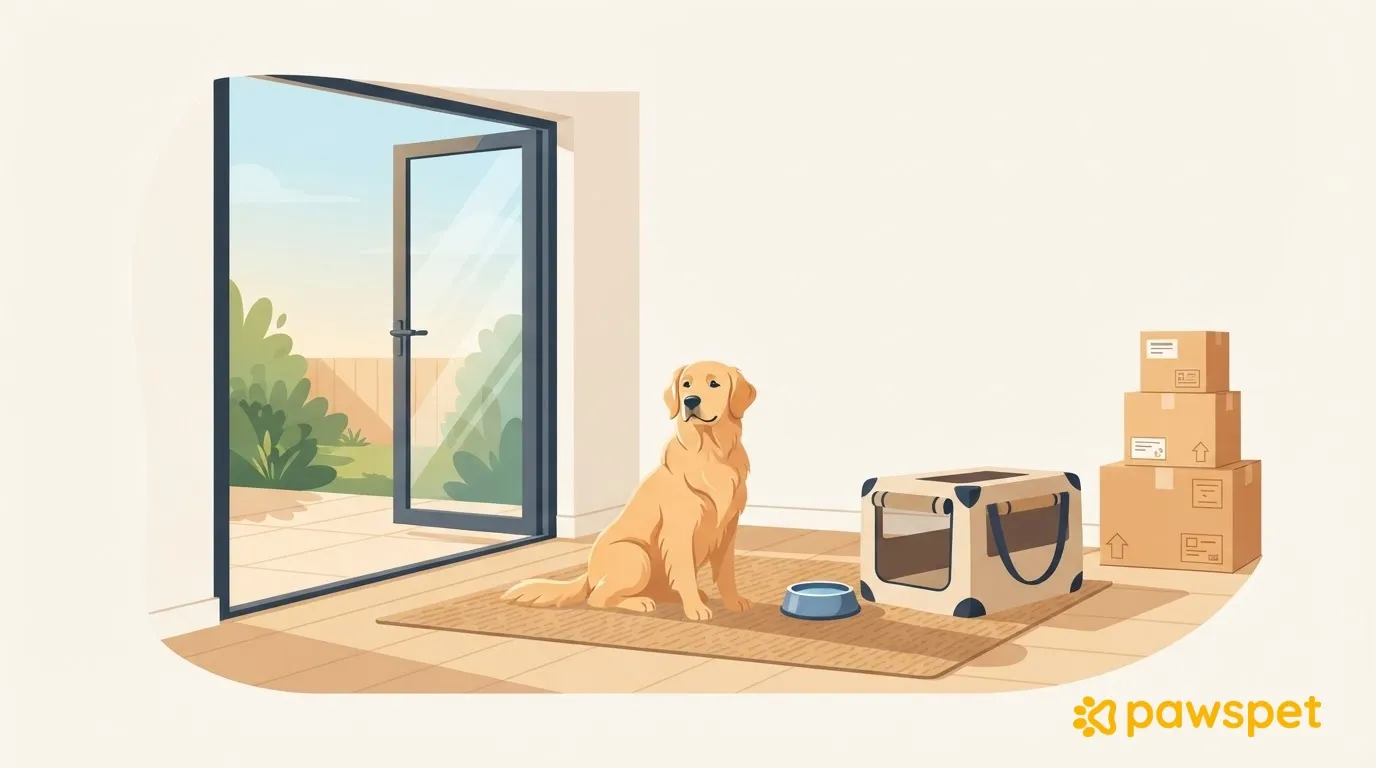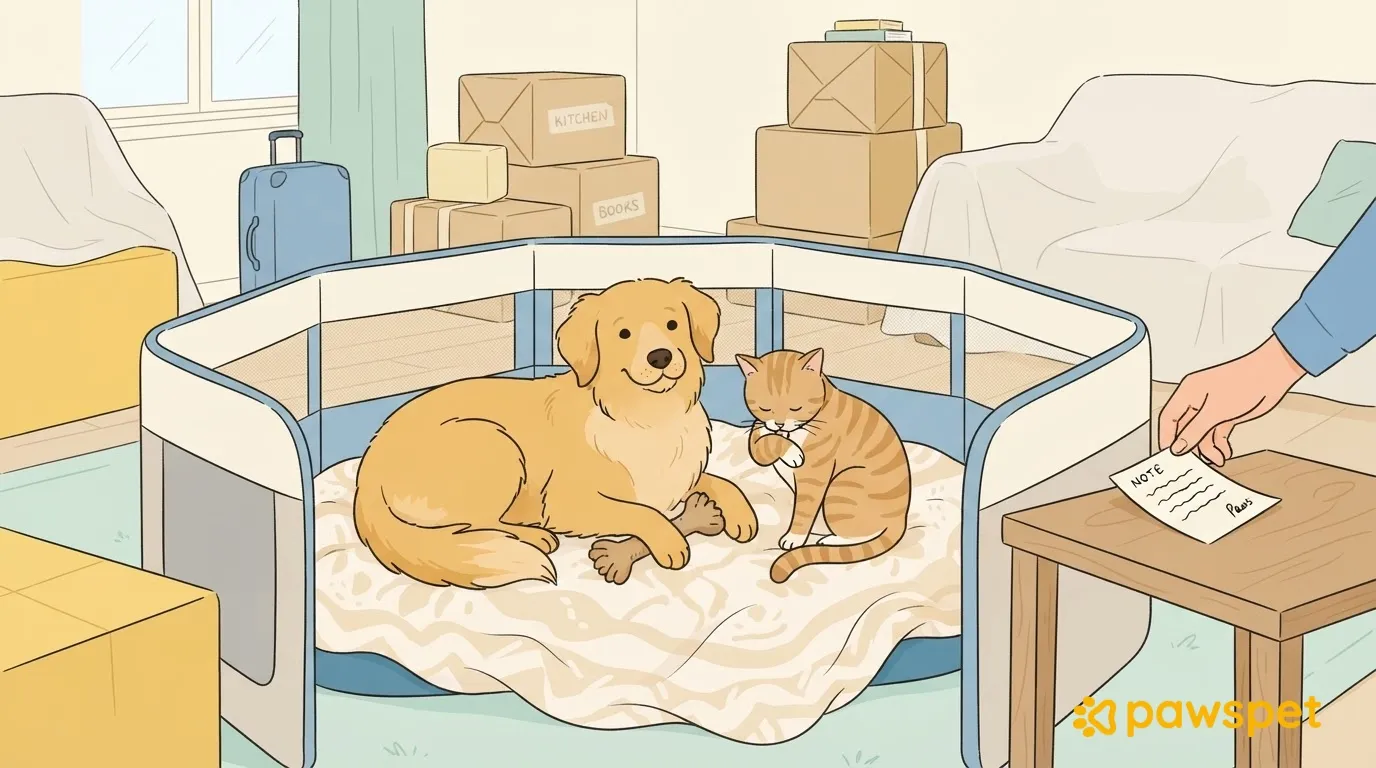
If your new home is not ready yet during a move, there is no one-size-fits-all best option for your dog or cat among family, a pet sitter, boarding, and temporary accommodation. The right choice depends on how many days you need, your pet’s temperament and age, health and medication needs, whether their routine can be maintained, how safe the place is, and how far it is from your new home. Then, especially if you have never left your pet with someone for several days, whoever looks after them will need a written care sheet and a few familiar items.
When temporary accommodation is needed
A gap between homes. You have left your old home and cannot move into the new one yet: for a while, your pet has no permanent place to stay.
Work in the new home. Painting, dust, fumes from paints and solvents, tools, contractors, and open doors or windows expose your pet to the risk of swallowing something harmful, irritation, or escape.
Temporary accommodation. A hotel, vacation rental, or family member’s home: before confirming, ask the host what rules apply to pets.
Questions to ask yourself before choosing
Write down your answers: this will help you rule out the options that are a poor fit.
- How many days do you need, and what happens if the timeline gets extended?
- How does your pet respond, given their temperament and age, to new places, other animals, or children?
- Do they have medication or health needs that require someone with the right experience?
- Can the person looking after them stick to their meal and outing schedule?
- Is the place secure against escape: gates, balconies, doors?
- How far is it from your new home and the vet?
For cats, there is one extra consideration, not a hard-and-fast rule: for many cats, a change of surroundings is harder than being away from their people. Compare two moves close together—first to a temporary place and then to your new home—with leaving your cat in the old home until the last day and having a cat sitter visit, if the old home is still available and quiet enough.
Possible options and what to check
None is generally better than the others: what matters is how well it fits your answers.
Family or friends. This makes sense if your pet already knows them and feels comfortable with them. Check that the space is secure against escapes and consider whether there are other pets in the home.
Pet sitter, at your home or theirs. This can work when your pet needs just one person to rely on. Arrange an introductory meeting with your pet present and, if they need medication, ask about the sitter’s experience with similar cases.
Boarding. This may work for a set period and for a pet that can cope with new places. Visit the facility before booking, ask what health requirements it has, and how it handles food and medication you bring from home.
With you in temporary accommodation. This lets you stay close to your pet, but check the host’s rules and whether you can avoid leaving your pet alone during the first few days.
The care sheet for whoever looks after your pet
Write it on a single page and leave it with your pet’s belongings:
- meal times and usual food, with enough for the whole period to avoid sudden changes;
- walks and toileting habits, or the litter box and where to put it;
- current medication, with a copy of the prescription and times written as the vet specified;
- allergies and intolerances;
- contact details for your regular vet and a nearby emergency clinic;
- signs of stress or illness to report right away;
- things to avoid, such as letting your pet roam outdoors during the first few days;
- familiar-smelling items, such as their blanket, and an ID tag with a reachable phone number.
If the person looking after your pet already has a PawsPet account, you can give them access to the pet: in the app, open the pet’s profile and tap ⋮ in the top right » «Collaboratori» » «Aggiungi collaboratore», search for the person by name or email, and choose their permissions. A new collaborator starts with «Visualizza» for «Salute», so they can view the medication, allergies, and vaccines you have recorded; if you want them to log outings, you can also grant them «Modifica» for «Attività». If they do not have an account, you can send them a read-only link, which you can activate from the same ⋮ menu » «Condivisione»: it shows the pet’s profile details and health summary.
Keep the limitations in mind. At the moment, documents and passports are not visible to collaborators or through the link: give the person looking after your pet any copies they need. A collaborator’s access does not expire automatically and must be removed manually. Anyone who receives the link can open it: if you deactivate it, it stops working, but if you reactivate it, the same code becomes valid again.
When to bring your pet to the new home
Wait until the work and strong odors are over, doors, windows, and balconies are secure, and at least one room is ready with your pet’s belongings. Choose a quiet time to bring them home, not while the furniture is being unloaded. Then remove access for any collaborators you added for the occasion and deactivate the link if you activated it.
Start today: write the care sheet and ask the person who will look after your pet whether they can follow the schedule you listed.