Many dogs need time to get used to a new home and neighborhood. To help, bring back familiar schedules and rituals right away. Set up a resting area with familiar belongings, explore the surroundings gradually, and start with short absences, increasing them step by step. If physical signs appear or problems get worse, contact your veterinarian first.
What may change in the first few days
In the first few days, you may notice:
- restlessness and difficulty settling down;
- interrupted sleep;
- barking at noises from the building or street;
- the occasional accident indoors;
- reduced appetite;
- increased attachment, with your dog following you everywhere.
New smells, sounds, and spaces, together with the disrupted routine during the move, can leave your dog without familiar reference points. These changes can help explain what is going on, but they are not enough to account for every difficulty.
Don’t attribute everything to the move: vomiting, diarrhea, ongoing loss of appetite, limping, or very frequent urination or blood in the urine are reasons to contact your veterinarian, not just wait for your dog to adjust.
The familiar routines to restore right away
Even with boxes filling the house, prioritize a few habits:
- Meals and walks: return to the schedule you had in your old home, keeping the same food and bowl too.
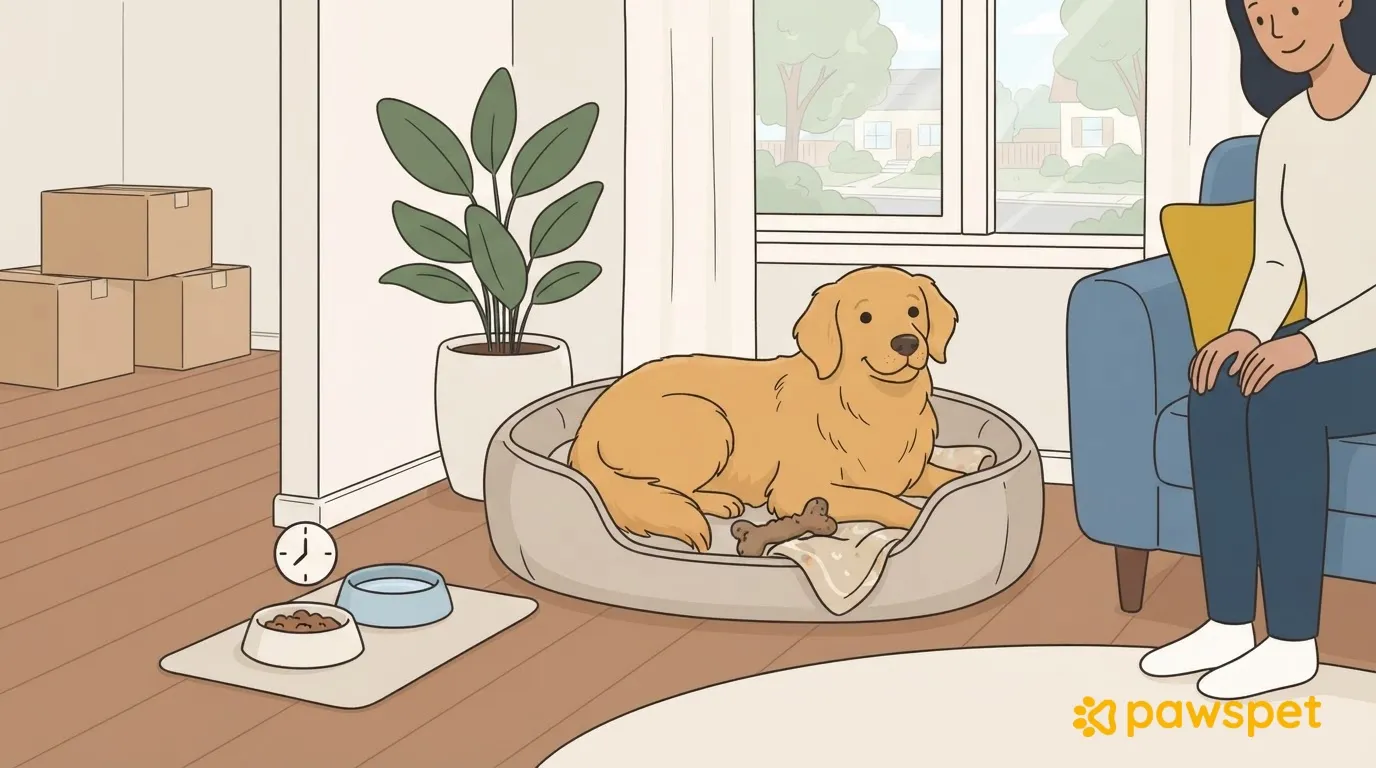
- Rest: put your dog’s bed with a blanket that smells like home in a quiet corner, away from high-traffic areas.
- Evening: repeat the ritual that came before bedtime, following a familiar sequence even in the new home.
For bathroom breaks, go outside often during the first few days, heading to the same spot near home, and reward your dog when they go outside. If there’s an accident indoors, clean it up thoroughly and don’t scold them: focus again on opportunities to go out.
To keep to a schedule amid the disruption, in the «Attività» tab of the PawsPet app you can create recurring activities, for example «Alimentazione e forniture» or «Gioco libero e passeggiate» in the «Generale» category, with «Ripeti» and a notification, then mark each occurrence as done. Notifications arrive only if the app has permission to send them: the reminder can help you stay organized, but it doesn’t replace consistency.
Explore the neighborhood one step at a time
Start with short, repeated routes at quiet times. Give your dog time to sniff and extend the walk gradually, rather than changing routes on every outing. If a stretch makes them more agitated or pulls them on the leash, choose an easier route for now.
During these explorations, keep your dog on a leash at all times, especially until you know the neighborhood’s fences, traffic, and potential hazards well.
Dogs behind gates, busy roads, and crowded areas don’t have to be mandatory stops: you can avoid them or approach while keeping a greater distance. The initial goal is to build a few familiar walks, not to explore every street right away.
Staying home alone in a new place
Even if your dog used to stay home alone without any problems, start building up to absences gradually again. Begin with a few minutes while you’re in another room, then move on to short outings, returning calmly. Before increasing the time, check that the previous step isn’t causing distress: don’t aim right away for the longest absence of your day.
You can leave them with a safe chew that’s suitable for them or a familiar scent-based activity. These options can support the process, but they don’t replace taking things gradually.
If continuous barking or howling, destruction near doors, or accidents only when they’re alone appear, don’t extend the absences and ask for help. There’s no need to keep trying longer and longer absences to see if your dog gets used to it.
To find a professional who can support you, in the «Servizi» tab of PawsPet you can filter by «Consulenza comportamentale» or «Addestramento» and check which options are available in your area.
When to ask for help and whom to contact
Your veterinarian is the first point of contact for physical changes, changes in appetite or bathroom habits, and if the situation gets worse. For restlessness, reactivity, or difficulty staying home alone that doesn’t improve with a routine, then ask a dog trainer or behavior consultant for support.
Make a note of when it happens, how long it lasts, and what was going on: a new noise, leaving home, a walk, or the evening routine. Also note whether you were present or away, so the professional has concrete details to work with rather than just a general “they’re unsettled.”
Write down today the schedule your dog followed in your old home and bring it back tomorrow.