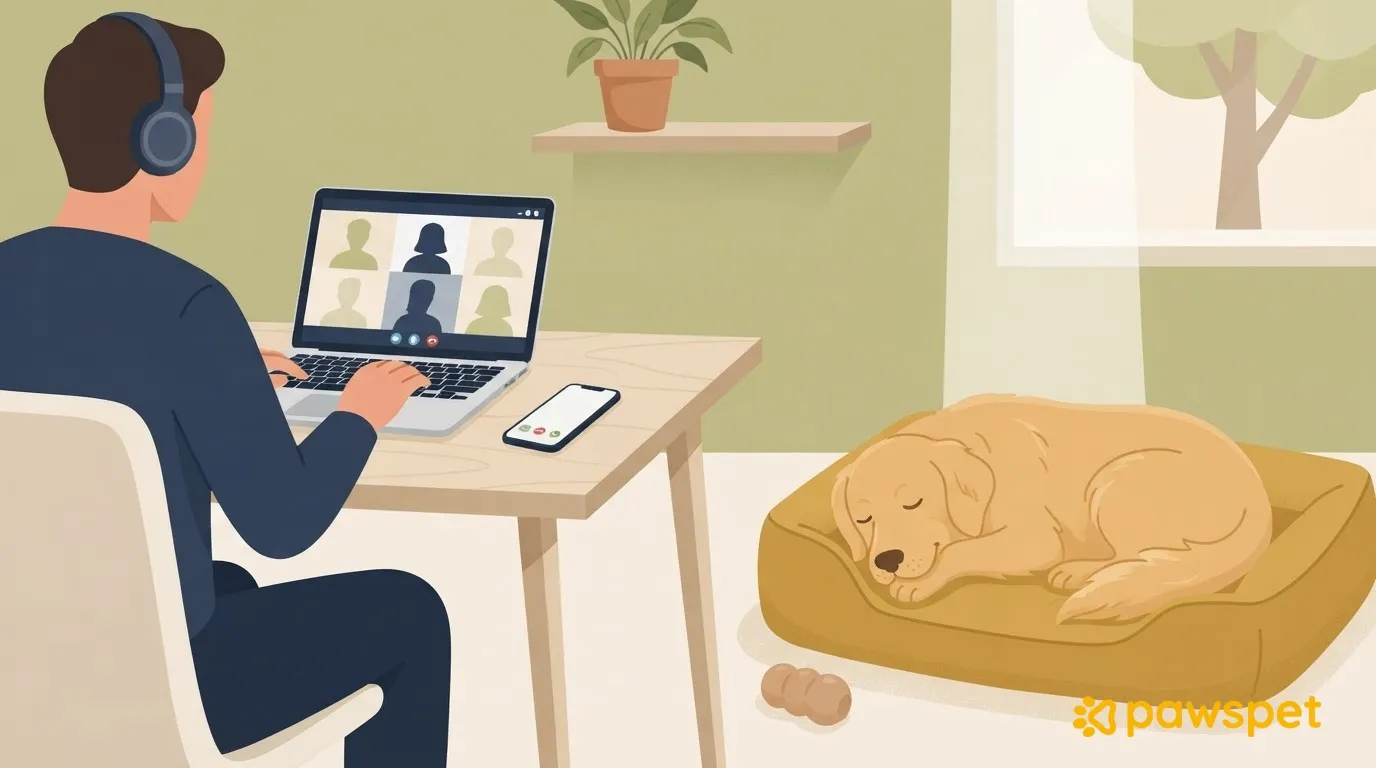
If you work from home and your dog barks, whines, brings you toys, jumps onto your chair, or asks to go out during meetings, they often aren’t being disobedient: a meeting is a time to prepare for beforehand, manage in the moment, and review afterward. Interruptions usually decrease when your dog comes to a video call with their needs met, already knows a place to rest, and has practiced with pretend calls. During the call, it’s best to manage them without rewarding barking, and shutting them out of the room shouldn’t be your first move.
Why dogs get worked up during meetings
Interruptions often stem from several factors at once, and some dogs are more affected than others:
- You’re there but unavailable to them: you’re present, but you don’t respond as you usually do.
- You’re talking to a screen in a different tone of voice than usual.
- Voices and notification sounds come from the speakers.
- The meeting may fall at a time when they usually go out or play.
There’s also a reinforcing effect: any reaction, whether it’s a glance, a word, or a treat to make them stop, can teach your dog that interrupting works. If their behavior changes suddenly—for example, a dog who has always been calm starts whining or can’t settle—it’s worth checking with your veterinarian.
Before the video call: meet their needs first, then help them settle
A dog who has had a chance to relieve themselves and sniff around calmly tends to have fewer reasons to ask for your attention. So before a block of meetings, plan a short potty break with a few minutes of sniffing, and leave water available. Save highly exciting games, such as chasing and fetching a ball, for later.
Here’s an example for a morning with a 9:30 a.m. meeting, which you can adapt to your dog’s age and health:
- 9:00 a.m.: short potty break with some sniffing;
- 9:20 a.m.: fresh water and their resting spot ready;
- after the meeting: more energetic play.
To avoid skipping a walk before recurring meetings, you can create a recurring activity with a reminder in the PawsPet app (tab «Activities», «+», row «Repeat», bell «Set»): it will remind you to take your dog out, but only if you’ve allowed app notifications.
The meeting spot: teach your dog to settle on a mat
Choose a mat or blanket to associate with meetings and put it where your dog feels comfortable: near your desk but out of camera view, or in a nearby room. Some dogs relax when they can see you; others rest better farther away. Observe your dog to see what works. Use small pieces of their daily food as rewards when you teach them.
- Reward your dog whenever they go onto the mat, even if they put just one paw on it.
- Reward calm lying down, not excitement.
- Increase the time between rewards by just a few seconds at a time; if your dog gets up, go back to the previous step.
- Add your presence: sit at your desk, first without doing anything, then while typing and moving the mouse.
- Choose a cue for going to the mat and an end cue, such as a word or gesture, and use them consistently.
The calm mat should never be a punishment: it should remain a place where your dog feels good.
Practice with pretend meetings
Before a real meeting, do a few short practice sessions: put on your headphones, sit at your desk, and talk to the screen as if you’re on a call while your dog stays on the mat. Reward calm behavior, end the session while things are still going well, and gradually increase the difficulty.
When practice sessions are going well, move on to a low-stakes call, even with the camera off, before tackling important meetings.
At the start of the meeting, offer your dog something calm to chew or lick that’s appropriate for their size and habits, has been tried before, and is given under your supervision. If it contains food, count it as part of their daily ration.
If your dog barks or interrupts during a video call
Mute your microphone and avoid scolding or lengthy explanations: even a reprimand is attention and can reinforce the interruption.
- Redirect them: if you’ve already trained the mat cue, use it and reward their return to calm, not the barking. Giving a treat while they’re barking can teach them that barking works.
- If they’re asking to go out to relieve themselves, take them out.
- Reduce the sounds that trigger them: use headphones and mute notifications.
- After the meeting, note the triggers: delivery people, other dogs, street noise.
If the door buzzer is the main trigger, you can find a dedicated guide in another article on the blog.
When to ask for help
Contact a dog trainer or behavior professional if:
- after a few weeks of consistent practice, the barking hasn’t improved;
- signs of persistent stress appear, such as panting at rest, pacing back and forth, or destroying objects;
- your dog has intense reactions to people and noises.
Talk to your veterinarian too, to rule out pain or medical causes. To find a trainer, you can filter by service type in the «Services» tab of the PawsPet app, for example «Training», «Behavioral consultation», or «Obedience training». The search doesn’t guarantee that professionals or available appointment times will be found in your area, and chat with the provider opens only after booking.
A plan for next week
- For the first few days, work only on the mat, rewarding your dog for going to it and staying lying down.
- Add a few pretend meetings with headphones and a screen, keeping the sessions short.
- Try a low-stakes call, even with the camera off.
- Review walk times: if interruptions always happen at the same time, plan a walk shortly beforehand.
These timelines aren’t guaranteed: if a step is too difficult, go back to the previous one.