A dog afraid of thunderstorms may become agitated well before the rain starts: they can sense changes in the air, distant sounds, and flashes that go almost unnoticed by us. Preparing the environment and intervening gradually can help reduce your dog’s stress without forcing them or minimizing their reactions.
How to Recognize Fear of Thunder in Dogs
Fear of noises is common, but every dog shows it differently. Some seek their owner’s contact, while others isolate themselves or try to escape. Observing the signs allows you to act before the agitation becomes difficult to manage.
Common behaviors include:
- trembling, panting, or excessive drooling;
- lowered ears, tucked tail, and a stiff posture;
- restlessness, vocalizations, or persistent barking;
- searching for hiding places, such as the bathroom, a wardrobe, or under the bed;
- attempts to get outside, scratching doors and windows, or escaping;
- refusing food, play, or contact.
A single episode does not necessarily indicate a noise phobia, but intense, recurring, or worsening reactions deserve attention. Never punish your dog for what they do during a thunderstorm: they are not “misbehaving,” but trying to escape a situation they perceive as threatening.
Dog Afraid of Thunderstorms: Prepare a Safe Space
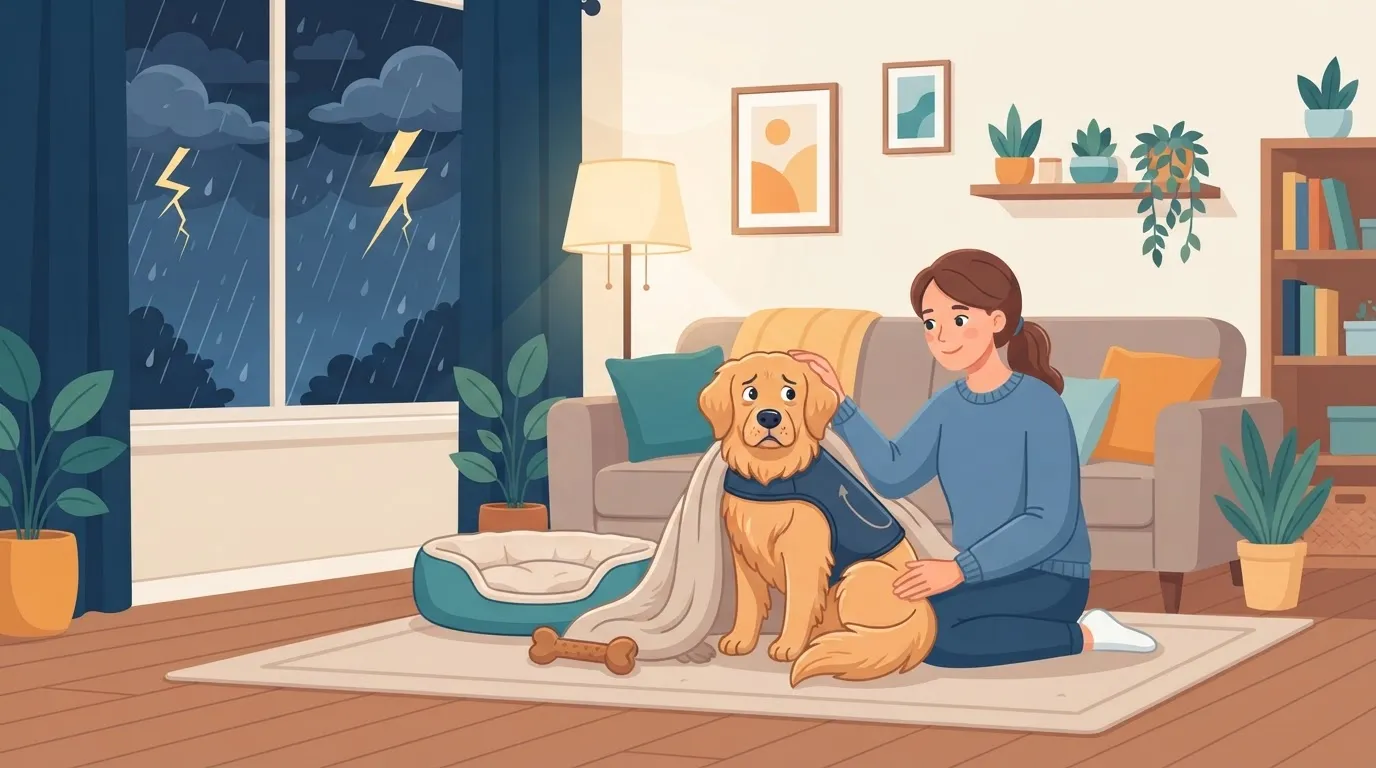
When rain or thunderstorm activity is expected, organize a quiet space in advance. The goal is not to force your dog to stay there, but to offer a predictable refuge where they can feel more protected.
You can make the safe space more effective by:
- choosing an interior room away from windows and exterior doors;
- closing curtains or blinds to reduce flashes and movement outside;
- leaving a bed, a blanket with familiar scents, and fresh water;
- using consistent background noise, such as relaxing music or a fan, at a moderate volume;
- checking that doors, balconies, and gates are securely closed;
- avoiding leaving your dog alone if you know they react with panic.
If your dog seeks your company, you can stay with them without turning the moment into an exceptional event. Speak in a normal tone, move slowly, and offer a favorite activity only if your dog is able to accept it. Comforting your dog does not “reinforce fear”: what matters is avoiding unintentionally increasing tension with an anxious voice, hurried movements, or constant reassurance.
How to Calm a Dog During a Thunderstorm Without Forcing Them
During the storm, safety and stress reduction are the priorities. This is not the right time to teach new skills or demand obedience. Reduce stimuli and let your dog choose where they feel safest, as long as they are not putting themselves at risk.
Try this practical sequence:
- Guide your dog to their safe space without dragging them.
- Reduce light, outside noise, and access to possible escape routes.
- Maintain a calm routine: sit nearby, breathe slowly, and speak little.
- Offer a licking or chewing activity only if your dog accepts it calmly.
- Postpone non-essential walks and trips outside until conditions improve.
Instead, avoid taking your dog to the window “to show them” that there is no danger, scolding them if they have an accident indoors, or forcing them to stay in a crate they do not already associate with a positive place. Going out into the yard during thunder and lightning can also be risky, especially for dogs prone to escaping.
Desensitization: Gradual Work Between Storms
Desensitization is a process that teaches your dog to associate noises with a safer, more manageable context. It should be carried out on calm days, never when your dog is already very frightened.
Typically, recordings of thunder are played at a very low volume and paired with pleasant activities such as play, scent work, or food rewards. The volume should be increased only when your dog remains relaxed: if they become stiff, stop eating, or try to move away, the step is too difficult.
The most important rule is to proceed slowly. For some dogs, small improvements in everyday management may be enough; others need a structured plan with a qualified dog trainer or a veterinarian experienced in behavior. If your dog injures themselves, attempts to escape, shows intense panic, or the problem worsens, seek professional support rather than waiting until the next storm season.
Good organization also helps: on PawsPet, you can use reminders to record your dog’s reactions, plan short exercises, and remember appointments with trusted professionals.
Frequently Asked Questions About Fear of Thunderstorms in Dogs
Is it normal for a dog to be afraid of thunder?
Yes, many dogs are sensitive to sudden noises and weather-related changes. However, if the reaction is very intense, frequent, or interferes with everyday life, it is useful to speak with a veterinarian or a behavior professional.
Should I ignore my dog when they are scared?
You do not need to ignore them completely. Stay available and calm without forcing contact. Let your dog choose whether to come closer, hide, or rest in their safe space.
Can I start desensitization on my own?
You can begin with recorded sounds at a very low volume while carefully observing your dog. If they show discomfort or their fear is severe, it is preferable to work with a qualified professional to avoid worsening their association with the noises.