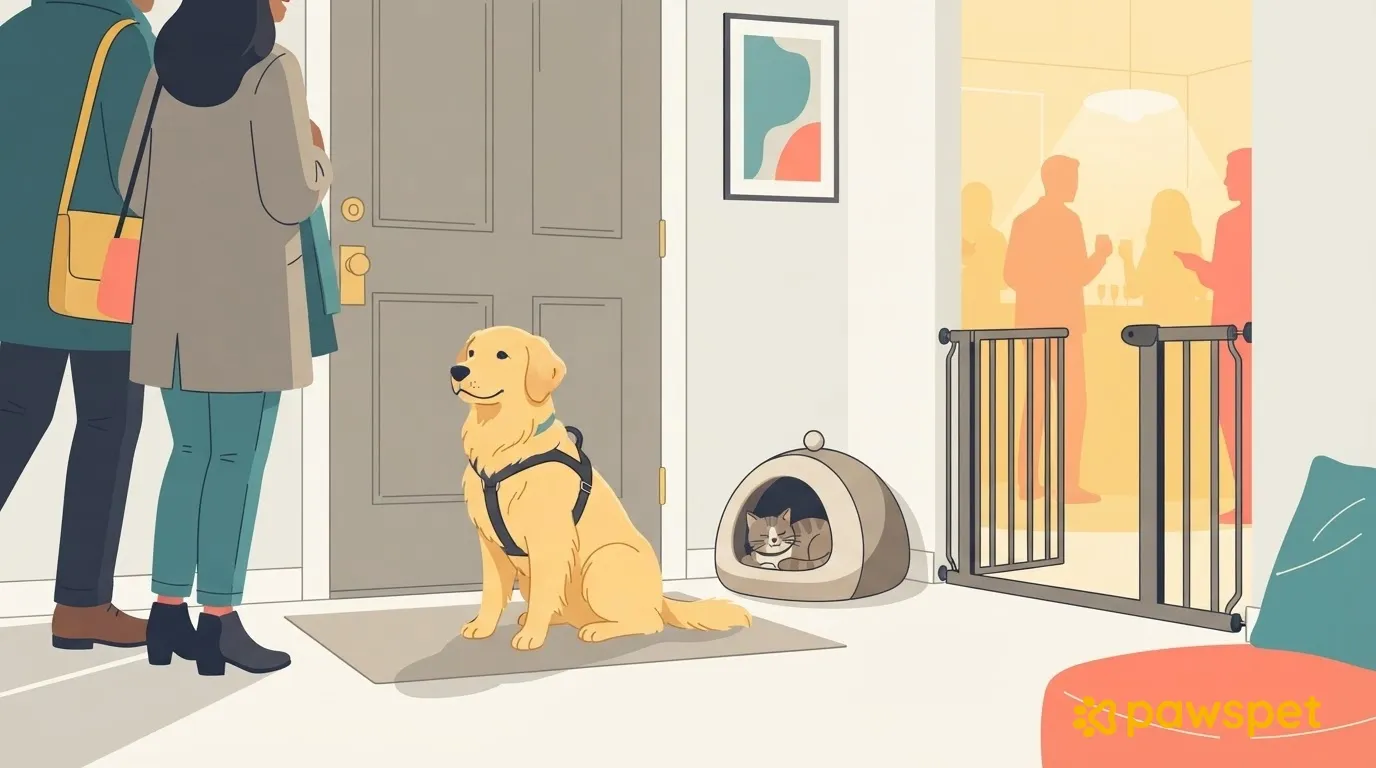
Most escapes during visits can be prevented with good organization: when the door is opening constantly, your dog or cat should not be loose near the entrance. Assign someone to manage arrivals and add a second barrier between the door and the rest of the home. Prepare identification in advance, just in case.
Why doors become a risk during visits
A dinner party, birthday, or simple visit: the door opens many times in a short period, often while people are carrying bags and coats. Guests don’t know your pet’s habits, so they may not realize that your dog tends to bolt outside or that your cat is waiting for just that moment. Noise, voices, and new people can excite or frighten your pet, and an agitated animal may slip through an opening without thinking. In summer, partly open gates and wide-open patio doors to let in the breeze add to the risk.
The four-step door protocol
- Keep your pet safe during busy arrival and departure times. Have them stay in their safe space, a quiet room with the door closed; a dog can also stay on a leash with someone. For a cat, the safe space should have a litter box, water, and a hiding place.
- Add a second barrier. Put a pet gate in place or close an interior door between the entrance and the rest of the home. If something goes wrong, your pet will encounter another obstacle before reaching the exit.
- Assign a door person. One person opens the door and welcomes guests; another looks after the pet.
- Check before opening. The door person checks where the pet is every time the door opens: in the safe space or with the person looking after them.
Example: dinner with eight guests
- Arrivals: If you can, ask guests to arrive a few minutes apart. Your pet should already be in the safe space; the door person welcomes one or two guests at a time and always closes the door before letting the next guests in.
- Everyone is inside: Once everyone has arrived and the front door is closed, your pet can leave the safe space and say hello. Keep the second barrier closed between the entrance and the dining area.
- Departures: When people start saying goodbye, take your pet back to the safe space and keep them there until the door has closed behind the last guest.
Guests, the yard, and windows: what to say and what to check
Let guests know the rules before the event or as soon as they arrive:
- don’t open doors or windows without checking first;
- don’t let the pet outside, and tell the person looking after them if they approach the door;
- close the gate and front gate behind you;
- don’t leave the door ajar while unloading bags or going out to smoke.
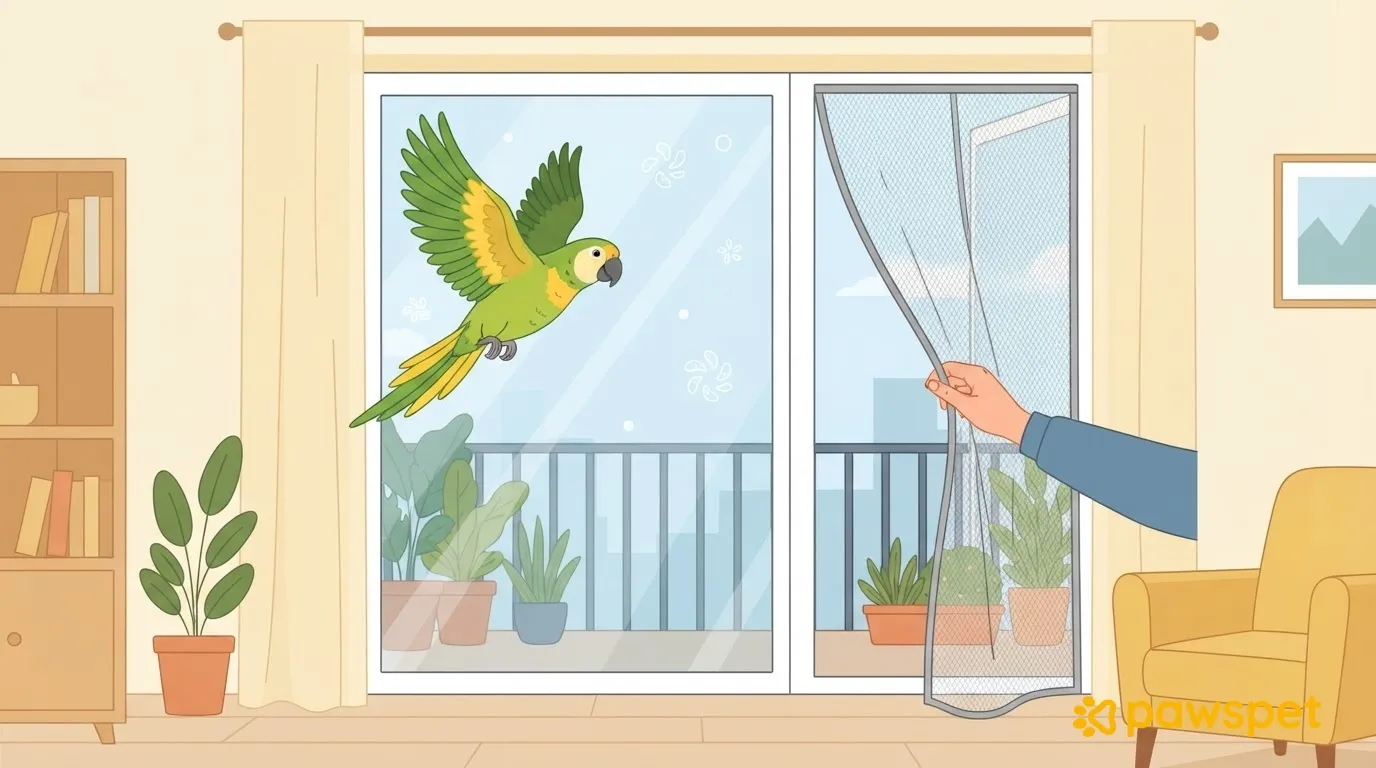
A sign on the door, such as “Pet inside: please always close the door,” can remind even the most forgetful guests. Before the event, check fences, gates, and small entrance gates: latches should work, and there should be no gaps in the fence. In warm weather, the same rules apply to patio doors and open windows.
Identification: what to prepare in advance
If your pet does get out, you need to be able to identify and describe them right away. Prepare these items in advance:
- a tag with a phone number where you can actually be reached, even during the party;
- a properly fitted collar or harness;
- a microchip, if your pet has one, with up-to-date contact details: ask your veterinarian or the relevant registry to confirm;
- two or three recent photos, showing your pet’s whole body and face;
- a note of distinguishing features, such as spots or scars.
To keep photos and the microchip number handy if your pet wanders off, you can store them in the animal’s profile in the PawsPet app: you can manage up to 6 photos under “Edit images,” while the microchip number is in the “Pet details” section and can be copied with one tap. The “Recommended” section indicates if photos or a microchip are missing. PawsPet does not track your pet or alert other users: it helps you keep the information ready, not search for your pet.
If your pet gets out: the first few minutes
- Whoever saw your pet leave should tell everyone which direction they went.
- Don’t chase them: it may frighten them and make them run farther away.
- Call them calmly, using a familiar toy or treat.
- Have one person stay at home in case your pet comes back on their own.
- If it’s a cat, first search nearby hiding places (under cars, in bushes, and in apartment building stairwells), using a flashlight if needed.
- Split guests into small groups, each assigned an area to search.
- Notify neighbors, the building manager, local veterinarians, and the local services recommended by your municipality.
- Prepare a message with a photo and contact details to share.
It’s better not to end up in this situation at all: an hour before guests arrive, prepare the safe space, close the second barrier, and assign the door person.
Frequently asked questions
Is a GPS tracker enough?
No. It can help with the search if your pet wanders off, but it doesn’t replace closed doors, a second barrier, and identification: first prevent your pet from getting out, then prepare to find them.
Can a cat that never goes outside escape?
Yes. A house cat frightened by noise and unfamiliar people may take advantage of an open door and hide nearby. That’s why the same protocol applies, and if your cat gets out, search the immediate area first.