To protect the litter box from the dog, you need two things: a quiet spot the cat can reach without going through the dog's area and leave in more than one direction, and a barrier only the cat can get through. Frequent waste removal and a methodical approach matter too: change one thing at a time and watch the cat. This isn't about the type of litter box, but how to protect access without frightening the cat or forcing interactions.
Why the dog should not reach the litter box
If the dog gets into the cat's litter box, sniffs around, or eats the feces, there's first of all a hygiene issue. There's also the cat to consider: if it feels disturbed or watched while using the litter box, it may start avoiding it and relieving itself elsewhere. And a dog waiting by the exit turns the bathroom area into a stressful place, even when nothing serious happens.
Where to place it: what matters
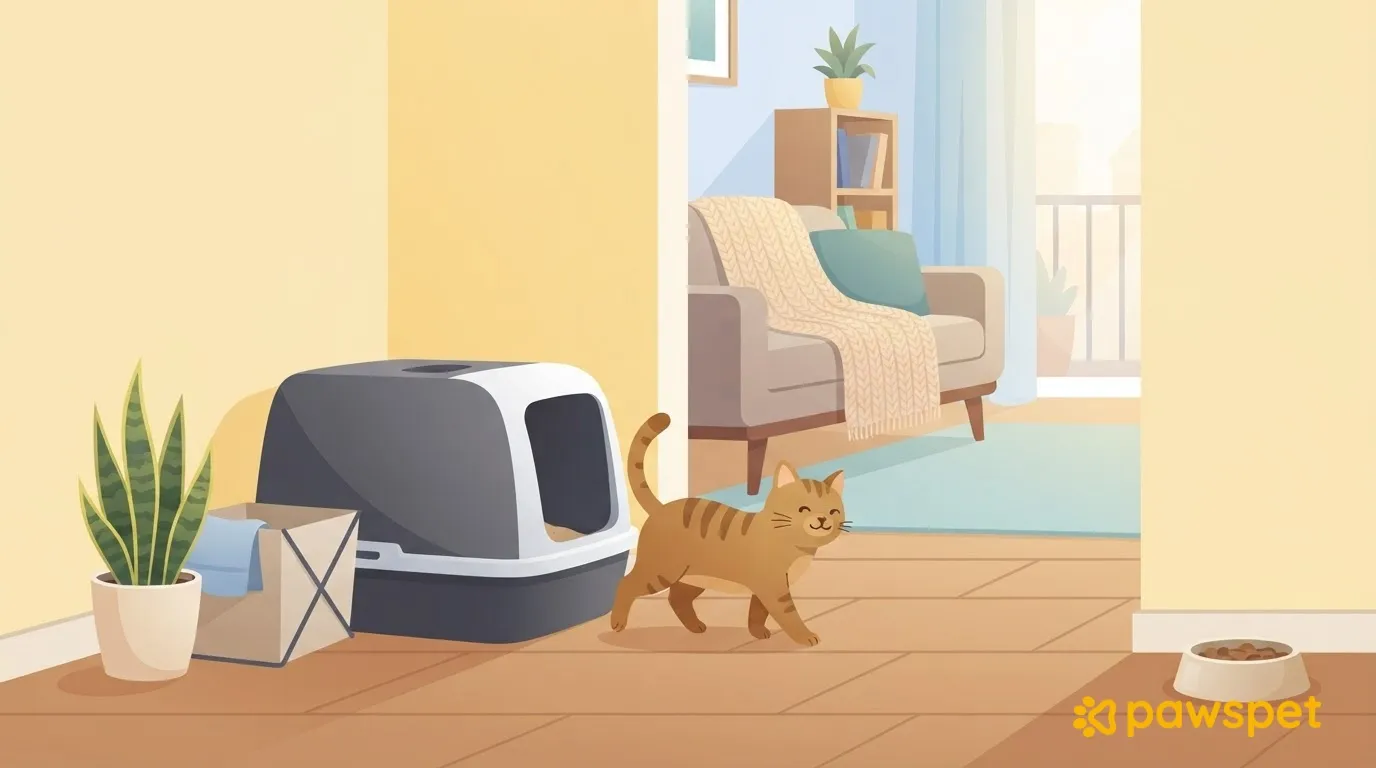
To figure out where to put the litter box when you have a dog at home, look at the space from the cat's point of view. The right spot:
- is quiet and away from the dog's bed, bowls, and toys;
- has more than one way out: no dead ends or corners where the dog could block the cat;
- lets the cat see who is approaching;
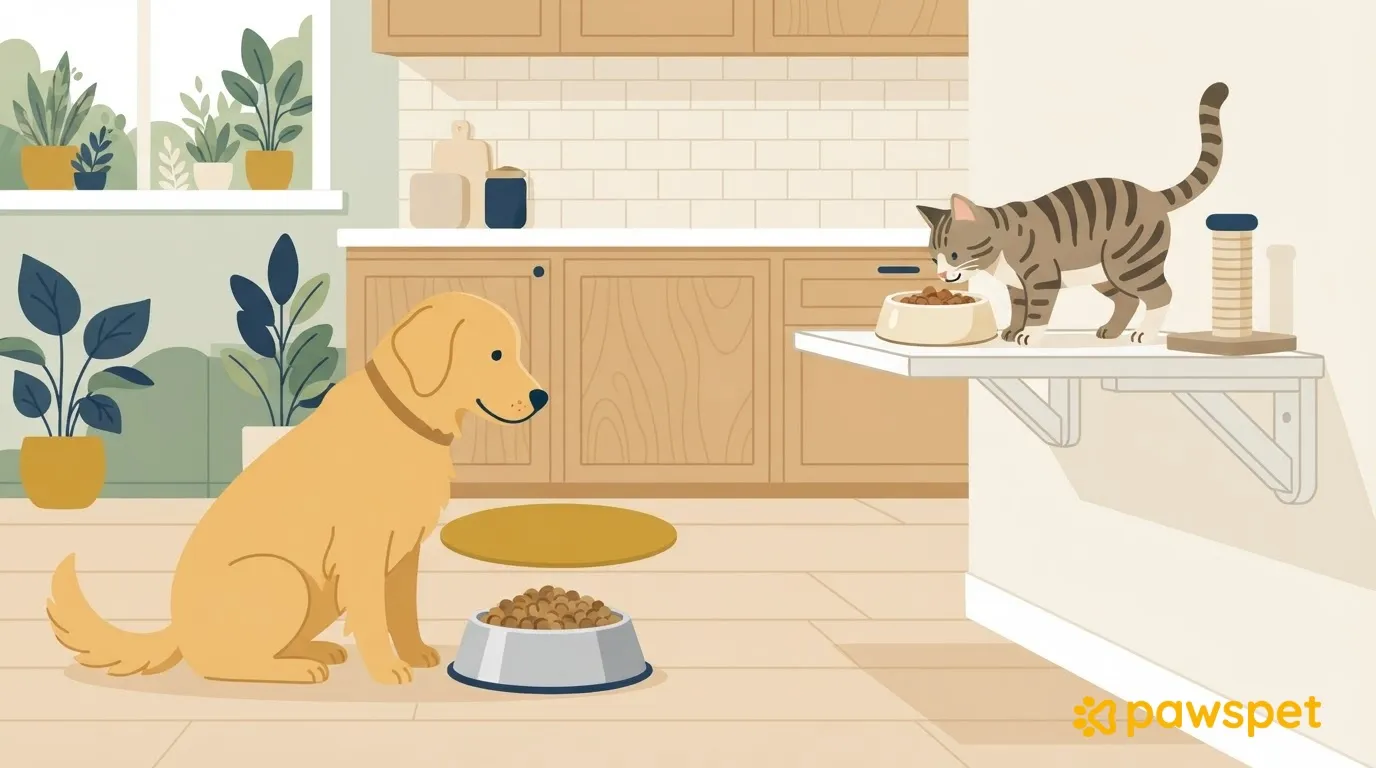
- is away from the places where the cat eats;
- is accessible without crossing the room where the dog spends the most time.
To move it without confusing the cat, first put a second litter box in the new spot and remove the old one only once the cat regularly uses the new one. There is no set number of litter boxes: it depends on the home and the animals.
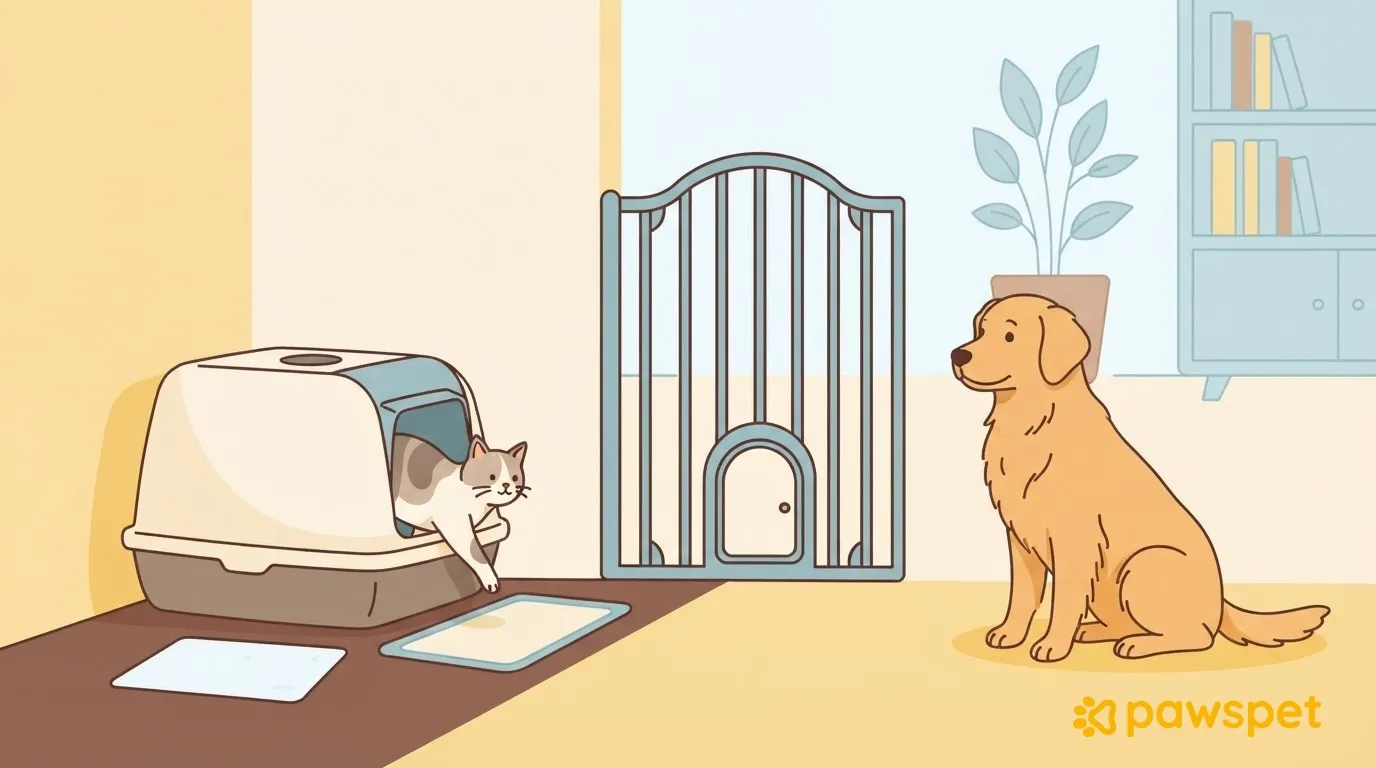
Barriers that let only the cat through
Choose based on the dog's size and how your cat moves.
| Solution | Works when | Limitations |
|---|---|---|
| Gate with a cat opening | The dog is larger than the cat | Useless if the dog can fit through the opening |
| Gate the cat can jump over | The cat is agile and the dog does not jump | Not suitable for older cats or cats that have trouble jumping |
| Door held ajar with a doorstop or strap | The gap is wide enough for the cat but not the dog | Make sure the door won't close and that the cat won't be left in a room with no other exit |
| Litter box on a stable raised surface | The dog can't reach it | There must be room to get in, turn around, and get down; not suitable for cats with mobility problems |
| Selective-access options, such as microchip-recognizing cat flaps | The dog and cat are a similar size | Check the manufacturer's product information |
Introduce the barrier calmly. Let the cat discover it on its own and reward it when it goes through. Don't push the cat or close off the old access until it uses the new one.
Cleaning and family rules
Remove waste often: this gives the dog less to investigate. Don't scold the dog near the cat's area, as the cat may associate that place with tension. If the dog approaches, calmly interrupt it and offer an alternative in its own area, such as a toy, a walk, or a chew it already uses.
Agree as a family on who cleans and when, so no one assumes someone else has already done it. If you need reminders to clean several times a day, you can create a recurring activity in the PawsPet app (Tab «Activities», button «+», a type such as «Hygiene and care», «Litter box cleaning» in the «Name» field, «Repeat» with «N times a day» for up to 6 times, plus a reminder from the bell) and check off each cleaning as you do it, so you know where things stand.
What to watch for in the days that follow
After each change, watch your cat for a few days.
The setup is working if:
- the cat goes in and out without rushing;
- it uses the litter box even when the dog is awake;
- the dog loses interest in the barrier.
Don't ignore these signs:
- the cat goes outside the litter box, waits for the dog to sleep, or hisses near the entrance;
- the dog keeps trying, jumps over, or pushes through the barrier.
If the cat is uncomfortable, change the location or increase the distance from the dog's area; if the dog keeps trying, change the type of barrier.
If the cat doesn't urinate, strains without producing anything, stops eating, or seems to be in pain, contact the veterinarian right away: this isn't a space issue. If the dog often eats the cat's feces or has vomiting or diarrhea, talk to the veterinarian.
For today:
- observe the route the cat takes to reach the litter box;
- choose a barrier suited to the dog's size;
- agree with your family on who cleans and when.
Frequently asked questions
The dog has already eaten cat feces: what should I do?
Don't punish the dog: remove the opportunity by picking up the waste right away and making the litter box inaccessible. If it happens often or symptoms appear, talk to the veterinarian.
Is a covered litter box enough to keep the dog out?
Not by itself: a cover doesn't replace the right location and an entrance reserved for the cat.