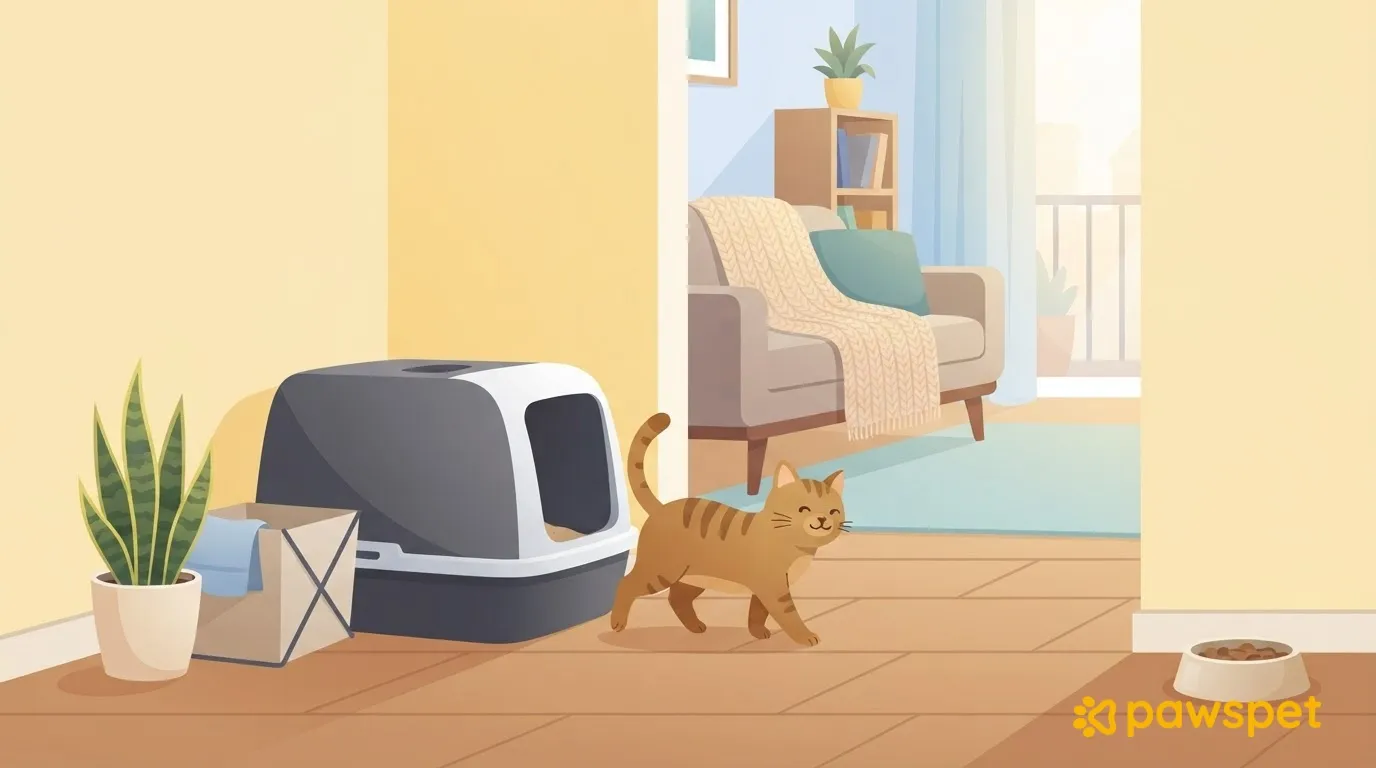
The right spot for a litter box is quiet but not isolated, accessible at all times, and away from food, water, and the cat’s sleeping area. It should also offer a view of the room and an escape route. In a studio or one-bedroom apartment, distance from walkways matters more than the number of square feet available.
The criteria that really matter
- Quiet: No constant foot traffic or noisy appliances nearby, such as a washing machine or dryer. A sudden noise can scare the cat while using the litter box.
- Always accessible: A closed door, chair, or drying rack should never block the way, day or night.
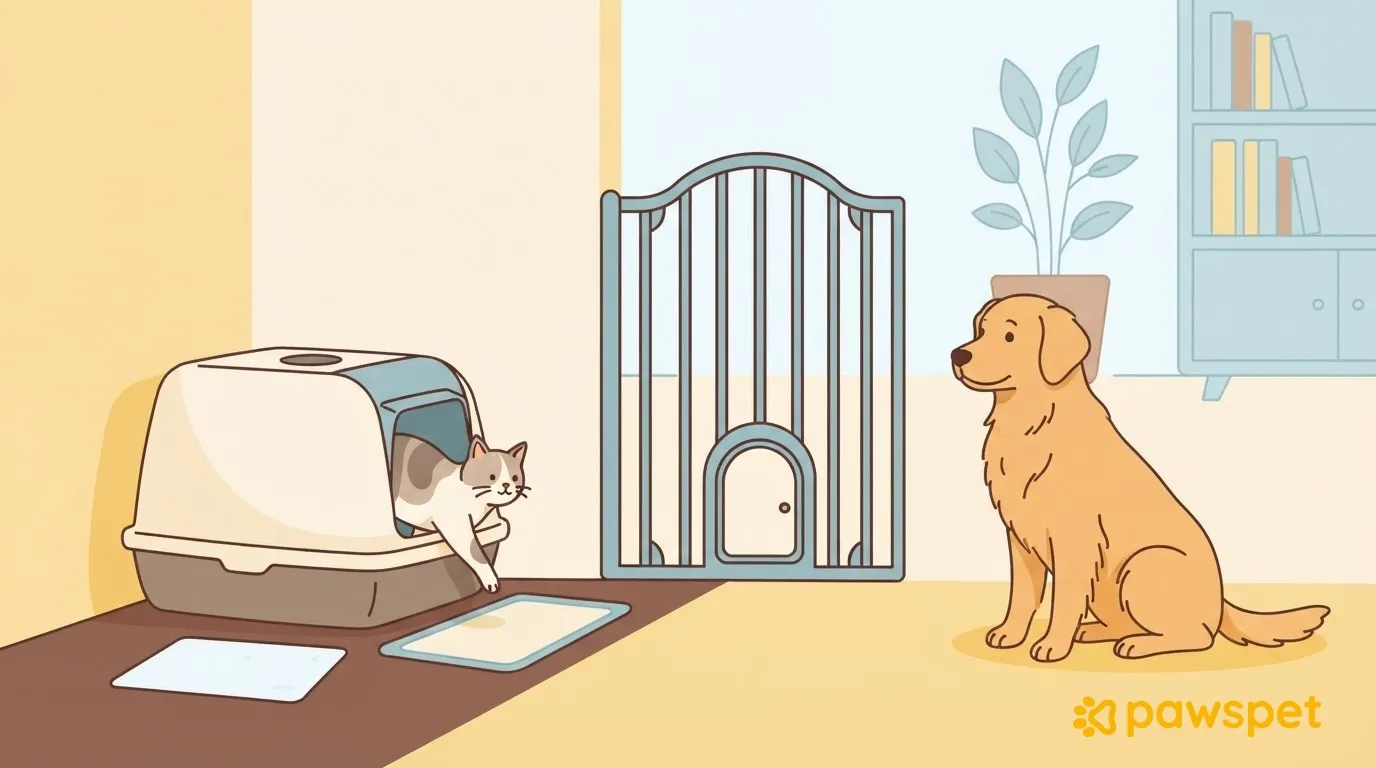
- A view and an escape route: The cat should be able to see the room while using the litter box and get away quickly. Avoid blind corners where the cat could be startled or trapped, for example by a person or another animal: feeling trapped can make it uncomfortable.
- Away from food, water, and the bed: Many cats prefer to keep the places where they eat, drink, and sleep separate from the place where they use the litter box. If space is limited, it’s better to move the bowls to the other side of the room than to put them next to the litter box.
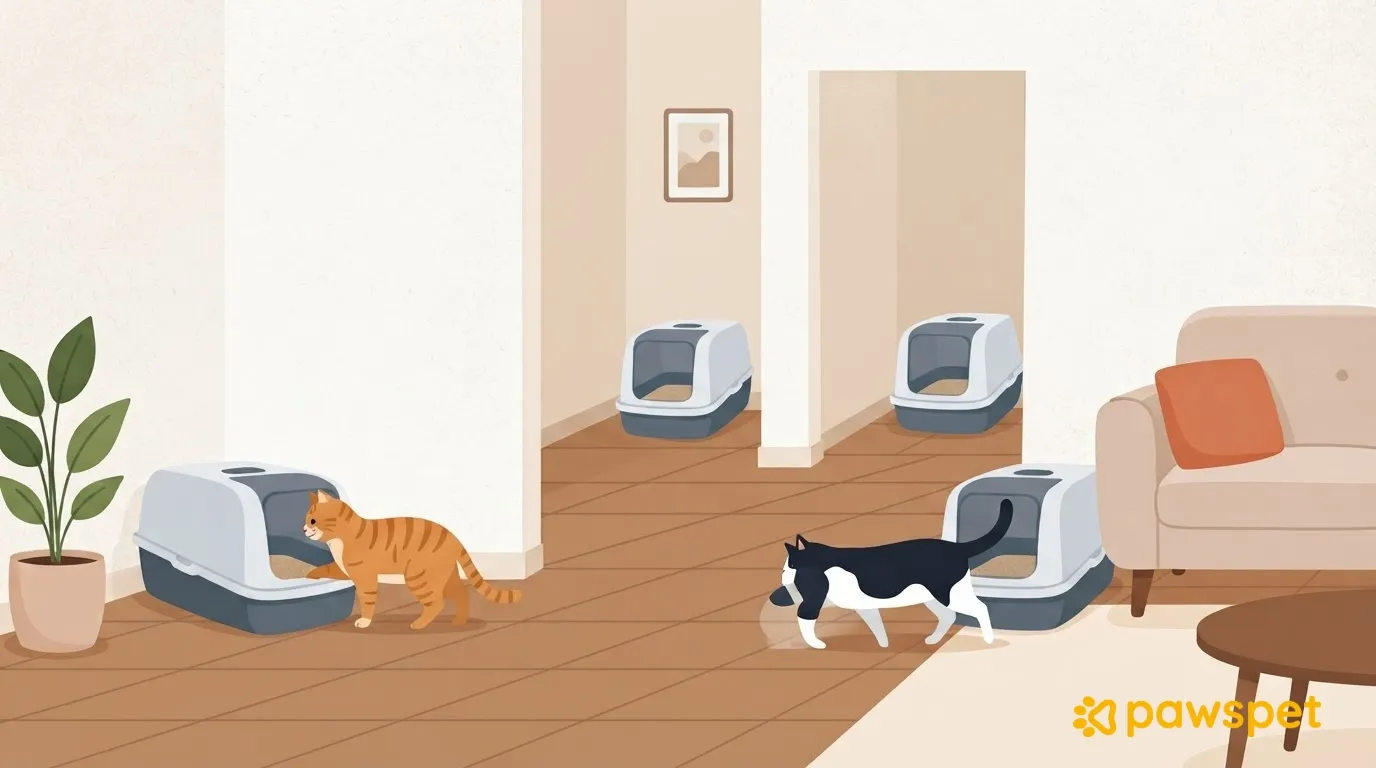
If your cat is older or has mobility issues, choose a box with a low entry and a route that doesn’t require jumping. If you have more than one cat, place the litter boxes in different spots rather than side by side.
Room by room: options for a small home
| Location | When it works | Watch out for |
|---|---|---|
| Bathroom | If it’s tucked away and easy to clean | A door that closes: prop it open with a doorstop. Shower splashes and a nearby washing machine: choose the side opposite the appliance |
| Entryway or hallway | Only if it isn’t the home’s only walkway; otherwise, a corner of the living area is better | A door that opens suddenly, guests coming in |
| Corner of the living area | If it’s away from the sofa and TV | If a low piece of furniture screens it, leave two sides open |
| Kitchenette | Better to avoid | Too close to food |
| Balcony | Best not used as the only option | Cold in winter, exposure, risk of falls or escapes, access not always possible |
A litter box enclosure can hide the box from view, as long as it has a convenient opening the cat can get in and out of easily, allows air to circulate, and is easy to clean. Introduce it gradually: place it beside the litter box your cat already uses and let the cat explore it before putting the box inside.
If no location meets every criterion, choose the one that meets the most and address the rest with small adjustments, such as a doorstop or a low piece of furniture.
Odors and litter in a small space
In an open-plan space, odors spread easily, but fragrance isn’t the answer: avoid air fresheners and strong scents near the litter box, as they may put your cat off using it. Air out the room, leaving open only windows with protective screens, so your cat isn’t at risk of falling or escaping.
A litter-trapping mat in front of the box catches the granules your cat carries on its paws. Otherwise, consistency is key: remove waste every day, while how often you change all the litter depends on the type you use and the manufacturer’s instructions. To help you remember daily cleaning, you can create a recurring activity in the PawsPet app, for example, “Litter box cleaning”: from the “Activities” tab, tap “+”, choose the “Hygiene and care” type in the “Hygiene” category, set “Repeat” and a reminder (you’ll only receive one if you’ve allowed app notifications on your phone), save it, and check off each occurrence when you’ve completed it.
If you need to move the litter box
A sudden change can confuse your cat, so it’s better to move it gradually.
- If you can, choose a spot not far from its current location.
- Set up a second litter box there with the same litter as the first one: change one thing at a time, never the location and litter together.
- Leave both available for a few days, without rushing: let your cat set the pace.
- Remove the old one once your cat uses the new one regularly; if your cat ignores it, leave the old one where it is and try again with a closer spot.
When the problem isn’t the location
Before changing your setup, see a veterinarian if your cat:
- urinates outside the litter box;
- visits the litter box often but produces little urine;
- strains;
- shows blood or seems to be in pain.
Moving the litter box won’t solve a possible health problem. Note how often your cat uses the litter box and when it started: this information can help at the veterinary visit.
A cat that goes in and out of the litter box without being able to urinate, especially a male cat, needs urgent care: have a veterinarian examine it right away. Don’t wait to move the litter box or change the litter.
If there are no warning signs, choose a spot using the criteria in this guide, try it for a week, and observe whether your cat uses the litter box without hesitation.