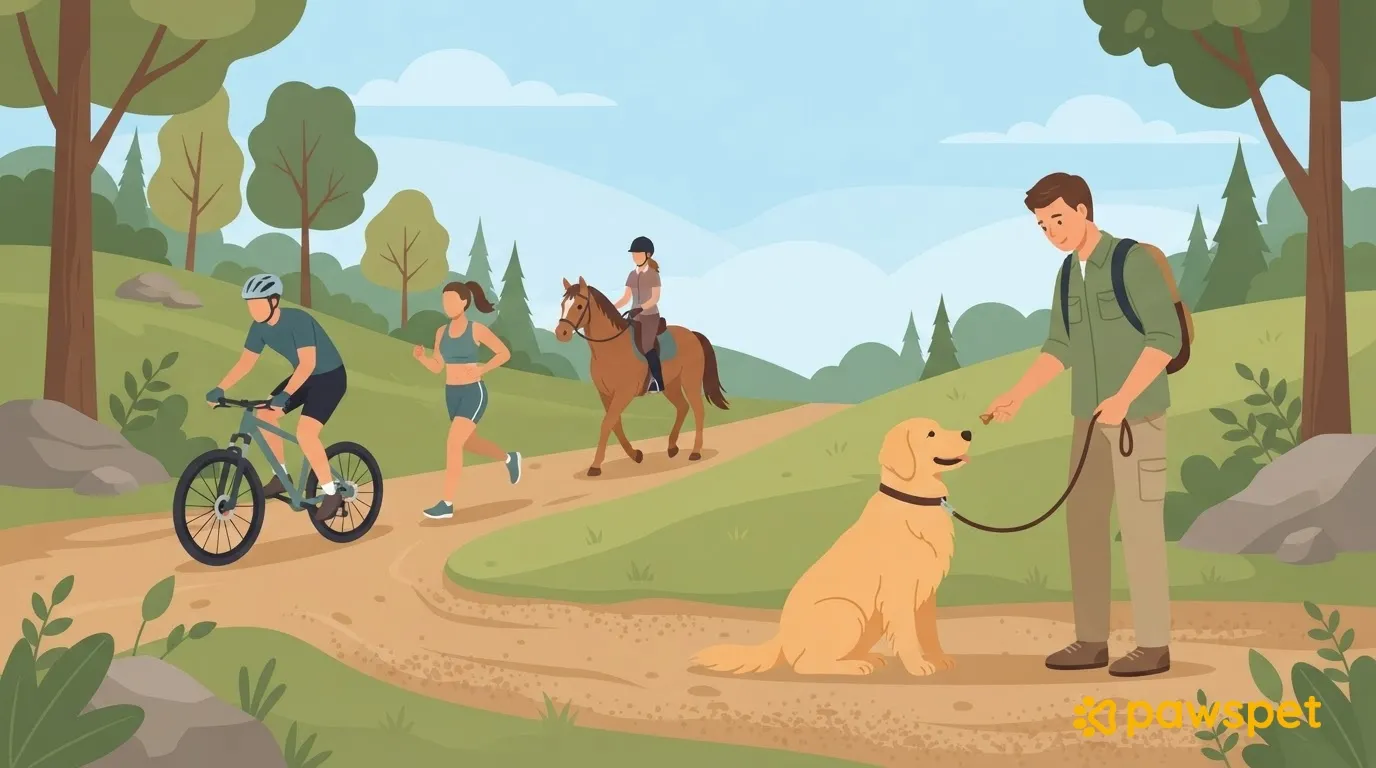
When a mountain bike or runner approaches on a trail, move well in advance to a wide spot and stand between the person and your dog. Shorten the leash and ask your dog to stay still beside you, rewarding them until the other person has passed. With a horse, stop and ask the rider how they would prefer to pass; with another dog, always ask before letting them meet.
This routine works best if your dog has already learned it in easy situations: train it in stages, starting at home and working up to the trail.
Why narrow trail encounters can be difficult for dogs
On a wide trail, your dog has room to look and let others pass; on a narrow stretch, several factors come into play. A bike approaches quickly and is often nearly silent, so your dog may only notice it at the last moment. A runner may tempt your dog to chase or play. A horse is large and can be startled, perhaps by a dog that suddenly darts or barks right in front of it. There is little room at the sides, and a taut or retractable leash could cross the trail exactly where someone needs to pass.
The common factor is pressure: little distance, little time to decide, and perhaps an already excited dog. That’s why your dog needs a simple, familiar task.
Train your dog to move aside before hitting the trail
Choose a short cue, such as “Side,” and use it only for this exercise. Your dog should stay beside you, on the side opposite to where someone would pass, with you in between. Work through the steps:
- At home, take a few steps with your dog beside you, on the side opposite to where a person would pass: use the cue and reward your dog.
- Add a few seconds of standing still, continuing to reward, then end the exercise with the same release word each time.
- On a quiet street, with your dog on leash, have a helper walk past at a distance on the side opposite your dog: reward your dog until the helper has passed you.
- Next, have the helper run, still starting from a distance.
- Finally, have the helper ride by on a bike, first slowly and from a distance, then closer.
Move to the next step only if your dog stays relaxed and accepts the reward. If they stop eating or become stiff, go back to the previous step. Keep sessions short and end on a success: there’s no set timeline, and every dog has their own pace.
On the trail: bikes, runners, horses, and other dogs
Bikes and runners
Look and listen ahead and behind you: bikes and runners can approach from either direction. As soon as you see or hear them, move to a wide spot and signal that you’ve noticed them with a nod or a greeting. Keep your dog on the side opposite the person passing, with you in between and the leash short, and use your cue. Give one treat after another until the person has passed, then set off again with one final reward.
Horses
When you encounter a horse with your dog, stop somewhere that leaves room and keep your dog still and quiet beside you: a sudden lunge or bark could startle the horse. Greet the rider and ask how they would prefer you to move, without assuming which side to use: it depends on the horse and the terrain. Avoid passing close behind the horse, and continue only once the horse and rider have moved away, rewarding your dog for staying calm.
Other dogs
Always ask before letting your dog approach another dog, even if your dog seems friendly: you don’t know whether the other dog welcomes an encounter or needs space. If the other owner changes sides or shortens the leash, give them room and do the same. If your dog is allowed off leash, don’t let them run up to leashed dogs: a leashed dog can’t choose to move away.
If your dog barks, pulls, or tries to chase
Increase the distance right away: move farther from the person passing, even by turning back, until your dog can look at you and take a treat again. Then go back to the easier steps of the exercise and build up from there. Avoid narrow trails at busy times until things improve. Don’t yank the leash or punish your dog: this increases tension and doesn’t teach them what to do instead of barking or pulling.
If your dog keeps barking or pulling even after practicing, consider working with a professional dog trainer. To find one, in the “Services” section of the PawsPet app you can filter by “Training,” “Obedience training,” or “Behavioral consultation,” and compare prices and reviews for the services available.
Leashes and gear for narrow trail encounters
On narrow trail sections, a fixed-length leash of moderate length is easier to manage than a retractable leash, which lets your dog get farther away and can cross the path. You don’t need a particular brand or exact length: what matters is keeping your dog beside you without yanking the leash and following local guidance.
- Well-fitted harness: your dog shouldn’t be able to slip out if they get scared.
- Hands-free waist belt: convenient only if you can keep control of your dog; take the leash in your hand if needed.
- Treat pouch: keep treats within easy reach so you can reward your dog right away while the other person passes.
- Long line: use only in open spaces, and gather it up when someone approaches, because a line on the ground or under tension can cross the path.
Before choosing a busy trail, practice this routine on a few outings in quiet places: use the cue, keep the leash short, and have treats ready. Move on to a busier route only if your dog stays calm.