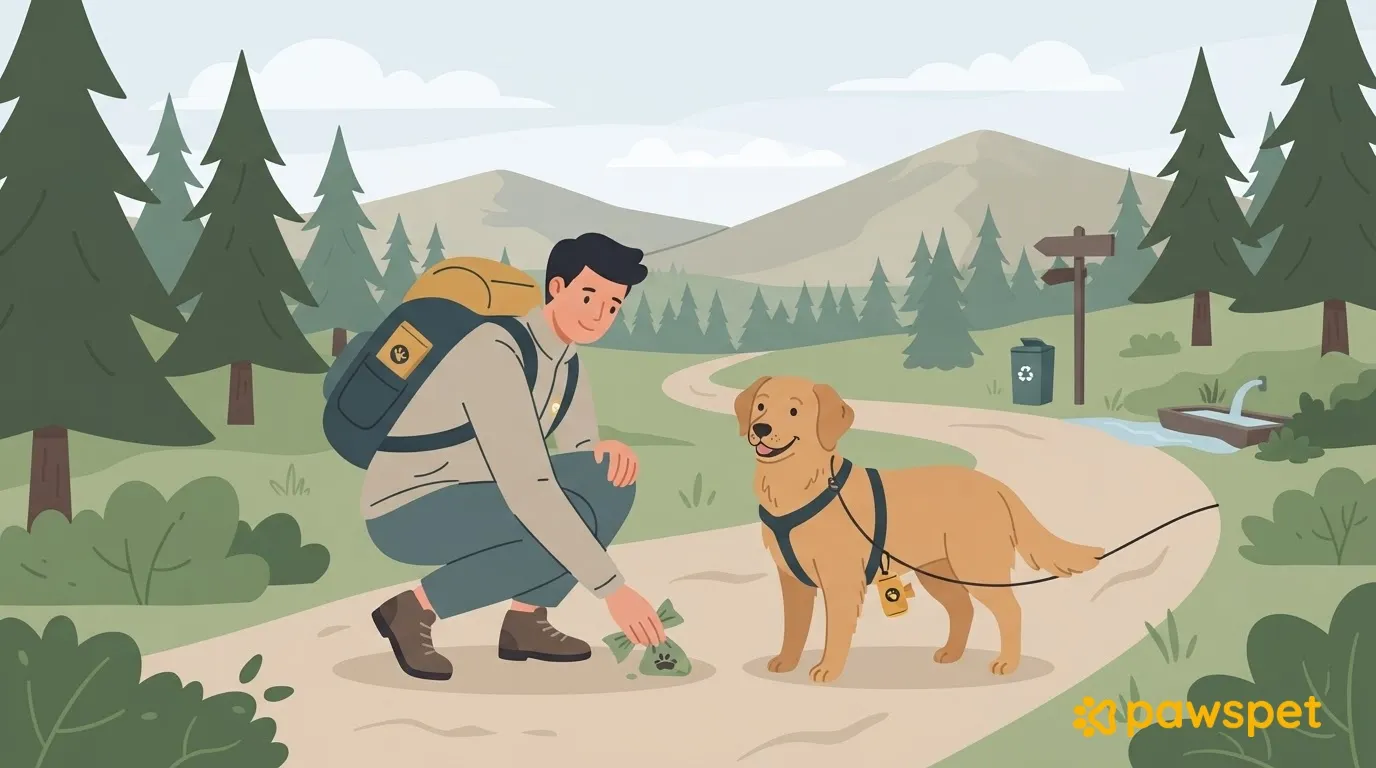
When hiking, always pick up after your dog, even in the woods and on snow. Seal used bags in an airtight container to carry to a suitable disposal point or back home, and never leave them along the trail. Give your dog water from their own bowl, not from fountains, springs, or troughs.
Why pick up after your dog even far from town
In the woods or mountains, picking up after your dog may seem pointless: there is plenty of space, nature seems to absorb everything, and there are no bins in sight. In reality, feces do not disappear quickly. They can contain parasites and reach water, trails, and meadows used for mowing or grazing by other people and animals later on. Moving them with a stick or covering them with leaves or snow is not enough: they stay where they are, just less visible.
Local regulations or protected-area rules may require you to pick up after your dog. Before setting out, check the rules for the area you will be visiting and read any signs at the trailhead.
What to pack
A basic kit is all you need:
- More bags than you think you will need: one might tear, and you can use a second one to pick up the first without getting dirty.
- A leakproof, resealable container, which you can attach to the outside of your backpack to keep it away from food and clothes. You may already have something suitable: a capped tube, a water bottle reserved for this purpose, a jar, or a waterproof pouch.
- Hand wipes or sanitizer, to use after each cleanup.
- A collapsible bowl and water for your dog, in an amount that will last for the whole outing: there is not always a place along the trail where your dog can drink.
On the trail, always follow the same steps: put your hand inside the bag like a glove, pick up the waste, turn the bag inside out, tie it, place it in the container, and clean your hands.
Where to dispose of bags when there are no bins
Take the tied bag with you: put it in the container and carry it back to your car or home, then dispose of it according to your local authority’s instructions and wash the container before your next outing. Bins, such as those at the trailhead, are fine only if they are suitable and not already full; if in doubt, take everything home.
Avoid these two shortcuts, even if they seem reasonable:
- Leaving the bag to pick up on your way back: you might forget it or take a different trail, and in the meantime it has been left as litter.
- Hanging it on a branch: it may look tidy, but it is still litter in the woods, clearly visible to anyone passing by.
Even a compostable bag must be carried away: it is designed for proper disposal, not to be left in the woods. And if you stop at a mountain hut, do not leave your waste there without asking the staff: they may not be able to take care of it.
Fountains, troughs, and streams: who drinks after your dog?
Public fountains, springs, and troughs are shared water sources: someone else, a person or an animal, will drink there after your dog. A few simple rules:
- Fountains and drinking fountains used by people: do not let your dog drink directly from the spout or get into the basin. Fill their bowl and set it on the ground a little farther away so they can drink without touching anything the next person might use.
- Troughs, basins, and springs: if people or grazing animals use them, do not let your dog get in, drink, or cool off in them. Use their bowl here, too.
- Swimming in streams and creeks: choose spots away from water intakes and basins, and follow any posted signs.
Meadows, trails, and mountain huts: simple ways to avoid conflict
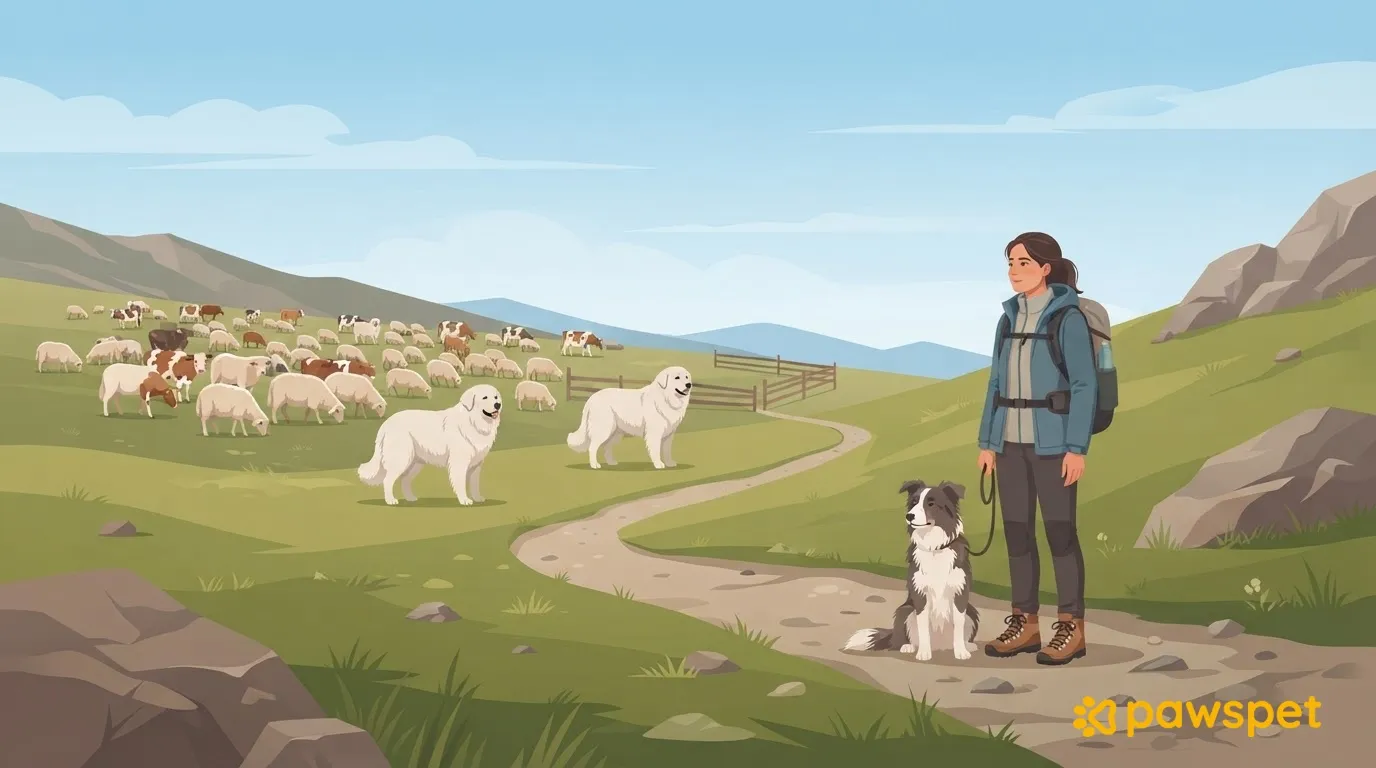
Stay on the trail in meadows used for mowing and on grazing land: these are working areas. Do not let your dog dig or damage stone walls and crops, and follow the owners’ signs indicating what is allowed there. When you meet other people, keep your dog close to you: not everyone wants a close encounter.
Before entering a mountain hut or farmhouse restaurant with your dog, ask whether dogs are allowed: that is not a given, and the decision is up to the staff. If they say yes, keep your dog beside you and away from tables and benches; if they say no, choose another place to stop.
In short, three things to do: always pick up after your dog, tie the bag and take it with you, and give your dog water from their own bowl. That way, the trail stays as you found it, for everyone who comes after you.