To help an older parent with a dog or cat from a distance, start with concrete signs you notice in the pet and at home, not with a judgment about the person. Offer specific tasks, chosen together, and build a small support network with clear agreements. A notebook or shared profile can help you stay informed without turning every phone call into a checkup.
What to observe during a visit or video call
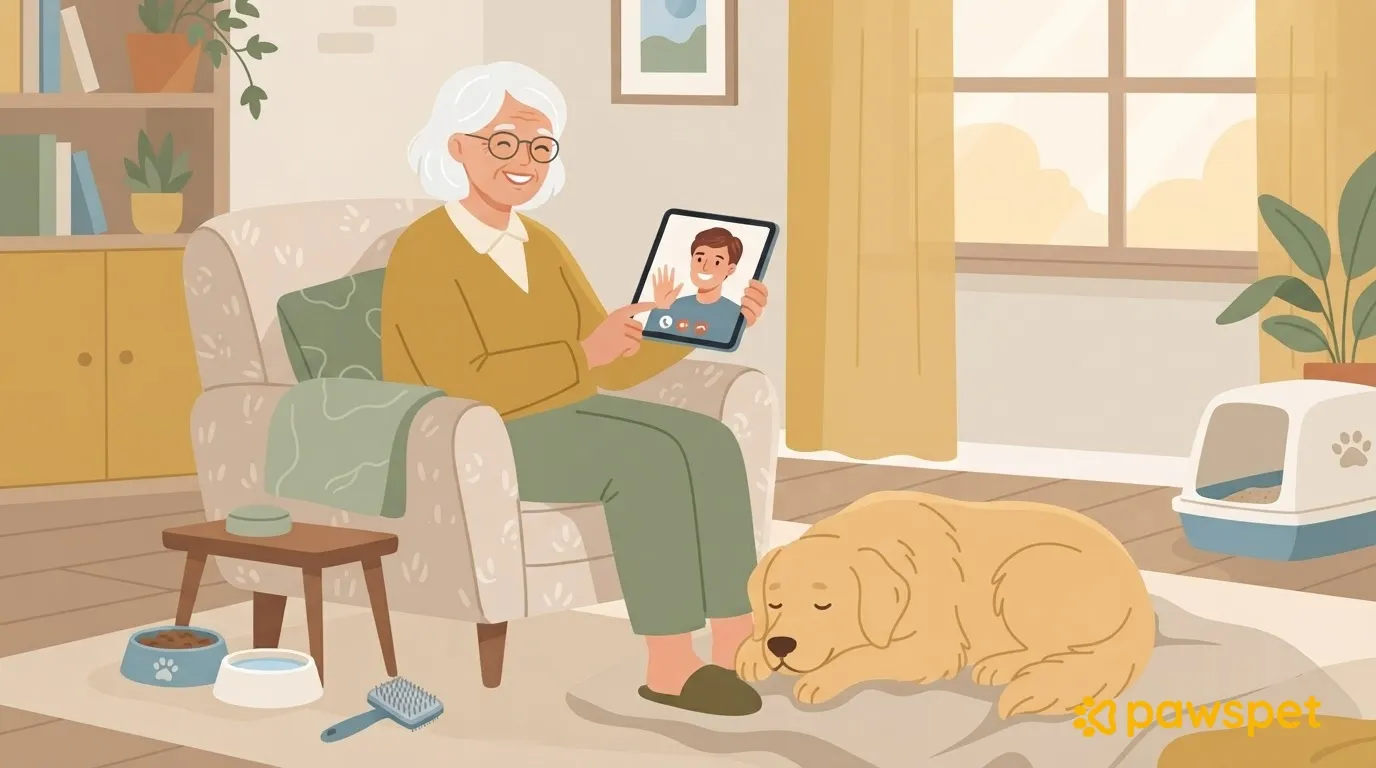
With their agreement, during a visit or video call, look for:
- Supplies: Is there enough food and litter, or do they often run out?
- Cleanliness: Are the food bowls and litter box clean?
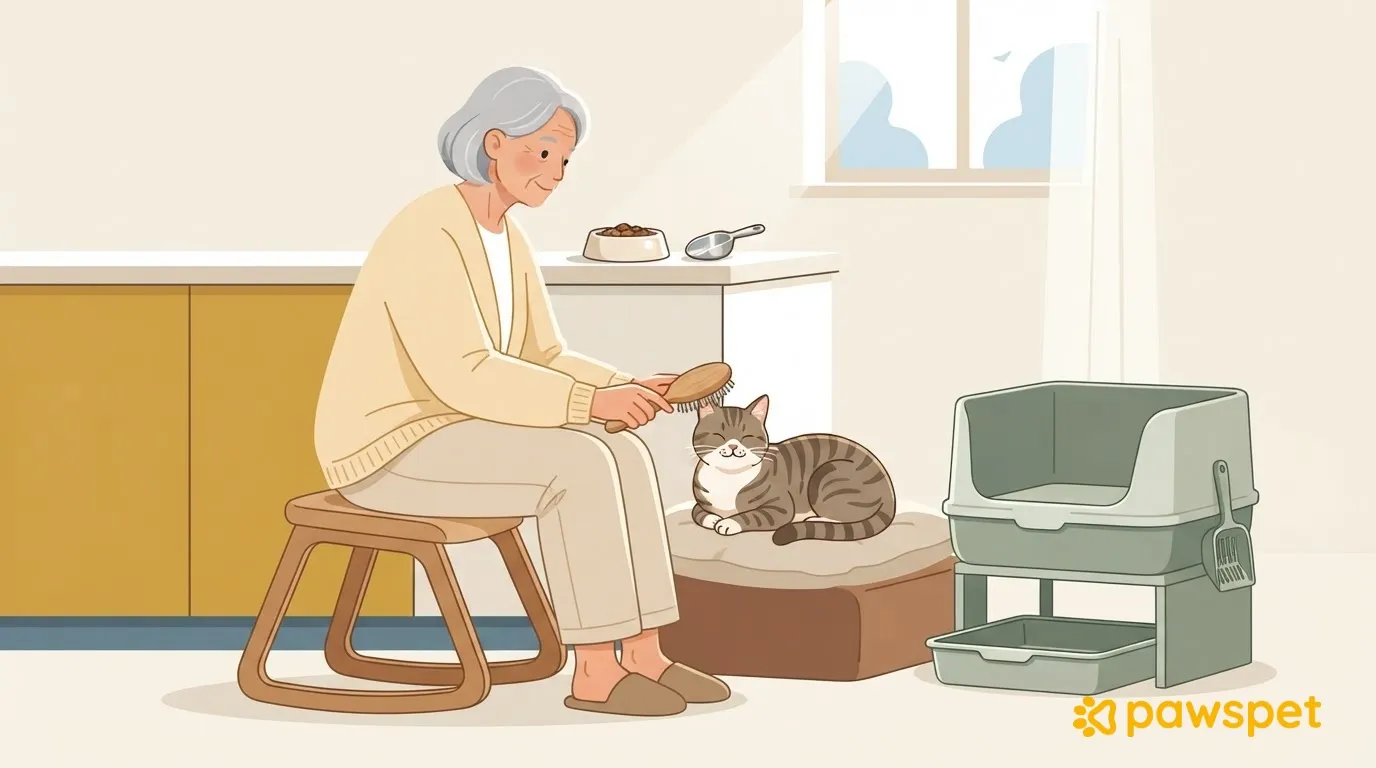
- Grooming: Is the fur matted? Are the nails long?
- Body condition: Have the ribs become very visible, or is the waist no longer visible?
- Outings: Are the dog's walks being skipped?
- Due dates: Have vaccinations or parasite treatments been missed? Ask whether any appointments are coming up.
- Behavior: Have there been any unusual changes from the pet's usual habits?
A single sign doesn’t tell you much: what matters is the trend over time. For changes in the pet, consult a veterinarian. If you’re concerned about your parent’s health, talk with them and, if needed, their doctor, without making assumptions or diagnoses.
Offer help without taking away independence
Ask which task feels most difficult before showing up with ready-made solutions. Offer specific, limited help: carrying heavy bags, accompanying them to the veterinarian, or finding someone to help with more demanding walks. Let them decide; check in together after a few weeks.
If they don’t want help, ask what kind of offer they would feel comfortable accepting, without insisting on fixing everything right away.
Two helpful phrases:
- “Those bags are heavy. Would you like me to bring them next time?”
- “For the longer walks, would you like us to look for someone together?”
Avoid: “You can’t manage this anymore.”
Who does what: a small support network
A simple table makes the arrangements concrete:
| Task | Who can do it | What to agree on |
|---|---|---|
| Heavy shopping | Family member or trusted neighbor | List and delivery |
| Vet visits and transportation | Family member or pet transport service | Time, who will accompany them, and who will report back |
| Walks or visits on difficult days | Trusted neighbor, pet sitter, or dog walker | Days, duration, and the pet’s routine |
| Grooming, nail trimming, and bathing | Groomer | Appointment, location, and transportation if needed |
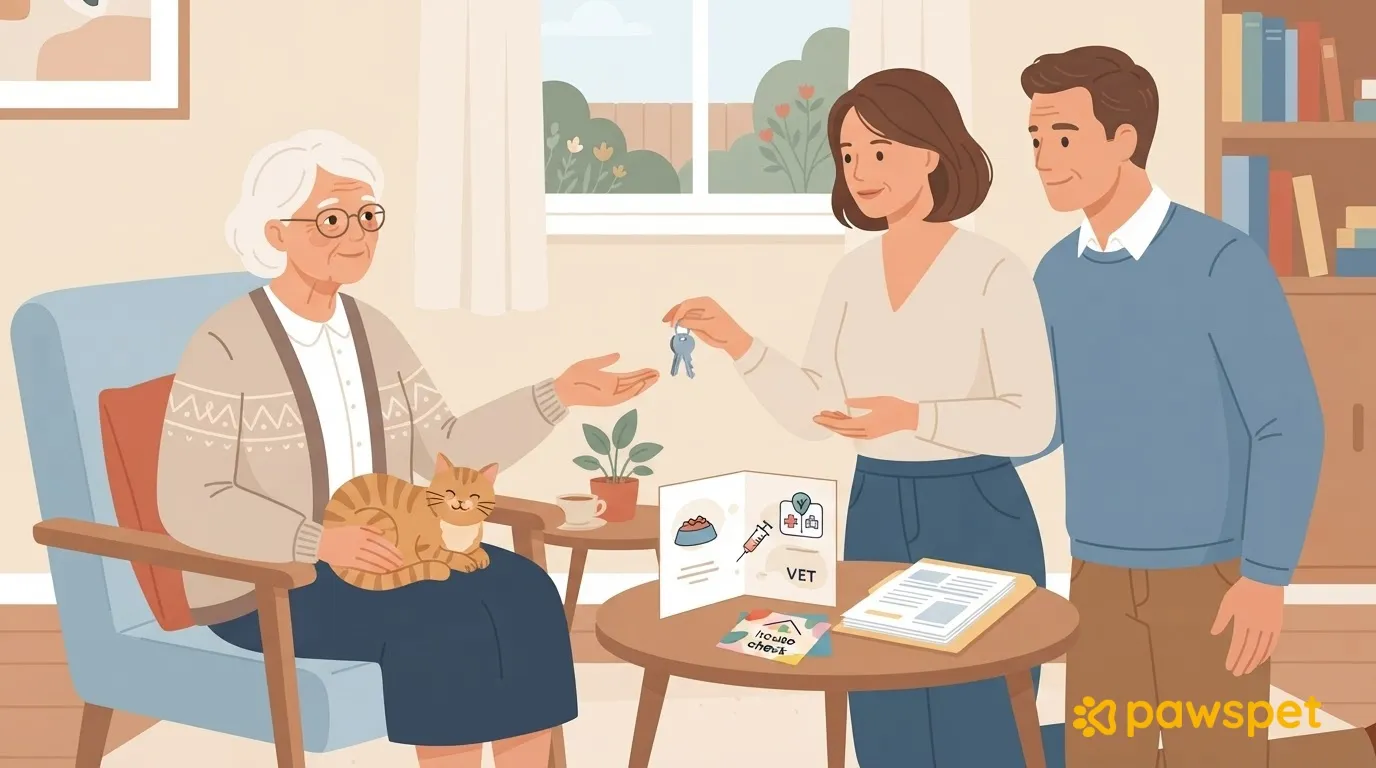
| Emergency: the parent can’t get back home | Family member or trusted neighbor | Who has the keys and who knows the pet’s routine |
Agree in advance on times, keys, any expenses, and a backup in case the planned help falls through. Choose one person to share updates so your parent doesn’t have to answer the same questions from several family members.
Stay informed without check-in calls
A notebook on the refrigerator with appointments, weigh-ins, and things to buy may be enough: agree on who updates it and sends you a photo. Note the date and what was done, keeping it separate from tasks that still need to be completed.
If you prefer digital tools, in the PawsPet app for pet owners you can share the pet’s profile to check their health and activity from a distance.
Decide in advance who will own the profile in the app: it doesn’t automatically have to be the person helping fill it out. Only the owner can delete it or put the pet up for adoption. The app’s AI assistant only works with pets that you own.
- As the owner, your parent opens the pet’s details, then ⋮ » «Collaborators» » «Add collaborator».
- They search for you by name or email: you also need a PawsPet account.
- Check the permissions: «View» for «Health» and «Activity»; add «Edit» for «Health» if you need to record a weigh-in or a vet visit you attended together.
- You’ll find the pet in the «Pets» tab, under the «Shared with me» filter.
In the app, collaborators can’t see documents or the pet passport. Use your usual phone calls and messages to coordinate: the profile isn’t a family chat.
When to bring in a professional
Consider regular outside help together when:
- tasks are often skipped;
- the dog is large or very energetic;
- your parent gets tired or is at risk of falling;
- the pet needs more care than before.
Where available, consider a pet sitter for home visits, a dog walker for walks, grooming, and at-home veterinary visits. Arrange an initial meeting with your parent present and a short trial. During the trial, check how well the pet’s routine is respected and how you’ll be told about the work completed.
In the «Services» section of the PawsPet app, you can search for professionals by service type and area; profiles, hours, and reviews are visible before booking. You can message a professional only after placing an order, and search results don’t guarantee availability.
At your next phone call
- “Which task with the dog or cat feels most difficult for you right now?”
- “Which days would it be helpful to have a hand, and who could help?”
- “How would you prefer us to keep each other updated on what’s been done, without discussing it on every call?”