As the days get longer, it’s nice to spend more time outdoors. But after rain, wet grass and leaves—or a dog suddenly lunging—can be enough to throw you off balance. Common mishaps can result from sudden pulls, a tangled leash, slippery ground, and fatigue. You can reduce the risks by choosing your equipment, grip, route, and time of day carefully, and arranging a backup in advance for difficult days.
What can lead to mishaps
Recognizing your own challenging moments helps you prepare; it isn’t meant to frighten you. Common situations include:
- a cat or another dog that sets your dog off;
- bikes and scooters passing close by;
- your dog suddenly stopping right in front of your feet;
- the leash passing between your legs;
- steps and wet surfaces;
- the walk home, when fatigue starts to set in.
Ask yourself which of these really apply to you: those are the situations to start with.
More stable equipment and grip
- Leash: A fixed-length leash that isn’t too long makes your dog’s movements more predictable. A retractable leash also requires you to manage the locking button and the spool. If you use one, discuss it with a dog trainer.
- Fasteners: Choose clips that are easy to open and close, even if your hands aren’t as nimble.
- Collar or harness: Choose one your dog is comfortable with, in consultation with your veterinarian or a dog trainer. There’s no single best option for every dog.
- Grip: Don’t wrap the leash around your fingers or wrist. This helps keep your hand from getting trapped if your dog lunges. Choose a comfortable handle.
- Keep your hands free: Carry bags and keys in a crossbody bag; keep your phone in your pocket rather than holding it while walking.
- Shoes: Wear closed shoes with non-slip soles.
If you use a cane or walker, ask a physical therapist how to manage your mobility aid and the leash together, and never attach the leash to your aid.
Routes and times with fewer surprises
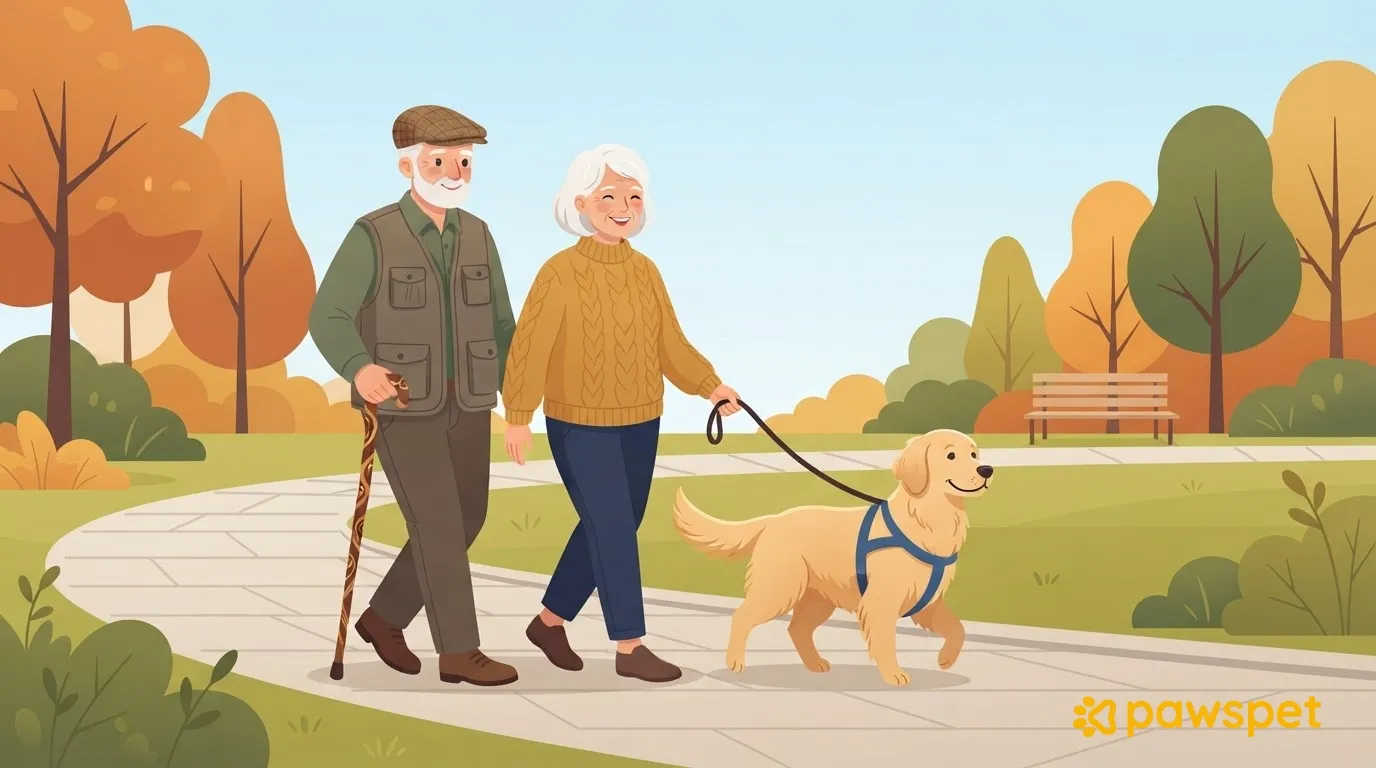
Choose a short, familiar, flat route with a bench or two where you can stop. Stay away from busy intersections, areas crowded with dogs, and bike paths, and favor daylight hours with less foot traffic. After rain, it’s best to avoid grass, leaves, and ramps.
If your dog needs more exercise, talk to your veterinarian about spreading it out without making any one walk too long.
If your dog pulls or reacts
When your dog suddenly pulls or gets agitated, the goal is to stay balanced, not to correct them:
- stop and plant your feet firmly;
- don’t chase your dog;
- wait for them to calm down before setting off again;
- calmly move away from whatever is upsetting them.
A lasting solution starts with preparation: a dog trainer can work on leash walking and your dog’s reactions. In the meantime, avoid situations that make them lunge.
A plan for days when it’s better not to go out
Heavy rain or ice, fatigue, pain, or dizziness are good reasons to ask someone else to take your dog out. Getting help doesn’t mean giving up your dog. It’s easier to make the decision in advance, with a clear head, than on a morning when you don’t feel safe, and a family member may be able to help. Here are three things to arrange:
- who to call: a family member, neighbor, or dog walker—a professional who walks dogs;
- the schedule and keys, agreed on in advance;
- a few quiet activities at home for those days, such as scent games, without expecting them to replace a walk.
If you’ve already lost your balance or fallen, talk to your doctor and ask someone else to handle the more challenging walks.
To find a professional to take your place, select the «Passeggiata» service type in the «Servizi» tab of the PawsPet app, then use the filters to choose the «Zona di ricerca» and «Distanza». Before booking, tap the professional’s name on the service listing: their profile shows working hours and reviews. Search results don’t guarantee that anyone in your area is available, and chat with the professional opens only after you place an order.
Try this week
You don’t need to change everything at once. For this week, focus on four things:
- Leash and grip: fixed length, easy-to-use fastener, never wrapped around your fingers or wrist.
- Choose a short route: familiar and flat, away from intersections and bike paths.
- Shoes: closed, with non-slip soles.
- Backup: keep the name and number of someone who can take your dog out for you close at hand.
If something doesn’t feel right, change one thing at a time and ask a dog trainer or veterinarian for advice.
A frequently asked question
My dog is large and strong: should I stop taking them outside?
It depends on you and your dog, so there’s no one-size-fits-all answer. Try working with a dog trainer who can assess your specific situation with you, and share the walks with someone else so you don’t have to handle the more challenging moments alone.