If a fall or sudden illness leads to an unexpected hospital stay, your dog or cat will be left at home, and no one may know they're there. A simple emergency plan can be put together in an afternoon and has five parts: two contacts with keys, a notice that travels with you, an instruction sheet, a small supply of essentials, and an occasional practice run. It helps to think about it from the perspective of the person who will enter your home in your place. The same plan also works for short, unexpected absences.
Two contacts, not one
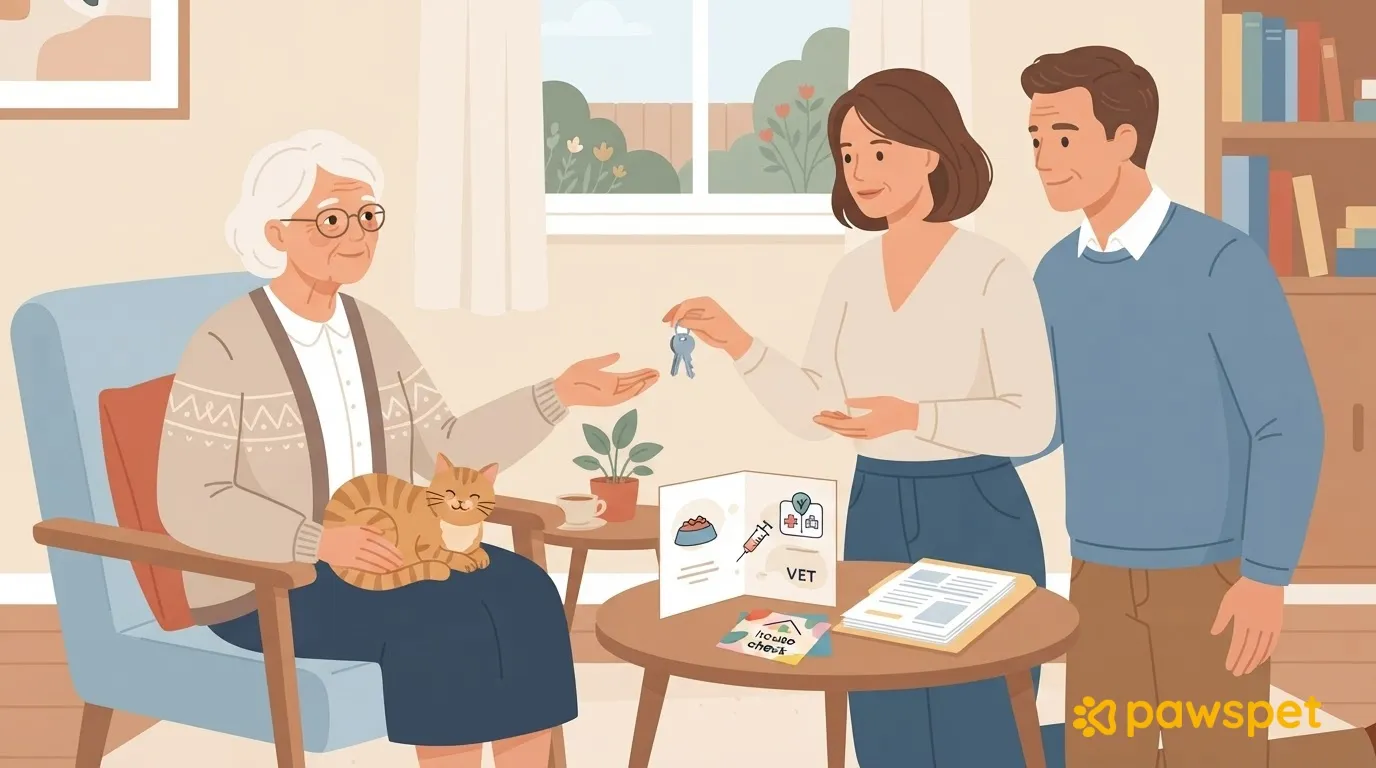
One person isn't enough: your first contact may be away or unavailable that very day. Choose two and ask each one directly:
- whether they can get into your home at short notice;
- whether they can keep your pet for a few days or only stop by to feed them and clean up;
- how they prefer to be contacted.
Give both of them a copy of the keys and save their numbers under a recognizable name, for example, “Marta – keys and cat.” Also give them your vet's contact details and ask the vet how they handle an appointment brought in by someone you trust.
If no one is available, ask your vet or a local animal welfare organization in advance what temporary options they know of, such as a pet sitter or boarding facility. These may not be available everywhere, and they may not be free.
A notice that travels with you
The notice lets people know there is a pet at home when you can't tell them yourself. Three ways to do this:
- a note in your wallet or among your personal documents, with a sentence such as “There is a cat home alone: please contact…” followed by your contact's name and number;
- a note visible on the inside of your front door, with the same sentence;
- share the same information with family members and your primary care doctor.
If your phone lets you save emergency contacts or information, add a line about your pet and the contact's name.
The instruction sheet: what to write
One page is enough, handwritten or printed, answering the questions of someone unfamiliar with your routines:
| Item | What to write |
|---|---|
| Feeding | What they usually eat, how much you give and when, and where the food and measuring scoop are. E.g.: “Dry food morning and evening; bag and scoop under the sink.” |
| Current treatments | Name, timing, and instructions as prescribed by the vet, where the medication is kept, and a note not to change anything. E.g.: “Treatment in the evening, as prescribed; medication in the drawer. Do not change it.” |
| Vet | Name, phone number, and clinic address. |
| Identification | Microchip number, if present, and a recent photo. |
| Habits and personality | Where the cat hides, fears, the dog's walking times, and how to put on the leash or harness. E.g.: “Cat: hides under the bed. Dog: goes out at 7, 14, and 21.” |
| Where to find things | Carrier, leash, litter box, and the pet's paper documents. |
Keep one copy on the refrigerator and give a copy to each contact.
If you use the PawsPet app and have recorded your pet's diets, treatments, and allergies in the pet's “Health” section, you can give your contact an easy-to-read summary. From “Pets,” open the pet, tap the ⋮ menu in the top right, choose “Sharing,” turn sharing on, and send the read-only link using “Share.” Your contact can open it in any browser, even without the app or an account, and see photos, basic identifying information, microchip details, and a summary of diets and treatments, allergies, vaccinations, and illnesses. For a family member who already has a PawsPet account, you can instead grant access from “Collaborators” in the same menu and choose permissions—for example, “View” only for health information.
Limitations: anyone with the link can see the entire page, including location if you filled it in, so send it only to people you trust. Neither the link nor collaborators show documents or a passport. Turning sharing off makes the link stop working, but turning it back on makes a link you've already sent valid again: the code stays the same. An internet connection is required, so the paper sheet remains essential.
Supplies and essentials within reach
Someone arriving in a hurry shouldn't have to search. Prepare the following, depending on your pet:
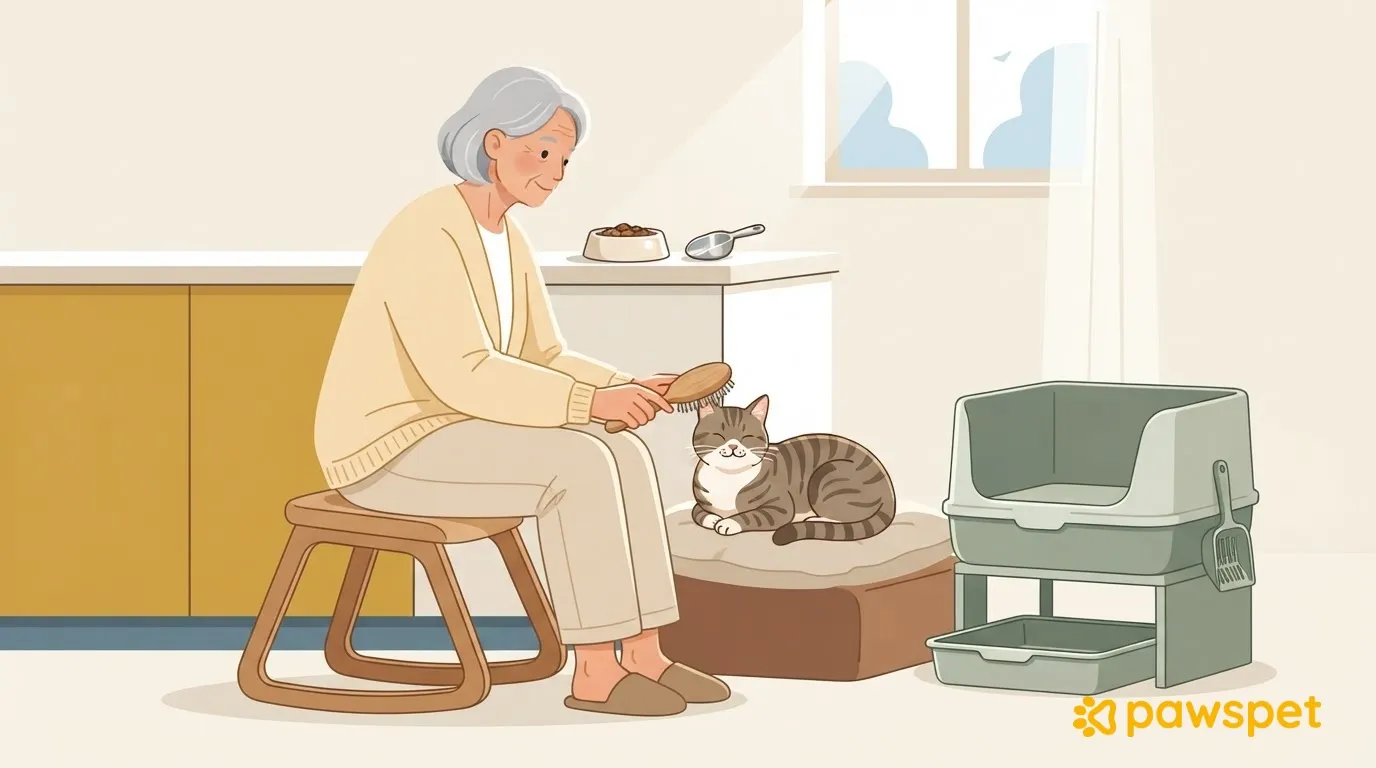
- enough food and litter for a few days, in an easy-to-find place;
- the carrier, accessible without having to climb onto a chair;
- the leash, near the door;
- a copy of the pet's documents, together with the instruction sheet.
Test the plan
Ask each contact to come in once while you're home and find everything listed on the sheet by themselves: food, medication, carrier, and documents. If they can't find something, update the sheet. Repeat the practice run occasionally and update the sheet and app whenever the food, treatment, vet, or contact changes. If you have more than one pet, prepare a sheet for each one.
Where to start today
Three things you can do today: call your first contact and ask if they're willing; write the note for your wallet; fill in the first lines of the sheet, starting with feeding and vet details. If you're helping a parent, do it together: the person who lives with the pet knows their habits. No plan can prevent every unexpected event, but the person who enters your home in your place will know whom to contact and what to do.