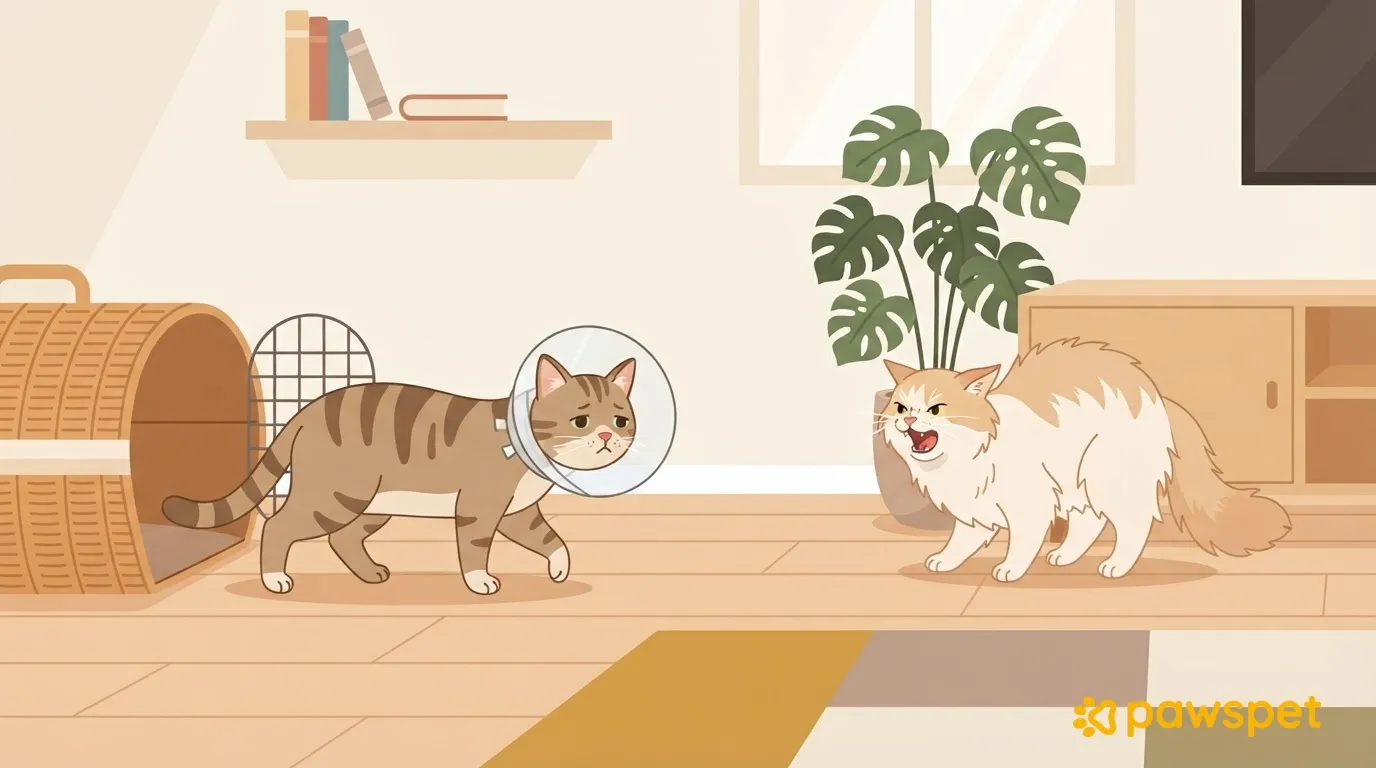
It’s common for a cat to hiss at a companion just back from the vet: they’re often reacting to the smells from the clinic and changes in the other cat’s movements. Don’t force contact: provide a separate room with its own resources, exchange scents, and reunite them gradually once both are calm, always following the veterinarian’s instructions. If there are injuries or the returning cat’s condition worsens, contact the veterinarian right away.
Why the other cat doesn’t recognize them
Their scent may be different after a stay at the clinic, exposure to disinfectants, or treatment. Their appearance and movements may also have changed: an unsteady gait, shaved areas, a cone, or bandages can make them seem less familiar.
On top of that, both cats may be stressed. Hissing, growling, or avoiding each other doesn’t necessarily mean their relationship is damaged, but it does signal distress that should be respected. Don’t make them “work it out” through forced contact.
Before the visit: prepare for the return
If the visit is scheduled, prepare for the return this way:
- Put a blanket that smells like home in the carrier and bring it back afterward.
- Set up a quiet room so you won’t have to improvise a separation.
- Ask the veterinarian what will be needed afterward: rest, food, a cone, permitted activities, and whether contact with other animals is allowed.
If you’re already home, set up the room now and reread the instructions you received before trying to reunite them.
As soon as you get home: a quiet room
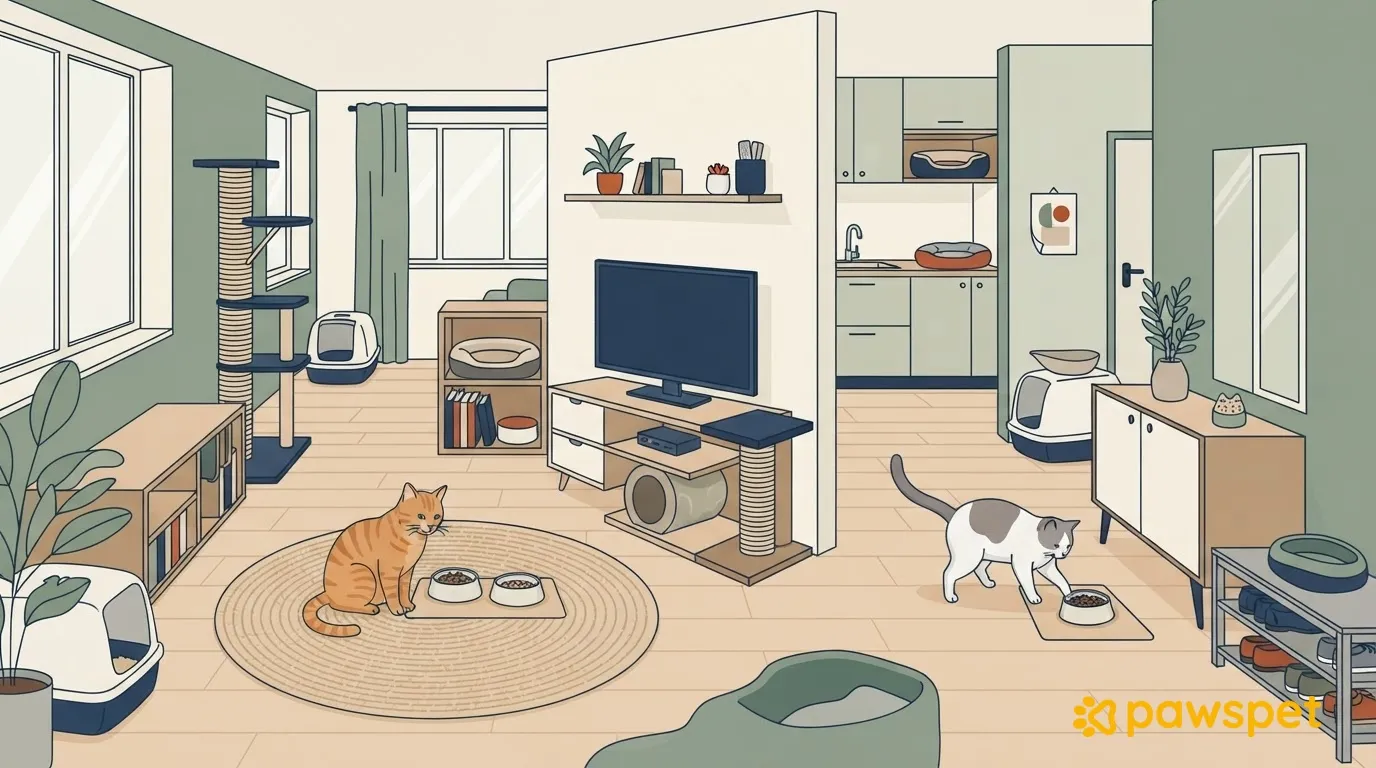
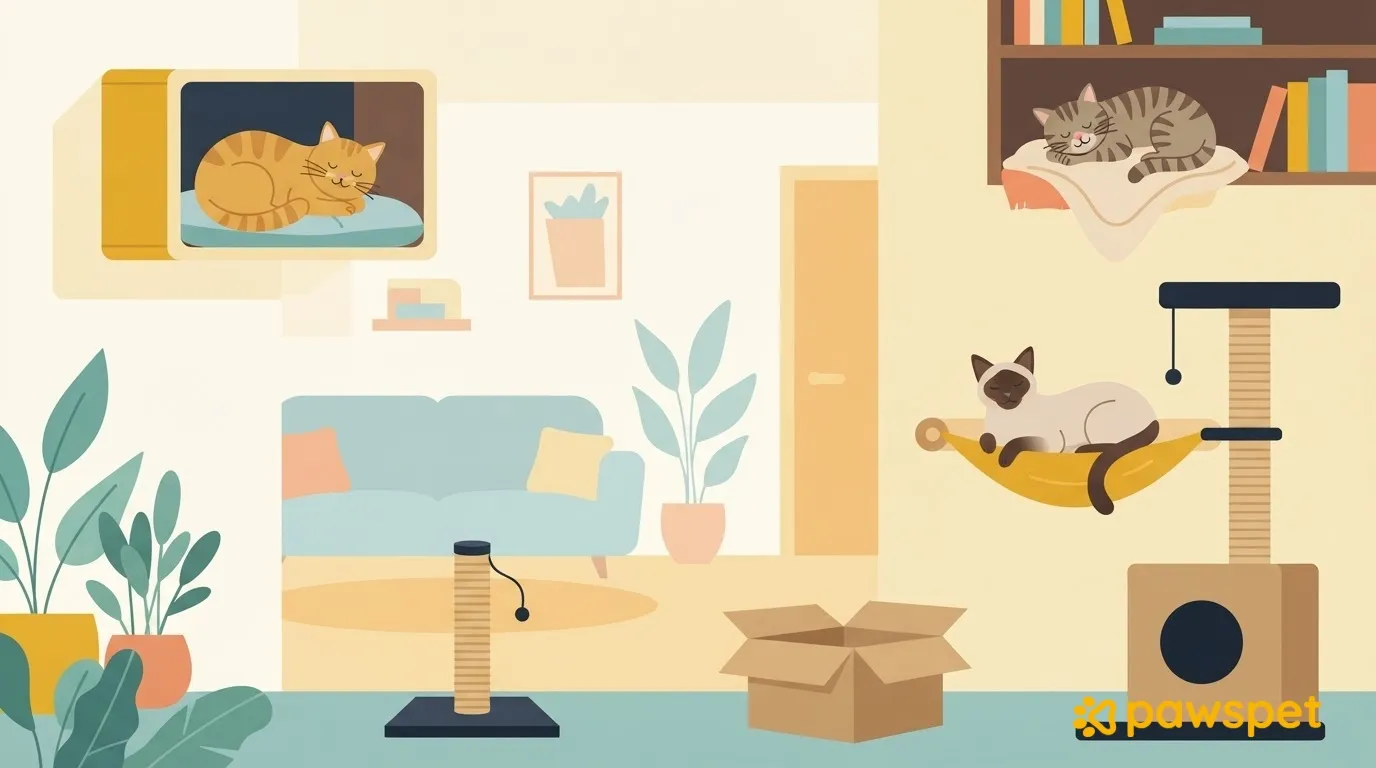
At first, keep the door closed. Put a litter box, water, a bed, and a hiding place in the room, along with food as directed by the veterinarian. Let the cat rest and groom themselves, as far as their recovery allows.
Spend time with the other cat outside the room too, without bringing them to the door to provoke a reaction. There’s no set duration: the next step depends on how both cats are doing, not on the calendar.
If there are stitches, a cone, or bandages
Recovery comes before reunion. Avoid vigorous play and rough contact until the veterinarian gives the all-clear: introductions must also respect any restrictions you’ve been given.
To find the instructions during recovery and at the follow-up visit, you can log the visit in the PawsPet app on your phone: from the cat’s profile, «Salute» » «+» » «Visita medica». Fill in the visit type, date, «Eseguito da», and notes; use the optional «Diagnosi» and «Prescrizioni» steps only to record what the veterinarian has recommended. At the «Foto» step, «Carica allegato» lets you add a photo or the PDF of the discharge paperwork.
Exchange scents before reuniting them
Before direct contact, try exchanging scents:
- Wipe a cloth over the cat who stayed home, if they accept being touched, and leave it in the returning cat’s room; then do the reverse, without forcing either cat to be handled.
- Swap blankets or beds.
- Offer calm playtime or treats on either side of the closed door, only if these are compatible with the veterinarian’s instructions about food and permitted activity.
Calm sniffing is a good sign. Repeated hissing or agitation means it’s time to slow down: increase the distance and don’t bring the cats closer to “get them used to each other.”
Gradual reunion and when to take a step back
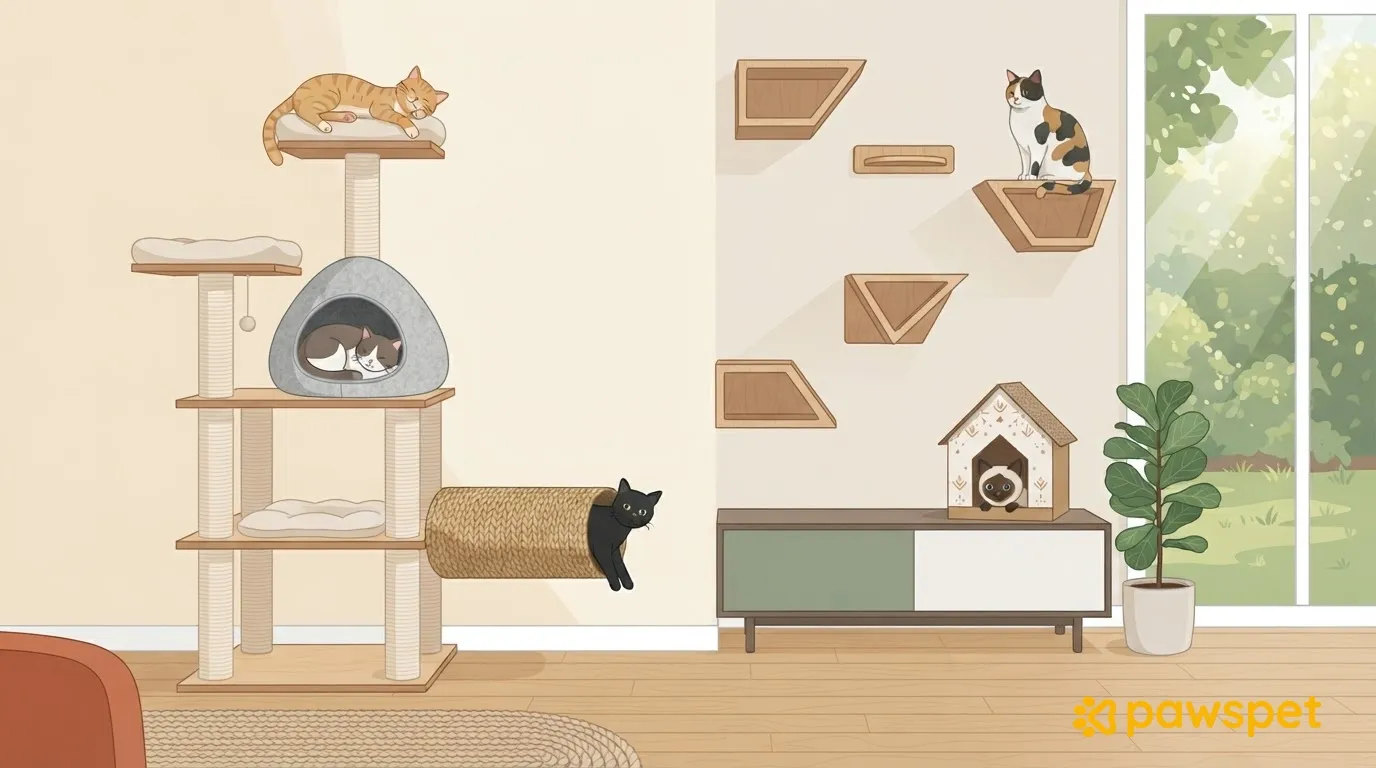
Once both cats are calm and the instructions you received allow it, arrange short, supervised meetings, initially with the door ajar or with a barrier. Choose a space with several escape routes so neither cat feels trapped.
If they stay calm, you can gradually move on to direct contact, always supervised. End the meeting before tension builds rather than waiting for a fight to start.
Staring, growling, a puffed-up tail, or chasing are signs to stop and separate them again. Go back to the previous step, even if that means exchanging scents only.
Don’t punish hissing: it’s communication. And don’t hold either cat during the meeting.
When to ask for help
Contact the veterinarian if the tension doesn’t ease or gets worse. Do so immediately if there are attacks that cause injuries or if the returning cat stops eating, stops using the litter box, or gets worse: don’t wait for the cats to get used to each other again.
If the returning cat hisses at everyone, they may be stressed or in pain; don’t treat it as just a relationship problem.
If the conflict continues after recovery, consult a feline behavior professional.
If the returning cat is doing well and there are no injuries, observe how the cats react today and move to the next step only when both are calm.
FAQ
How long does it take for them to get back to normal?
There’s no set timeline: it may take a short while or a few days. What matters is the direction of the signals: less tension and more calm. If there’s no improvement, ask the veterinarian for help.
What if the cat who just came home is the one hissing?
They may be stressed or in pain: let them rest separately and contact the veterinarian if it continues. If they stop eating, stop using the litter box, or get worse, contact the veterinarian right away.