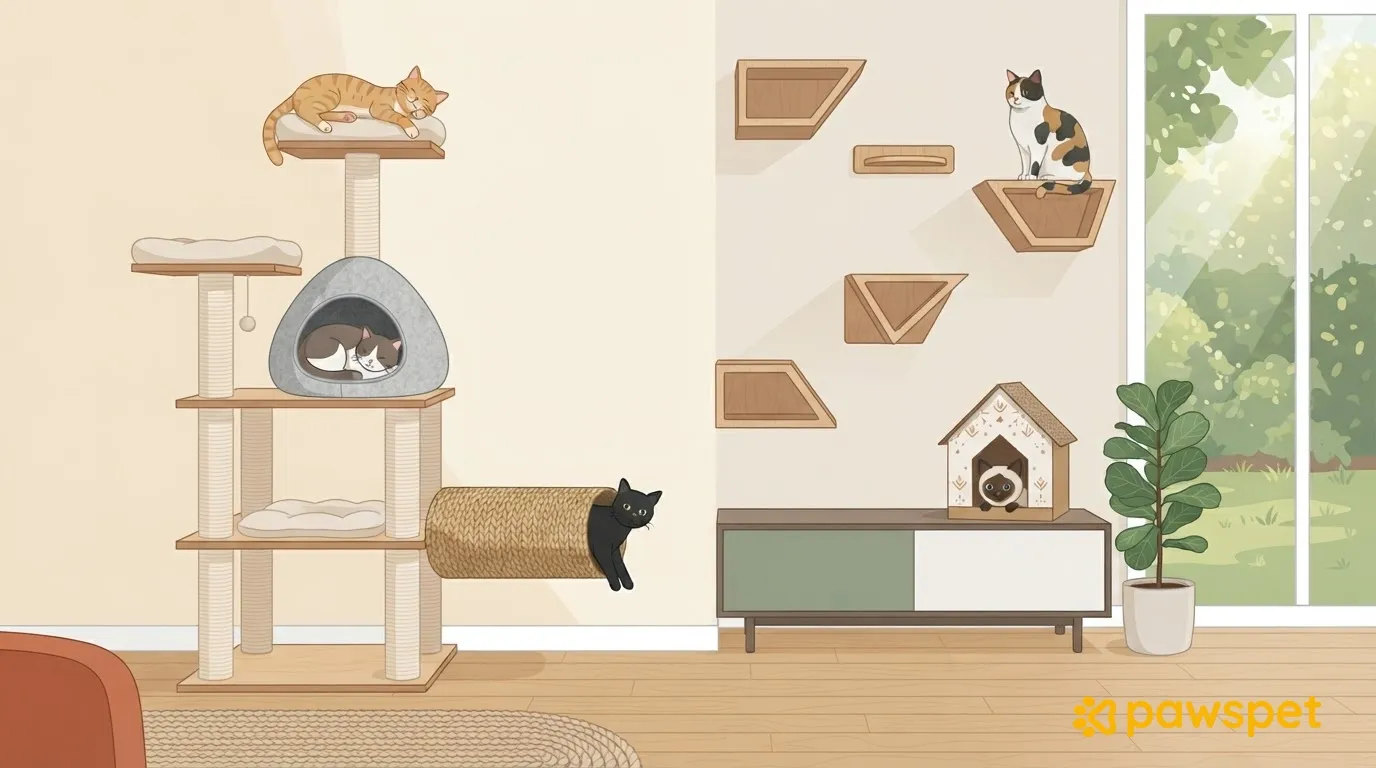
Competition between cats usually eases when a favorite spot is not the only option: offer several elevated perches at different heights, at least one hiding place per cat in separate areas, and routes with more than one exit. Before adding accessories, look at your home as a three-dimensional territory: the goal is to offer alternatives and let each cat move away without getting trapped.
First, identify the conflict hotspots
For a few days, observe where the cats cross paths and sketch a simple floor plan, even by hand. You don't need to record every incident: just mark the spots that come up most often.
Mark:
- where fixed stares, displacement, or chasing occur;
- when it happens and which cats are involved;
- narrow passageways: hallways, doorways, stairs, and access to the windowsill.
Also notice who waits for the other cat to move away before passing, or who always stays in the same room. Focus on situations that happen repeatedly and start there: if the problem is at the living room entrance, a new shelf in a distant room may not change that passageway.
More high perches at different heights
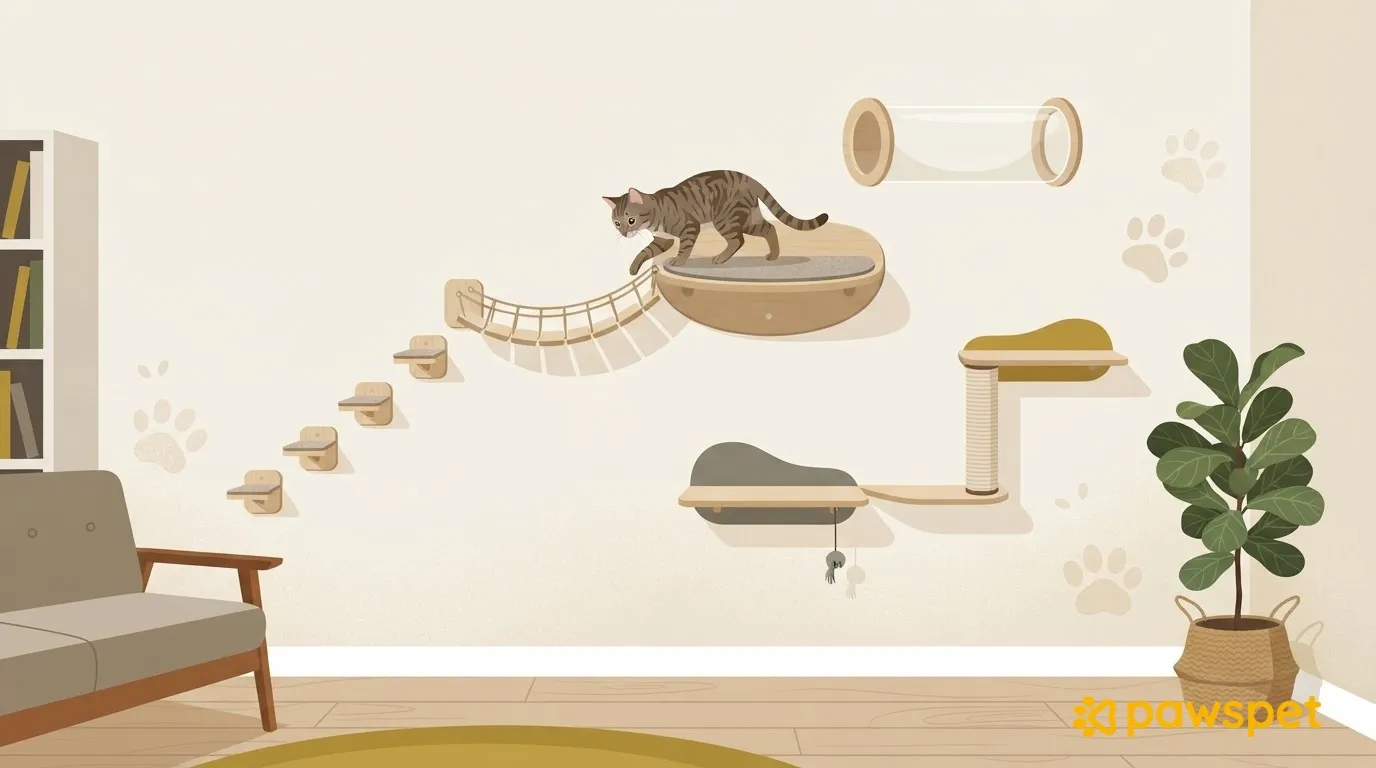
Cat shelves, multi-level scratching posts, and furniture with a clear top can provide alternative resting spots. Don't put all your options on a single high perch: shelves at different heights let cats share the same area without all having to reach the same spot.
For example, beside the contested window, you could set up one lower perch and one higher one, spaced apart and accessible by separate routes. Add other options in several rooms: concentrating every appealing spot in one corner may leave the bottlenecks unchanged.
Safety comes before height: structures and shelves must be stable and properly secured. For an older or less agile cat, provide intermediate steps and easier-to-reach alternatives without making them attempt difficult jumps.
One hiding place for each cat
Provide at least one hiding place for each cat, in separate areas: boxes, covered beds, spaces under furniture, or elevated hideaways, as long as they are accessible. When possible, choose shelters with two openings: they offer another way out.
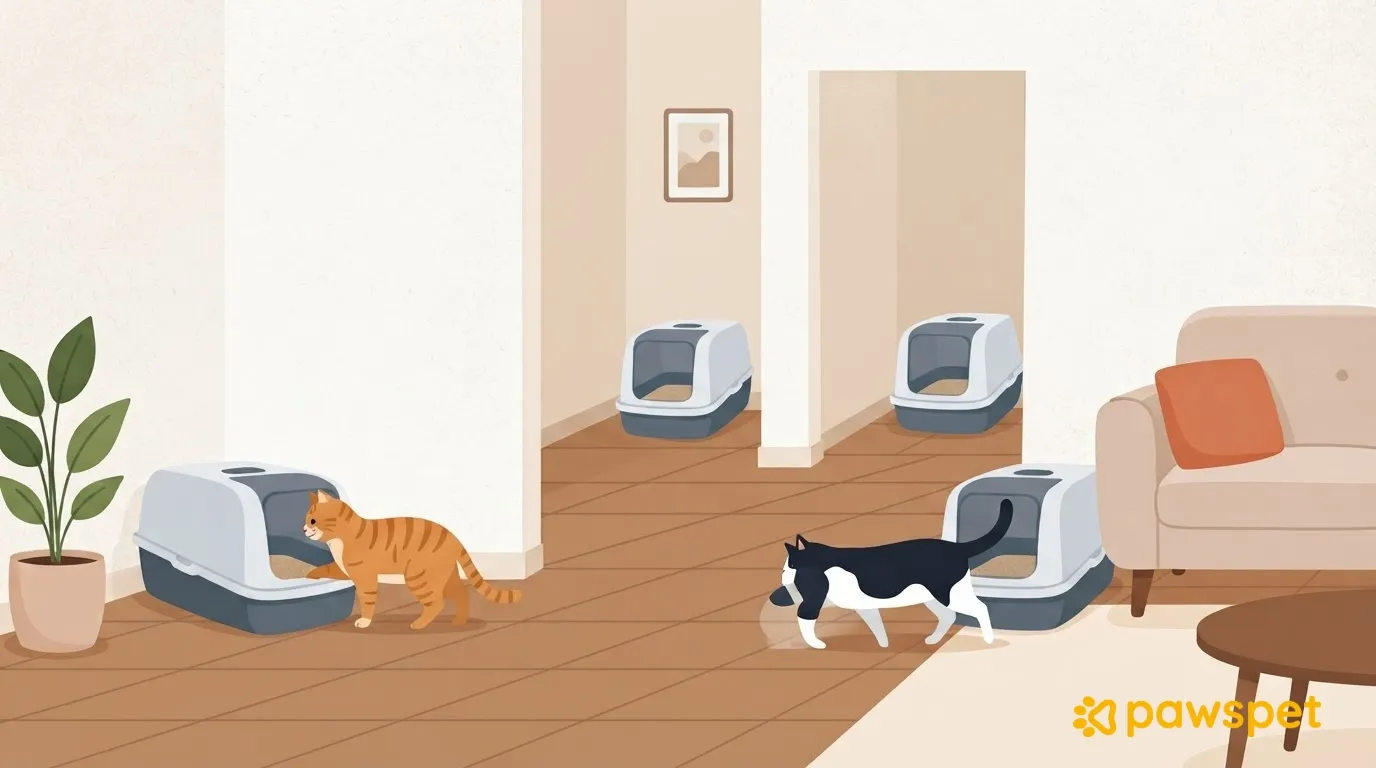
In a home with two cats, for example, you could put a box in the bedroom and a hideaway in the living room instead of placing them side by side under the same table. Avoid spots next to the litter box or the other cat's food bowls: getting to the hiding place shouldn't require crossing an area that's already contested.
Don't pull a hiding cat out or let the other cats disturb them. If a companion follows them or waits in front of the entrance, reconsider the setup and the exit routes: the hiding place should give the cat a chance to stay away.
Routes with more than one exit
Look at the connections between spaces, not just the places to sit. A comfortable shelf may still be hard to use if the only way down is through the one passage occupied by the other cat.
Create alternative routes with furniture and shelves, keep interior doors open when possible, and avoid placing food bowls or other important resources at the end of a dead-end hallway. The goal is to be able to reach and leave an area from more than one direction.
In the living room, if the window is only reachable by going behind the sofa, consider moving it to open up a second route. A stable shelf connected to an already accessible perch can instead create an alternative way to reach the windowsill. Check the way down, too: it shouldn't force the cat back to the same spot guarded by the other cat.
Windows and outdoor views
If only one window has a comfortable perch, try making another view accessible too. Offer several lookout spots, in the same room or in different rooms, with separate perches: they don't all have to share the same windowsill.
But watch how your cats react to what's outside. If a cat gets agitated when they see other cats outdoors and then takes it out on their housemate, temporarily covering the lower part of the window may help. Check whether the situation changes.
Always secure open windows.
When the environment isn't enough
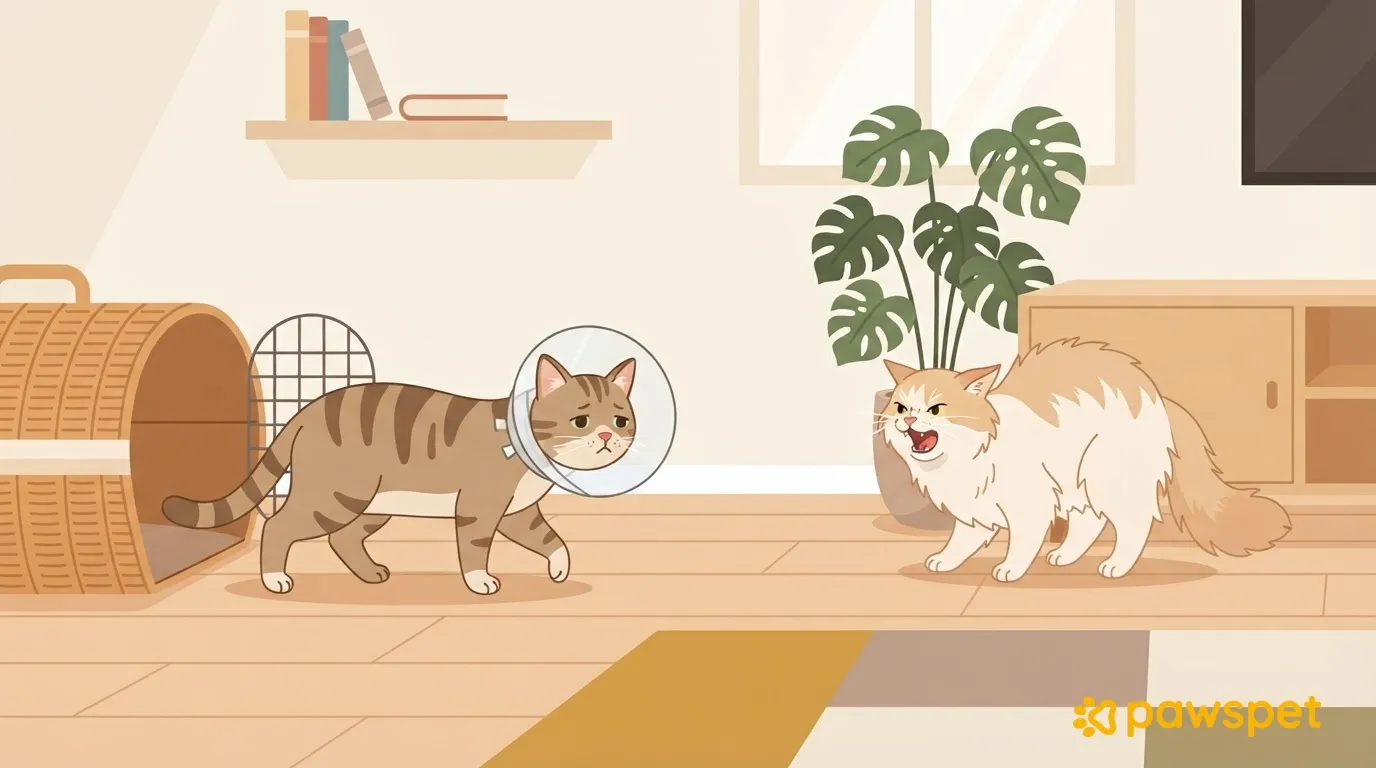
If there are injuries, a cat stops eating or using the litter box, stays hidden for almost the whole day, or the relationship between previously calm cats changes suddenly, contact your veterinarian first. Don't wait for the new setup to take effect: pain or illness can change behavior.
After the veterinary assessment, if the difficulties continue, consult a feline behavior professional. In the meantime, keep the cats in separate rooms, each with their own food bowls, water, litter box, and hiding place, to prevent further conflicts.
If there are no warning signs, choose the most contested spot, set up two nearby alternatives that can be reached separately within the week, and observe whether blockages and chasing decrease. The goal isn't to make the cats share every spot, but to give each cat a choice.